
Estimating Winter Electricity Use After Switching to Reverse-Cycle Heating
Estimate winter heating electricity from your routine, building and tariff, then separate heating energy from the household’s other electricity and gas use.
Estimate winter heating electricity from your routine, building and tariff, then separate heating energy from the household’s other electricity and gas use.

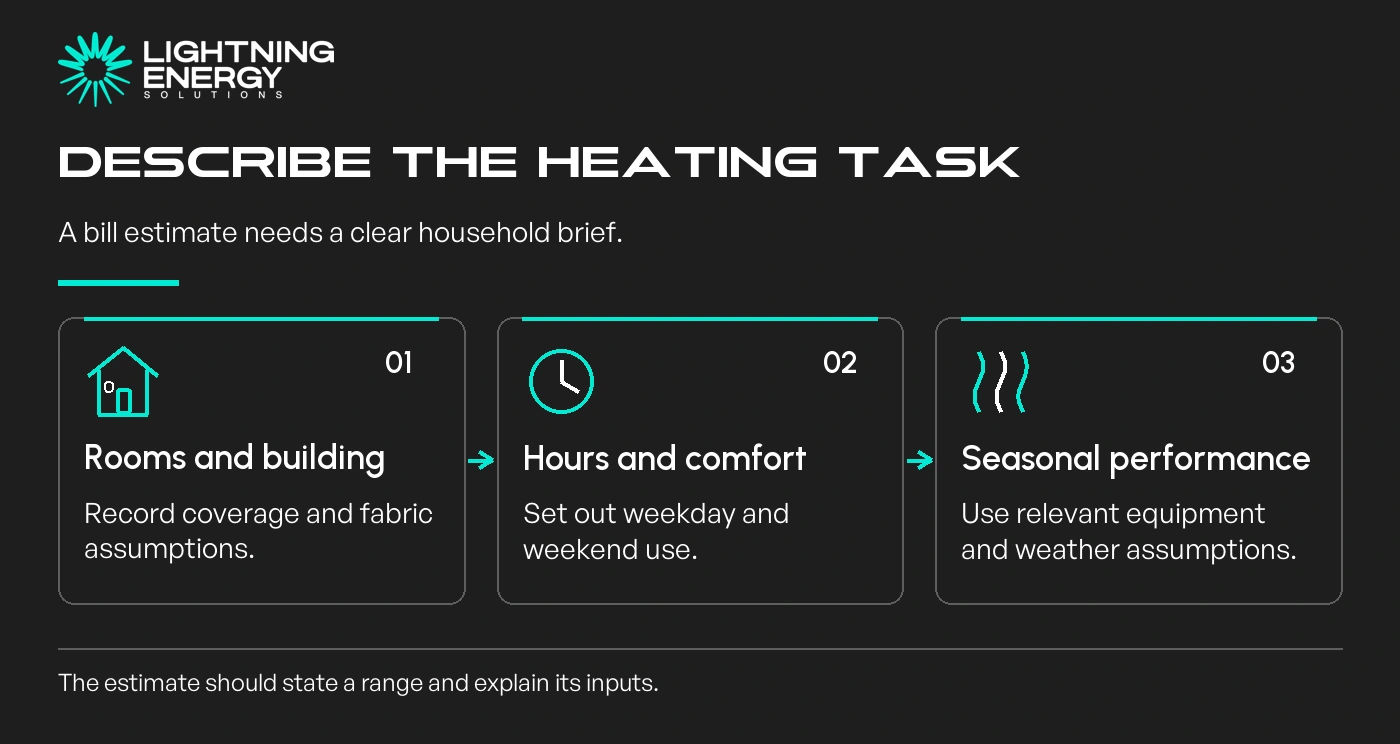
A winter heating estimate should start with the rooms, hours and comfort you expect, then apply realistic equipment performance and your tariff. Multiplying the advertised heating capacity by every operating hour gives the wrong quantity.
Use a range and record the assumptions. A confident single bill forecast is not useful if it quietly assumes milder weather, fewer heated rooms or the disappearance of gas charges that remain.
Write down the occupied rooms, weekday and weekend hours, and usual comfort target. Keep those conditions similar when comparing the old gas arrangement and proposed reverse-cycle heating.
Separate any extra service the new system provides, such as cooling or heating a previously unheated office. Higher comfort can be worthwhile, but it changes the bill comparison.
When discussing air conditioning, ask the estimator to identify building assumptions, local weather assumptions and the proposed equipment’s seasonal performance.
Government energy-label estimates use standardised conditions. They help compare suitable equipment, but are not a forecast of your home’s actual winter use.
Energy Rating explains the assumptions.
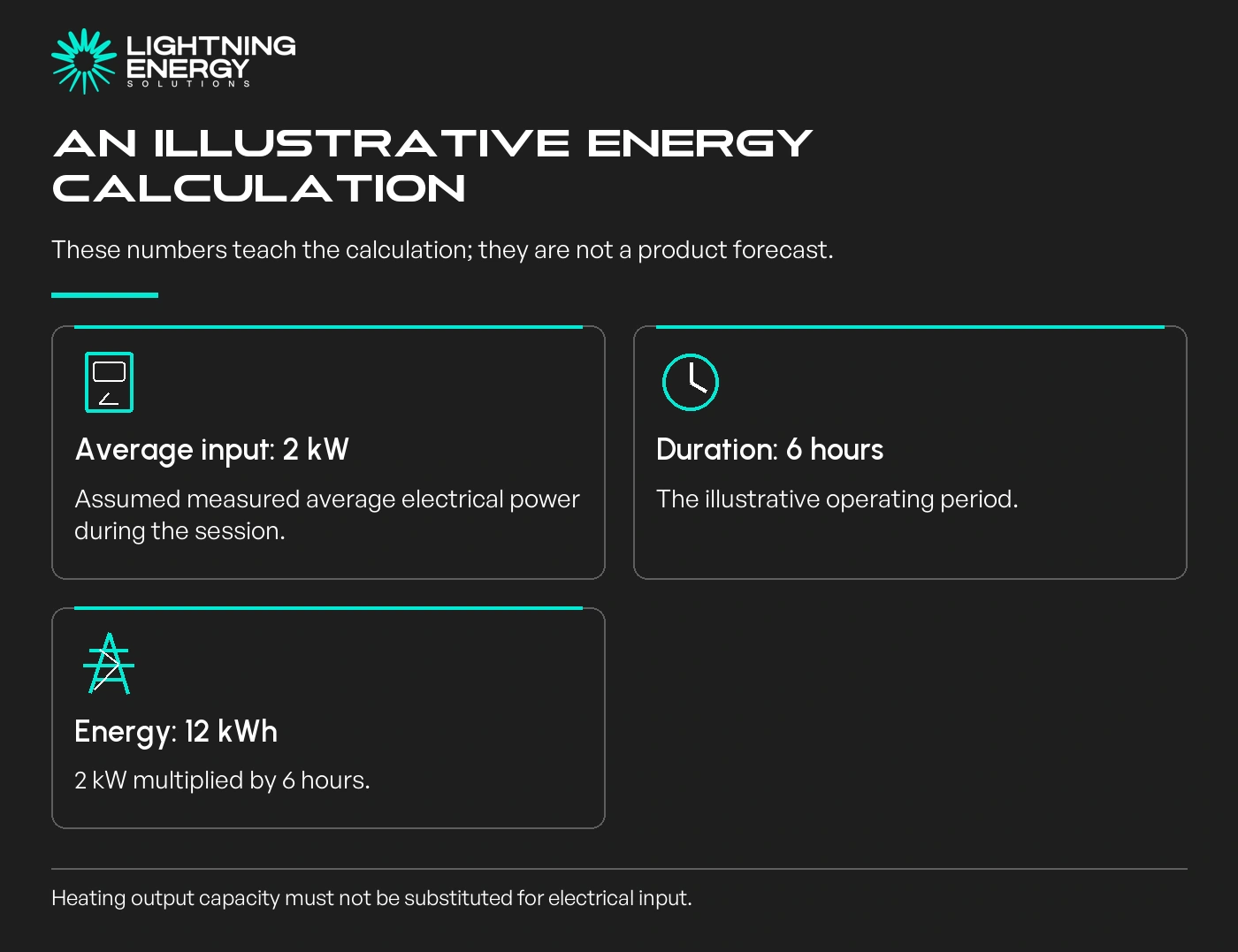
Heating output is the heat delivered. Electrical input is the power consumed. Electrical energy over a period is measured in kilowatt-hours, which is the quantity billed under an ordinary usage tariff.
For an illustrative calculation, assume measured average electrical input of 2 kW across a six-hour session. That session uses 12 kWh. This is arithmetic, not an estimate for a particular model or Melbourne home.
Repeat the calculation using lower and higher plausible measured or modelled inputs and different operating hours. Label where those assumptions came from rather than presenting the middle result as guaranteed.
If you use an efficiency ratio to estimate input, its operating conditions matter. A single rated COP should not be assumed constant through every hour of winter.
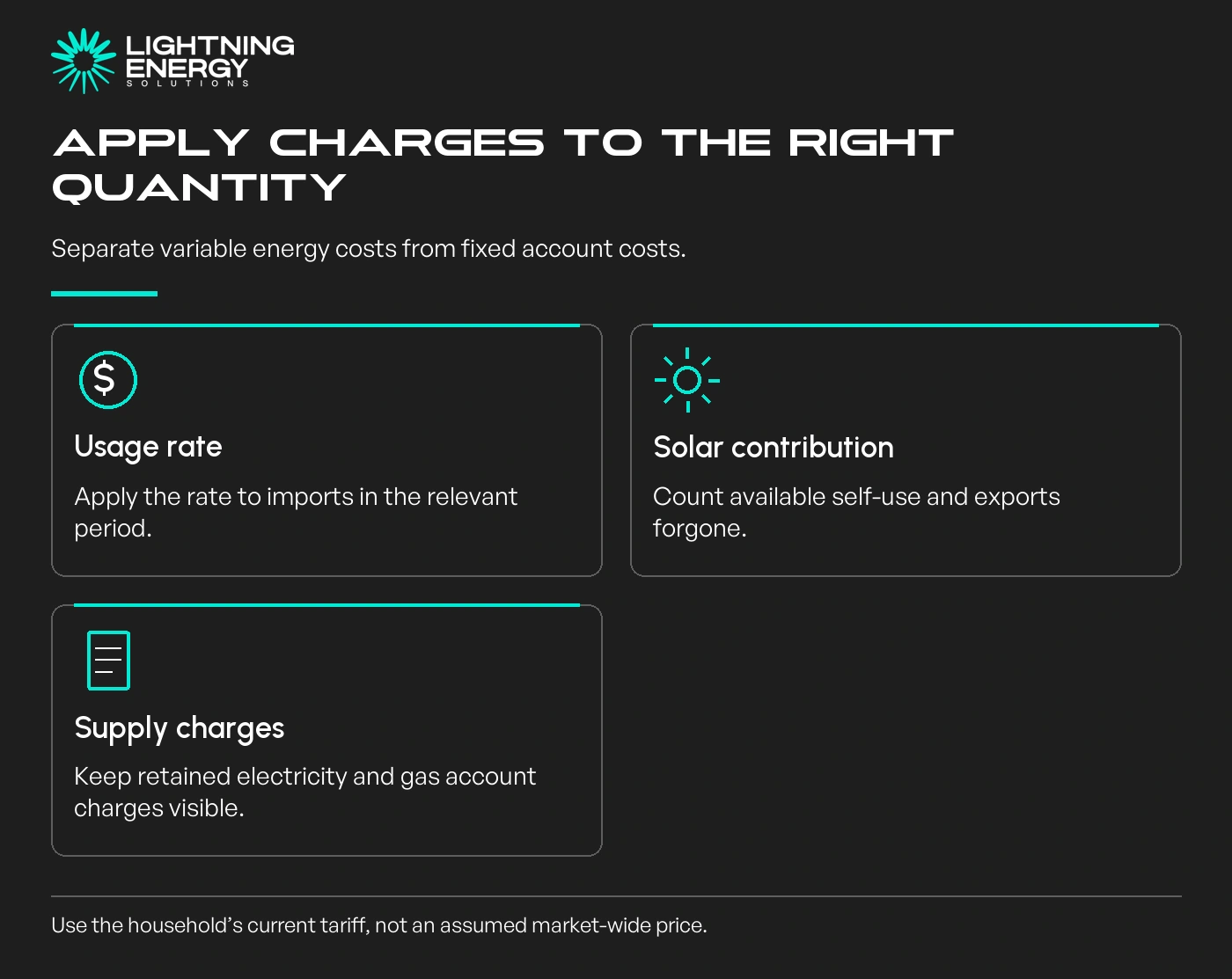
For a flat usage tariff, multiply imported heating kWh by the applicable rate. For time-of-use pricing, allocate those imports to their actual tariff periods before multiplying.
Keep daily supply charges separate. Electricity supply charges already paid by the household are not automatically a new heating cost, while remaining gas supply charges cannot be counted as avoided.
Our guide to fixed network charges explains why lower usage and a lower total bill are not the same calculation.
If solar serves some heating, count only the share available at that time after other loads. Include the value of exports forgone and any battery effects when comparing operating schedules.
Do not credit an entire day’s generation against evening heating without tracing when energy was used, stored or exported.
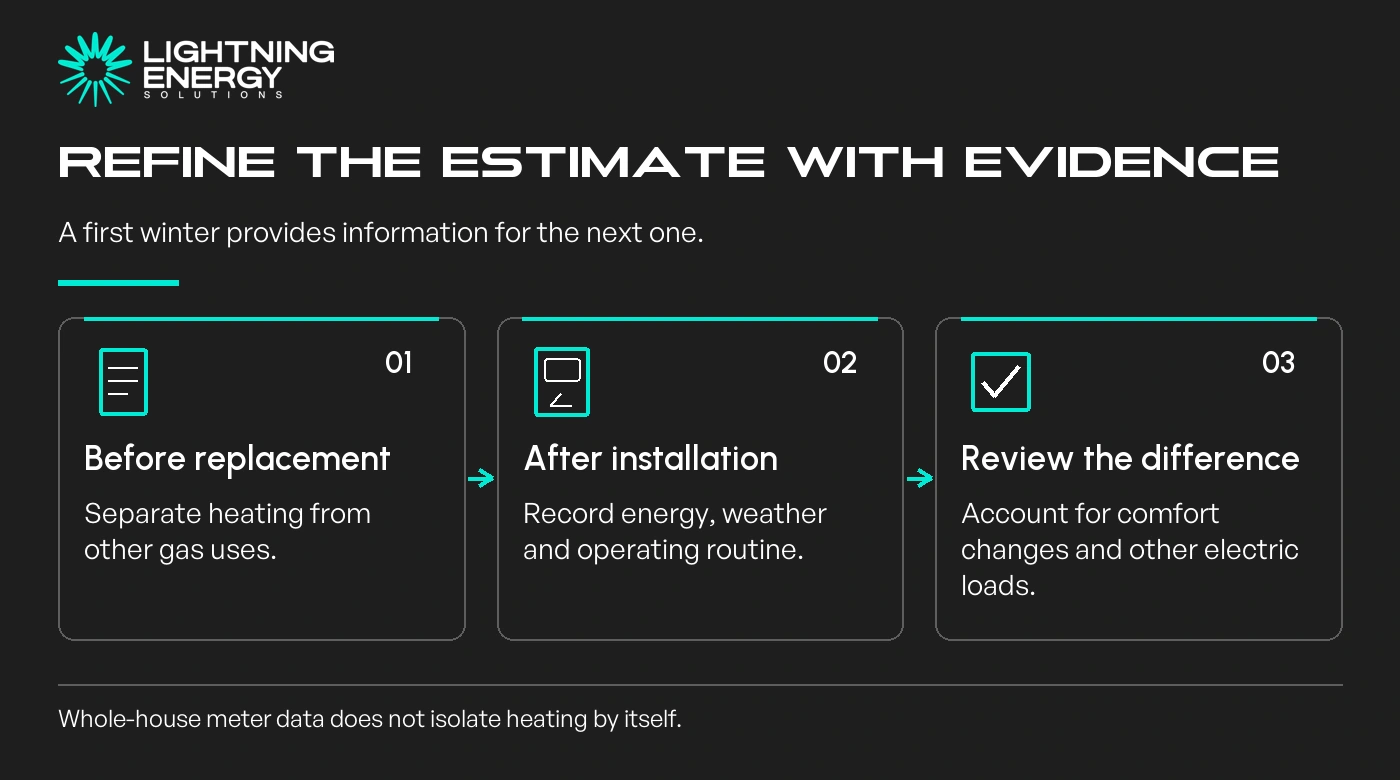
A gas bill can include water heating and cooking as well as space heating. Estimate those other uses separately before treating the whole bill as the old heater’s consumption.
Gas megajoules can be converted to kilowatt-hours by dividing by 3.6, but that gives fuel energy. Delivered heat still depends on the old heater and distribution losses.
The Australian Government’s Energy Rating guide calculates estimated running costs from electricity use and the applicable tariff. Use your own current rate, and keep the estimate’s operating assumptions visible when comparing it with actual bills.
Energy Rating running-cost guidance.
After installation, compare similar weather and occupancy periods. Whole-house smart-meter data includes other appliances, so record changes such as EV charging or guests before attributing every extra kilowatt-hour to heating.
Collect a recent tariff, winter bills and a room-use schedule for a heating assessment. Ask for a low-to-high estimate with visible assumptions and a plan for checking actual use after the first winter.
Available times
Book a consultation and we'll map solar, storage, hot water, and the rebates around your bills and your goals.
Question 1 of 6