GreenPower, Rooftop Solar and Carbon Offsets: What Are You Paying For?
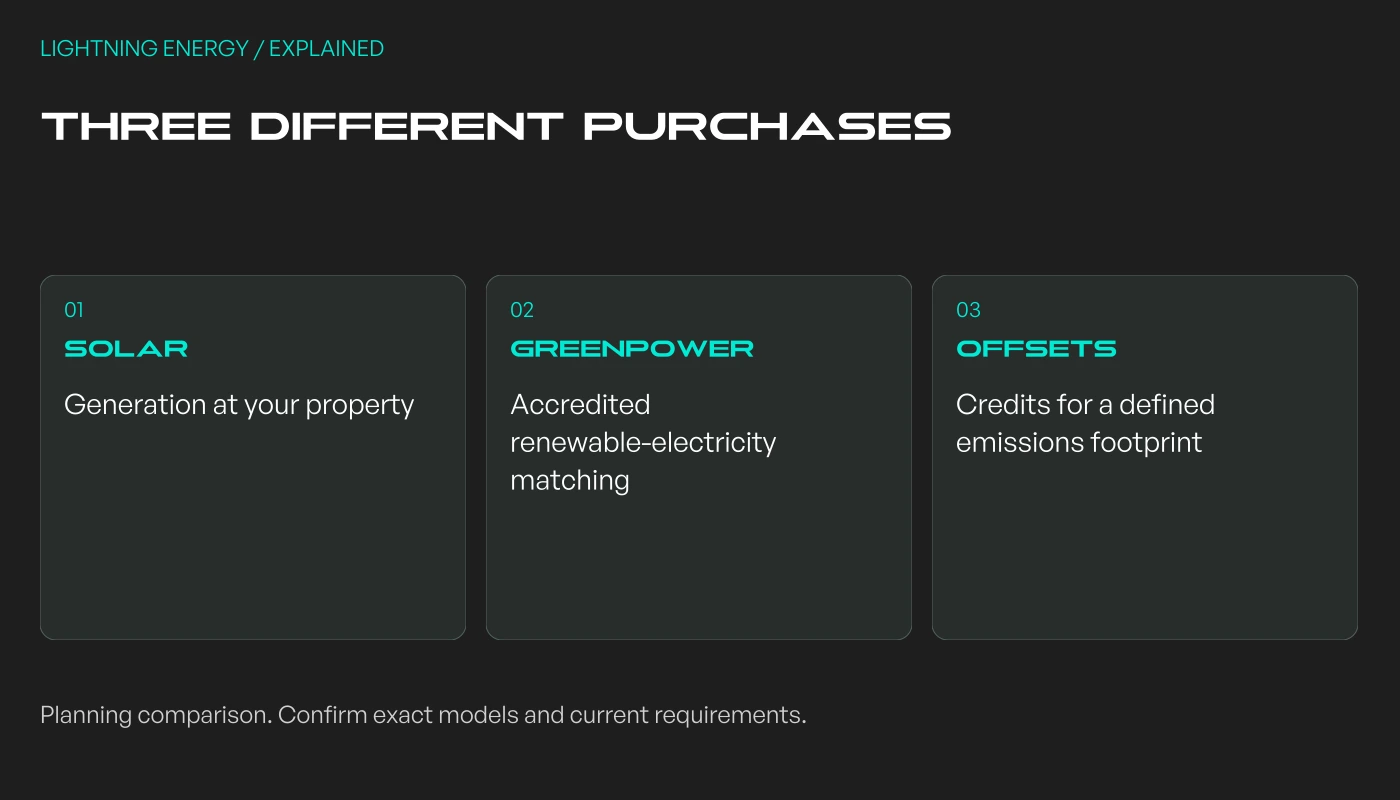
GreenPower, rooftop solar and carbon offsets can appear in the same conversation about a cleaner home, but the money buys different things. Understanding that distinction makes it easier to choose a plan and describe what you have actually paid for.
LLightning Energy TeamLightning Energy27 October 2026 · 5 min read
GreenPower, rooftop solar and carbon offsets can appear in the same conversation about a cleaner home, but the money buys different things.
Understanding that distinction makes it easier to choose a plan and describe what you have actually paid for.
Start with your goal.
Are you trying to reduce electricity bought from the grid, support renewable generation through your electricity plan, or compensate for a defined emissions footprint?
Those are related decisions, with different evidence.
Rooftop solar changes what happens at your property
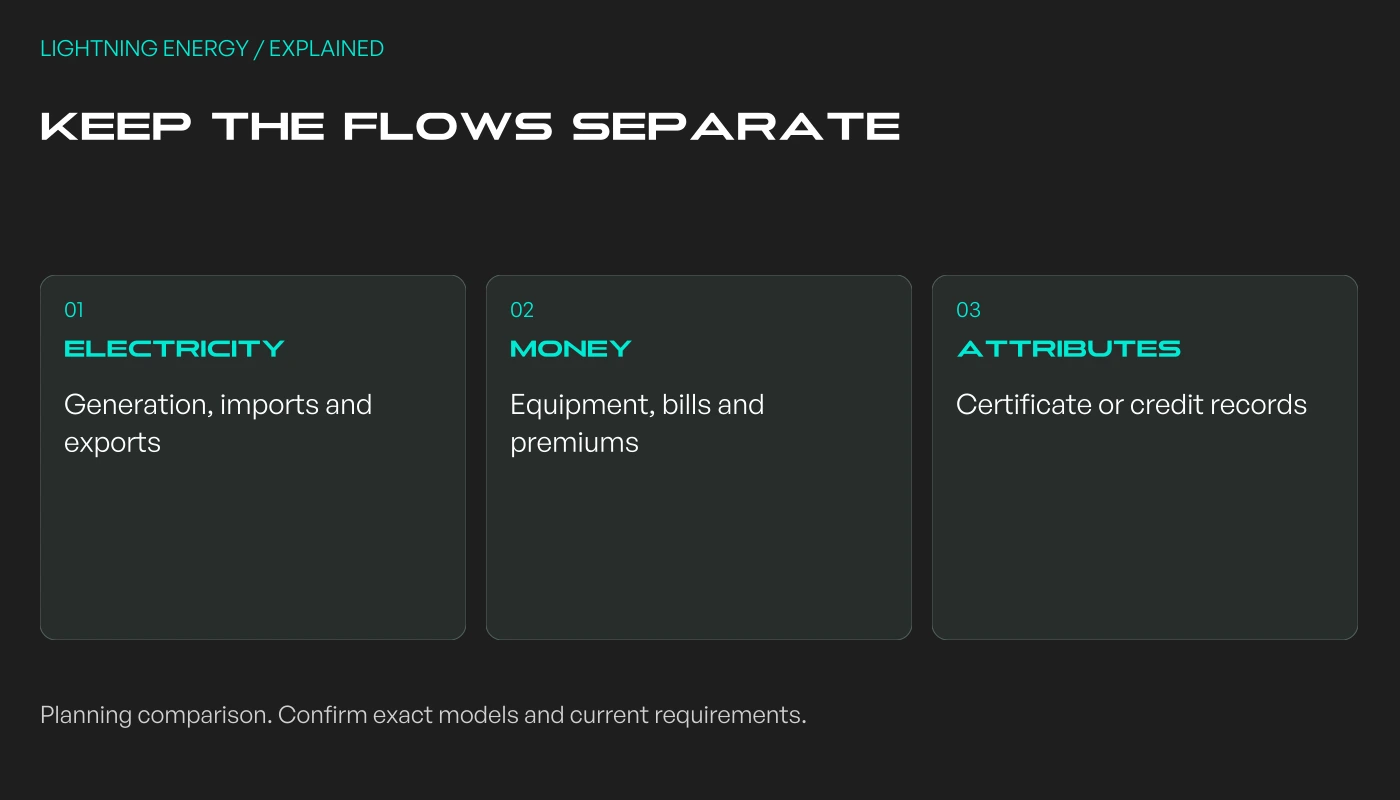
A rooftop solar system generates electricity at the home. Some may supply appliances directly, some may be exported, and some may charge a battery if the installation includes one.
That physical flow is separate from a certificate transaction. The Clean Energy Regulator explains assignment: a system owner can assign certificate creation rights to a registered agent.
Read our STC assignment guide before describing the environmental attributes you retain.
An upfront certificate discount and a feed-in credit are different transactions.
Planning comparison. Confirm exact models and current requirements.
GreenPower buys a verified renewable-energy commitment
It does not give your house a private cable to a wind farm. Electricity still arrives through the shared grid. The commitment is accounted for through the scheme, rather than identifying the source of every electron entering your home.
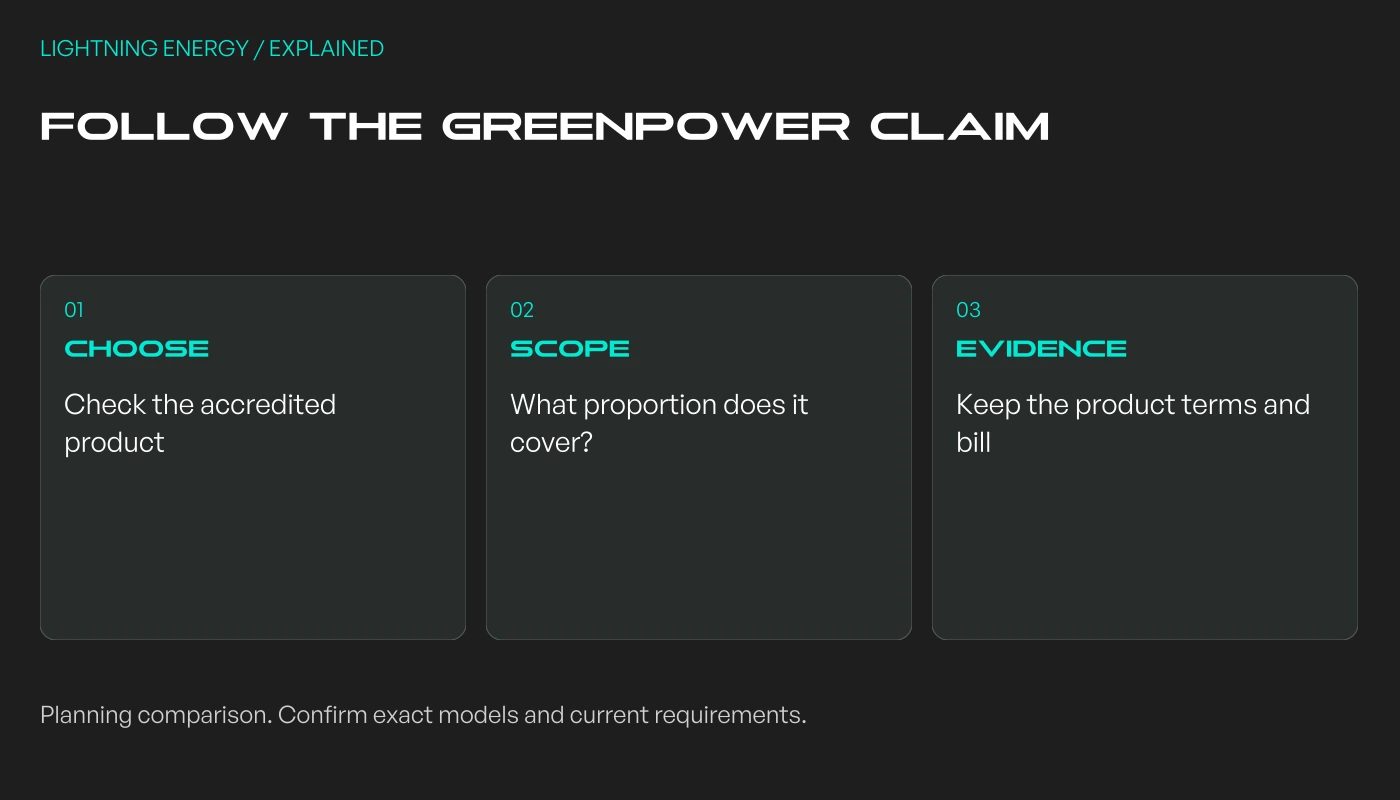
Check what proportion of your electricity the offer covers. A partial GreenPower option should not be described as covering all of the home's grid consumption.
The program's frequently asked questions describe provider auditing. Look for the accredited product and its terms, rather than assuming any green branding means the same thing.
Planning comparison. Confirm exact models and current requirements.
Carbon offsets address a defined emissions amount
An offset purchase relates to emissions reductions or removals represented by credits. It is a different mechanism from buying accredited renewable electricity or installing panels on your roof.
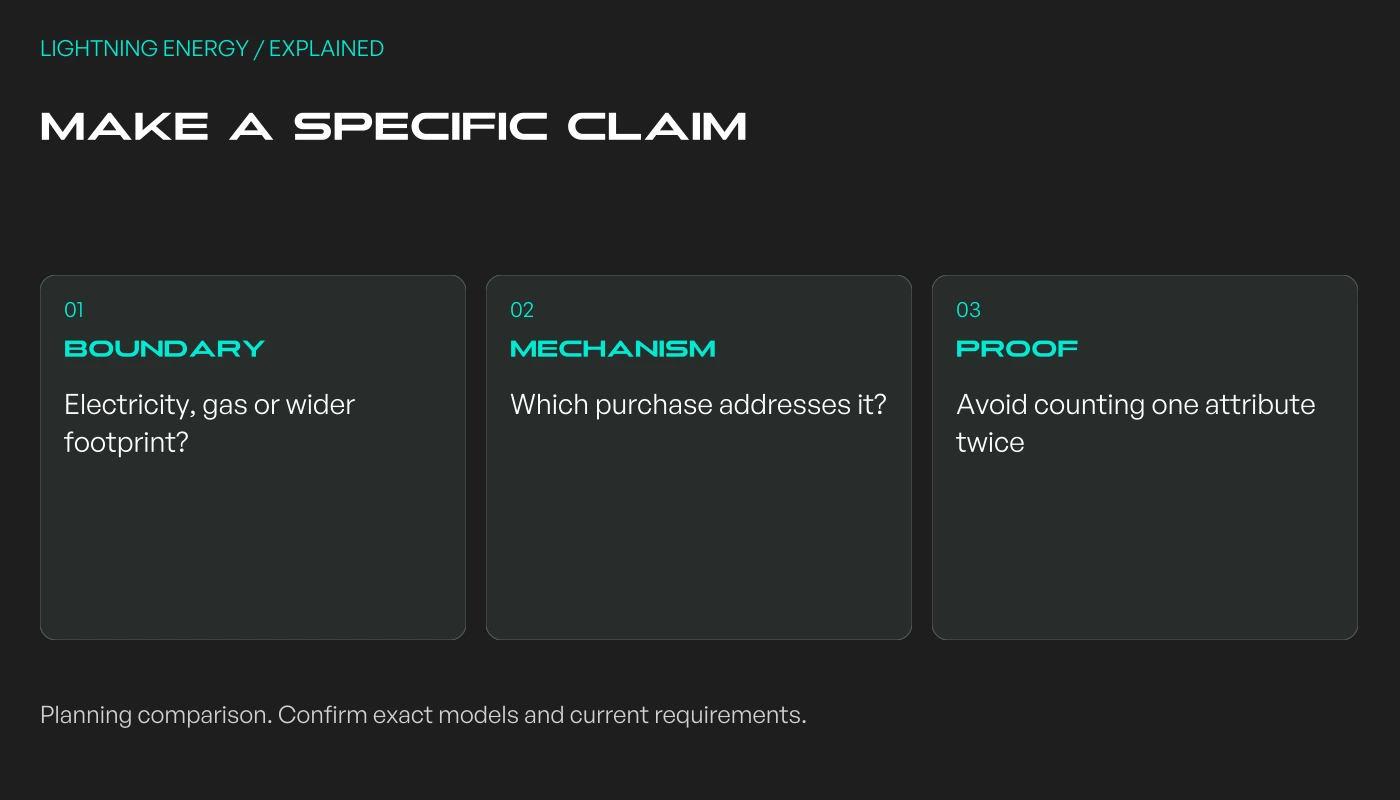
Ask what emissions were calculated, which credits are being used, the project and vintage, and whether retirement is documented. A claim about electricity alone does not automatically cover gas, transport, purchases or construction.
The Australian Government's zero-carbon home guidance puts energy efficiency and renewable supply into the wider home picture. Reducing avoidable demand remains a useful first step before paying to address the remainder.
Planning comparison. Confirm exact models and current requirements.
Compare the bill and the claim separately
Imagine a household with solar that still imports electricity overnight. Its panels may reduce imports during sunny hours, while a GreenPower option applies to the grid electricity covered by that retail product.
Adding a home battery could change the timing of imports and exports. It does not, by itself, prove that the household's complete electricity or carbon footprint has been eliminated.
For a bill comparison, write down the usage rate, daily charge, feed-in rate and any GreenPower premium. Compare the same usage profile across plans; the green option is only one part of the total.
For an environmental claim, keep a second record: what the product covers, which certificate or credit mechanism applies, and the evidence supporting the statement. Avoid counting the same attribute twice.
Planning comparison. Confirm exact models and current requirements.
Choose a useful next step
If your priority is lower daytime grid demand, start with appliance timing and a roof assessment. If you want accredited renewable support for remaining imports, compare the relevant GreenPower products and their full tariff costs.
If you are evaluating offsets, define the emissions boundary before buying credits. Keep the claim specific enough that another person can understand what was included and what was left out.
Contact Lightning Energy to discuss solar, storage and the household loads you want to change. This guide explains the mechanisms; it does not certify a household as carbon neutral. Sources checked 27 October 2026.
Book a consultation and we'll map solar, storage, hot water, and the rebates around your bills and your goals.
Loading consultations…
Lightning EnergyPlan your next energy upgrade.
⚡
Hi, I’m Lightning Energy’s project guide. I’ll ask a few practical questions, explain what usually matters for your project, and help you decide on a useful next step — no guesswork or sales pressure.
First, what kind of property are we planning for?