
Heat pump COP explained: how to compare efficiency claims fairly
Learn what heat pump COP means, why test conditions matter and which additional information helps compare annual hot water performance fairly.
Learn what heat pump COP means, why test conditions matter and which additional information helps compare annual hot water performance fairly.

COP describes how much heat a heat pump delivers relative to the electricity it uses under stated conditions. A larger number can be useful, but only when the test conditions and measurement boundaries are comparable.
Treat an isolated COP figure as the start of the comparison. It is not an annual savings guarantee or a measure of how many showers your tank can provide.
When comparing hot water heat pumps, ask for the evidence behind the number and the performance information that matches your climate and demand.
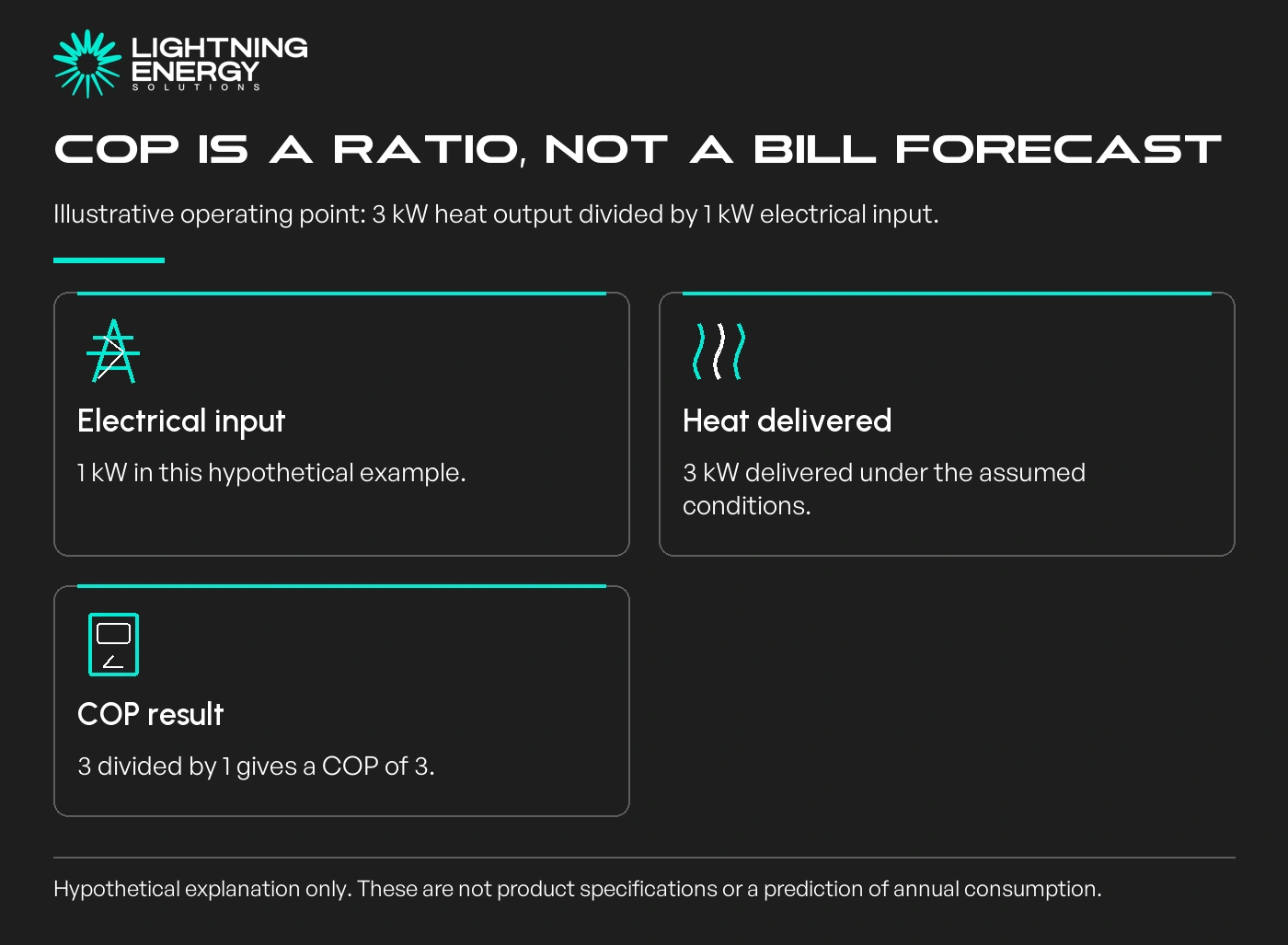
The coefficient of performance is heat output divided by electrical input. For an illustrative operating point, 3 kW of heat delivered using 1 kW of electricity gives a COP of 3.
The additional heat comes from the surrounding environment. The example illustrates the ratio; it is not a rating for any model sold by Lightning Energy.
Government heat pump technology factsheet.
Keep power and energy comparisons consistent. A ratio based on instantaneous kW describes an operating point; a ratio over an interval needs the heat and electricity measured across that same interval.
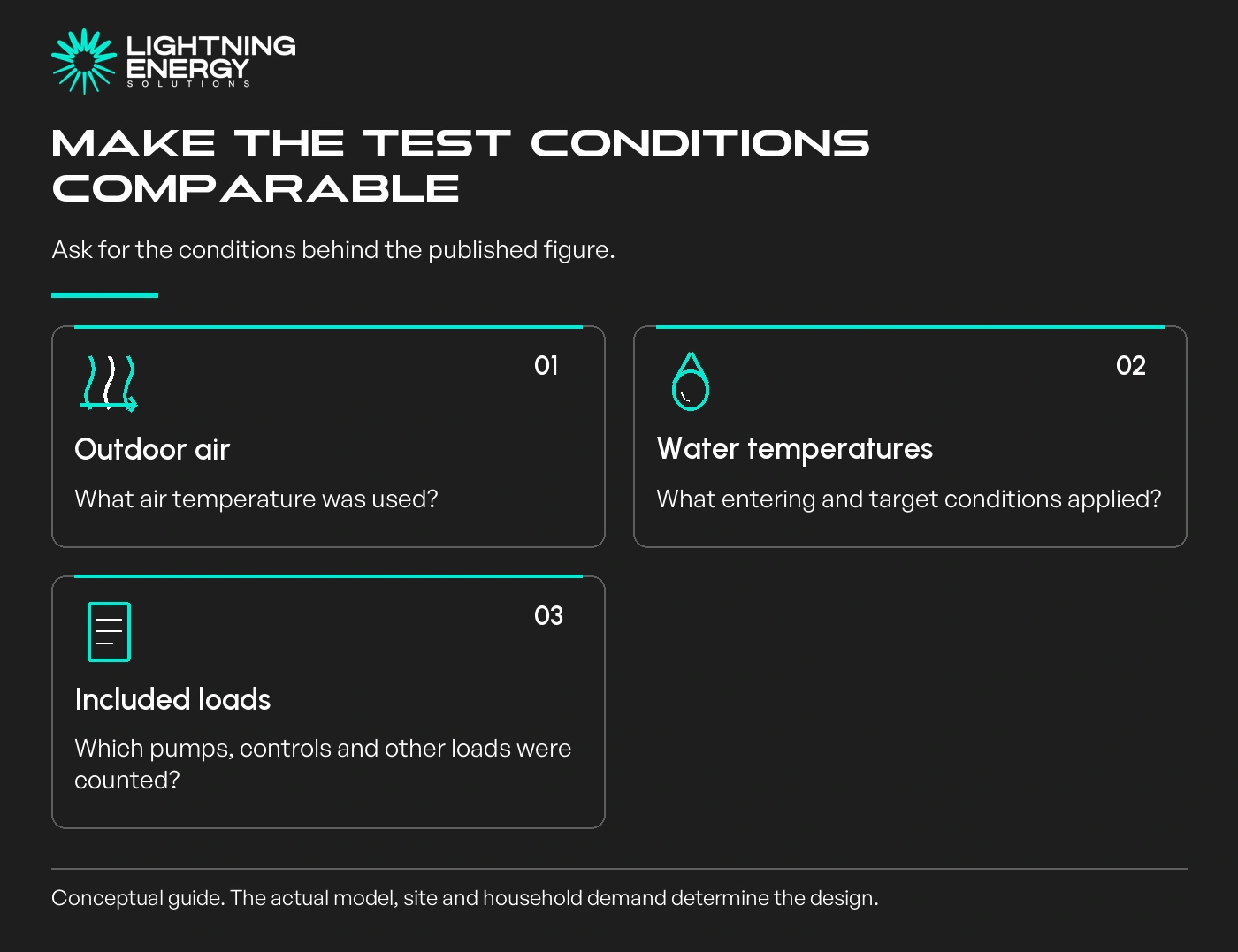
Ask what outdoor air temperature, entering water temperature and target water condition applied. The work required to move heat changes with those conditions.
Also ask which electrical loads are included. Controls, pumps and any element operation can affect the whole system’s electricity consumption even when a compressor rating looks attractive.
A favourable test point from one brochure should not be compared with a colder or otherwise different test point from another. Request equivalent data or acknowledge that the comparison is incomplete.
This is especially relevant when setting a winter heating window, because a short operating period must still deliver the required hot water.
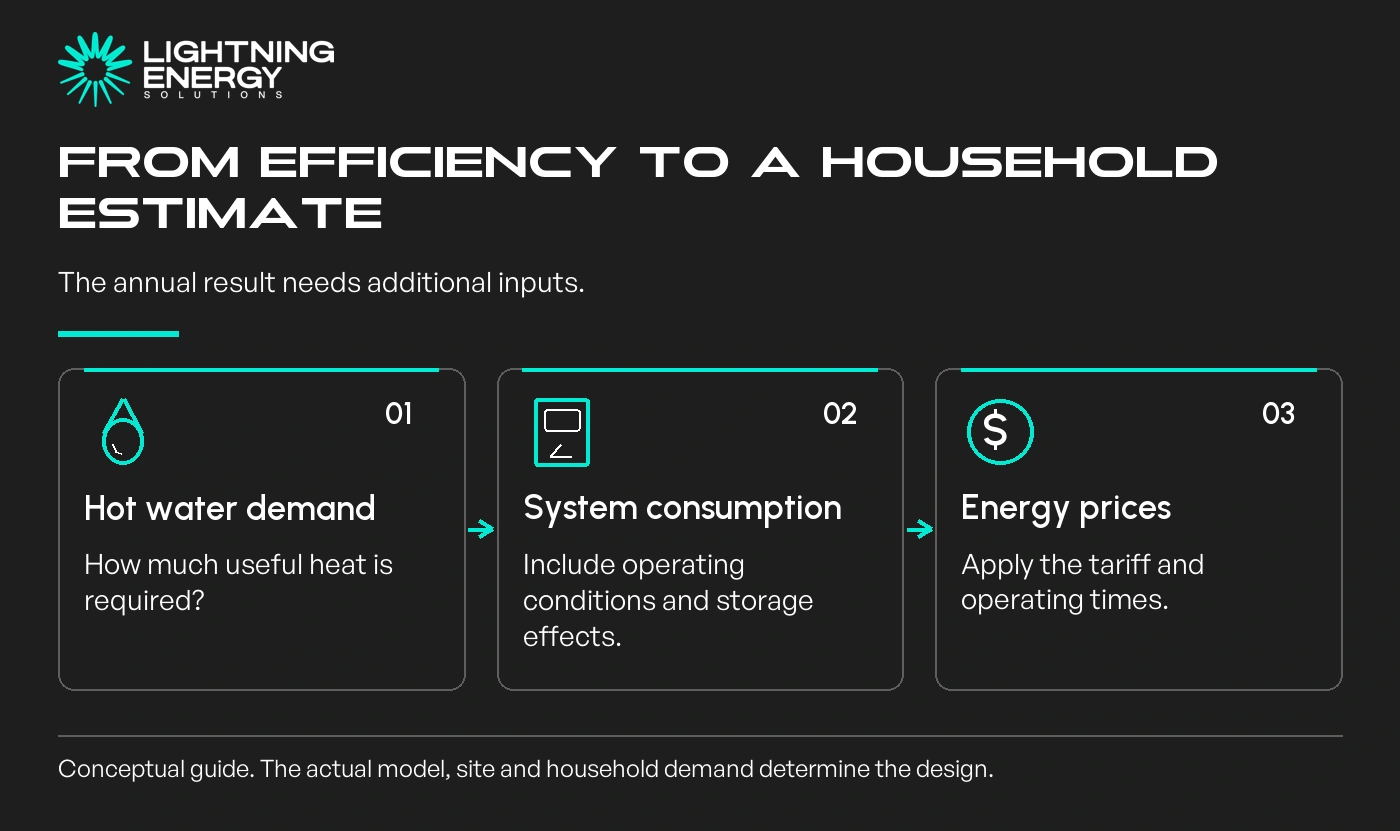
Your bill depends on the heat needed, storage losses, operating schedule, actual performance through the year and applicable electricity prices. COP is only one input.
A second illustrative example shows the limitation: two systems can have similar published COP values but different tank losses, control behaviour or use of boosting. Their annual consumption need not be identical.
Ask for a household estimate using the same demand and tariff assumptions for each model. Do not convert the best advertised COP directly into a fixed percentage off the entire electricity bill.
If rooftop solar supplies some of the electricity, include the timing and value of that energy separately from the heat pump’s efficiency.
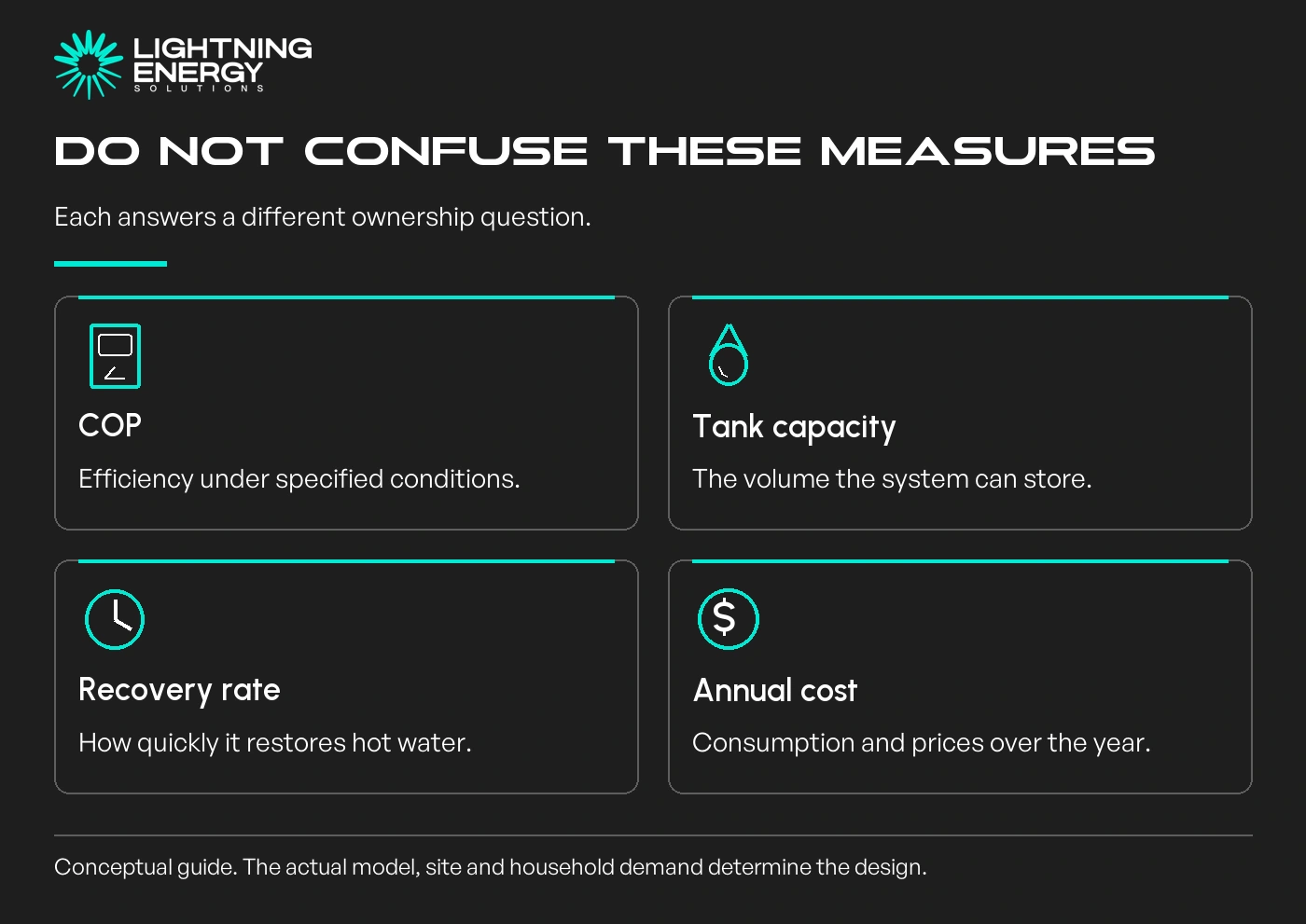
An efficient model still needs enough storage and recovery capacity for the household. A family’s consecutive showers can create a different design requirement from the same volume spread across the day.
Solar Victoria’s current product requirements recommend matching heat pumps to local climatic conditions. Ask for the selected model’s operating range and useful cold-condition performance information.
Solar Victoria climate requirements.
Include noise, installation requirements and service support in the decision. Paying more for a headline COP that cannot be compared fairly is not a sound way to select the whole installation.
Ask: “Can you compare these models under equivalent conditions and show how that informs our household estimate?” A clear answer is more helpful than another enlarged efficiency badge.
If comparable data is unavailable, make that uncertainty visible. You can still assess documented capacity, installation scope and support, without claiming an efficiency winner that the evidence cannot establish.
Send us the model documents and your hot water requirements. We can help distinguish a useful technical comparison from a number that looks impressive on its own.
Available times
Book a consultation and we'll map solar, storage, hot water, and the rebates around your bills and your goals.
Question 1 of 6