
Heat pump maintenance: what homeowners can check
Check visible airflow, drainage and operating changes around your heat pump, while leaving plumbing, electrical and refrigerant work to qualified people.
Check visible airflow, drainage and operating changes around your heat pump, while leaving plumbing, electrical and refrigerant work to qualified people.

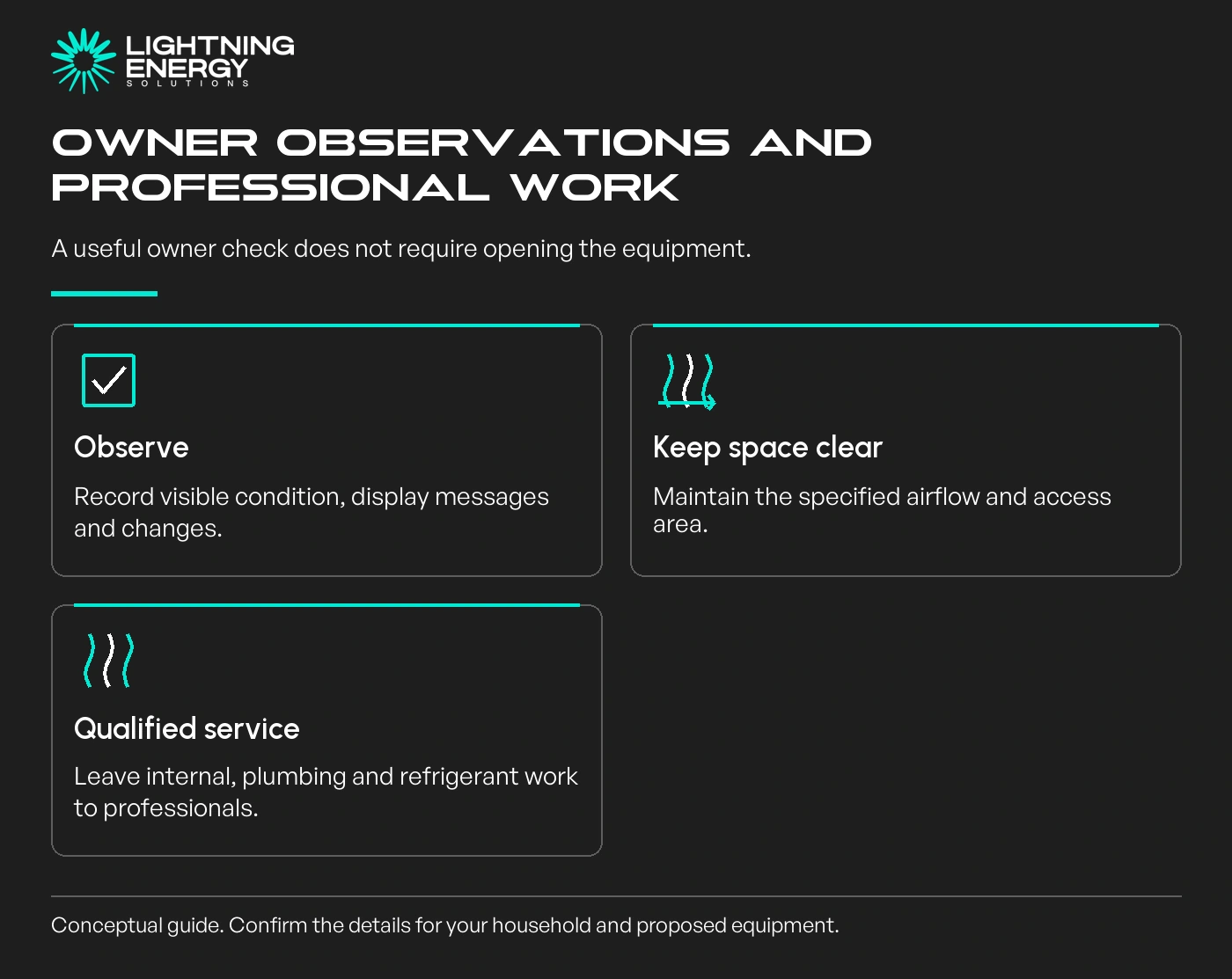
Homeowner maintenance starts with looking, recording and keeping the surrounding space clear. Opening the cabinet, altering plumbing or handling refrigerant belongs with the appropriate qualified technician.
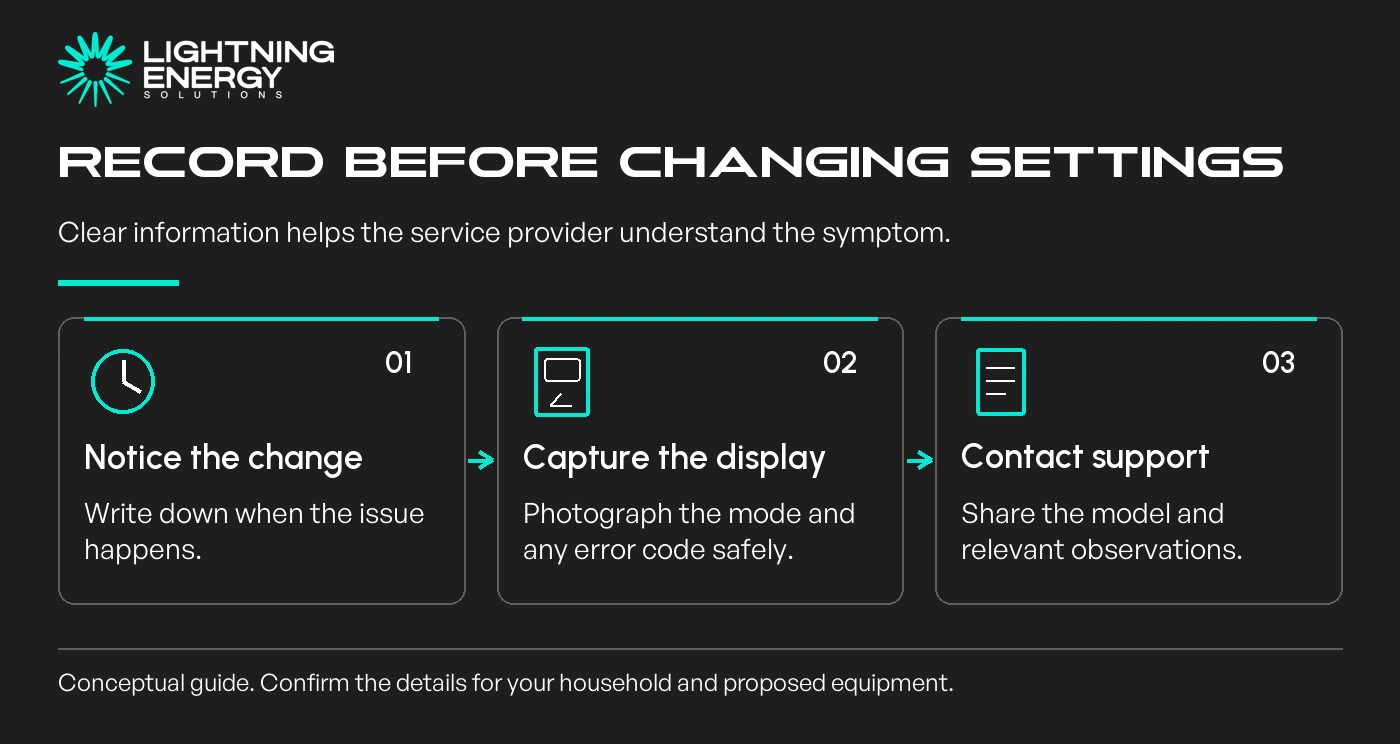
Your own checks can still be useful. A photo of an error message, the time hot water ran out and a clear description of a change can make a service call much more productive.
Check that garden growth, stored boxes or a new screen have not obstructed the air inlet, outlet or servicing space. Use the required clearances in your model's installation instructions.
Do not add a decorative enclosure to hide the unit without checking the design. A space that looks open from the footpath may still interfere with airflow or technician access.
The iStore owner manual, for example, directs owners to monitor obstructions and condensate drainage, while assigning scheduled servicing to a licensed tradesperson.
iStore 270L R290 owner manual, December 2025.
Some water discharge can occur during normal operation, but an unfamiliar leak still deserves attention. Note where it comes from, when it occurs and whether it has changed, without touching hot outlets or dismantling drains.
Photograph visible corrosion, damaged insulation or pooled water from a safe position. Send the images to the installer or service provider rather than guessing which internal component has failed.
Relief valves have model-specific checking instructions and can discharge scalding water. Ask the installer to demonstrate any owner task and explain when a plumber should do it instead.
Record the displayed mode, clock, error code and any recent outage or settings change. A heater waiting for its programmed start time is a different problem from one that tries to heat and repeatedly faults.
Our solar timer guide helps with scheduling questions. Preserve the manufacturer's hygiene, temperature and protection functions while checking how the operating window was intended to work.
The Victorian plumbing regulator explains that safe delivery temperature and stored-water hygiene have different purposes. Do not try to cure a hot-water complaint by improvising changes to safety controls.
Victorian hot-water safety guidance.
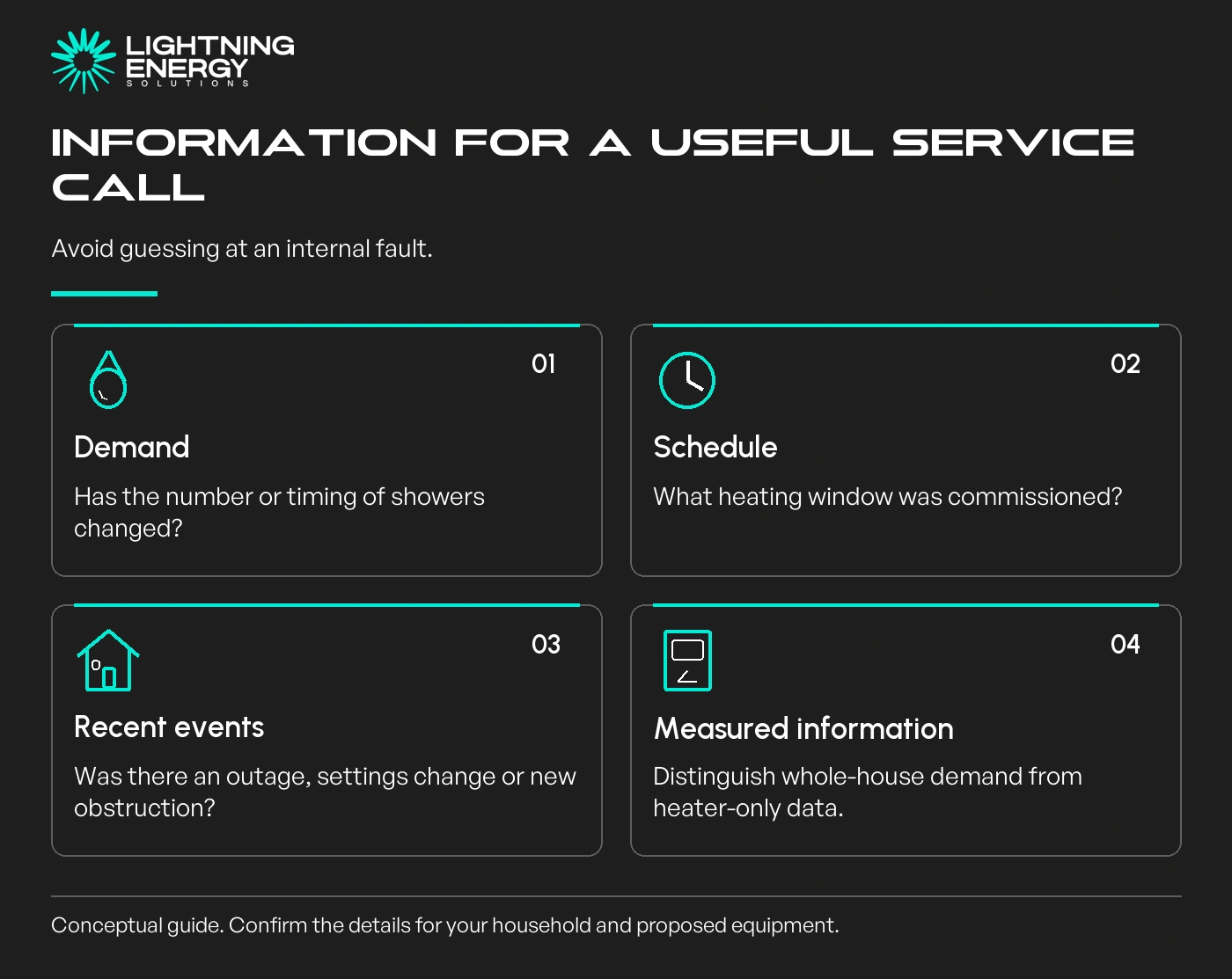
Imagine a system that normally serves two adults, then runs short while visitors stay. Record the extra showers and heating window before concluding that the compressor needs replacement.
Conversely, repeated shortages with unchanged use, a new persistent noise or repeated faults deserve a professional assessment. A larger electricity bill alone does not identify the cause.
If you have solar monitoring, useful timestamps can show when household demand changed. Unless the water heater is separately measured, the whole-house graph cannot prove its individual consumption.
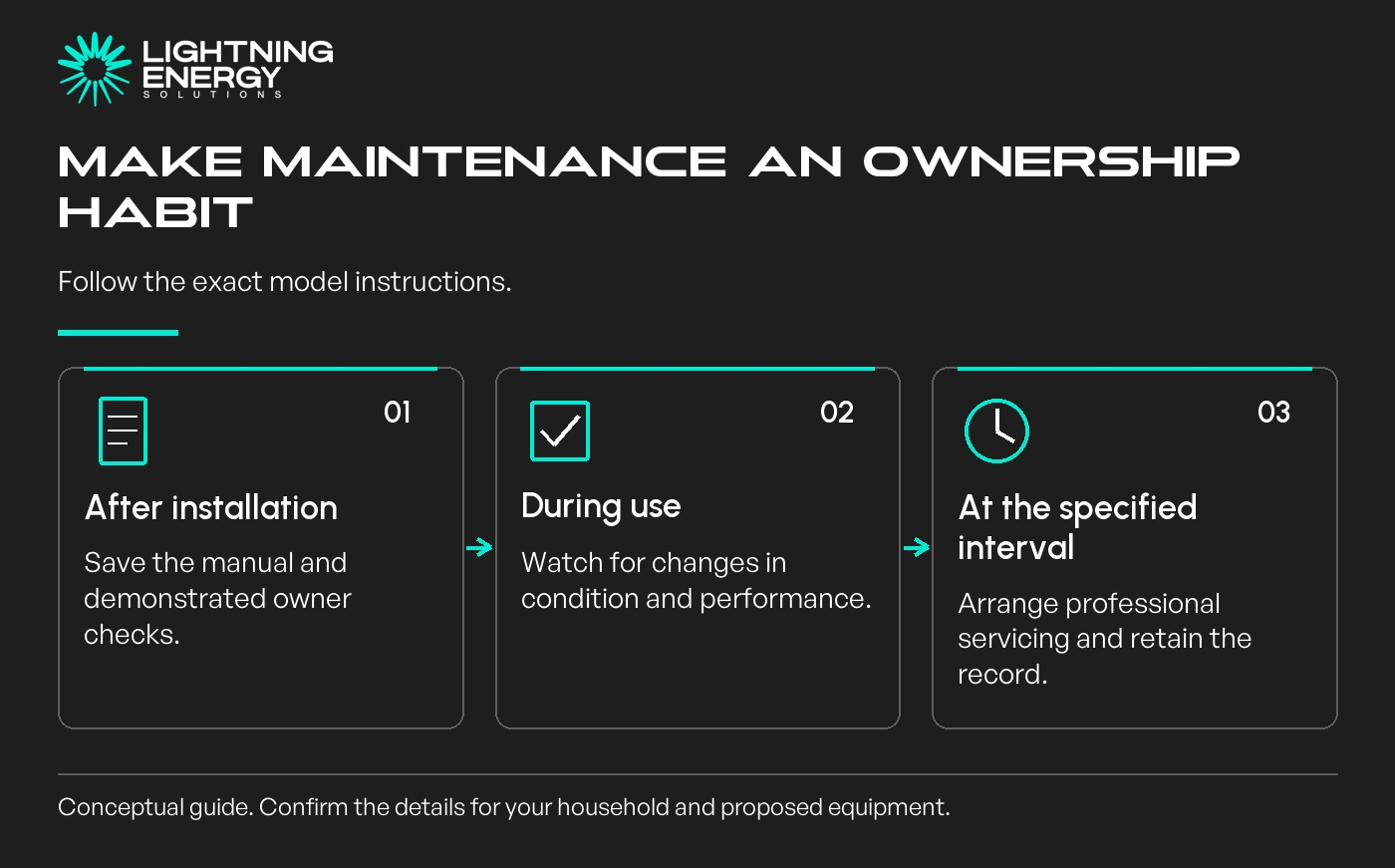
Use the exact manual to find the service schedule, including any anode requirement. Ask what the visit covers and whether additional plumbing or electrical work would need separate approval.
Routine observations do not replace that schedule. Equally, avoid buying a maintenance package based only on a generic 'every heat pump needs this annually' claim; compare it with your model's instructions.
Keep invoices and the installer's handover documents together. If the house changes owners, those records help the next household establish what has been done.
Seek prompt professional advice for visible damage, significant leaking or repeated faults. For immediate danger, keep people clear and use the appropriate emergency service rather than continuing a checklist.
When comparing replacement heat pump options, include accessible servicing in the design. A working unit that merely needs an appropriate service does not automatically need replacing.
Plan your hot water upgradeTell us the model, symptoms and any displayed fault code. We can help direct the enquiry and discuss servicing or replacement only after the issue is understood.Available times
Book a consultation and we'll map solar, storage, hot water, and the rebates around your bills and your goals.
Question 1 of 6
