
Already Have a Solar or Battery Quote in Sydney? Check Loan and Discount Timing
Already have a Sydney solar or battery quote? Check Home Energy Saver application order, approved suppliers, deposits and finance conditions before installation.
Already have a Sydney solar or battery quote? Check Home Energy Saver application order, approved suppliers, deposits and finance conditions before installation.

An existing solar or battery quote does not automatically become eligible for every NSW discount or loan. If you want to use Home Energy Saver, the application route and the order of approvals matter.
Before paying more or booking installation, identify which support you intend to use and ask its provider to confirm the process. A quoted saving is not the same as an approved application.
Rules and sources checked on 22 November 2026. This guide explains the decision process; eligibility and the final installation scope need to be confirmed for your property.
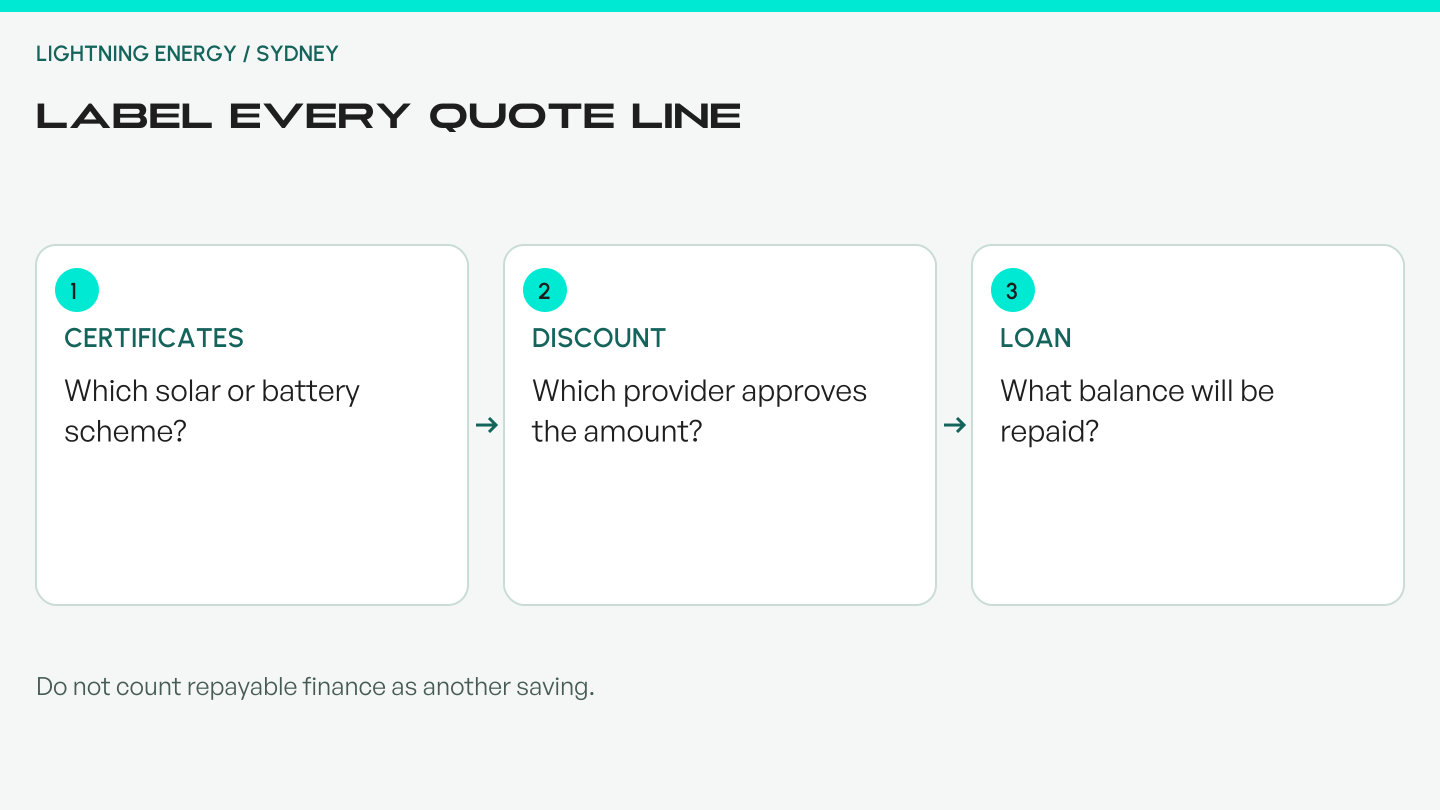
Highlight each line described as a rebate, discount, credit or loan. Ask the retailer to name the scheme behind it and explain whether the amount is confirmed, estimated or conditional.
Federal solar or battery certificate support is different from the NSW Home Energy Saver discount. A VPP joining payment is another separate offer, with its own timing and conditions.
Finance is not an additional reduction in the equipment price. It changes how an eligible balance is paid and creates repayment obligations.
For a Sydney combined-system quote, ask for the equipment price, each incentive, any cash contribution and the proposed financed amount. These figures should reconcile without counting the same benefit twice.
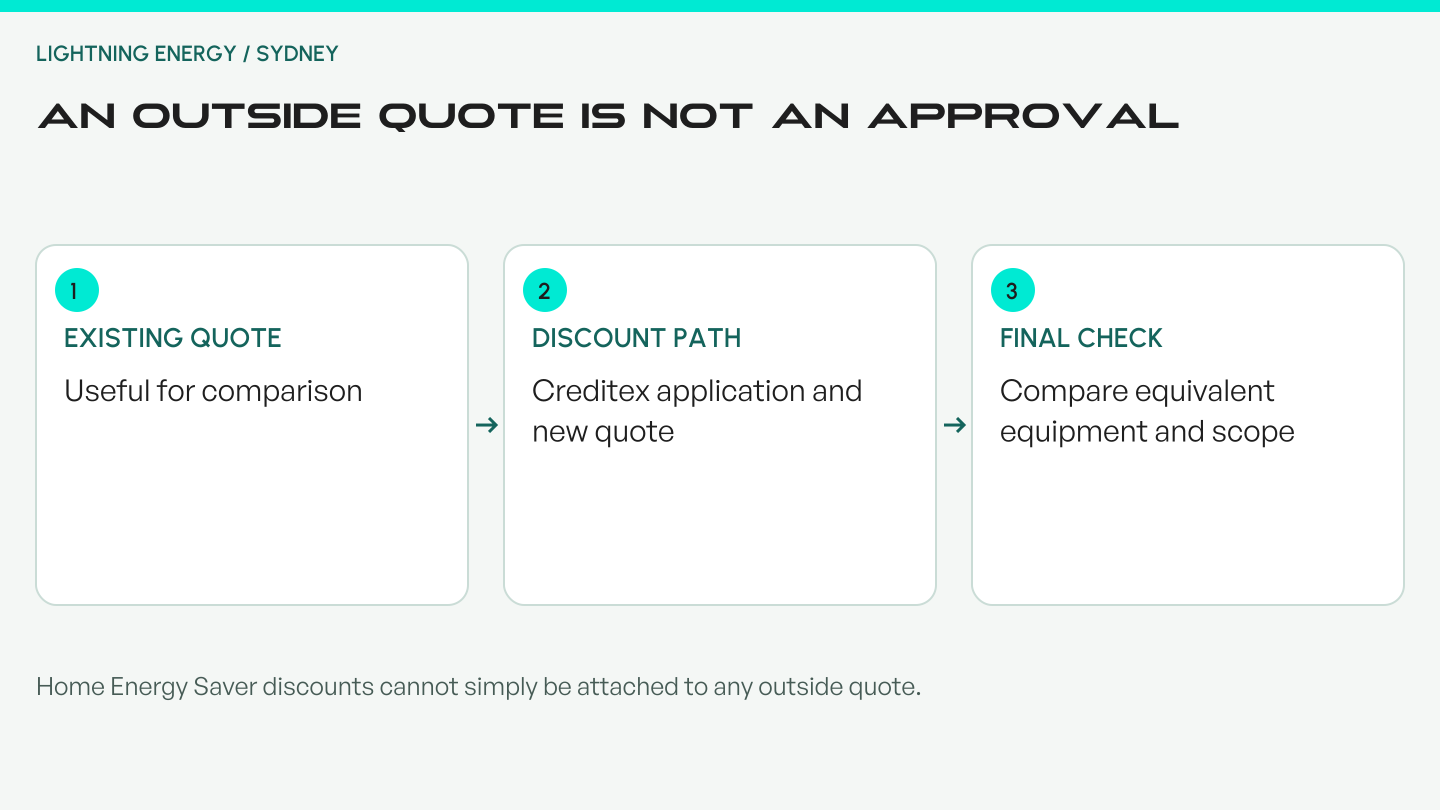
The NSW discount page says the discount is available through Creditex and cannot simply be applied to a quote obtained outside that process.
A new quote is supplied through its application pathway.
If you already have a retailer quote, use it as a comparison document. Do not assume the chosen equipment, installer or price transfers unchanged to the discount pathway.
Compare the final scope carefully: model numbers, battery capacity, backup, electrical work, removal and warranties. Two quotes with different scopes cannot be compared only by their net totals.
Ask Creditex to confirm eligibility and the required assessment before treating the maximum advertised discount as part of your budget. The final system still needs to suit the property.
For the same purchase, the program requires the discount application first. The remaining eligible balance may then be financed if the relevant borrower and project receive loan approval.
Applying for the loan first does not let you retrospectively add the Home Energy Saver discount to that same purchase. The official guidance distinguishes a separate upgrade as a different possibility.
The loan guidelines and finance-provider requirements still apply.
Check who is borrowing, which supplier is accepted and which items are eligible.
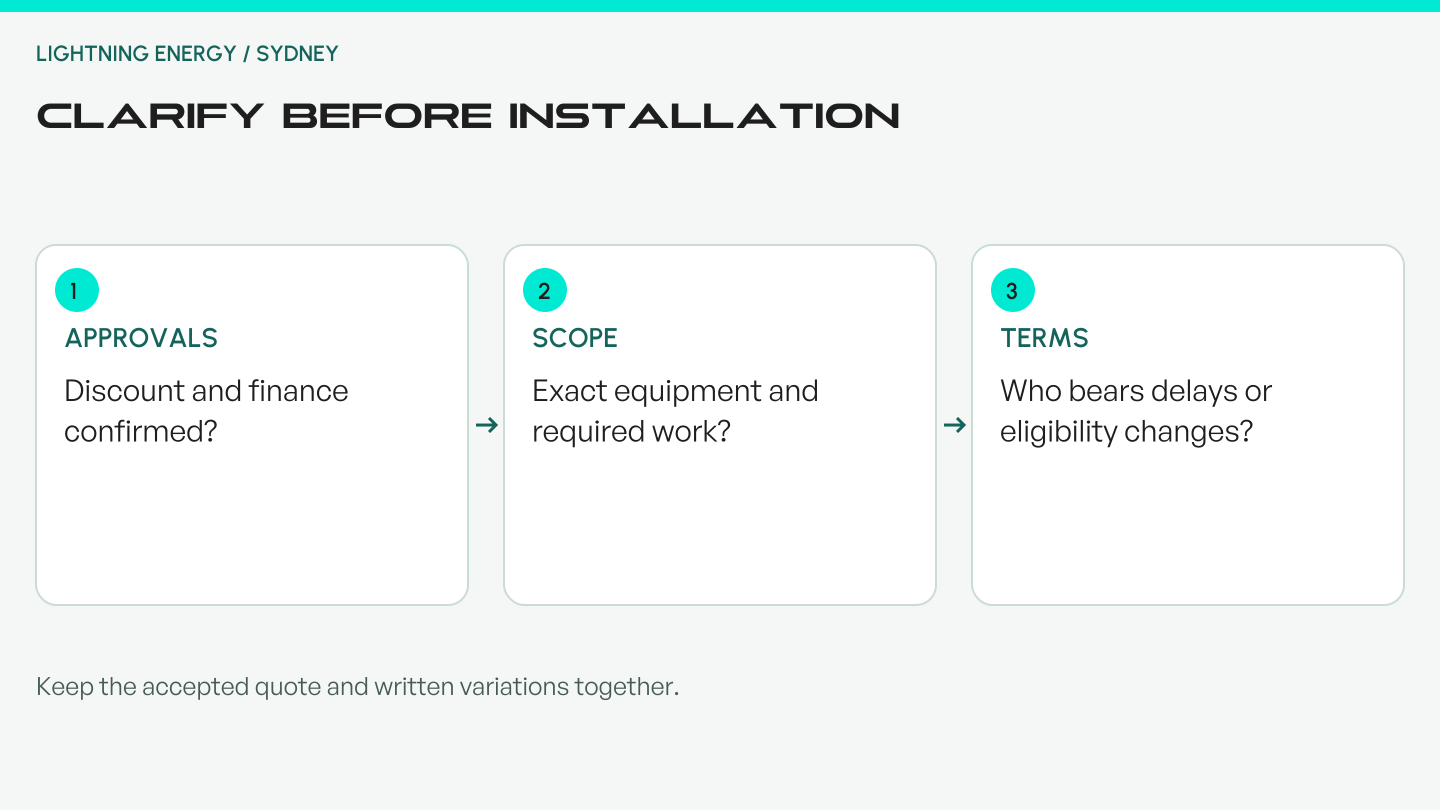
Do not let an installation booking outrun the approvals. Ask for a written sequence showing application, assessment, final quote, finance approval and installation.
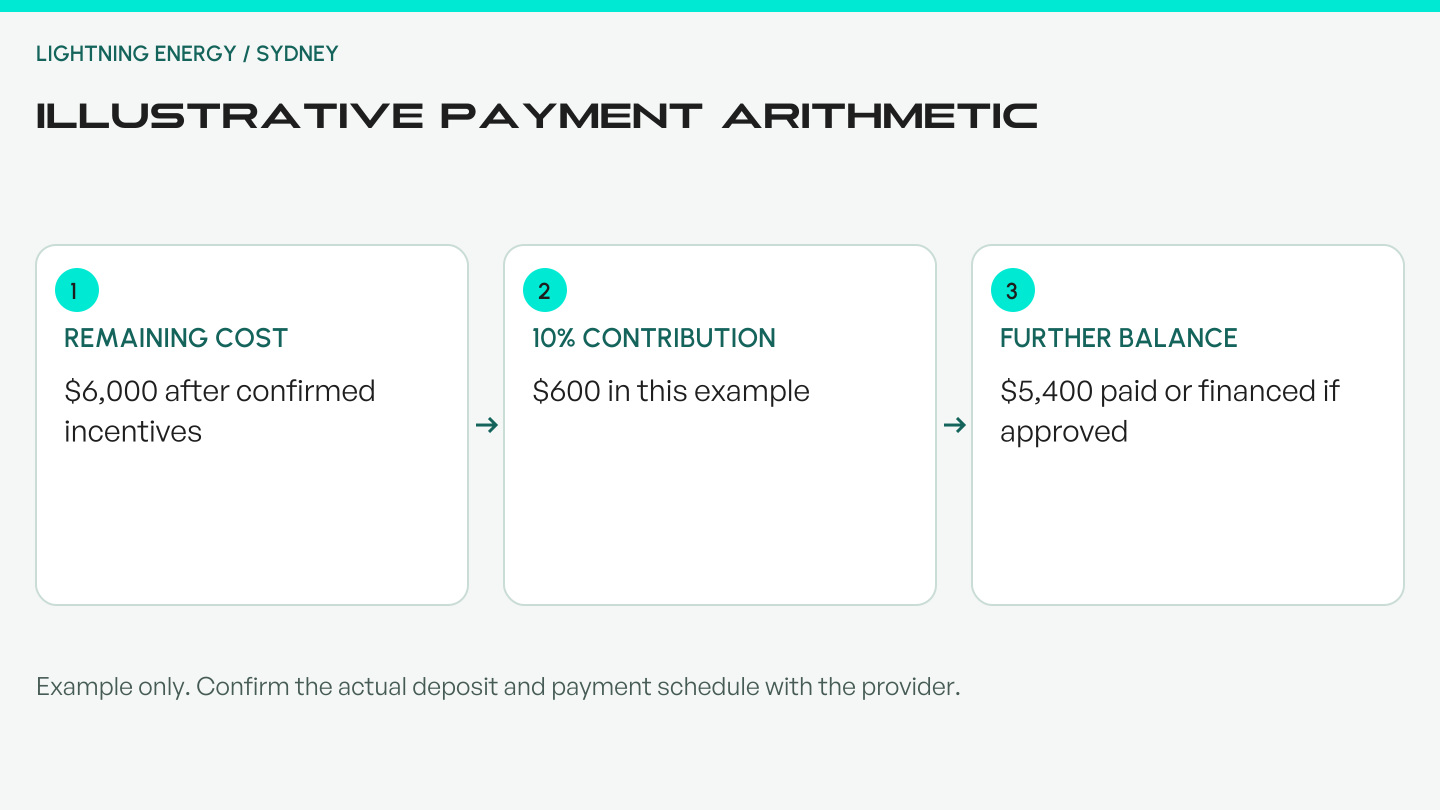
The discount process includes a deposit and a possible remaining balance. Ask the provider to explain the applicable contribution and payment stages for your final quote.
The published process describes a deposit based on the greater of $200 or 10% of the balance after discounts and incentives.
The exact amount must come from the provider’s confirmed calculation.
For an illustrative $6,000 remaining balance, 10% is $600. If the provider accepts that contribution, a further $5,400 remains to be paid or financed subject to approval. This is arithmetic, not a system quote.
If you have already signed another installation contract, review its cancellation and variation terms before changing providers. Do not assume a new program application cancels the original agreement or guarantees a refund.
The lender assesses the borrower and eligible finance scope. The installer and certificate agent check the relevant installation-incentive requirements. One approval does not replace the other.
Brighte’s Home Energy Saver page identifies approved installation and credit requirements.
Ask the provider directly if your existing retailer is part of its accepted supplier network.
For federal certificates, confirm the installation-date assumptions and the equipment actually being supplied. A deposit should not be described as fixing every future incentive rule.
Keep a price-variation clause visible. It should be clear who bears any difference if installation timing, eligibility or equipment changes.
Ask: which amounts are confirmed, which provider approves them, whether my current supplier is accepted, what I must pay before installation, and what happens if finance or the discount is declined.
Attach the current quote and request an itemised response. Record any revised equipment or scope in an updated contract rather than relying on a phone conversation.
The goal is a clean chain from application to installation, with one understandable total. That is more useful than adding several headline benefits together and hoping they all apply later.
No. The Home Energy Saver discount uses the Creditex application and quote process. An outside quote is not automatically eligible for that discount.
Not to the same purchase under the current program sequence. If combining both, apply for the discount first and then obtain approval for the eligible loan-funded balance.
Current Home Energy Saver loan eligibility.
NSW solar, battery and VPP support.
Installation-date effects on the federal discount.
Home Energy Saver discount application and quote rules.
November Home Energy Saver loan guidelines.
Brighte supplier and credit requirements.
Cover: existing Lightning Energy website photography, used as installation or home-energy context. The pictured property is not claimed to be in the suburb discussed or to have received a particular incentive.
Diagrams are conceptual guides.
Available times
Book a consultation and we'll map solar, storage, hot water, and the rebates around your bills and your goals.
Question 1 of 6
