
Heat pump noise ratings: making sense of decibels and distance
Compare heat-pump noise figures fairly by checking sound power, sound pressure, distance and operating mode, then assess the actual location at your home.
Compare heat-pump noise figures fairly by checking sound power, sound pressure, distance and operating mode, then assess the actual location at your home.

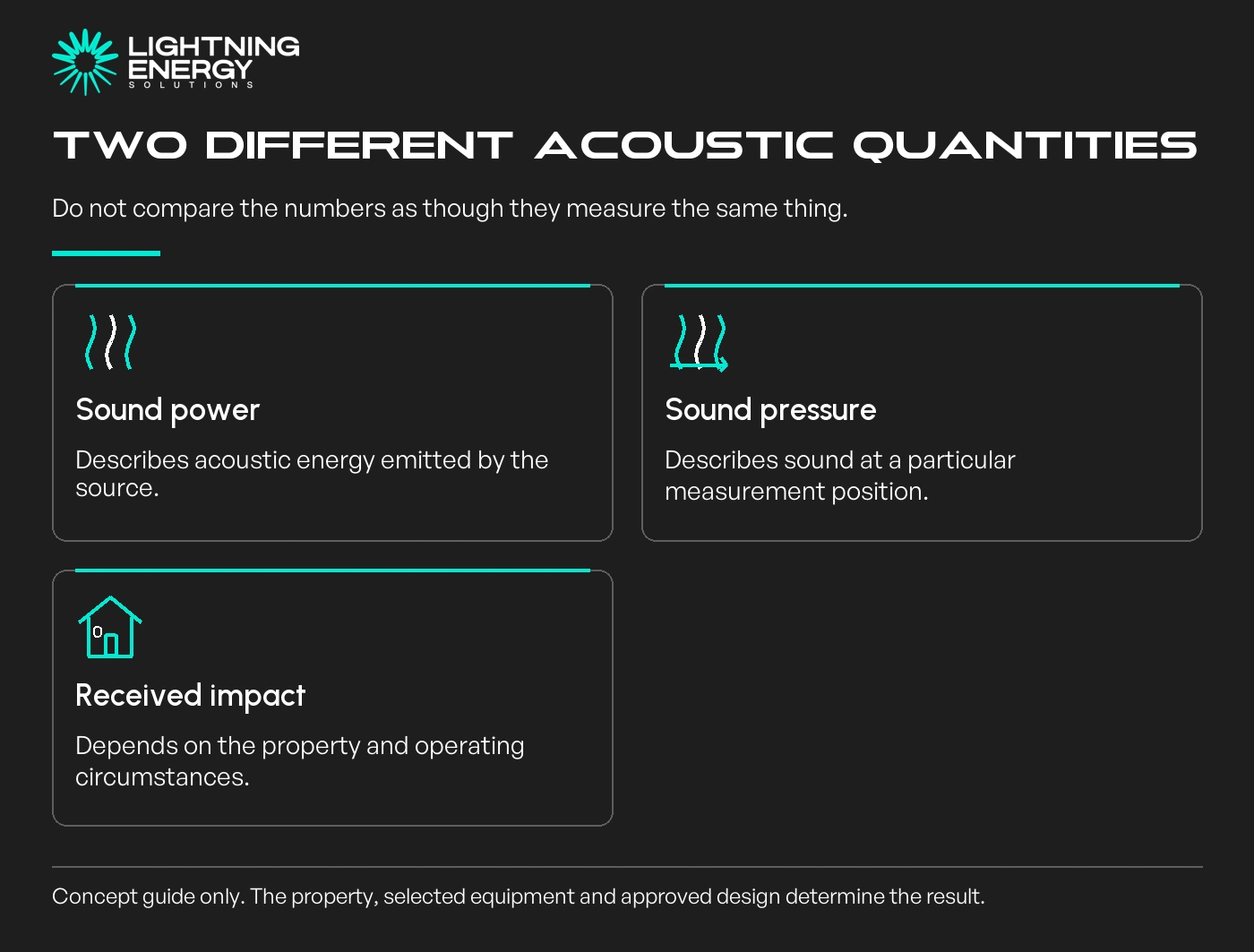
A heat-pump decibel figure is only useful when you know what was measured and under which conditions. Sound power and sound pressure are different quantities, even when both are expressed in decibels.
Do not rank two hot-water systems by the smallest number in their brochures until the measurement type, distance and operating mode match.
Sound power level describes acoustic energy emitted by equipment. It can help characterise the source for a properly prepared noise assessment.
Sound pressure describes the sound at a measurement position. Distance, the surroundings and measurement conditions influence the result at that position.
Daikin Australia's acoustic explanation distinguishes these measures.
The underlying distinction applies when reading heat-pump specifications, although the cited page discusses air-conditioning equipment.
A sound-power number is not directly comparable with a sound-pressure number measured some distance away. One is not inherently a worse product merely because its differently defined number is higher.
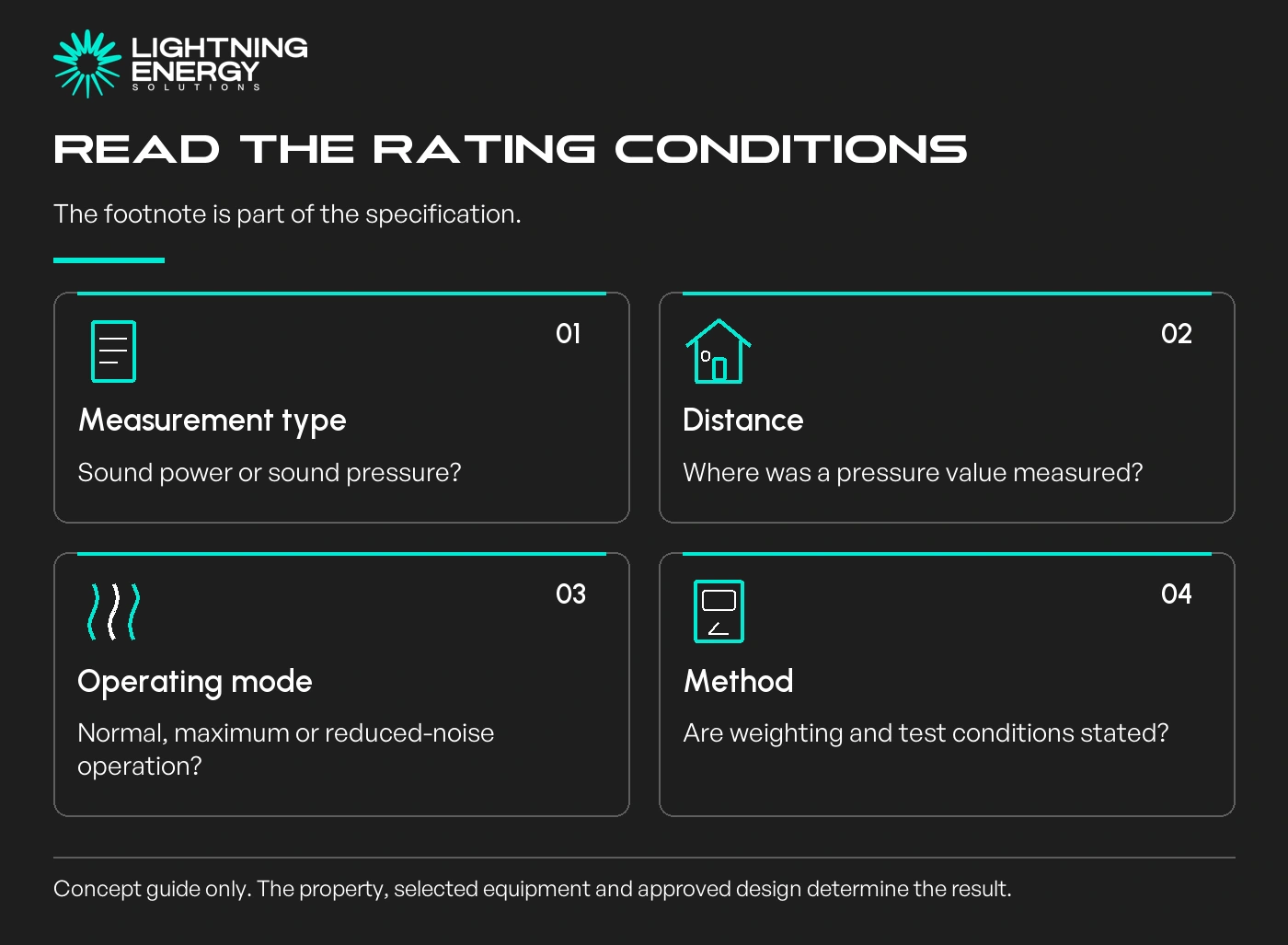
Ask whether the figure is A-weighted, the measurement type and the stated operating mode. Where sound pressure is quoted, identify the distance and test conditions.
Sanden's specifications, for example, state a measurement distance for the GAU-A45HPD operating-noise figure.
That location is part of the published information, not a predicted bedroom noise level.
For heat-pump comparisons, request equivalent data from each supplier. If one figure lacks a measurement basis, mark it as incomplete rather than assuming a favourable interpretation.
Also check whether a rating describes normal operation, maximum output or a special reduced-noise mode. Those conditions may have different implications for water-heating performance.
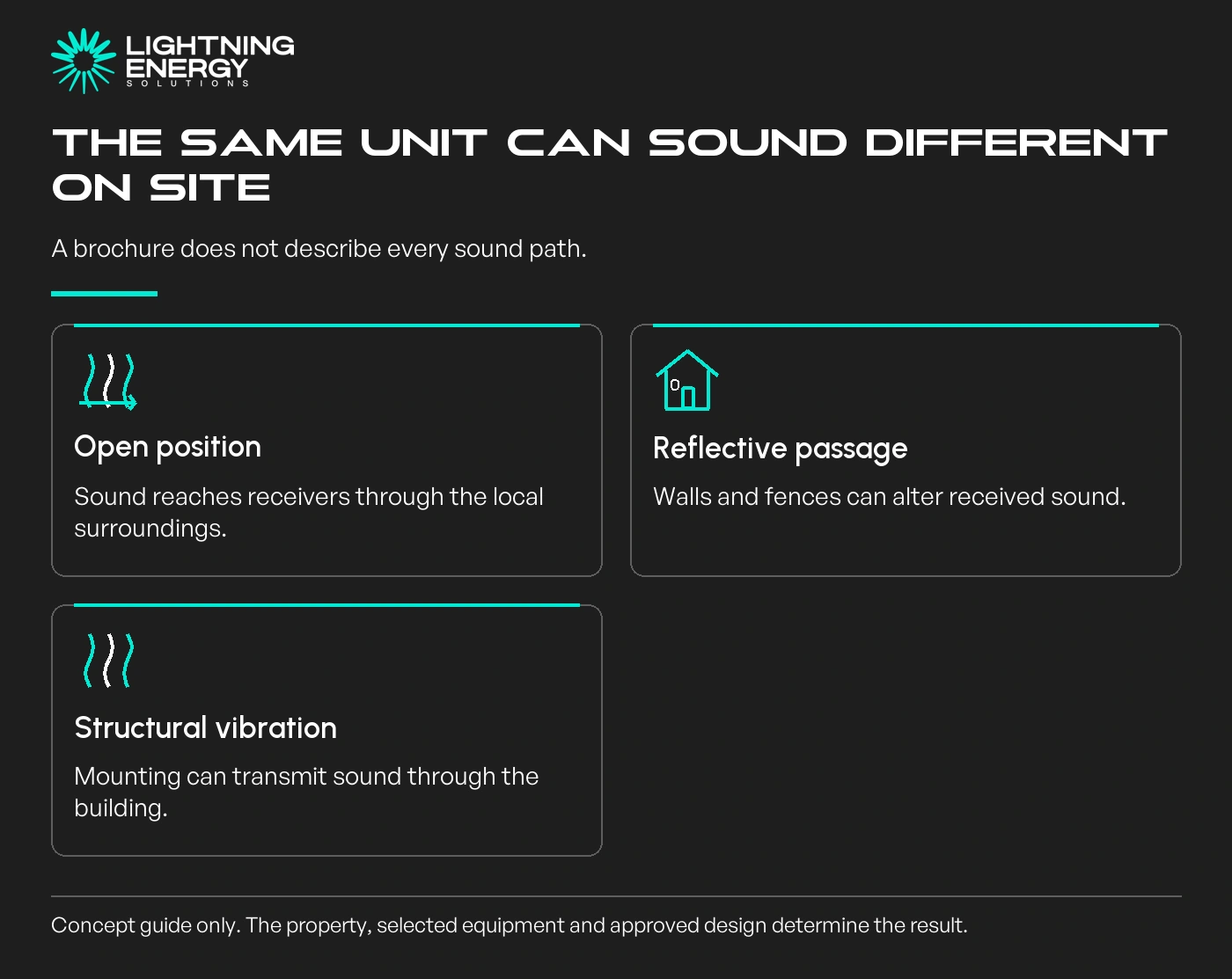
Distance generally matters, but nearby walls, fences, corners and reflective passages affect how sound reaches a room. A simple distance rule cannot establish the outcome for every installed location.
Mounting can also transmit vibration into a structure. That may create a disturbance different from the airborne noise described by a laboratory rating.
EPA's residential equipment guide considers sound character and the affected location.
It does not reduce every residential assessment to checking a manufacturer's advertised decibel number.
Imagine identical units installed in an open area and a narrow passage beside a bedroom. Their brochure specifications match, but the exposure experienced by residents can differ.
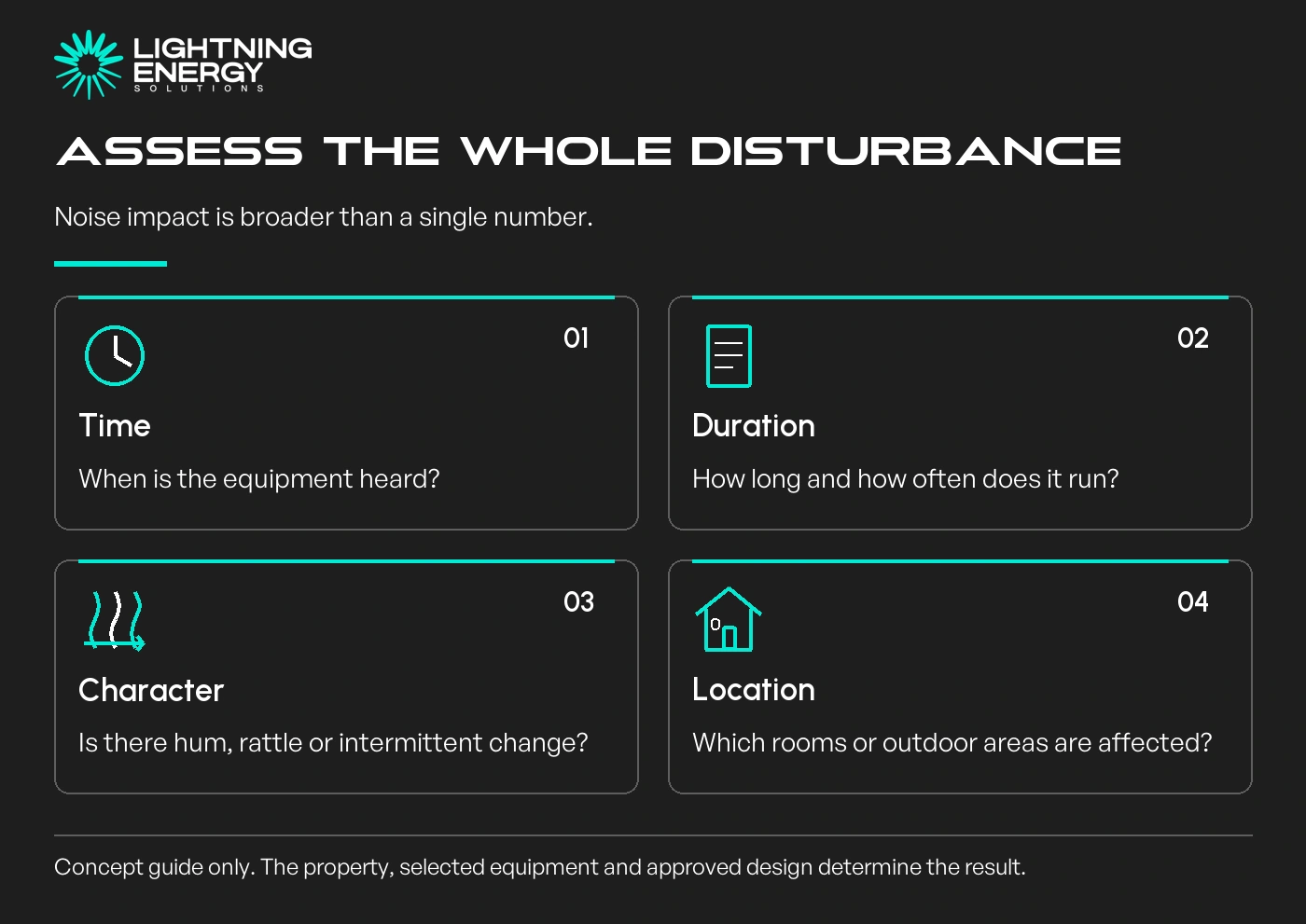
A noticeable hum during a quiet night can matter differently from the same equipment operating when normal daytime background sound is higher. Duration, repetition and tonal or rattling characteristics also matter.
Victorian residential noise guidance sets prohibited audible periods for specified equipment and recognises unreasonable noise at other times.
Ask the installer to consider actual operation, not just a daytime demonstration.
Our hot-water timer guide explains why timing can be useful but cannot override necessary safety functions. A schedule does not replace suitable siting.
If air-conditioning equipment shares the area, mention it during assessment. The relevant situation may involve several sources operating at once.
Request the exact acoustic datasheet, proposed position, operating modes and any planned mounting or treatment. Ask how the installer expects sound to reach nearby habitable rooms.
A phone recording can help communicate the character and timing of an existing concern, but it is not equivalent to a calibrated professional noise measurement or compliance assessment.
Do not buy a replacement solely because its brochure number is lower under different conditions. First establish whether the current concern is siting, vibration, maintenance, operation or the equipment itself.
Contact us with the model details and proposed location when comparing systems. A clear measurement basis and site assessment are more useful than an unsupported promise that a unit is “whisper quiet”.
Available times
Book a consultation and we'll map solar, storage, hot water, and the rebates around your bills and your goals.
Question 1 of 6