
Heat pump or home battery first?
Decide whether a heat pump or battery should come first by comparing appliance condition, solar surplus, remaining gas charges, backup needs and budget.
Decide whether a heat pump or battery should come first by comparing appliance condition, solar surplus, remaining gas charges, backup needs and budget.

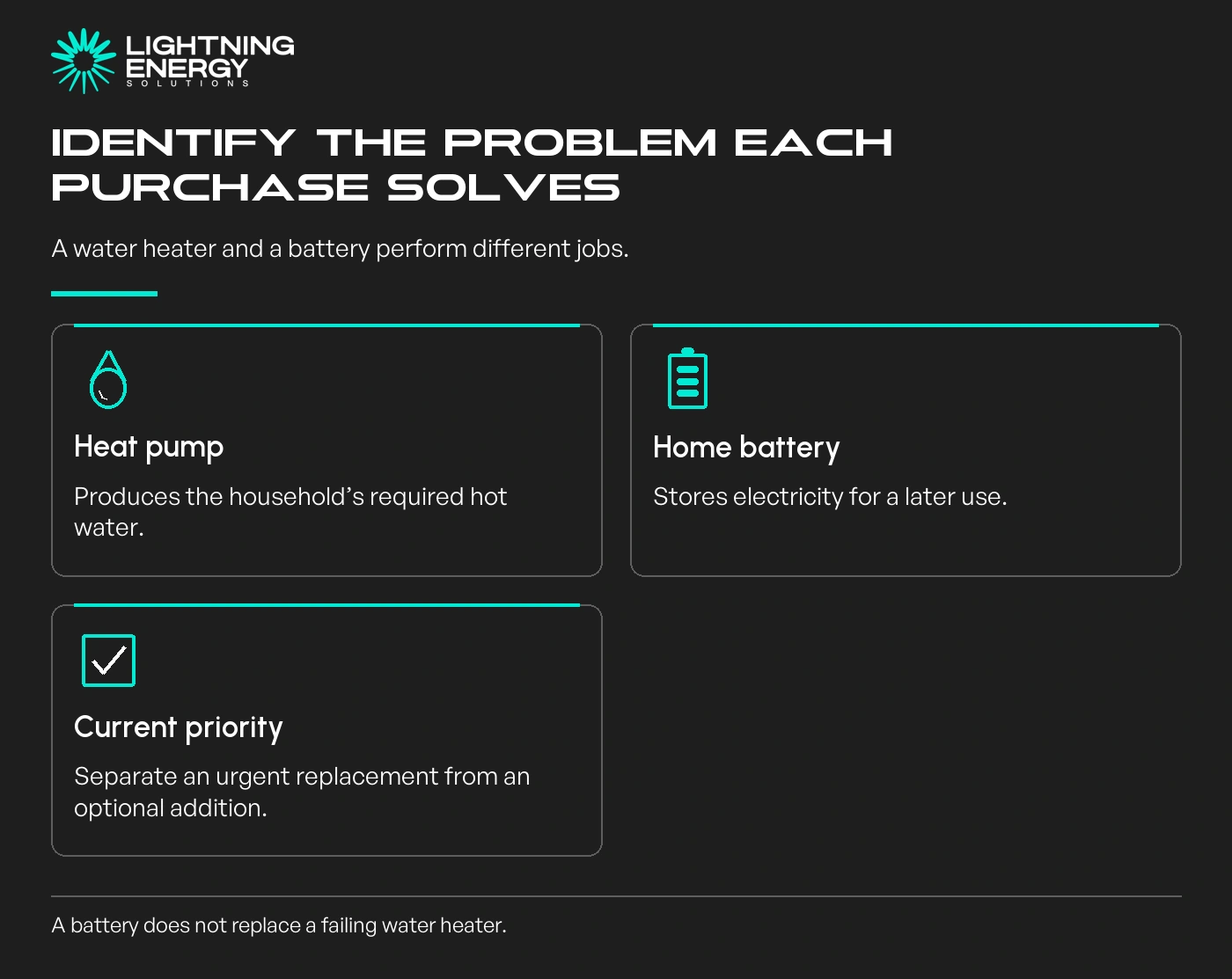
There is no universal rule that a home battery should come before heat pump hot water, or the other way around. They solve different problems and draw on the same household budget.
Start with the existing heater’s condition and your actual energy pattern. A reliable hot water replacement may be urgent; a battery purchase should answer a clearly identified storage or backup need.
Record the existing water heater’s age, condition and repair advice. If it is failing, compare practical replacement choices and the complete installation cost before treating the battery as the first priority.
A heat pump changes how hot water is produced. A battery stores electricity for later use; it does not replace the water heater or reduce the amount of heat the household needs.
The government’s hot water guidance explains the heat pump’s use of heat from the surrounding air.
For an illustrative family with a failing electric resistance heater, the replacement decision exists even if the rooftop solar system has no surplus. Solar is not a prerequisite for using a heat pump.
Review heat pump options against hot water demand and site conditions. If the existing heater remains suitable, its replacement can instead be considered as part of a planned budget.
Use monitoring to identify when electricity is exported and when the household imports. Distinguish a sunny summer afternoon from winter conditions when heating and other loads may be higher.
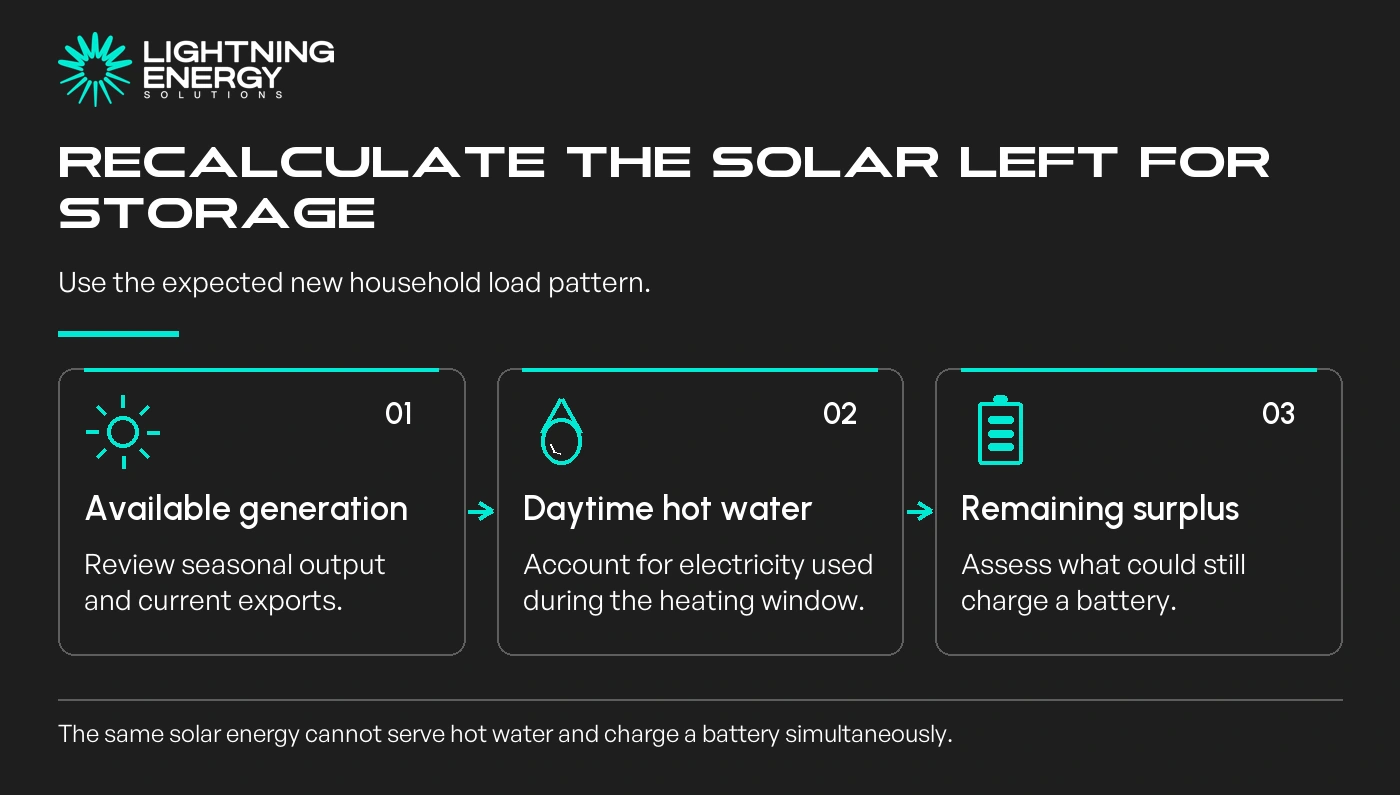
A daytime hot water schedule can use some solar directly. A battery can shift some remaining generation to later hours, but the two cannot both use the same surplus at once.
The government’s solar-use guidance recommends matching suitable household use with generation.
For illustration, suppose a home currently exports during the heat pump’s intended heating window. Model the new hot water load first, then assess the surplus left for battery charging.
Compare battery options using that revised pattern. Sizing from the old export total can overstate the energy that will remain available after electrification.
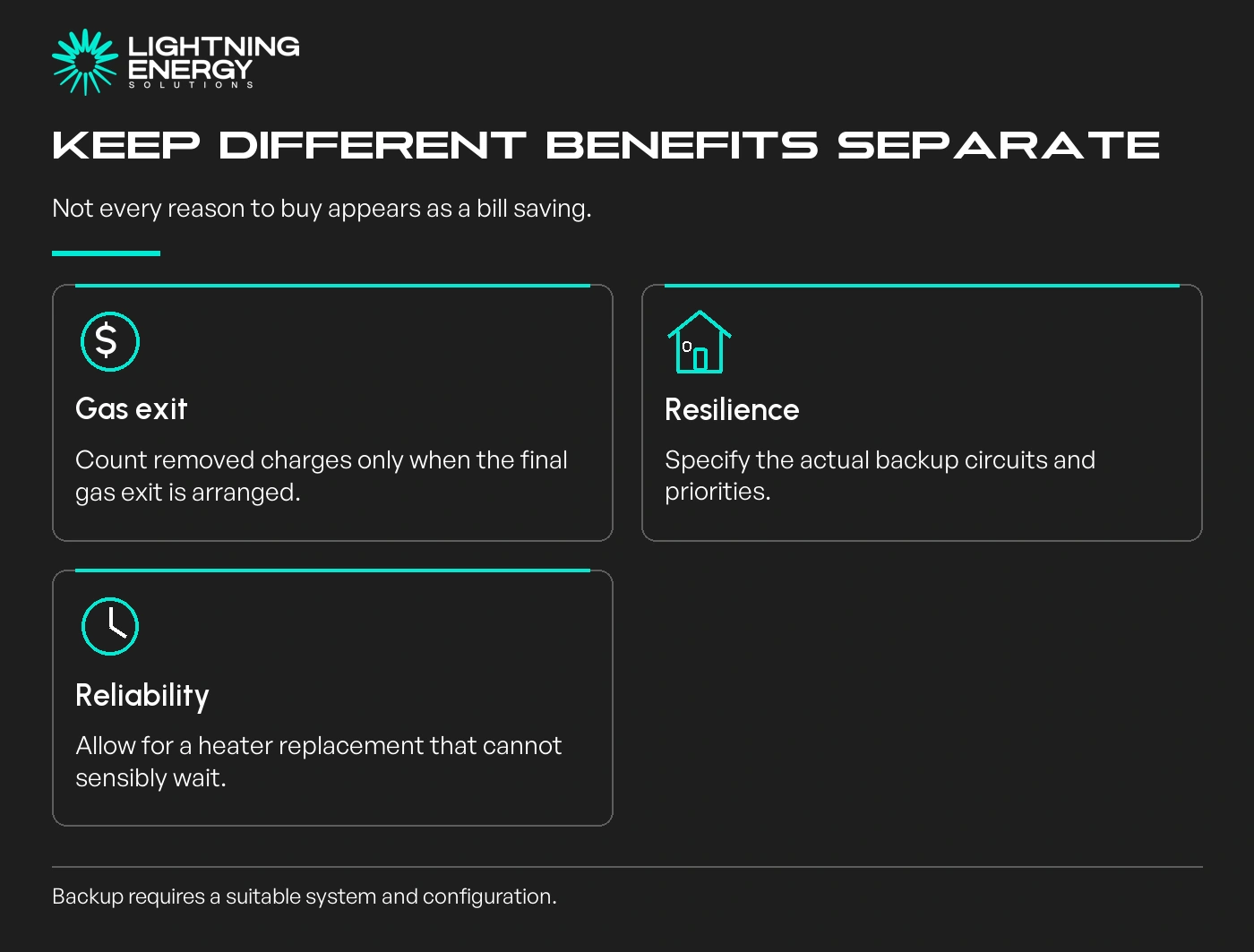
If hot water is the last gas appliance, replacement may allow the household to arrange a complete gas exit. If cooking or space heating remains on gas, do not credit the heat pump with removing the entire daily gas charge.
Review the whole-home transition, including the final account and connection process. Appliance removal alone does not settle that process.
A battery may have a resilience value beyond its bill savings, but outage supply requires the right equipment and configuration. Not all battery installations support every household circuit.
The government’s battery guide explains backup and storage limitations.
Keep those benefits distinct. It is reasonable to value essential backup, but a quotation should not present that personal value as a guaranteed annual cash saving.
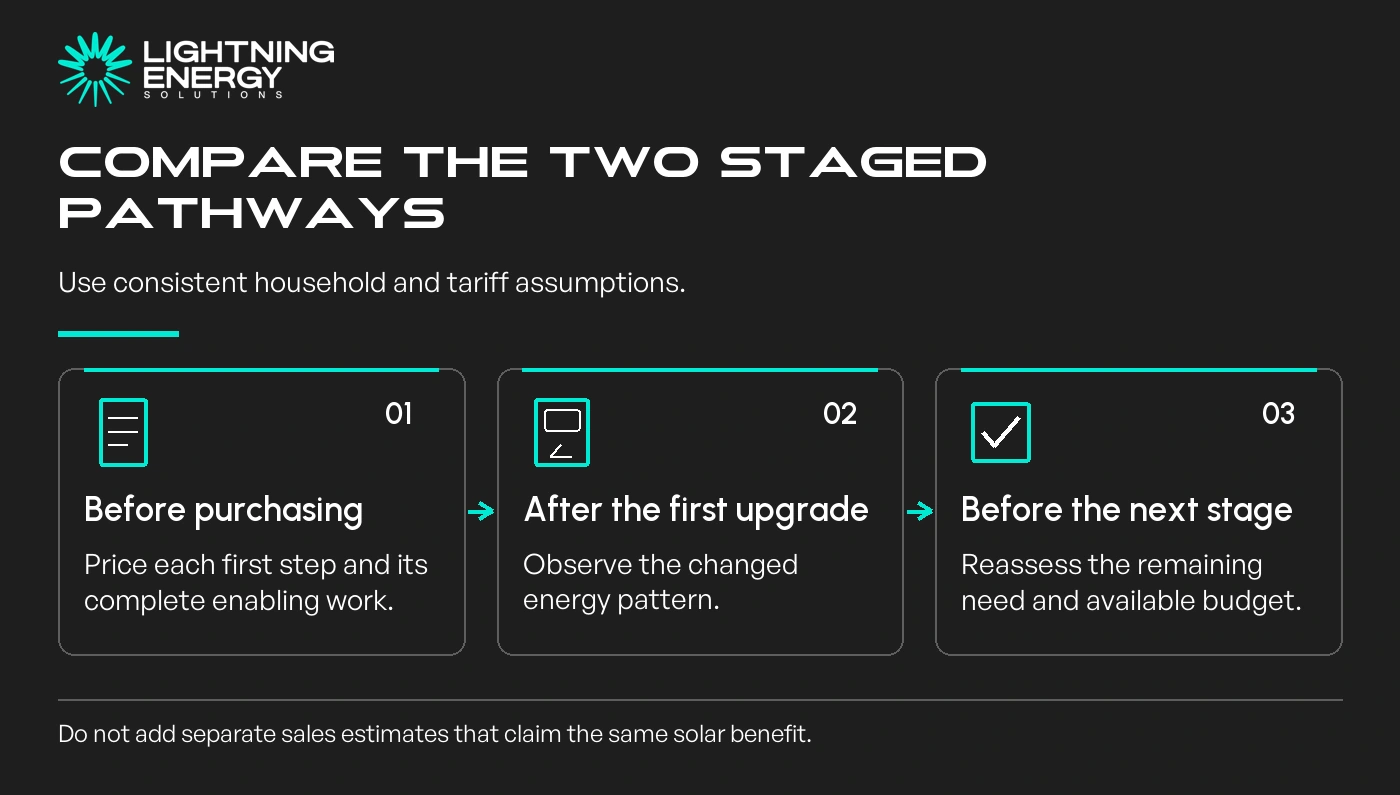
Request a heat-pump-first plan and a battery-first plan using the same tariffs, household demand and solar assumptions. Include installed costs, verified incentives, maintenance and any enabling work.
Show the second-stage effect in each case. The first purchase changes the load or energy available to the next one, so adding two independent sales estimates can double count savings.
Ask whether shared electrical assessment or coordinated trade visits reduce repeated work. Coordination can help even when the purchases happen months apart.
Do not drain the household’s contingency fund for a package whose extra capacity has no identified use. A staged decision can preserve room for an unexpected appliance failure or necessary switchboard work.
Choose the order that addresses the most important current need at an affordable total cost. Revisit the second purchase once the first upgrade’s actual operation is visible.
Bring heater details, bills and solar monitoring when you request a staged comparison. The useful question is what each first step changes for the household and the next purchase.
Available times
Book a consultation and we'll map solar, storage, hot water, and the rebates around your bills and your goals.
Question 1 of 6