
Heat pump running out of hot water: what to check first
If a heat pump runs short of hot water, record demand, timer settings and fault messages first. Separate a recovery problem from a plumbing or equipment fault.
If a heat pump runs short of hot water, record demand, timer settings and fault messages first. Separate a recovery problem from a plumbing or equipment fault.

When a heat-pump system runs out of useful hot water, start with what changed and when the shortage occurs. The cause may be demand, timing, a fault or water delivery, rather than a tank that is automatically too small.
Observe the controls and accessible information safely. Leave electrical, refrigerant and internal plumbing work to the appropriate qualified trades.
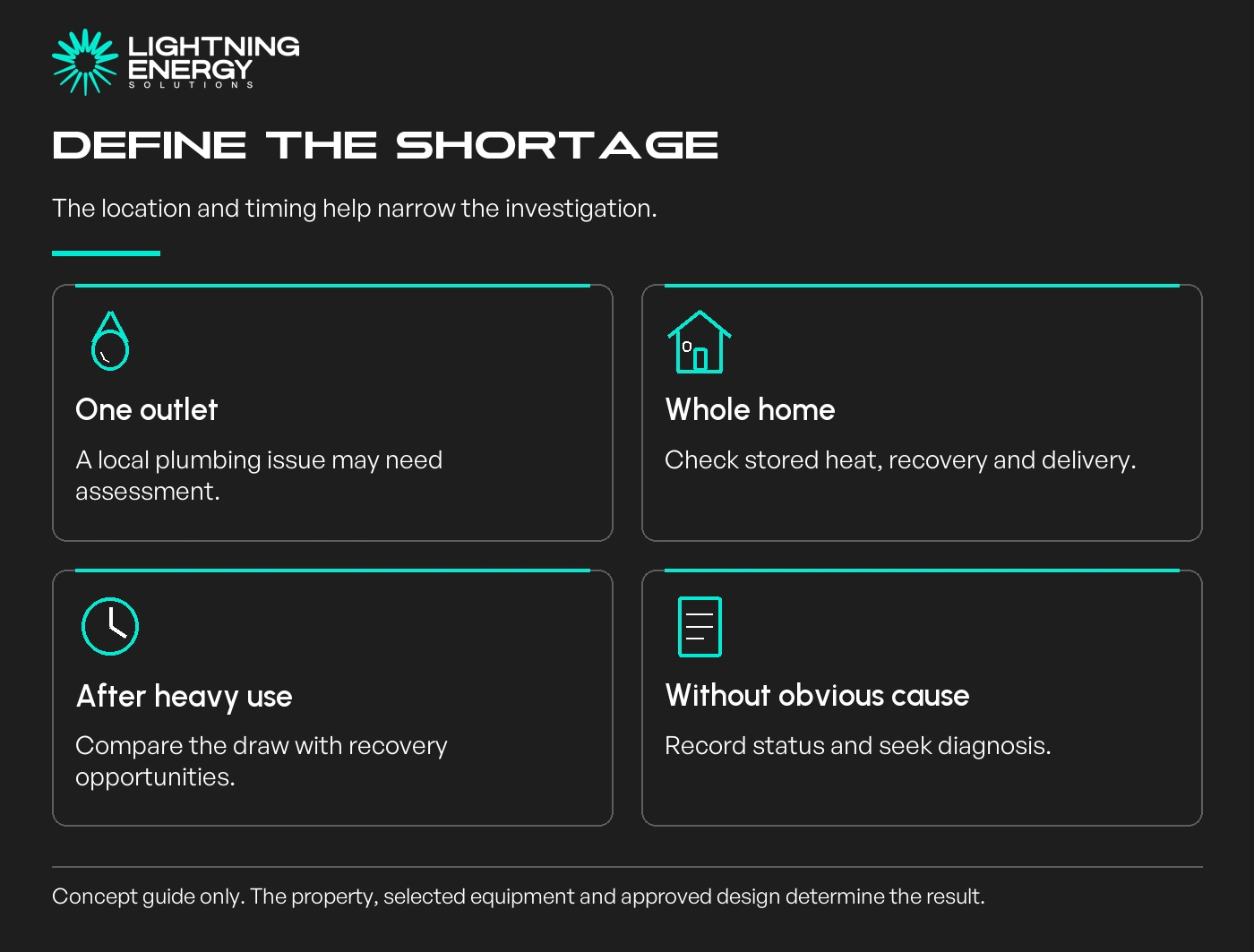
Does every hot tap become cooler, or only one shower? Does the problem follow several consecutive showers, appear first thing in the morning, or occur even after a normal heating cycle?
A problem limited to one outlet can require a different plumbing investigation from a whole-home shortage. Do not assume the compressor is responsible for every change in shower temperature.
Record visitors, longer showers, baths or other changed use. Our heat-pump service information gives the system context, but your actual demand pattern is the starting point for diagnosis.
Imagine the system worked well until two relatives stayed for a week. That is a useful clue about demand; it is not proof that a component failed on the day they arrived.
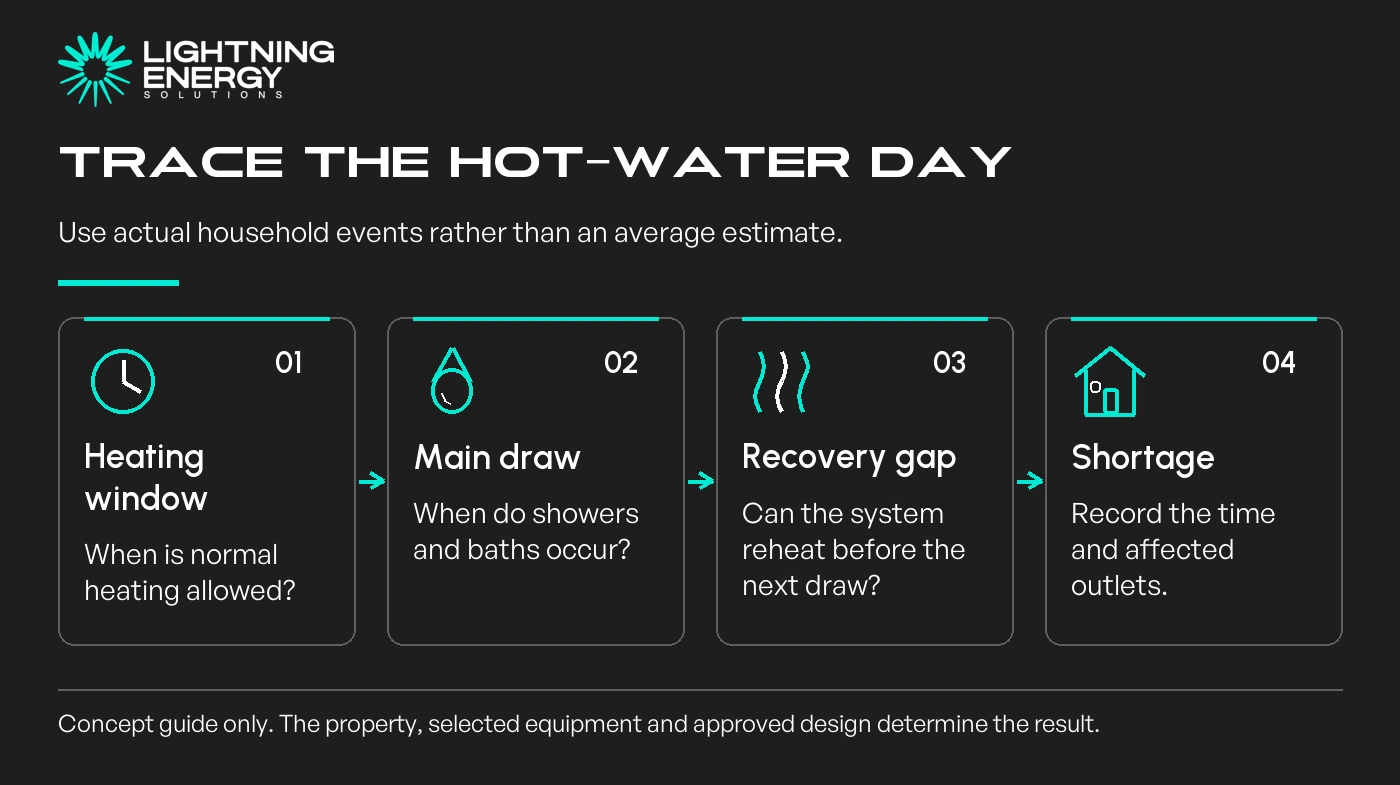
Read the current mode, clock and normal heating window using the owner's guide. Note whether a holiday setting, power interruption or recent adjustment changed the usual schedule.
A timer can prevent normal reheating until its next permitted period. If most water is drawn after the final heating window, the next morning depends heavily on what remained in storage.
Our hot-water timer guide explains why a summer schedule may need review in winter. Do not make unsupervised changes to hygiene or protective settings.
Solar Victoria's planning guidance discusses timing and boosting.
Use the specific manufacturer instructions to determine which owner adjustments are supported.
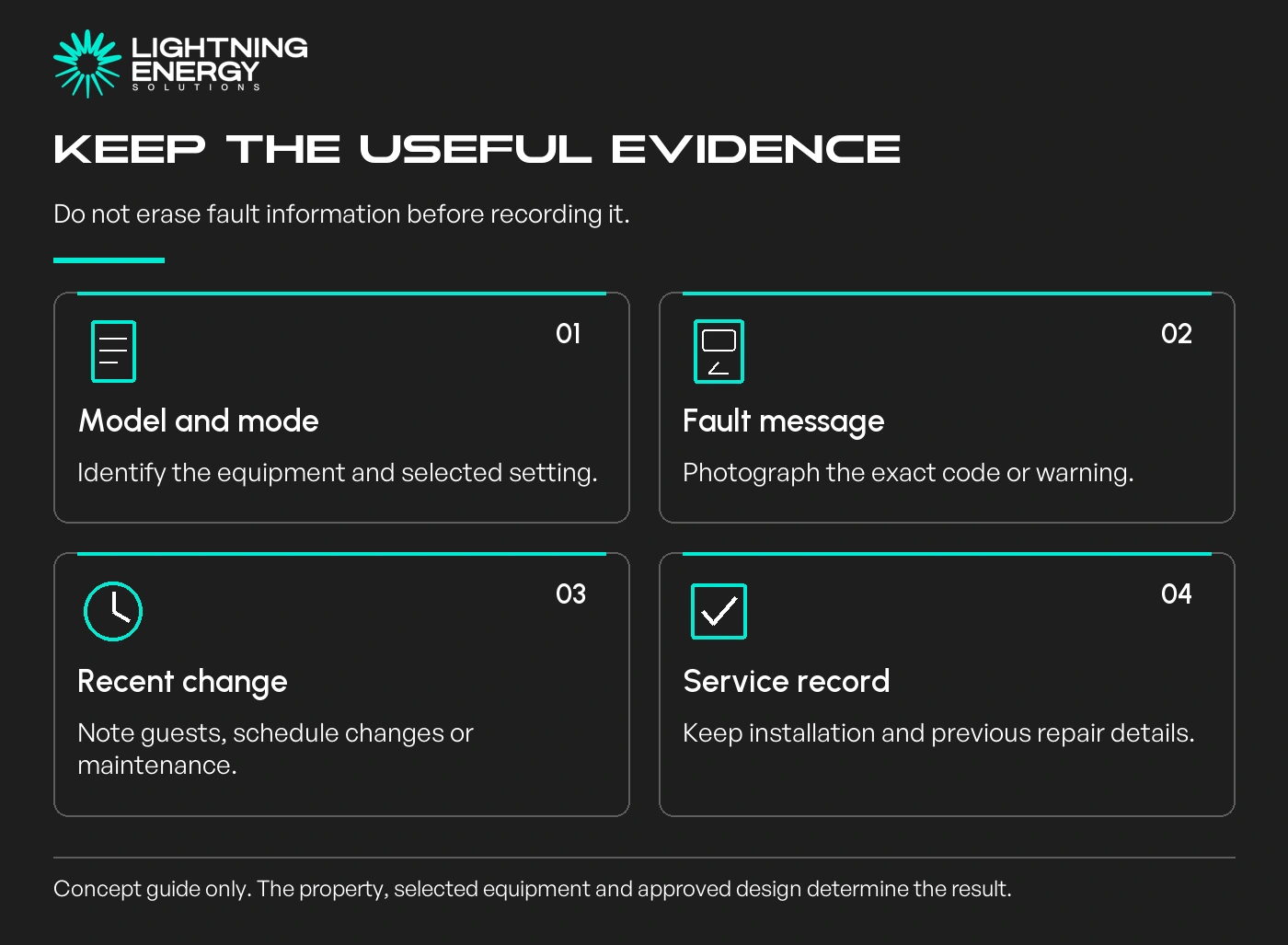
Photograph the displayed mode and any fault code. Note whether the compressor is operating, heating appears to complete, or the system repeatedly stops without restoring useful water.
Do not repeatedly clear a fault before recording it. A technician may need that information to identify a sensor, electrical, refrigerant or other equipment issue.
A tank display may show a temperature at one sensor, rather than a precise count of litres available for showers. Interpret the display according to the actual model's manual.
Haier's documentation, for example, distinguishes temperature bars from water volume on specified controllers.
Other products may use different displays or calculations.
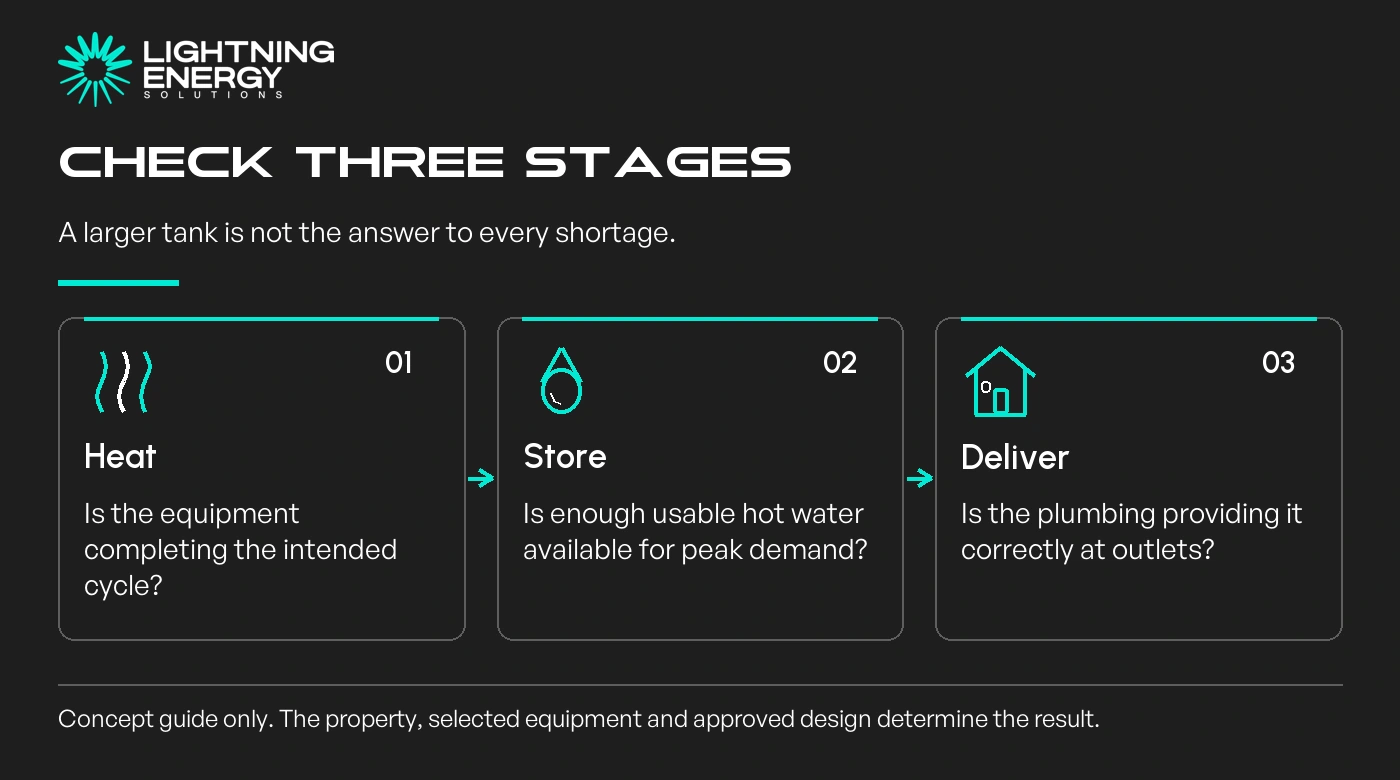
If there is no identified fault, compare the peak draw with usable stored hot water and the available recovery between uses. The tank's nominal capacity alone cannot answer that question.
Solar Victoria's sizing guide recommends considering the dwelling, demand and manufacturer guidance.
A simple headcount can miss unusually high-flow showers or clustered use.
Ask whether the unit was sized and commissioned for your current household. A changed family routine can expose a limitation without making the original installation defective.
Adding solar does not increase the tank's physical storage. It may help supply electricity during suitable heating periods, but it is not a direct remedy for insufficient recovery or a plumbing defect.
Prepare the model, installation date, current settings, shortage times and a short use diary. Include error photographs and any recent maintenance or electrical work.
Ask the installer to distinguish inadequate heating time, changed demand, delivery problems and equipment faults. A proposed larger tank should be supported by a sizing explanation rather than offered before basic checks.
If a supported boost option is needed temporarily, follow the model's owner instructions and advice from the installer. Do not treat repeated manual rescue as the permanent solution to an unexplained problem.
Contact our team with the record for assessment. Reliable hot water requires a system that heats, stores and delivers enough for the home; checking those three stages usually makes the next step clearer.
Available times
Book a consultation and we'll map solar, storage, hot water, and the rebates around your bills and your goals.
Question 1 of 6