
Heat pump smart controls: sharing solar with your home battery
Coordinate heat-pump hot water and a home battery by checking real control compatibility, shared solar surplus and the priority given to reliable hot water.
Coordinate heat-pump hot water and a home battery by checking real control compatibility, shared solar surplus and the priority given to reliable hot water.

A heat pump and home battery can share rooftop solar, but they do not automatically coordinate just because both have an app. Useful control requires the right measurements, compatible equipment and clearly defined priorities.
Start with the service the home needs: adequate hot water, suitable battery charge and reliable operation when solar is insufficient. Optimising one device in isolation can move costs or inconvenience to another.
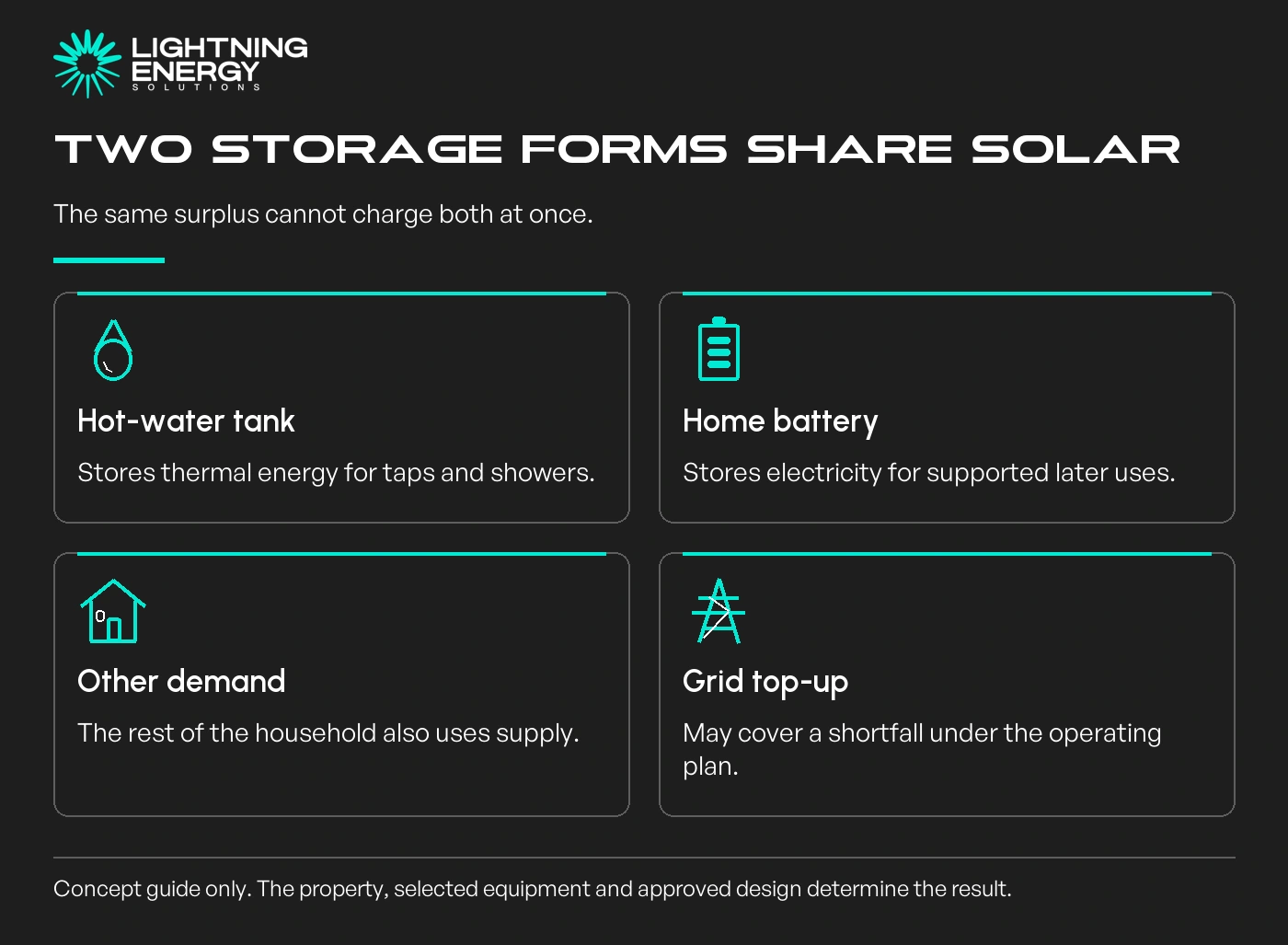
Solar first contributes to the household's combined demand. Electricity used to heat water is then unavailable for simultaneous battery charging, unless enough additional generation remains.
Conversely, a battery charging strongly may leave less surplus for the heat pump. Grid top-up can supply a shortfall in a normal grid-connected arrangement, but it changes the cost calculation.
Our battery information explains storage's role. A hot-water tank stores heat for taps; it cannot later supply electricity to lights, cooking or an EV.
Government smart-home guidance describes home energy management. The actual benefit depends on supported device functions and the measurement arrangement installed at the property.
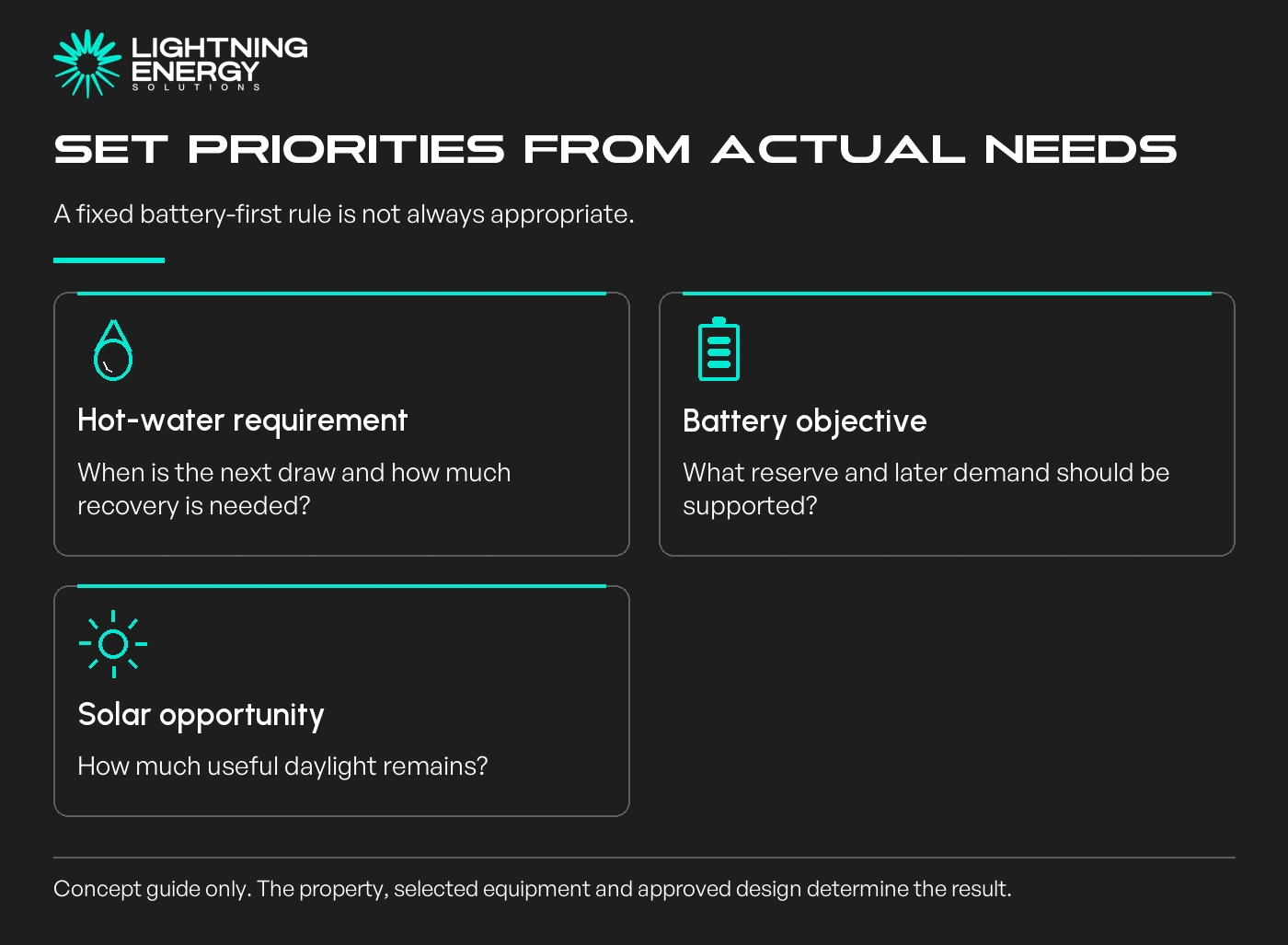
A useful strategy recognises minimum hot-water needs and when the next main draw will occur. Battery reserve, expected evening demand and available daylight are separate considerations.
Imagine a household with a cool tank and showers due that evening. Delaying all water heating until the battery is full could create a shortage if clouds arrive before recovery finishes.
On another day, a sufficiently heated tank may allow more solar to charge the battery. The best priority can change with starting conditions rather than remaining a permanent “battery first” rule.
For heat-pump planning, have the installer explain which priorities are configurable and which protective or delivery functions always take precedence.
Ask which equipment measures grid flow and how the heat pump receives a command. Some products accept an appropriate remote input; others offer only timers or app-based control.
A timer chooses hours. A surplus signal responds to a measured or calculated condition. Neither automatically means the controller knows tank demand, battery state and future weather.
Reclaim's manufacturer document library provides different controller manuals.
Its V2 guide describes remote-control options and fallback behaviour, but that does not prove compatibility with every inverter.
Request the exact controller, interface and supported integration in the quote. Do not assume an optional gateway, electrical connection or subscription is included because a brochure uses the word smart.
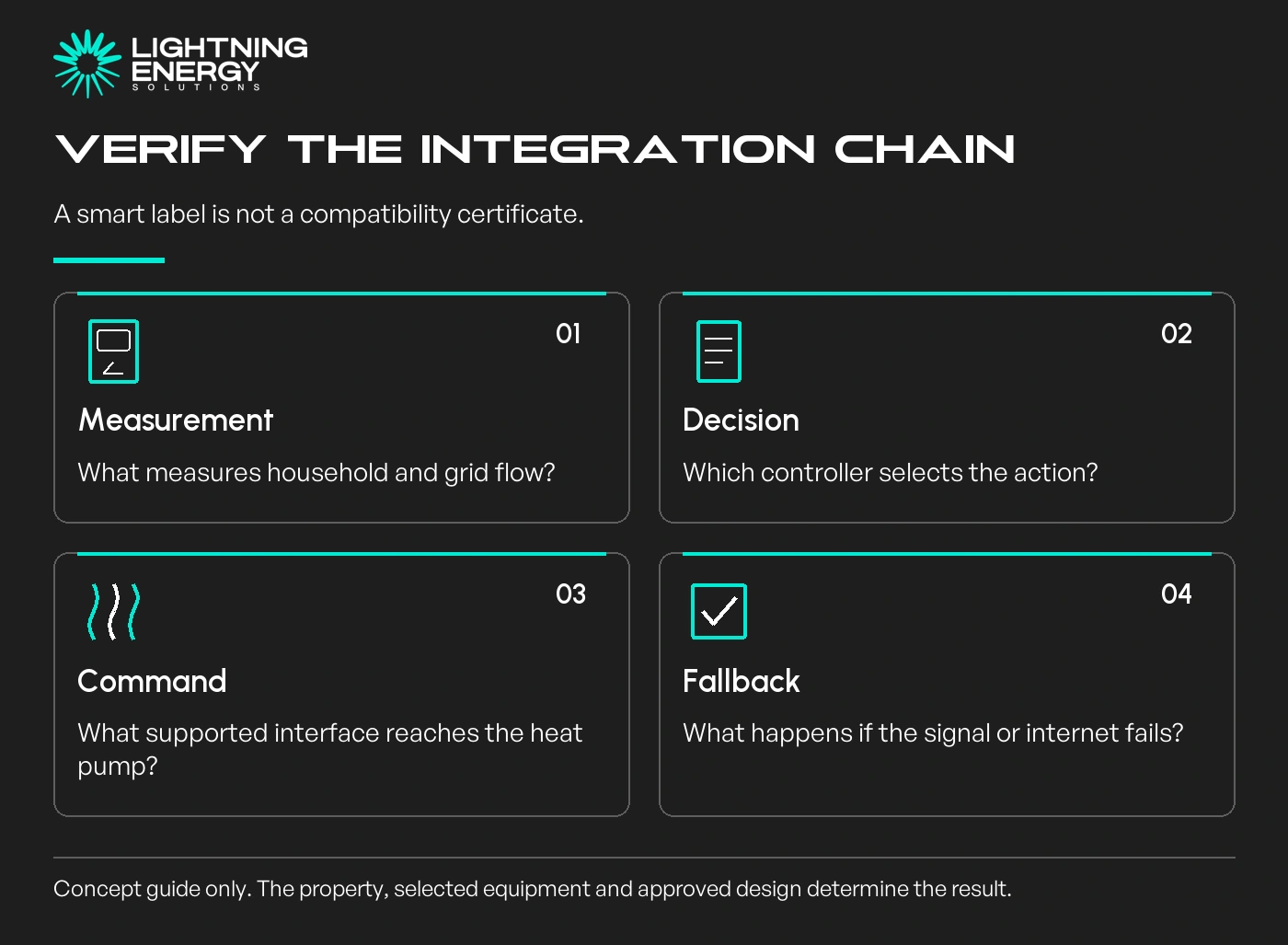
The system still needs a strategy for cloudy days, exhausted battery capacity and communication problems. Confirm what happens if internet access or a control signal is unavailable.
Required hygiene, frost protection and adequate hot-water delivery must remain available. Our solar timer guide explains why suppressing every non-solar cycle is not the goal.
Also distinguish everyday battery operation from blackout backup. A heat-pump circuit is not backed up merely because the home has storage; backup depends on the installed design and available power.
Ask how manual overrides work and how normal operation resumes. The household should be able to get support without needing to understand an undocumented chain of apps.
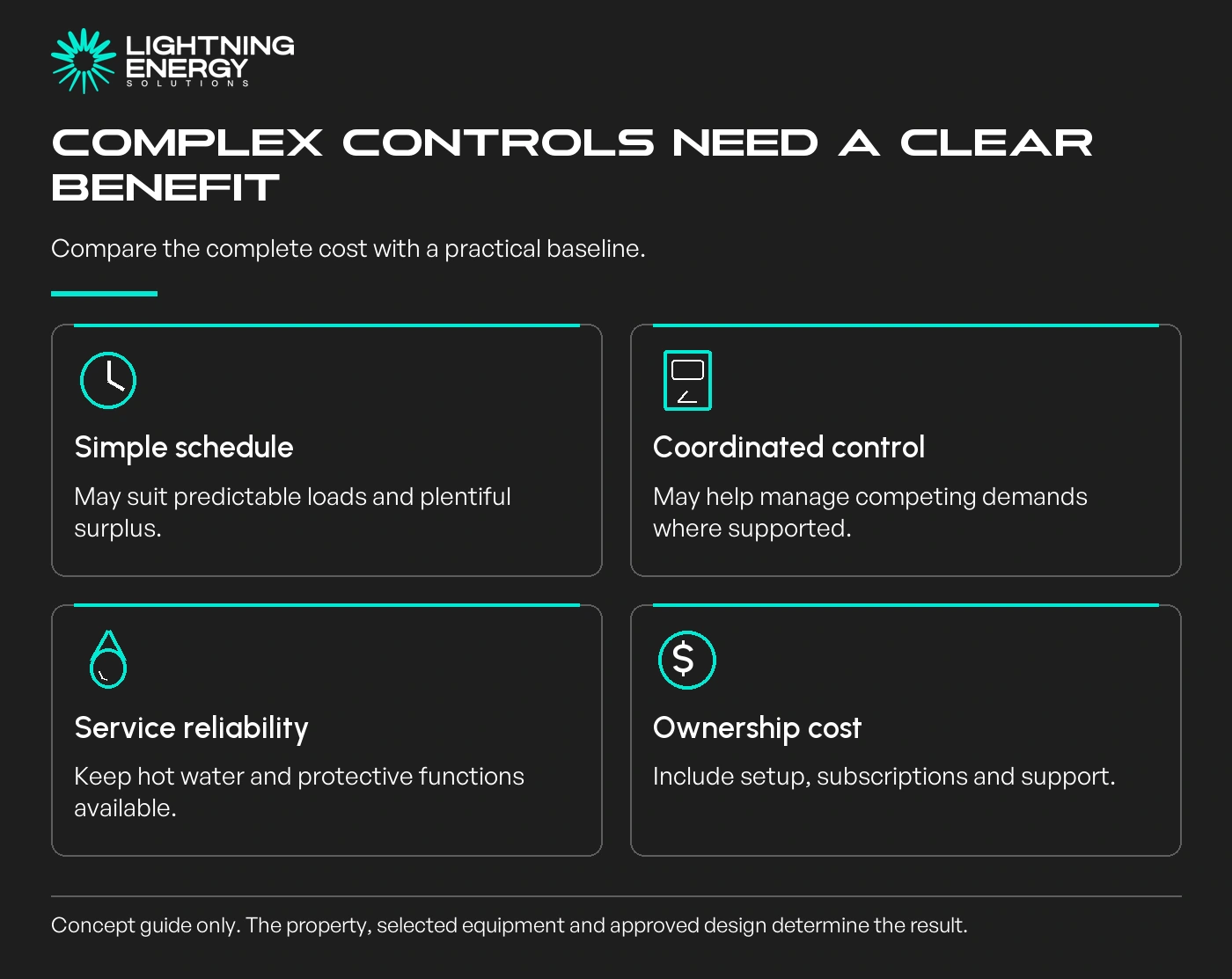
A simple supported timer may be sufficient where the household has predictable demand and ample daytime generation. More complex control can be worth assessing when competing loads or changing tariffs create a real opportunity.
Compare the added hardware and setup cost with a realistic benefit. Include any cloud service, ongoing fee and support responsibility, rather than valuing integration as a free feature.
After commissioning, review actual imports, battery charging and hot-water availability. A larger self-consumption percentage is not useful if it comes with shortages or unnecessary equipment cost.
Contact us with the heat-pump, inverter and battery model details. A coordinated design should explain its decisions, preserve essential functions and remain understandable when the weather does not cooperate.
Available times
Book a consultation and we'll map solar, storage, hot water, and the rebates around your bills and your goals.
Question 1 of 6