
Heat pump timing: cheap overnight electricity or daytime solar?
Compare overnight electricity with daytime solar for heat-pump hot water using actual tariffs, forgone exports, recovery needs and seasonal operating conditions.
Compare overnight electricity with daytime solar for heat-pump hot water using actual tariffs, forgone exports, recovery needs and seasonal operating conditions.

The cheaper heating time depends on the electricity actually used, its value at that time and how the heat pump performs. A low overnight rate does not automatically beat daytime solar, and solar is not always without an opportunity cost.
Compare two supported schedules that both provide reliable hot water. A cheaper-looking schedule that regularly requires extra recovery later is not a fair comparison.
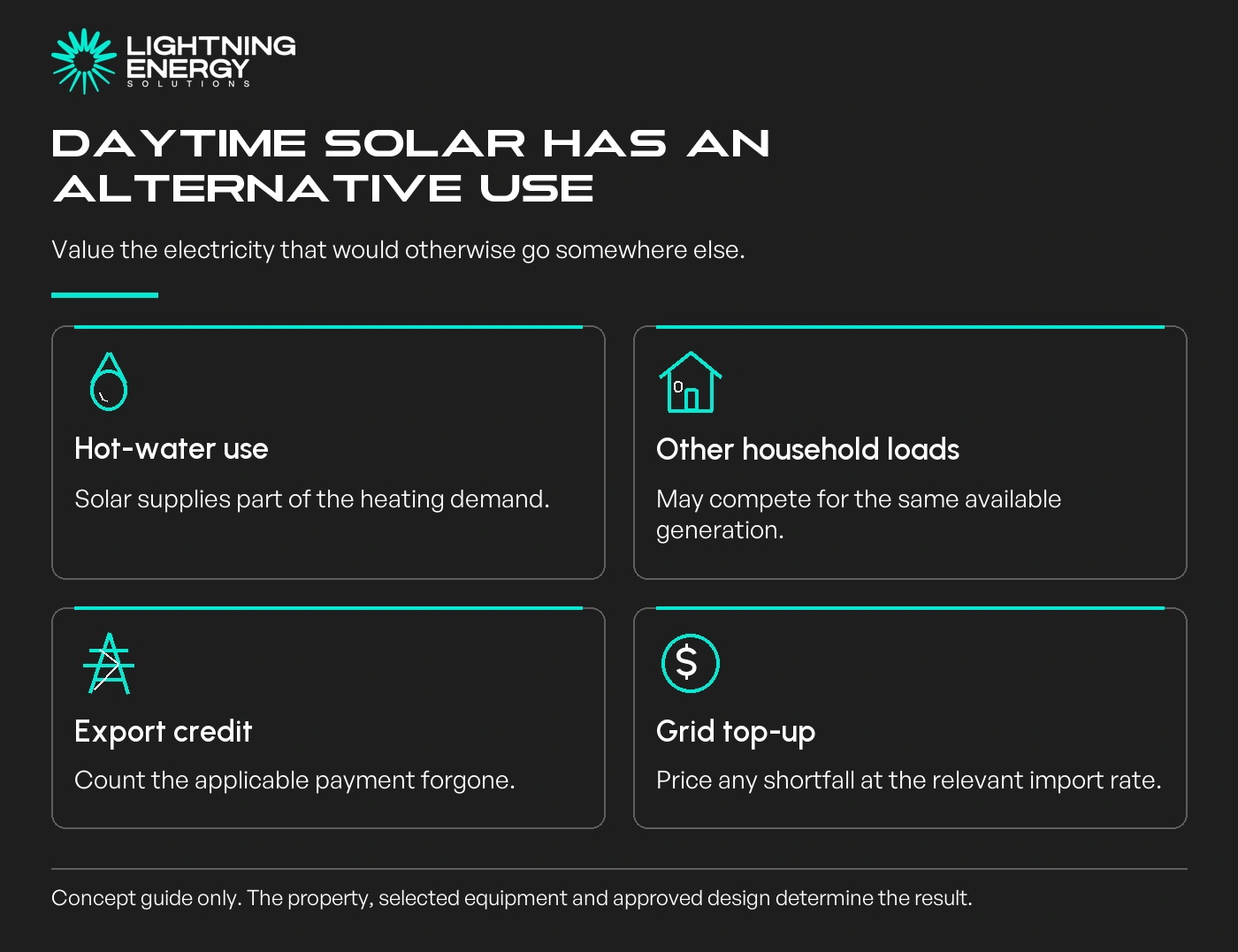
Solar used by the heat pump is unavailable for another simultaneous load or for export. If it would otherwise have been exported, the applicable feed-in credit is part of the comparison.
If there is not enough spare solar, the remaining demand is supplied from another available source, commonly the grid. Apply the daytime import rate to that portion rather than assuming the entire cycle is solar powered.
Government tariff guidance explains why import prices and export credits are separate.
Use the current offer, including any time or volume conditions.
For a home with solar, start with actual surplus after other loads. A strong inverter generation figure does not prove the full amount is available for heating water.
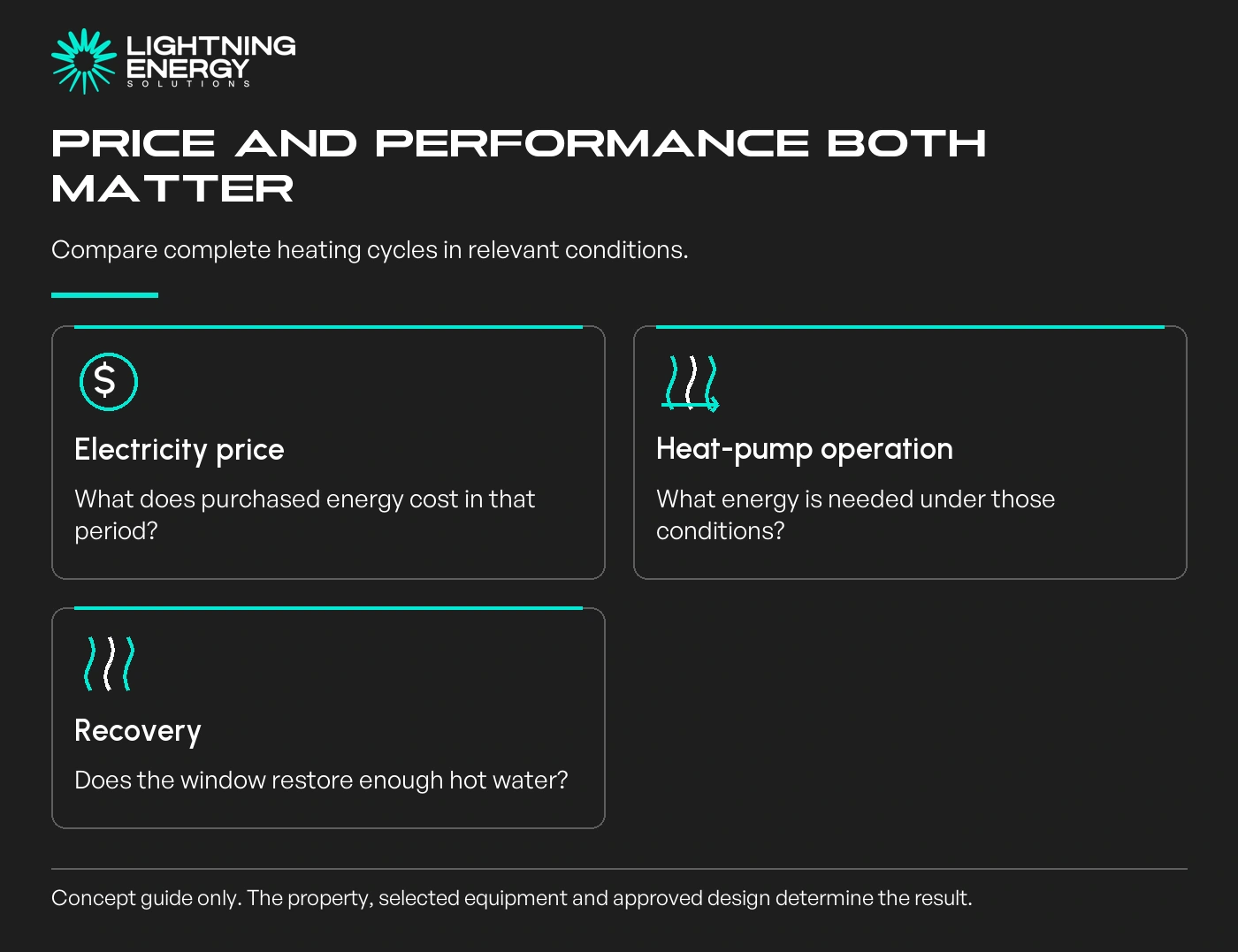
Outdoor air and incoming-water conditions can affect the electricity needed to deliver hot water. Warmer daytime conditions may be helpful, but the benefit depends on the equipment and conditions.
Government smart-home guidance identifies both energy prices and heat-pump operating conditions as scheduling considerations. A price-only comparison leaves out part of the decision.
Ask for relevant model information rather than transferring one published efficiency figure to every hour.
Sanden's specifications, for example, state the test conditions with its performance data.
Our heat-pump timer guide explains why the chosen window must permit adequate recovery and preserve required safety functions.
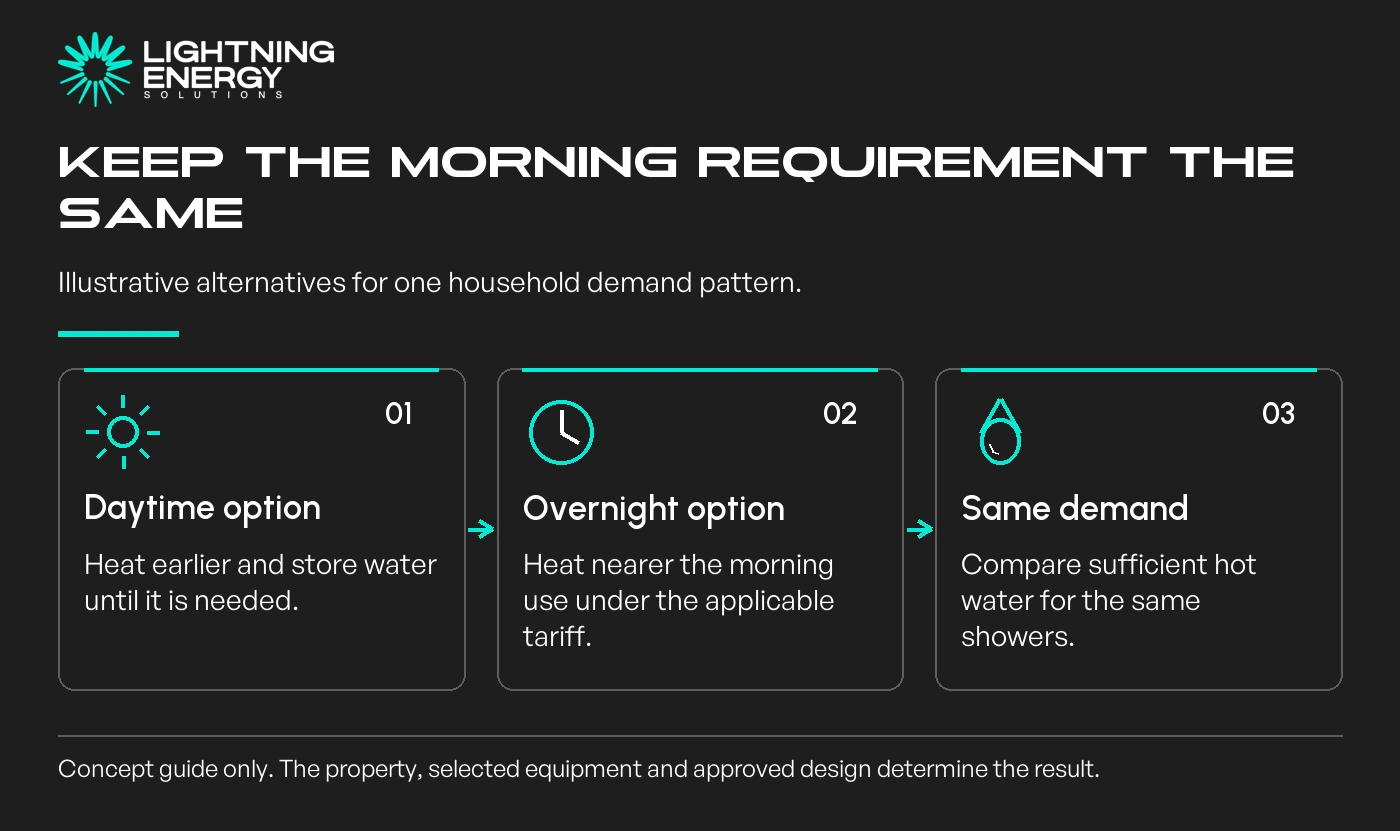
Imagine a household needing most hot water before work. One option heats during the previous afternoon; another heats overnight. Both must leave enough useful water for the same morning demand.
Consider storage losses across the waiting period, any additional heating events and whether a boost element operates. A comparison of one compressor cycle with an element-assisted alternative needs that distinction visible.
If battery storage supplies overnight heating, the electricity is not automatically free. It has a charging source, losses and a competing use for other household demand.
Where a controlled-load circuit is involved, first confirm which supply can reach the heat pump. You cannot compare a hypothetical direct-solar schedule that the existing wiring does not support.
For each option, identify electricity purchased under the relevant tariff and solar export value forgone. Include any extra controls or electrical changes required to implement the schedule.
Keep household demand consistent. Use measured appliance energy where available, or clearly stated model estimates, and test both ordinary conditions and a colder, higher-demand period.
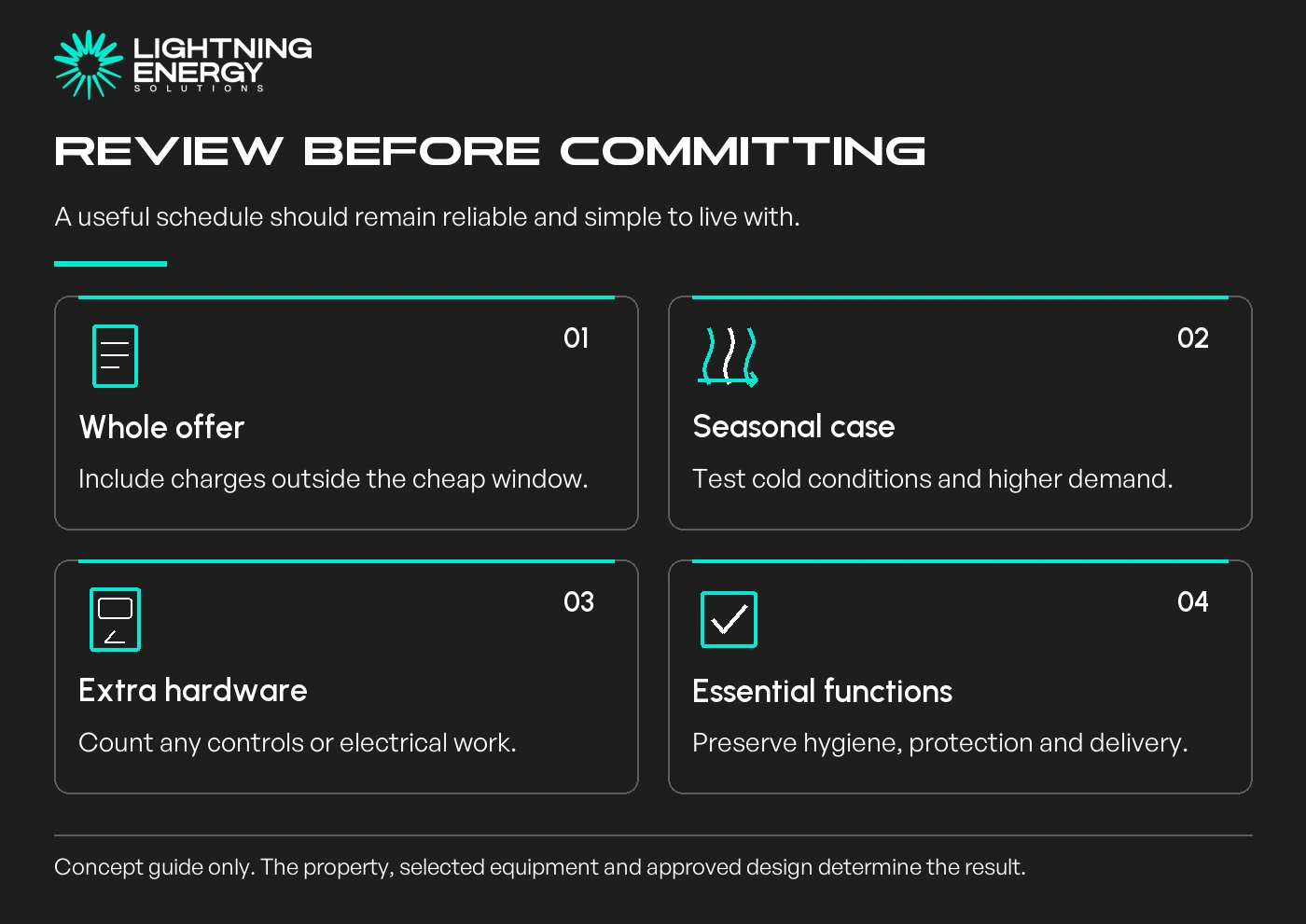
The full household bill remains relevant if a special cheap window comes with higher charges elsewhere. Do not allocate all of a plan's benefit to hot water while ignoring its effect on evening imports.
A short trial with supported settings may help, but weather and occupancy can change between weeks. Treat the result as evidence to interpret, not a laboratory comparison of two isolated variables.
The preferred answer may be daytime, overnight or a supported combination. It can change when the tariff, solar system or household routine changes.
Avoid chasing a marginal price advantage that requires constant intervention or leaves insufficient water. Keep hygiene, frost protection, permitted noise and recovery needs in the operating plan.
If the present schedule works well and the expected benefit is small, additional control equipment may not be justified. Calculate the likely gain before spending money to optimise it.
Contact us with the tariff, heat-pump model and consumption pattern when comparing the options. The best time is the one that supplies the required hot water at a sensible overall cost under your actual conditions.
Available times
Book a consultation and we'll map solar, storage, hot water, and the rebates around your bills and your goals.
Question 1 of 6