Beat the Peak? Why Your Home Battery’s Electricity Plan Matters
New Australian research links solar-and-battery homes on time-of-use tariffs with lower peak grid purchases. What the finding means, its limits, and what to check before switching plans.
LLuke CoveLightning Energy10 October 2026 · 6 min read
A home battery and an electricity plan are usually discussed as separate purchases. New Australian research suggests they deserve to be considered together, especially when the aim is to reduce grid purchases during expensive hours.
The interesting question is not whether everyone can move dinner to a cheaper time. It is whether storage can change when a household buys electricity while everyday life carries on.
We read the original paper and its companion summary.
Two findings that should not be confused
VEPC Working Paper 2609 examines roughly 5,100 households across NSW, Victoria, Queensland and South Australia, using half-hourly grid records over three years to August 2025. It is observational research, not a randomised tariff trial.
First, wider peak-to-off-peak price gaps did not produce a statistically detectable response in the analysis. That is different from saying electricity prices never matter.
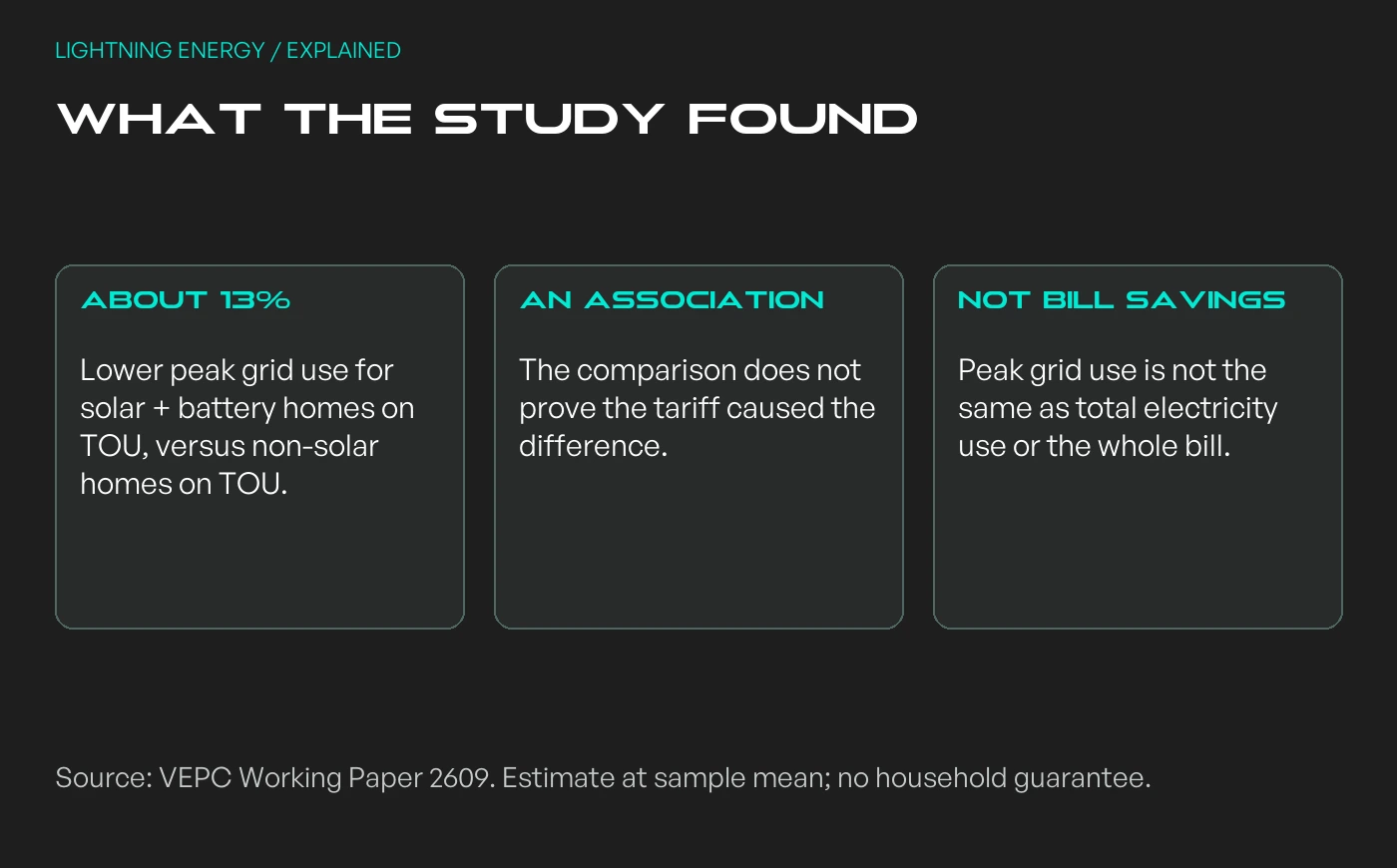
Second, solar-and-battery households on time-of-use tariffs had an estimated 13% lower peak grid consumption at the sample mean than non-solar households on the same tariff type.
The same clear pattern was absent for battery homes on flat tariffs.
Original Lightning Energy explanation of VEPC Working Paper 2609. The estimate is evaluated at the sample mean, comparing solar-and-battery homes with non-solar homes on the same tariff type.
The useful idea: equipment can respond to a schedule
The author suggests that tariff periods may influence how a battery is configured, rather than households continually reacting to the size of price differences.
Scheduling and automation are possible explanations, not directly observed proof of the mechanism.
The non-technical summary also notes that the effect depends on how peak periods are defined.
A generic evening window is not a substitute for the relevant tariff hours.
Our practical reading is that a system handover should include the electricity plan. A battery can be capable of useful operation while still needing its schedule checked against the contract a household actually has.
For example, a plan change could leave an old schedule in place. That is a reason to review the settings with the installer or manufacturer, rather than assuming an operating mode remains suitable indefinitely.
Why this is not a universal promise
Different households can differ in ways a dataset cannot fully capture, including occupancy and appliance use. The paper acknowledges these limitations. Its battery cohort also predates the recent wave of larger installations.
The result therefore should not be read as proof that switching any battery owner to TOU will cut peak imports by 13%. Nor does an absent statistical pattern mean a battery on a flat tariff has no value.
Backup needs, solar self-consumption and household preferences remain separate considerations. A statistical comparison can inform a conversation without replacing a design or a full electricity-plan comparison.
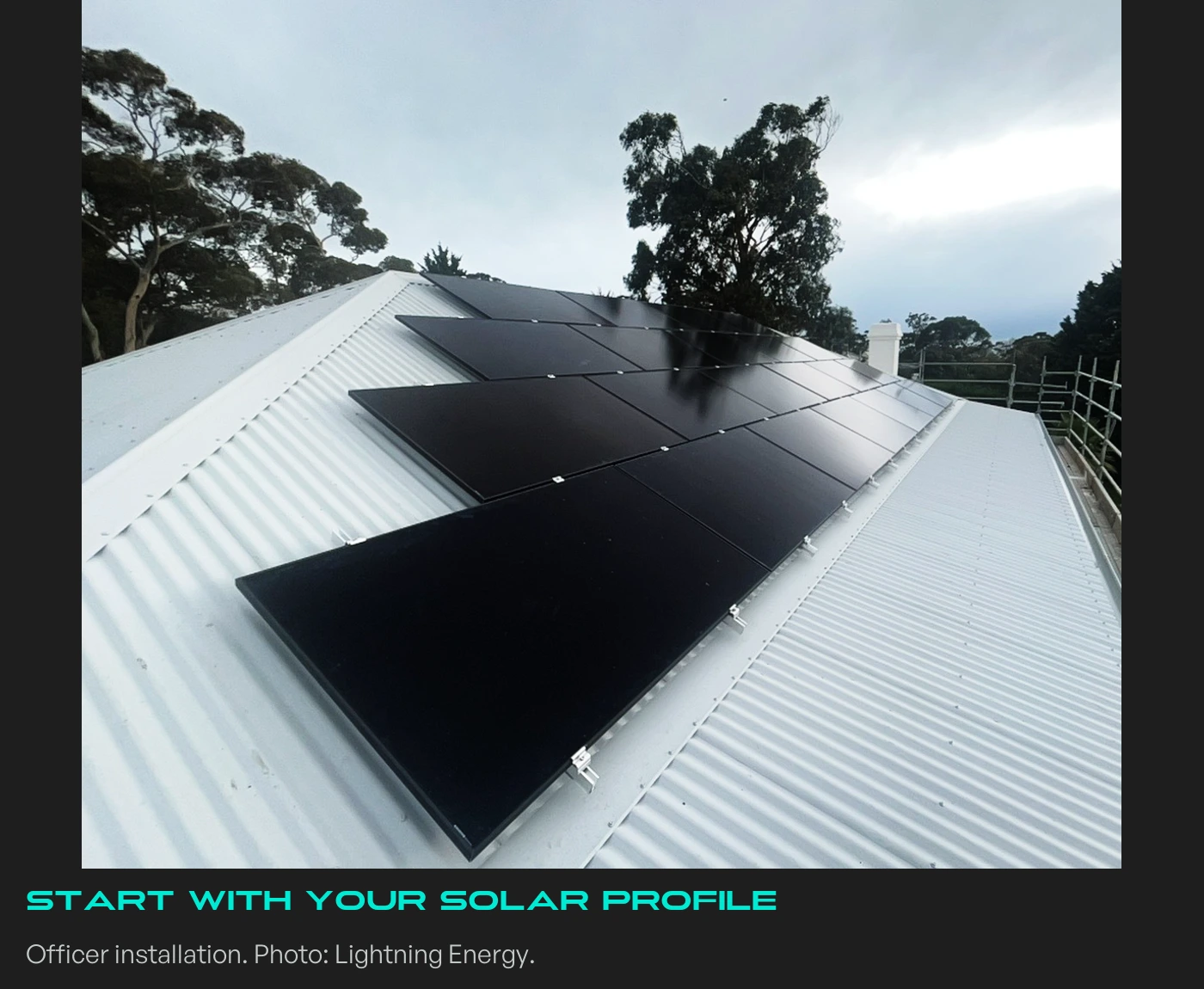
Photo: Lightning Energy, Officer installation. Illustrative photography, not a household identified in the study. The feature image is credited Tesla promotional photography and does not imply the study tested that product.
Time-of-use pricing starts with the actual hours
A flat tariff generally applies one usage rate throughout the day. Time-of-use plans apply different usage rates in specified periods. The periods and prices are plan-specific; weekends and seasons may also have different rules.
The Australian Government’s tariff guide explains flat, time-of-use and demand charges.
It recommends comparing the overall plan rather than focusing on one attractive rate.
Check the tariff information your retailer provides, including daily supply charges and solar export terms.
A network tariff and the retail offer on your bill are related, but the retail contract is what you need for the household calculation.
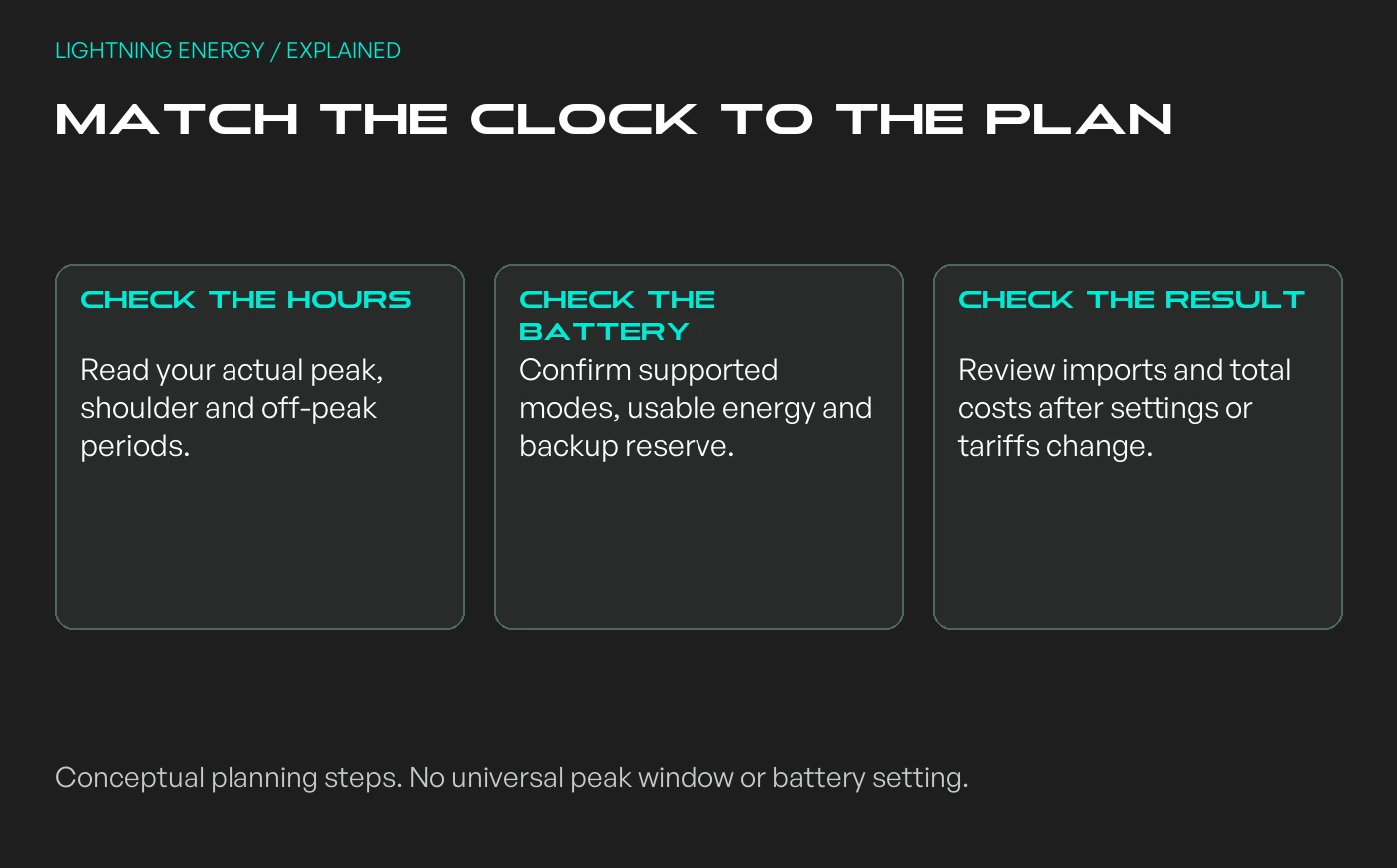
Original planning graphic. No default peak window or universal charge/discharge setting is recommended.
What to check before changing your battery settings
Bring your interval usage data, current plan and battery details together. Ask which operating modes are supported, whether the displayed tariff periods are current, and how the selected backup reserve affects available energy.
Check both stored energy and power delivery. A battery may hold enough energy for several hours yet still be unable to supply every large appliance at once. Some grid imports may be normal for the system and load combination.
A cloudy day can also change the picture. If the battery has little energy available before an expensive period, the household may still need to buy power then. A fair comparison includes less favourable days, not just sunny ones.
When exploring home batteries, ask for the proposed settings and assumptions to be documented. For an existing solar system, use its generation history rather than assuming every afternoon produces a surplus.
Lower peak imports and lower bills are different goals
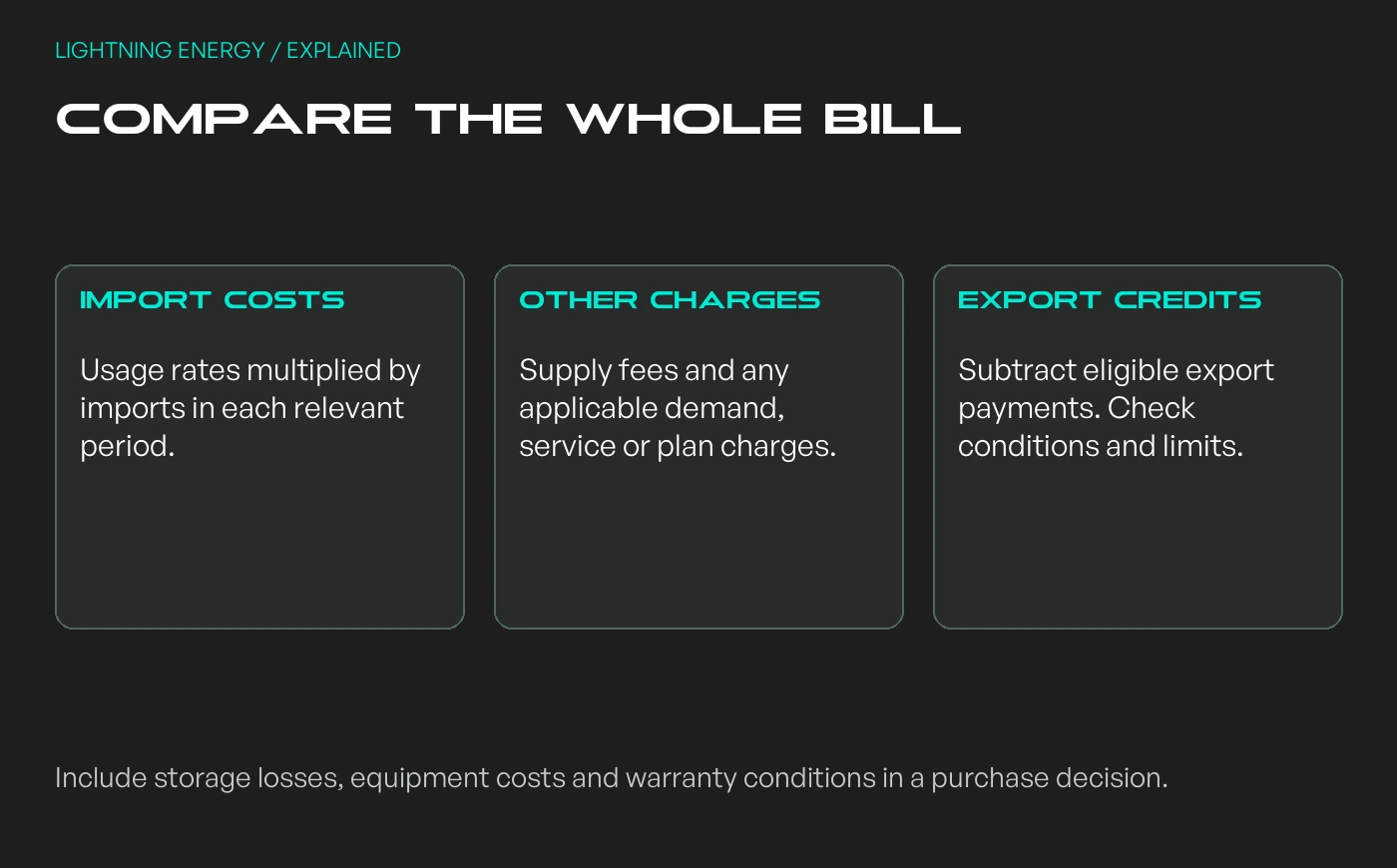
A bill combines charges and credits across the whole billing period. Reducing imports in one window is useful information, but it does not establish the final cost on its own.
For an original illustrative example, moving 1 kWh of grid purchases out of a peak period changes when that energy is bought. It does not tell you the saving until the relevant rates, storage losses and other costs are known.
A purchase assessment should also account for the battery’s cost, warranty conditions and the value of solar that could otherwise have been exported. There is no single tariff spread that makes every battery financially worthwhile.
Original Lightning Energy concept graphic. This is a comparison framework, not a savings forecast or retail offer.
Build a plan around the way your home runs
Our recommendation is to compare complete scenarios: the current arrangement, another available tariff, and any proposed battery configuration. Use the same household data for each, and make uncertainties visible.
If you also have an electric car, include EV charging in that exercise. A new large load can change the useful schedule and the household’s total imports, even if the battery itself has not changed.
The broader lesson is to make the hardware, electricity plan and controls work together. That is more useful than treating either an expensive peak rate or a battery purchase as a guaranteed result.
Original Lightning Energy analysis, checked 10 October 2026. Research findings are attributed to a working paper; practical examples are illustrative. Real photography is credited, and explanatory graphics are original.
Book a consultation and we'll map solar, storage, hot water, and the rebates around your bills and your goals.
Loading consultations…
Lightning EnergyPlan your next energy upgrade.
⚡
Hi, I’m Lightning Energy’s project guide. I’ll ask a few practical questions, explain what usually matters for your project, and help you decide on a useful next step — no guesswork or sales pressure.
First, what kind of property are we planning for?