
Using Solar to Preheat or Precool Your Home: A Measured Trial
Try a measured solar preheating or precooling schedule, tracking comfort, grid imports and exports to see whether the timing works for your home.
Try a measured solar preheating or precooling schedule, tracking comfort, grid imports and exports to see whether the timing works for your home.

Preheating or precooling with solar can be worth testing if the home holds that comfort until it is needed. The result depends on the building, available surplus, tariff and how much extra operation the trial adds.
Begin with a modest scheduling change and measure the result. A timer set for lunchtime is not proof that heating is solar-powered or that the day becomes cheaper.
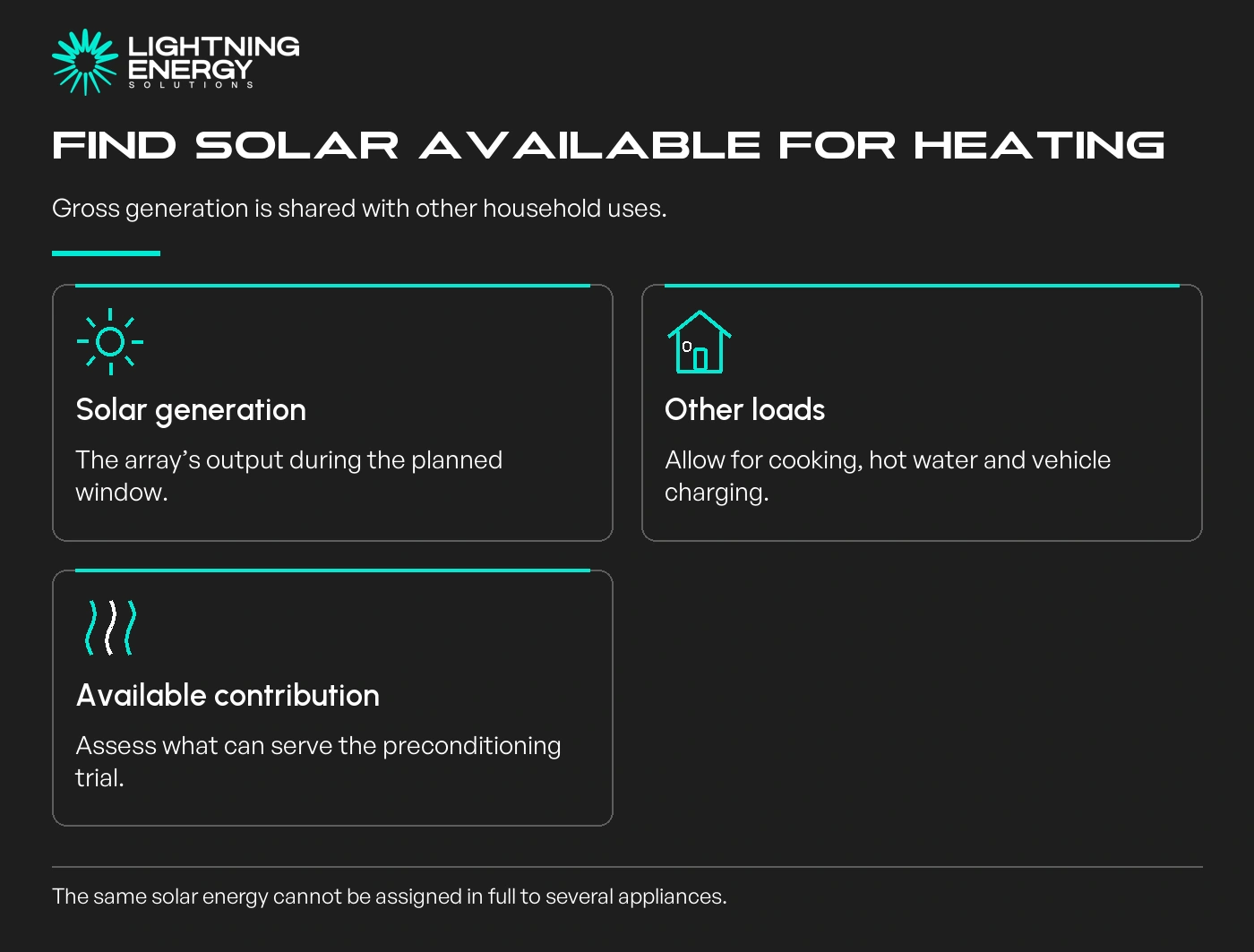
Look at generation and whole-house consumption over typical days. Surplus is what remains after other loads, not the array’s gross output shown at the top of an app.
Note hot water, cooking and vehicle charging that already run during the day. The same spare solar cannot be allocated in full to every appliance at once.
Review the operating picture with your solar system before choosing a heating window. A cloudy day may have a different balance even when the timer follows the same schedule.
The government’s smart-home guidance describes using monitoring and controls to coordinate energy flows. Confirm what your equipment actually measures and controls.
Smart-home energy management guidance.
Select the occupied area you want comfortable on arrival, keeping within the installed system’s permitted zone arrangements. Use the manufacturer’s normal scheduling functions rather than altering installer configuration.
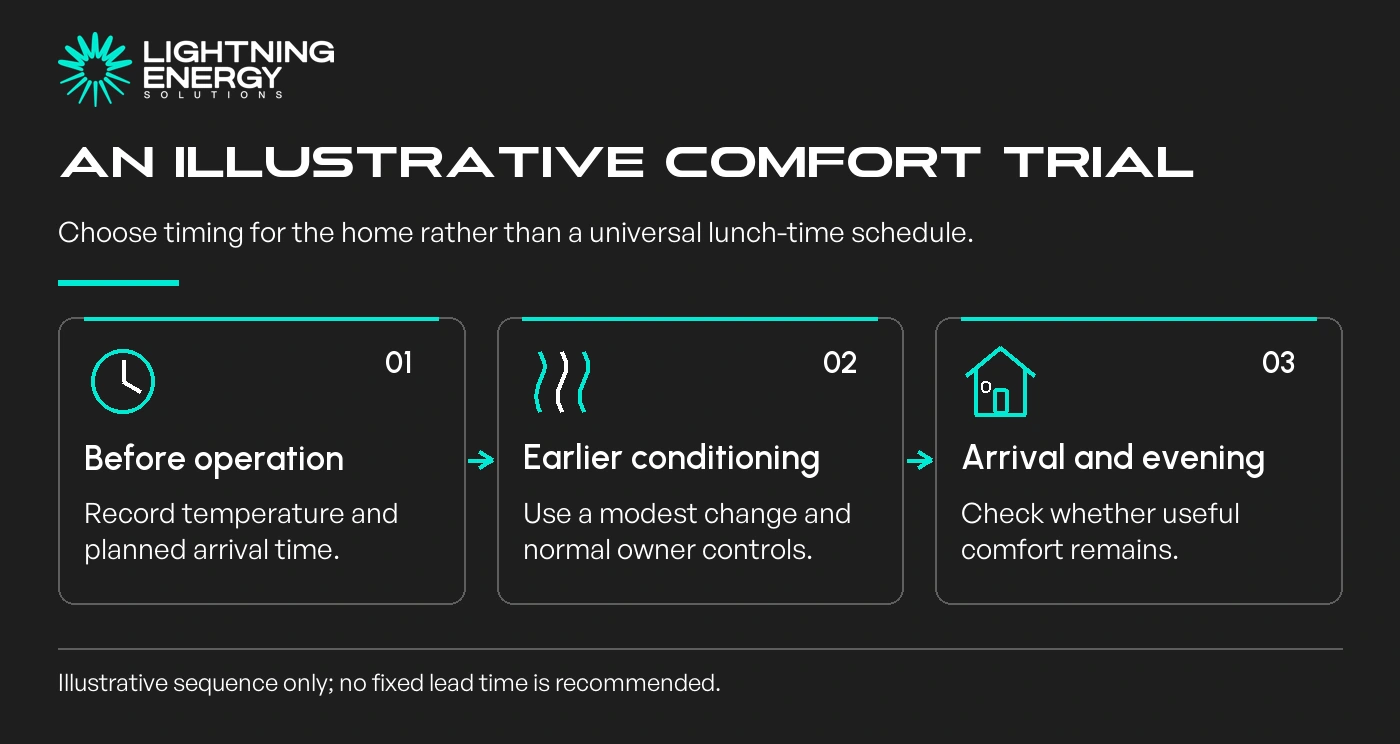
For an illustrative winter trial, a household arriving at 5 pm might start the relevant zone earlier on selected days while keeping its normal comfortable set point. The useful start time must be tested in that home.
Record indoor temperature before operation, on arrival and later in the evening. Stop or adjust the trial if it creates uncomfortable overheating or cooling.
YourHome explains that thermal mass can absorb and release heat, while insulation and air tightness influence retention. A home’s response cannot be inferred from its floor area alone.
YourHome’s thermal-mass explanation.
Compare trial days with reasonably similar outdoor conditions, occupancy and appliance use. One sunny mild day against one cold overcast day is not a fair test of the schedule.
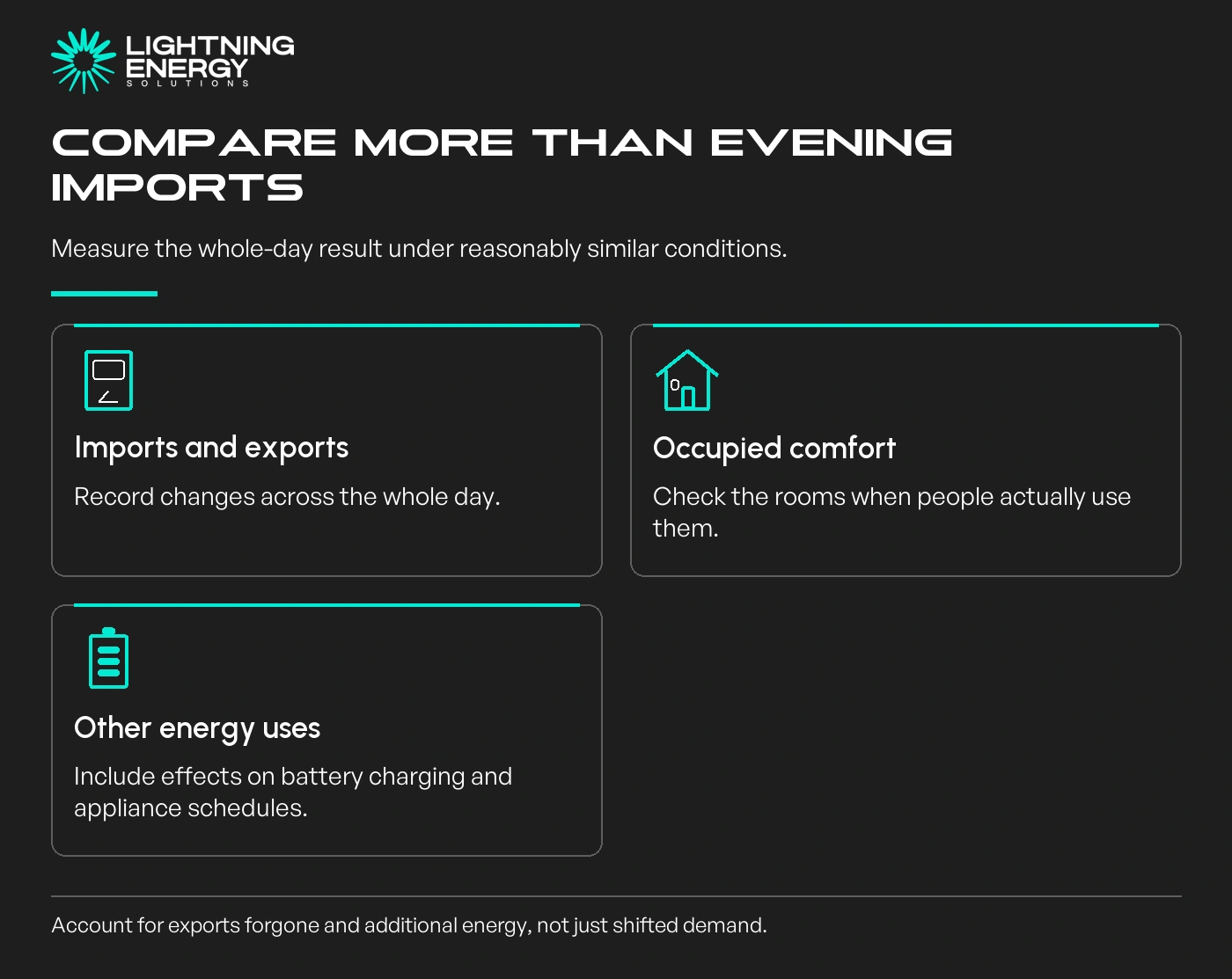
Check daily imports, exports and comfort at the times that matter. Earlier operation might reduce evening demand yet increase total energy enough to offset part of the benefit.
Account for export income forgone when solar is used for extra preconditioning. If the system would otherwise charge a battery, also consider what energy remains for later household use.
Keep hot water timing visible too. Our heat pump scheduling guide explains why these daytime uses should be considered together.
A whole-house meter captures all loads. Note cooking, guests or EV charging changes so their energy is not mistakenly attributed to the air conditioner.
A successful trial delivers the required comfort with an acceptable overall cost and routine. It does not need to minimise one app number while making the house unpleasant to occupy.
If the comfort fades before anyone arrives, reduce the lead time or reconsider the trial. More heating hours are not automatically the answer to weak heat retention.
The Australian Government recommends using heating and cooling during sunlight hours where practical, while keeping useful heat in or unwanted heat out. Test how that guidance works with your home and routine.
Government solar-use guidance.
Do not buy a new controller simply to run the experiment if the existing one already has a suitable timer. Establish which useful function is missing before considering hardware.
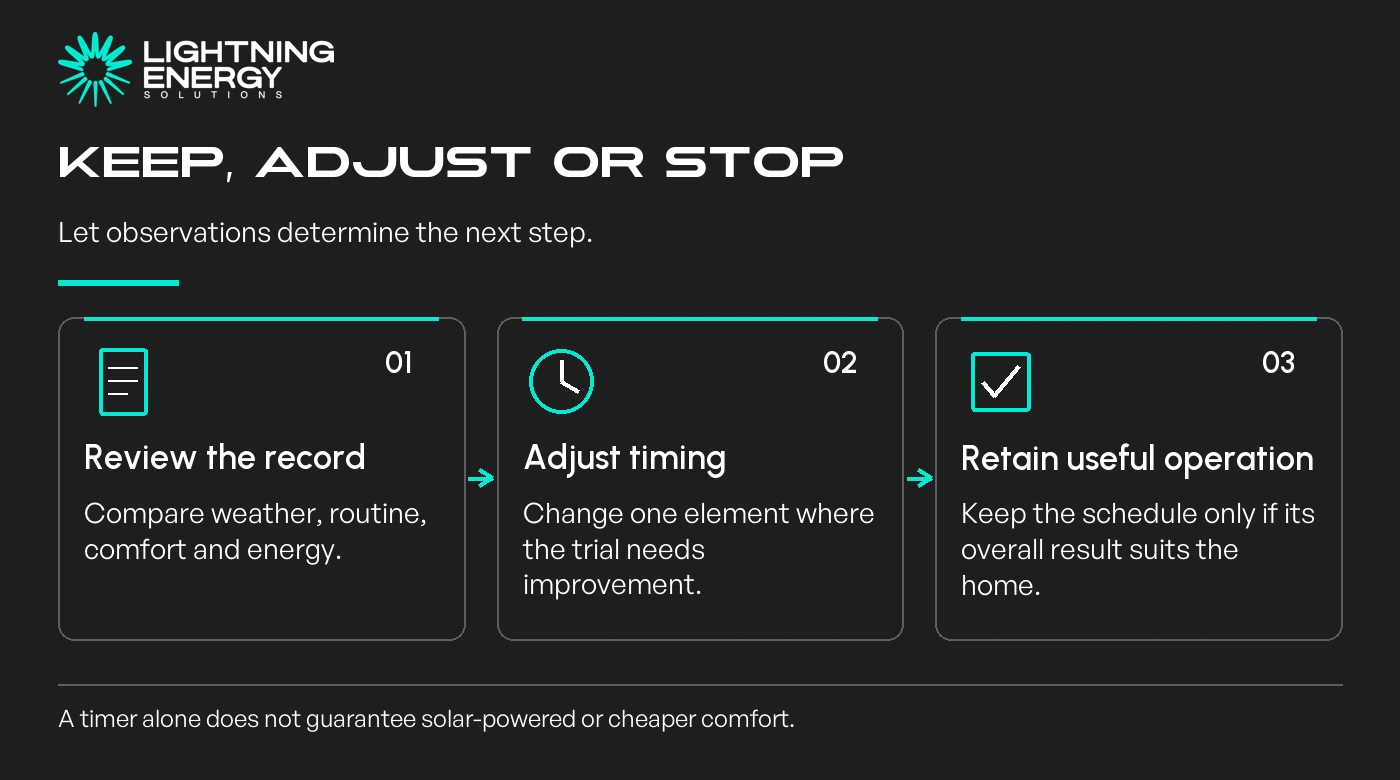
Keep a simple record of settings, weather, comfort and imports for the trial. Ask us to review the pattern if the schedule improves comfort but the energy result is difficult to interpret.
Available times
Book a consultation and we'll map solar, storage, hot water, and the rebates around your bills and your goals.
Question 1 of 6