
Home Battery in the Garage: Heat Detection, Alarms and Safety Checks
What garage battery owners should ask about heat detection, interconnected alarms, clearances and emergency planning, using Australian fire-service guidance.
What garage battery owners should ask about heat detection, interconnected alarms, clearances and emergency planning, using Australian fire-service guidance.

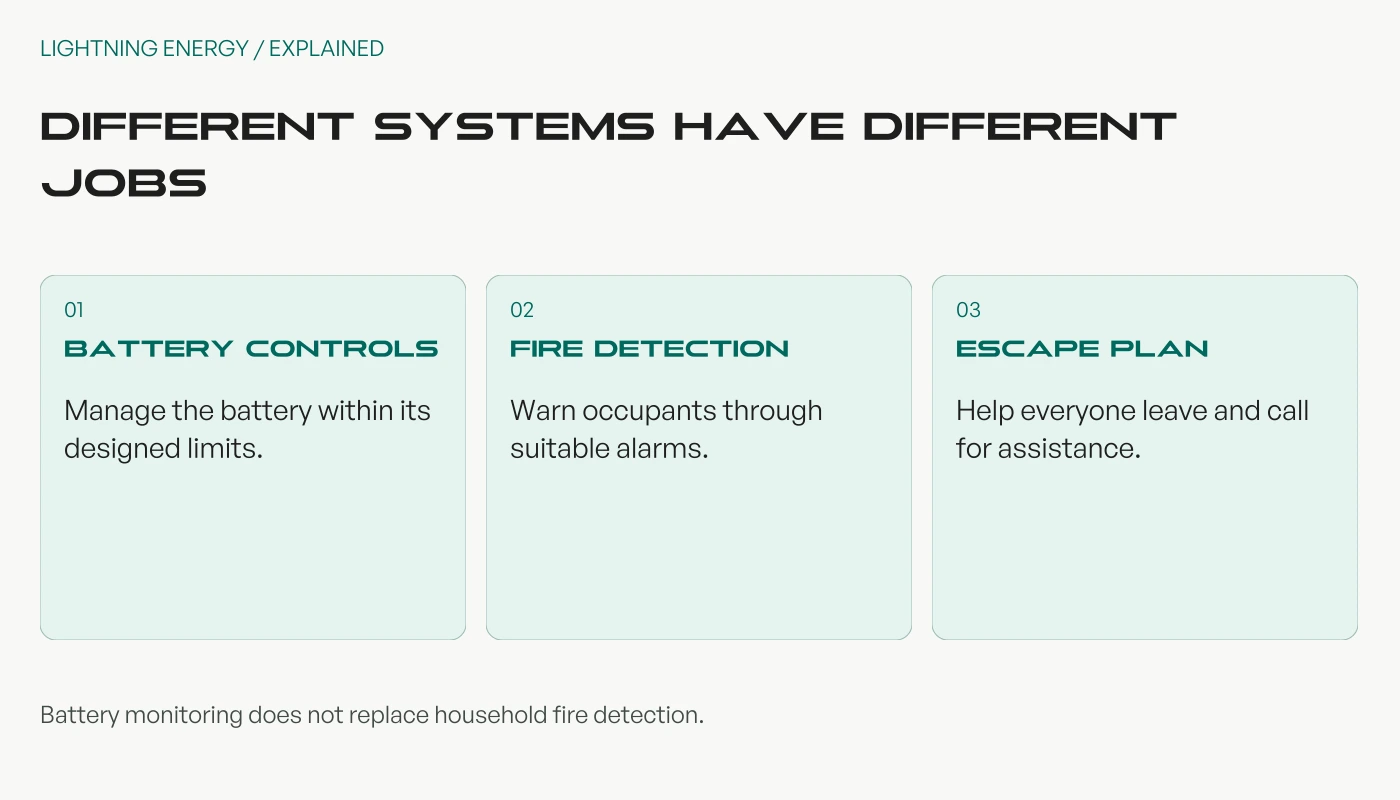
A battery app can show charge level and system faults. It should not be treated as a household fire alarm or a substitute for a suitable detection system.
If your battery is in a garage, include detection and evacuation planning in the installation discussion. The right arrangement depends on the building, environment, equipment and applicable requirements.
This guide was checked on 4 November 2026. It explains fire-service guidance and questions for qualified professionals; it does not certify an installation or provide wiring instructions.
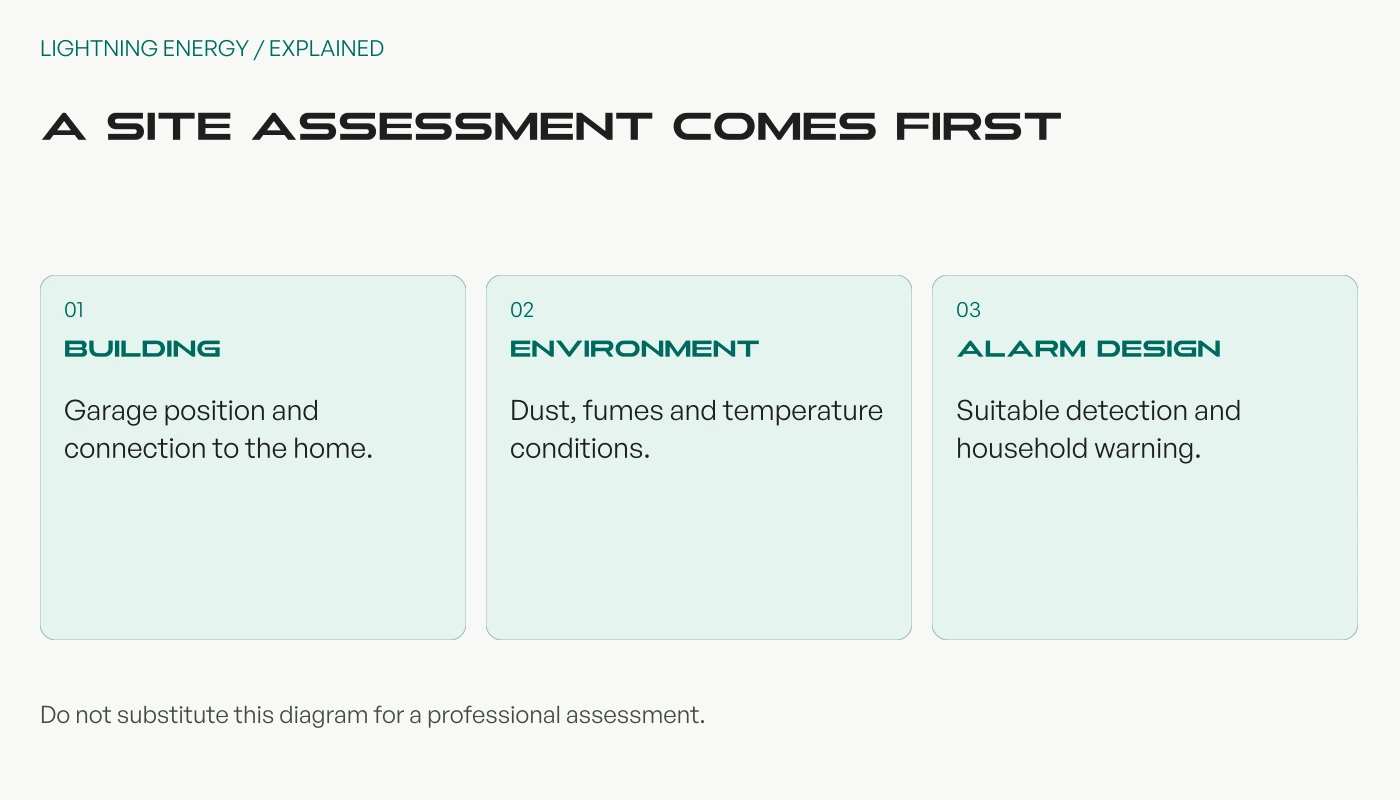
Garages may contain dust, vehicle fumes, stored materials and changing temperatures. Those conditions matter when a professional chooses the detector type and location.
The South Australian Metropolitan Fire Service advises considering a ceiling-mounted heat detector interconnected with the home’s smoke alarms for a home battery installation.
SA Country Fire Service guidance also recommends interconnected heat detection for battery systems within or attached to a home, including garages and carports.
Sources: MFS battery-system guidance.
Source: CFS home battery safety.
The fire-service recommendations above are useful safety guidance. They are not proof that one detector arrangement satisfies every Australian building, electrical or fire requirement.
Ask your installer and an appropriately qualified alarm professional to identify the requirements for your property. Have them explain detector suitability, interconnection, positioning and maintenance.
A heat detector in a garage should not be treated as permission to remove required smoke alarms elsewhere. Check the household alarm system as a whole.
For Victorian homes, CFA and Fire Rescue Victoria’s smoke-alarm guidance explains the importance of working alarms and interconnected warning.
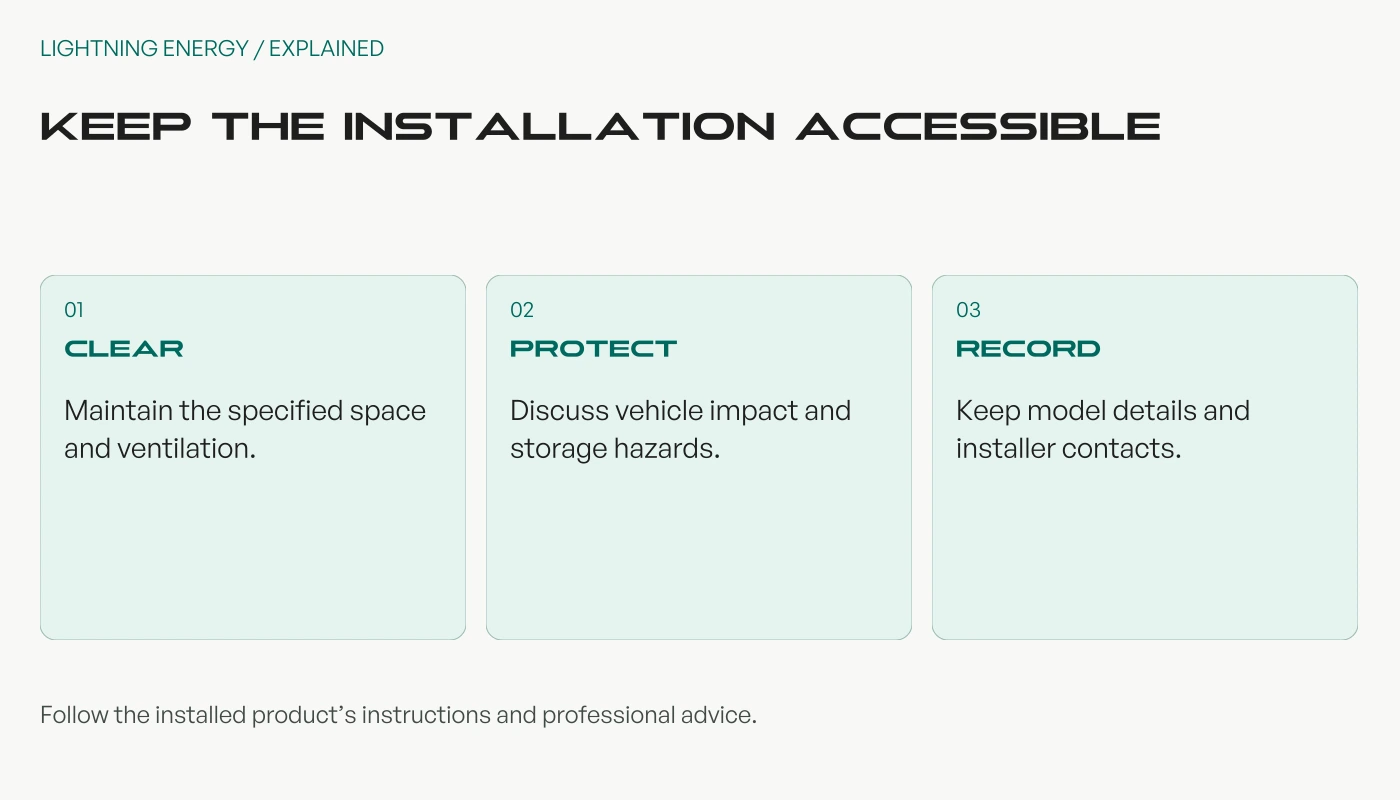
MFS guidance highlights protection from impact, clear ventilation and keeping the area free of obstructions. Do not turn the space around the battery into a storage shelf.
Ask the installer to explain the manufacturer’s required clearances and protection from vehicle impact. Keep the handover information where it can be found later.
Our battery quote checklist helps you ask about the location and included work before installation, rather than discovering exclusions afterwards.
If you are unsure whether a new cupboard, parked vehicle or stored item affects the installation, ask the installer before changing the surrounding space.
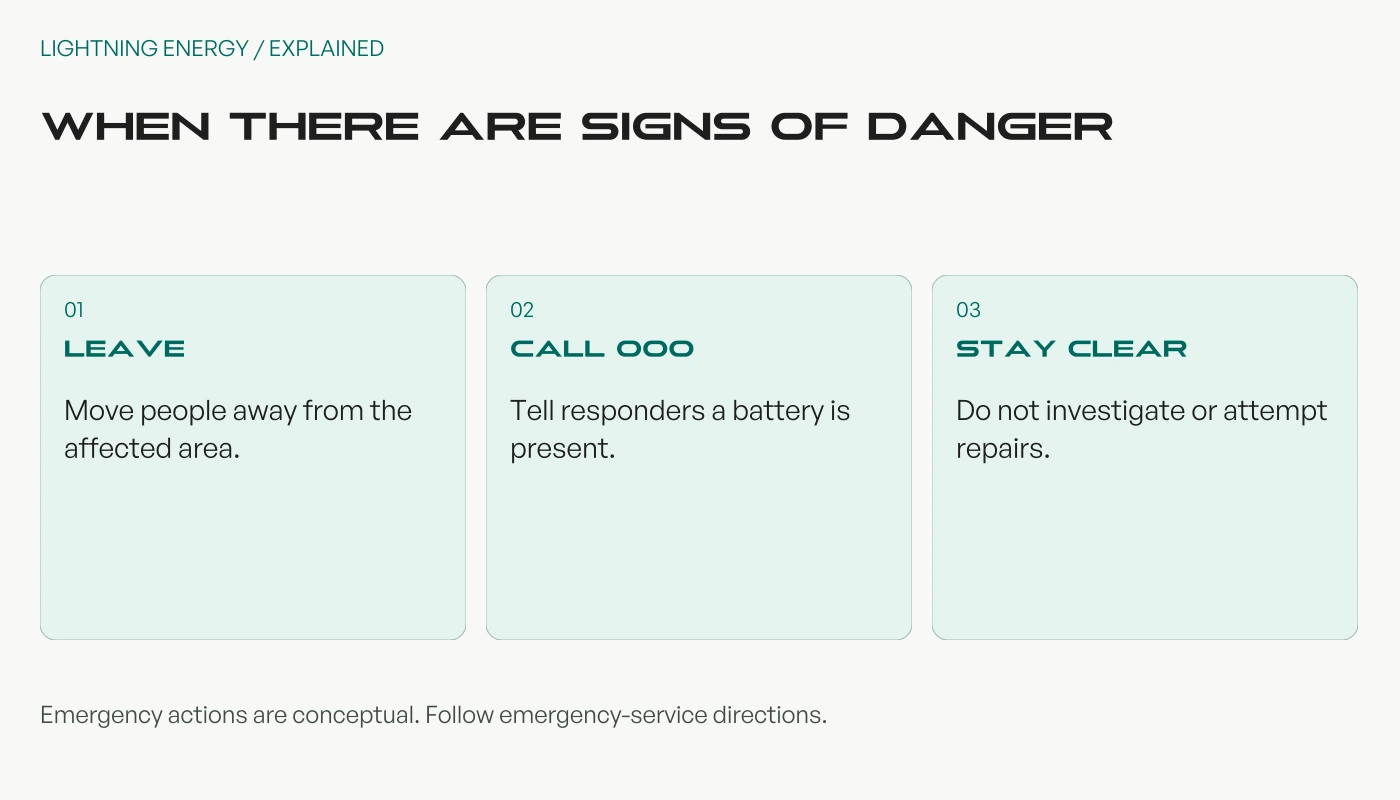
If an alarm sounds or you notice smoke, unusual heat or other signs of danger, get everyone away from the area and call Triple Zero (000). Do not approach the battery to diagnose the problem.
Do not open the enclosure, attempt repairs or put yourself at risk to operate equipment. Tell emergency services that a home battery and solar system are present.
Household members should know how to leave, where to meet and who may need help. Keep escape routes usable, including when the garage door cannot operate normally.
A battery’s ability to power selected circuits during an outage does not establish whether household warning arrangements are suitable. Both deserve attention.
Our backup test guide explains the handover discussion.
Also read why battery backup is not automatically a UPS.
Contact Lightning Energy about the installation design and handover records. For alarm selection and legal requirements, use a qualified professional familiar with your property and location.
Available times
Book a consultation and we'll map solar, storage, hot water, and the rebates around your bills and your goals.
Question 1 of 6
