
How Long Does a Heat Pump Hot Water System Last?
Heat-pump lifespan depends on the tank, compressor, controls and installation. Read warranties carefully and assess condition before choosing repair or replacement.
Heat-pump lifespan depends on the tank, compressor, controls and installation. Read warranties carefully and assess condition before choosing repair or replacement.

There is no single guaranteed lifespan for every heat-pump hot-water system. The cylinder, compressor, controls and other components can have different service histories and warranty periods.
For a buying decision, ask about maintainability, local support and the exact warranty. For an existing system, assess its condition and repair options rather than treating age alone as an expiry date.
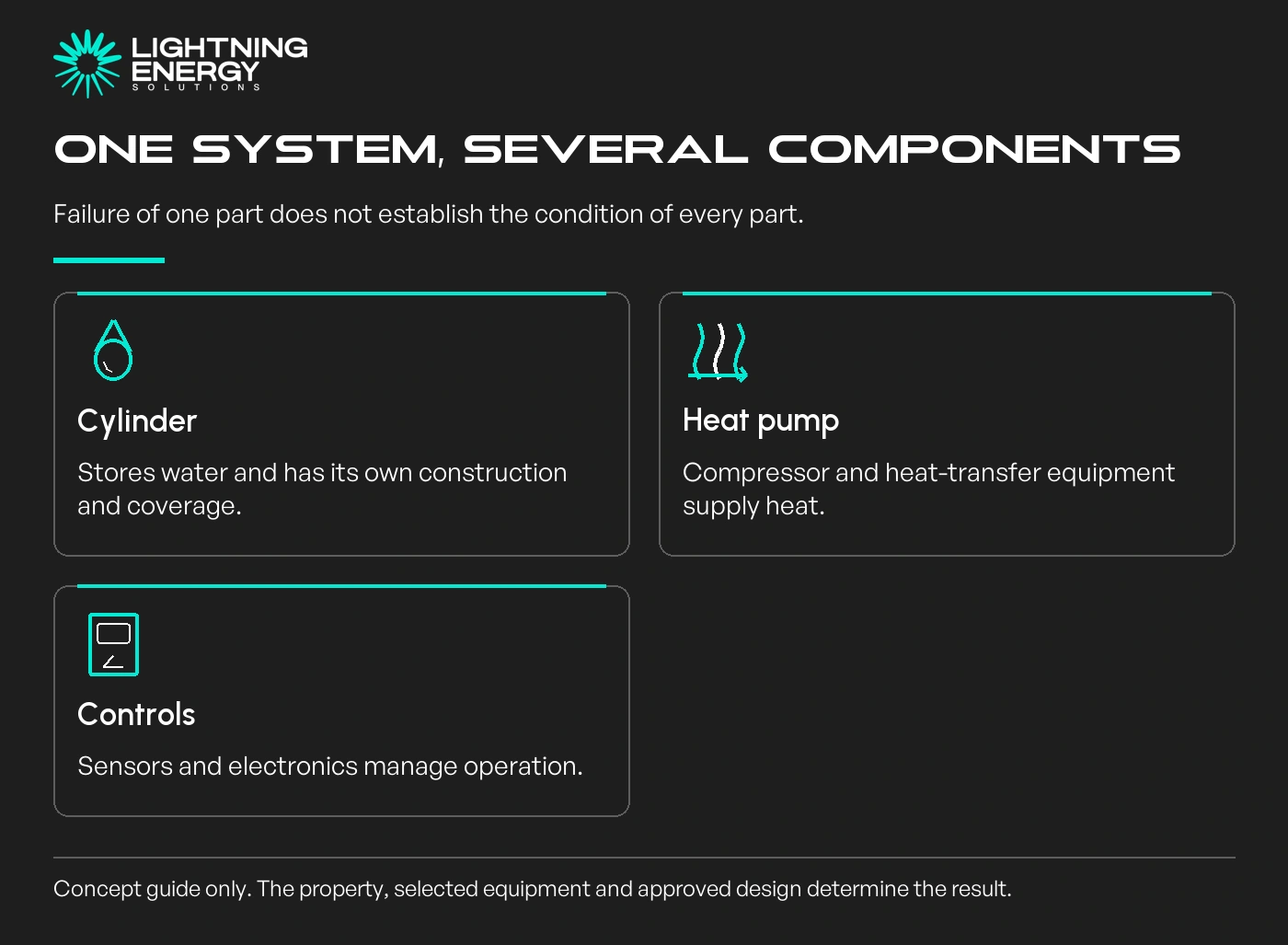
The tank stores water, the heat pump supplies heat and the controls manage operation. A problem in one part does not automatically mean every part has reached the end of its useful life.
Whether a component can be replaced separately depends on the design, compatibility and parts availability. A split layout may make components physically distinct, but it does not guarantee any replacement will fit.
Our heat-pump information explains the technology choices. Ask suppliers how a future cylinder, controller or heat-pump failure would be handled for the exact proposed system.
Imagine a failed controller on an otherwise serviceable installation. A supported controller repair may be a different decision from replacing a leaking cylinder and ageing heat-pump assembly together.
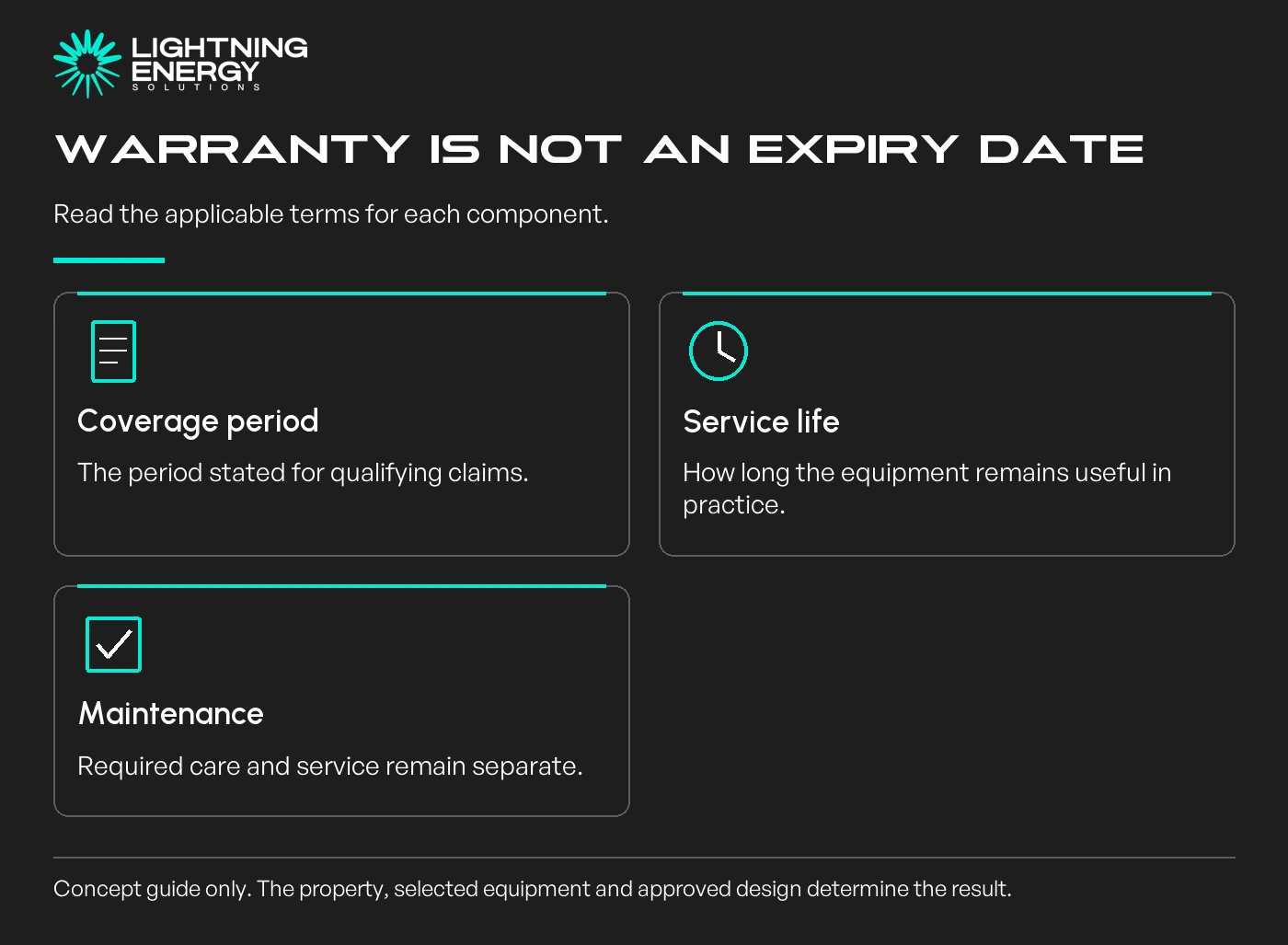
A warranty defines covered faults and remedies under its terms. It does not state that the equipment will fail when the warranty ends or operate without any maintenance until then.
Solar Victoria's warranty guide distinguishes coverage considerations.
Australian Consumer Law guarantees also exist separately from a manufacturer's written warranty.
Compare the cylinder, compressor, electronics, labour and travel provisions individually. A prominent long cylinder warranty may not describe the coverage of the whole installed system.
For example, Reclaim's warranty table separates tank and heat-pump components and includes service conditions.
Confirm the policy applicable to the exact model and purchase, rather than quoting its longest period alone.
Follow the selected manufacturer's service requirements. Water quality, corrosion protection where fitted, operating conditions and installation quality can affect both maintenance needs and the assessment of a claim.
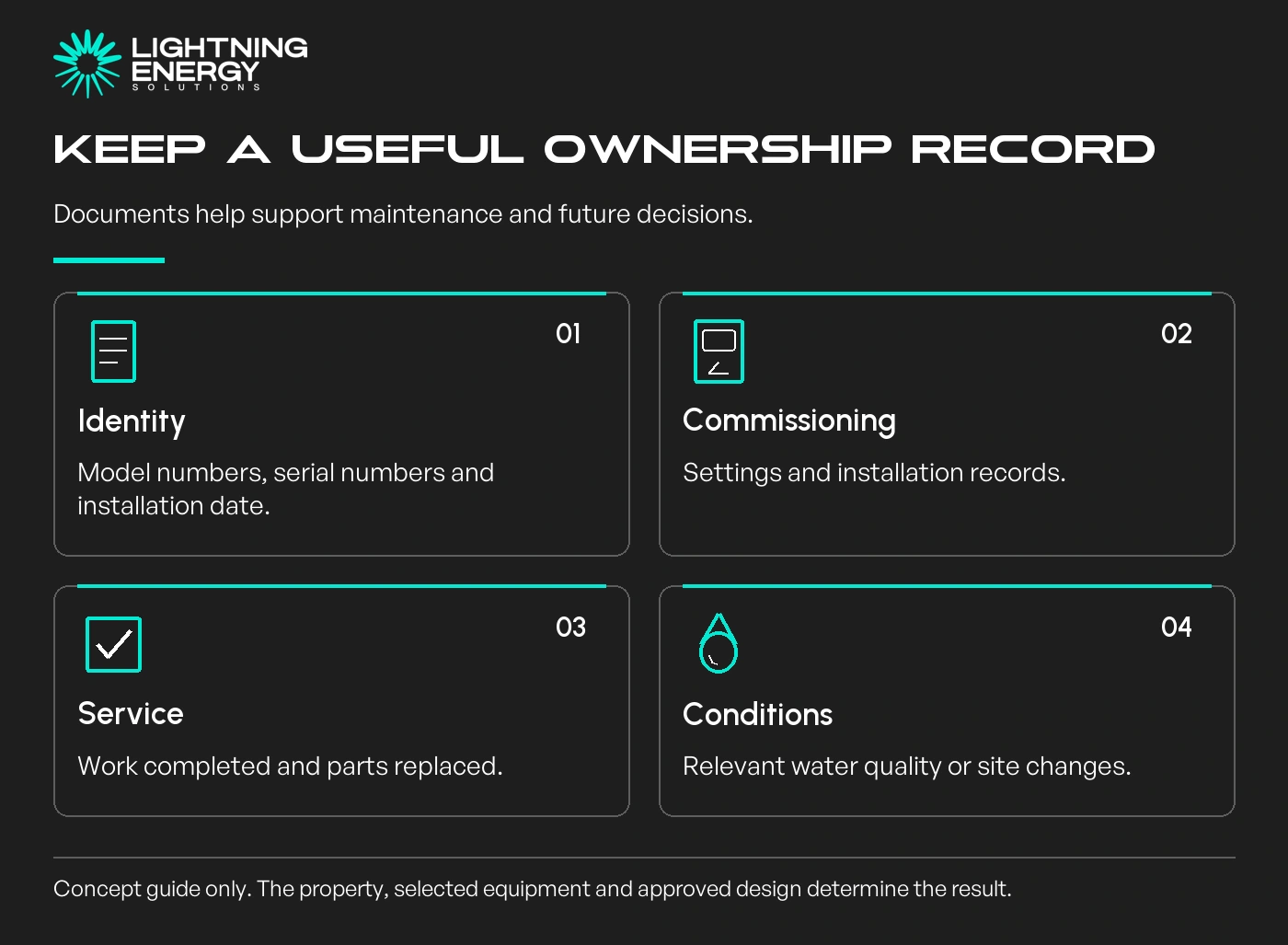
Keep commissioning and service records, with the model and serial numbers. They help establish what was installed and what work has been carried out if support is needed later.
Do not assume every tank needs the same maintenance or anode treatment. Cylinder materials and designs differ; a general online checklist should not replace the owner's manual.
If the system uses a solar-focused timer, ensure necessary safety and protective functions remain available. Cutting power indiscriminately is not a life-extension strategy.
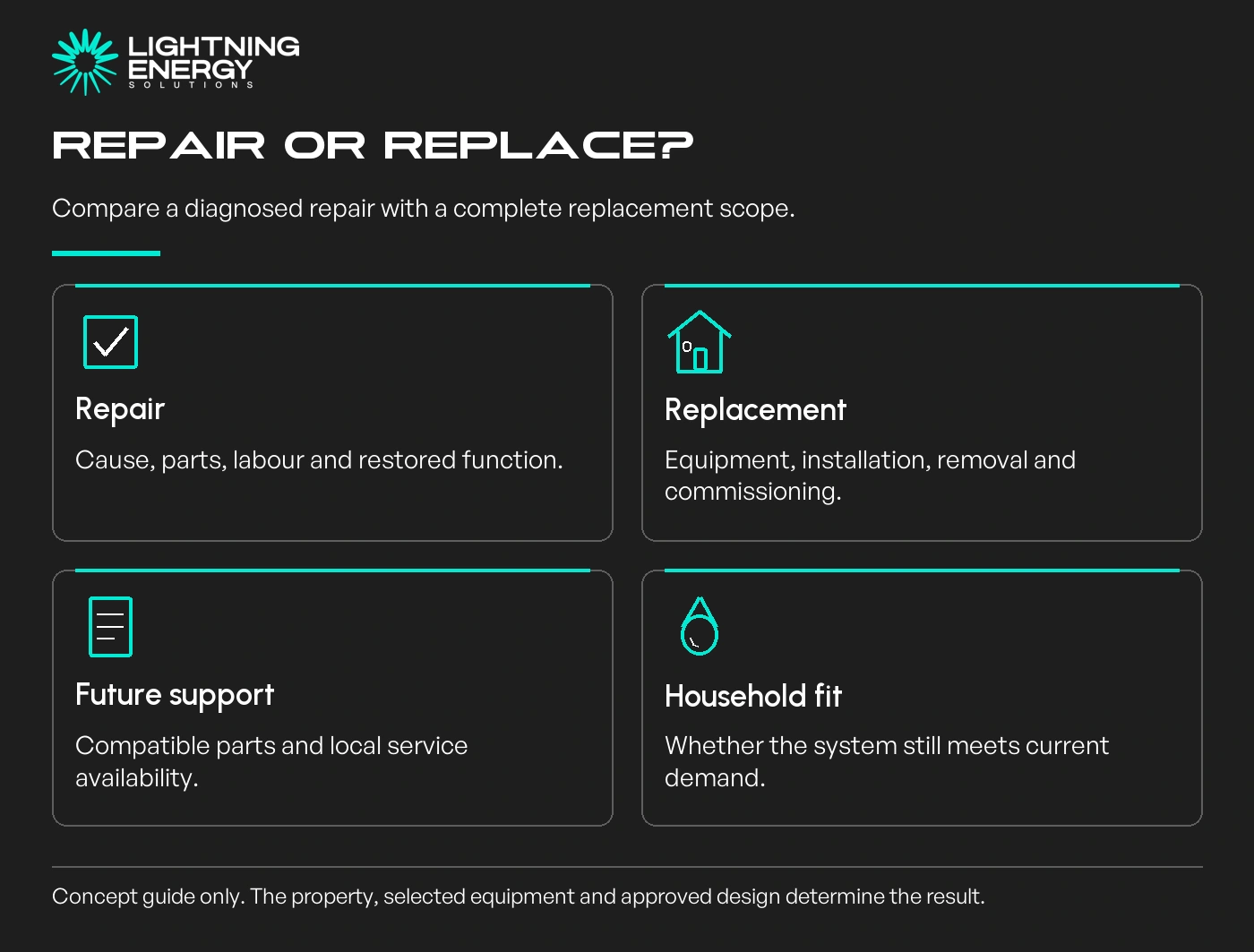
Request a diagnosis, repair scope, parts availability and an itemised price. Ask whether the repair restores the expected function and what warranty applies to the completed work.
For replacement, include installation changes, removal and commissioning in the comparison. A lower appliance-only price is not necessarily a lower complete-job cost.
Avoid assuming a new model's advertised efficiency applies to your old system's measured consumption. Compare realistic demand, climate and operating modes before attributing a payback to replacement.
If solar or the electricity tariff has changed, separate those effects from equipment deterioration. A higher bill may reflect prices or demand rather than a failing heat pump.
For household budgeting, test more than one explicitly assumed ownership period and allow for servicing or repairs. Treat those as scenarios, not promises of how long a particular unit will last.
A working, suitable system does not need replacement merely because it has passed a round-number birthday. Persistent faults, unavailable parts, a damaged cylinder or changed household needs can make replacement more sensible.
Ask for written reasons supporting the recommendation. If the only explanation is “these always last this many years”, request evidence specific to the equipment and its condition.
Contact us with model details and service history when considering the options. Useful lifespan advice connects condition, support and cost to your decision, rather than giving a universal countdown.
Available times
Book a consultation and we'll map solar, storage, hot water, and the rebates around your bills and your goals.
Question 1 of 6