
Insulation and Draught Sealing Before Replacing Gas Heating
Consider insulation and draughts alongside a heating upgrade, with a sensible sequence for an older Melbourne home, urgent replacement or staged budget.
Consider insulation and draughts alongside a heating upgrade, with a sensible sequence for an older Melbourne home, urgent replacement or staged budget.

Improving insulation and managing unwanted draughts can reduce the heating task, so they belong in the conversation before choosing replacement capacity. You do not have to complete a major renovation before replacing a failed heater.
The practical aim is to agree what building condition the new system is being designed for. That avoids sizing for improvements that are only imagined, or overlooking work already scheduled.
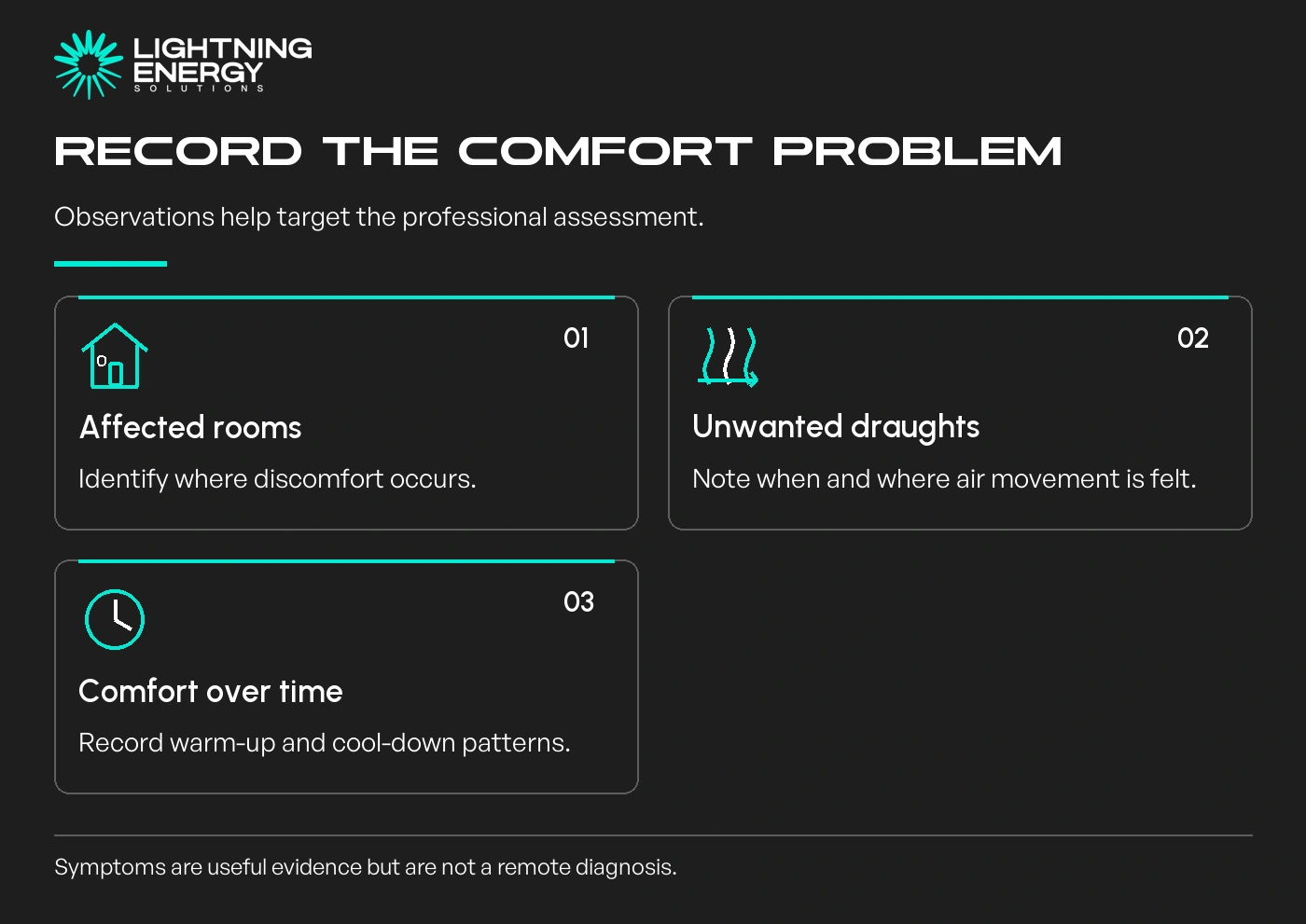
In an older weatherboard home, record where discomfort occurs: a cold floor, draught near a window, rooms cooling quickly after heating stops or one exposed wall. These are observations to investigate, not diagnoses.
Ask whether the ceiling insulation is known to be complete and suitable. If its condition is uncertain, arrange an appropriate professional assessment rather than entering the roof space yourself.
The air conditioning assessment should consider the building and room use together. A larger heater may warm the air without resolving the source of a local draught or cold surface.
Also record windows, shading and changes already made to the house. The name “weatherboard” alone does not tell the designer how well a particular home retains comfort.
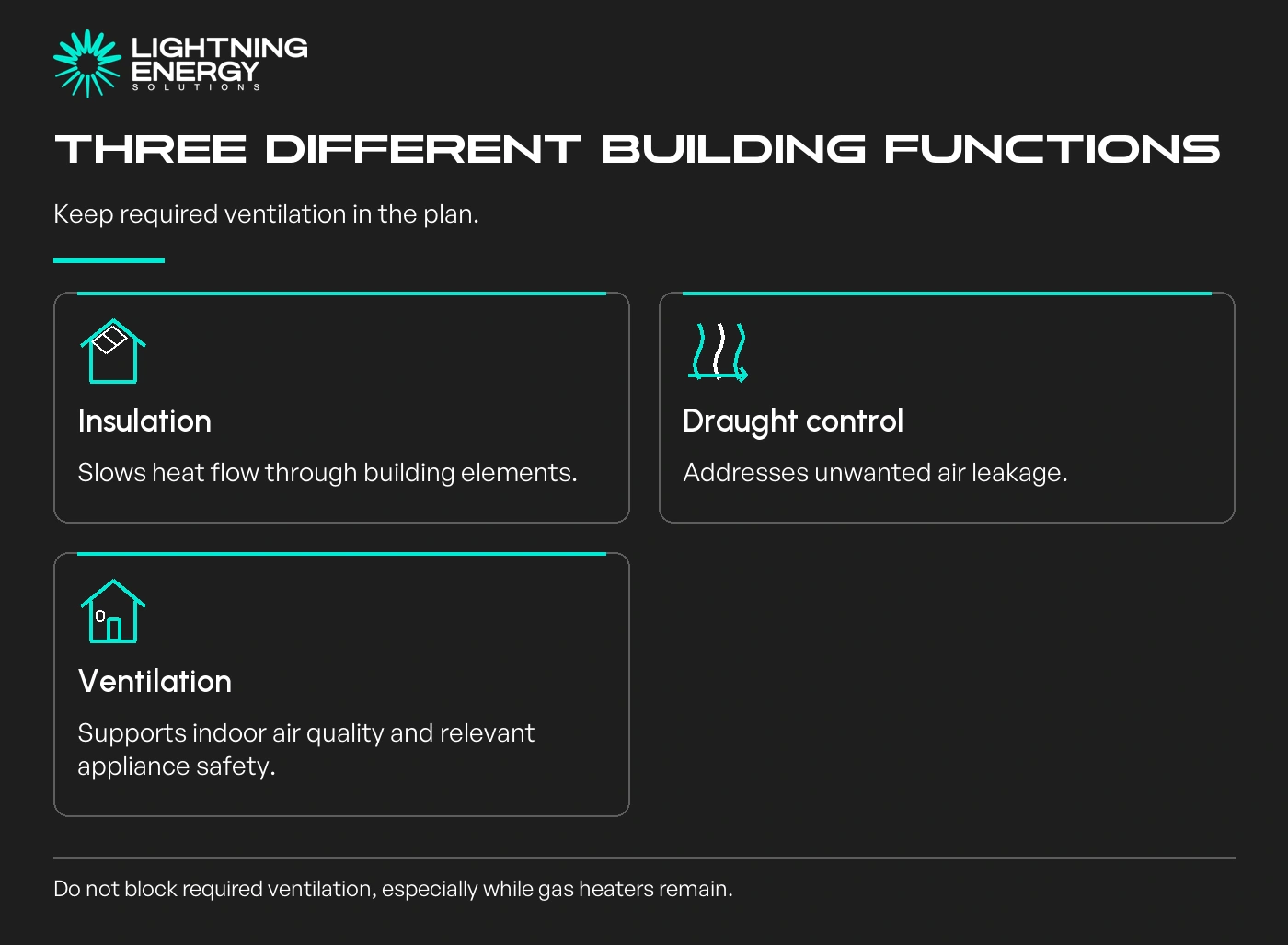
Insulation slows heat flow through building elements. Draught control addresses unwanted air leakage. Ventilation remains necessary for indoor air quality and safe operation of relevant appliances.
Before sealing gaps, identify any remaining gas heaters and their ventilation requirements. The Australian Government specifically cautions that flueless and open-flue gas heaters require adequate ventilation.
Government heating and ventilation guidance.
Do not cover a fixed vent simply because it feels cold. Ask a qualified practitioner to distinguish unwanted leakage from ventilation that must remain, particularly while gas equipment is still in service.
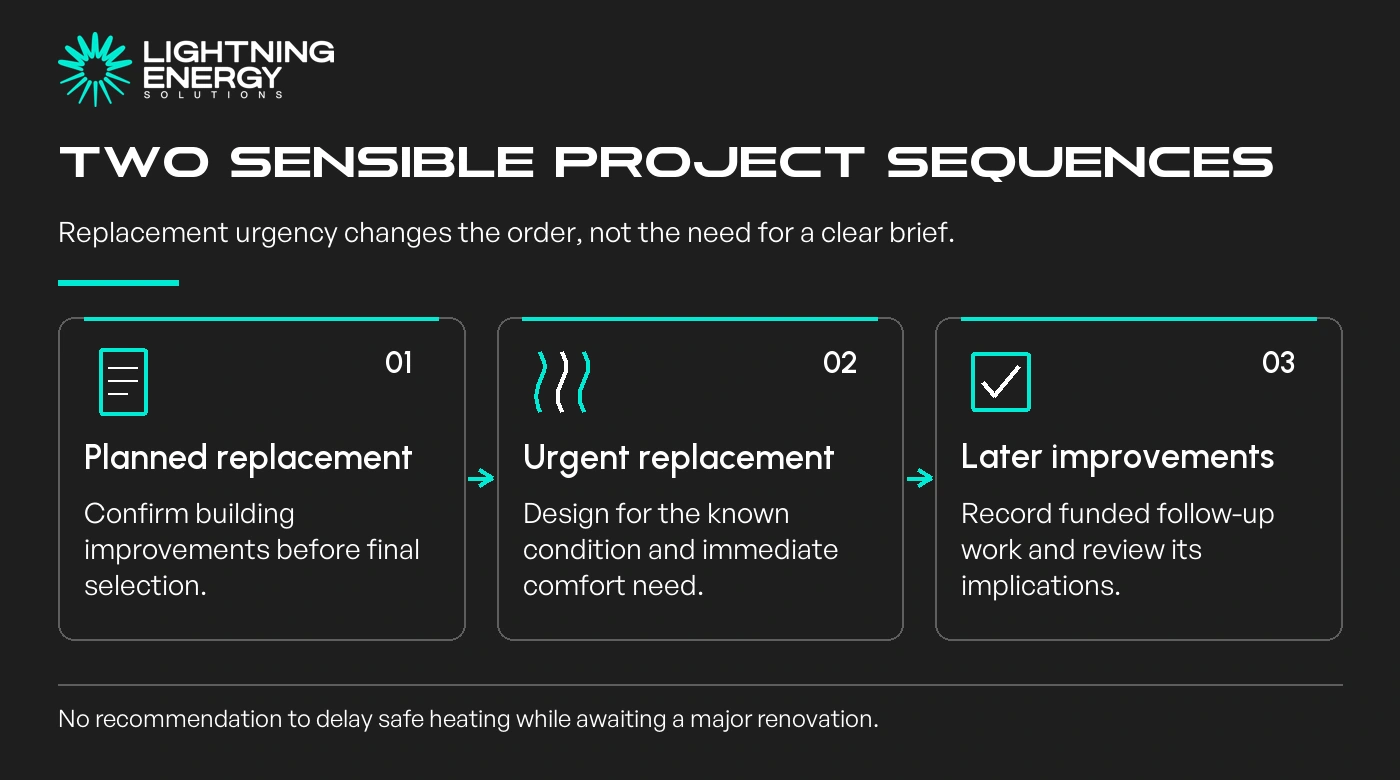
For an illustrative planned replacement, a household might assess ceiling insulation first, commit to repairs, then ask the HVAC designer to use that confirmed condition in the load assessment.
For an urgent failed-heater replacement, the household may need safe heating sooner. Ask the designer to document the present condition and the specific building improvements that can follow.
Where two stages are realistic, compare both in the design discussion. Avoid promising that later insulation work will be done if the budget or access has not been resolved.
Our electrification planning guide helps keep appliance replacement, electrical work and building work in a coherent sequence.
A later heat pump hot water upgrade is a separate project. It may affect the household schedule and gas-exit plan, but it does not replace the need to assess space-heating loads.
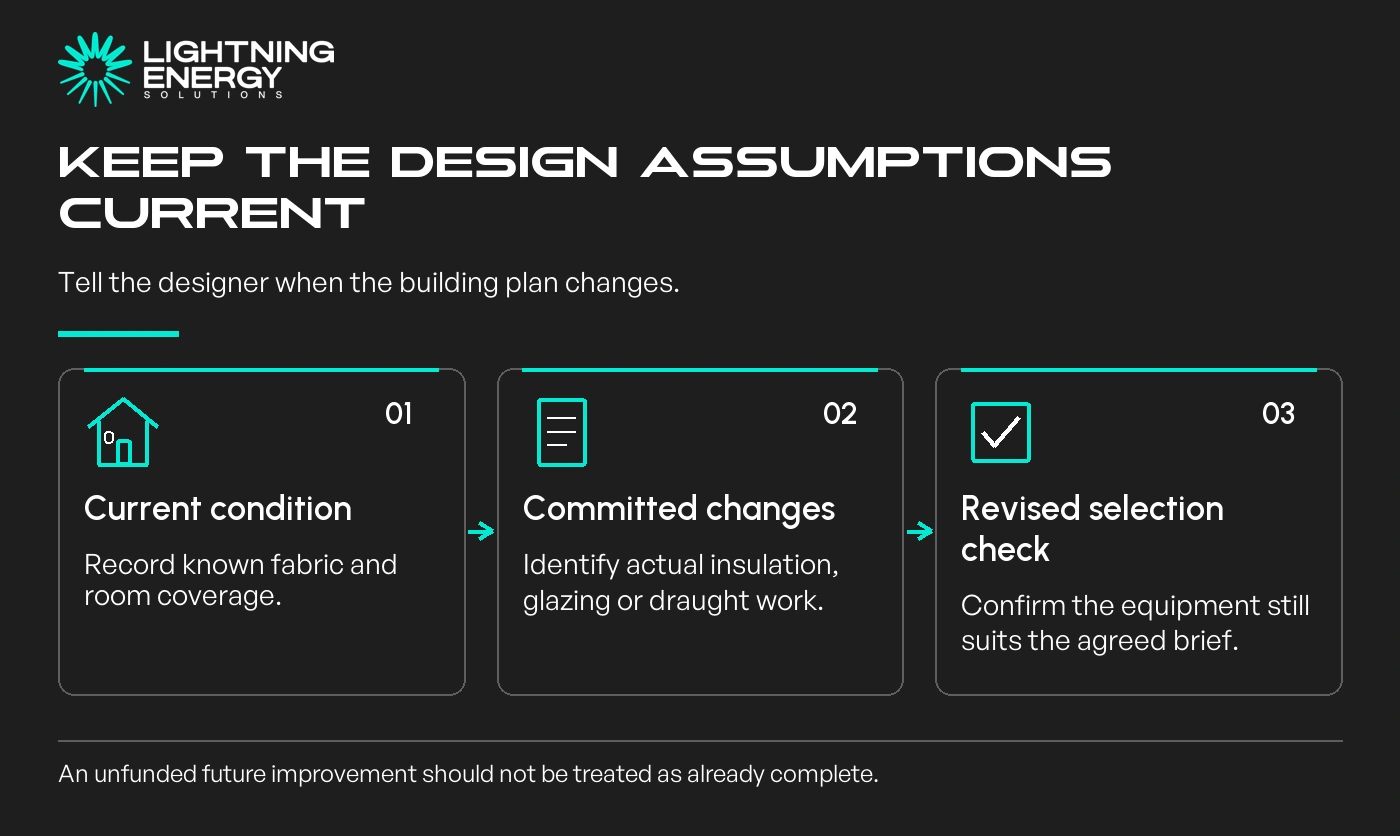
Ask each quotation to list the insulation, glazing and draught assumptions used. When those assumptions change, have the designer confirm whether the selected equipment and zone arrangement still suit the house.
The government’s draught-proofing guidance recommends identifying leakage and maintaining effective ventilation. A professional leakage assessment is one option where the causes are unclear.
Insulation and draught-proofing guidance.
Do not buy a complete window replacement solely because one room feels cold without comparing the likely causes and available remedies. Ask for the problem to be assessed before choosing the largest intervention.
After agreed work, review comfort using the same occupied rooms and a similar routine. Note whether draughts, warm-up time and the tendency to cool down have changed, without treating different weather as a controlled test.
Bring the comfort notes and confirmed building-work plan to a site assessment. Ask which improvements should inform the heating design now and which can sensibly be staged after an urgent replacement.
Available times
Book a consultation and we'll map solar, storage, hot water, and the rebates around your bills and your goals.
Question 1 of 6