
Is a VPP Worth Joining? Compare Rewards, Tariffs and Exit Terms
Compare a VPP with managing the same battery yourself, including rewards, changed bills, battery use, contract conditions and any costs of leaving.
Compare a VPP with managing the same battery yourself, including rewards, changed bills, battery use, contract conditions and any costs of leaving.

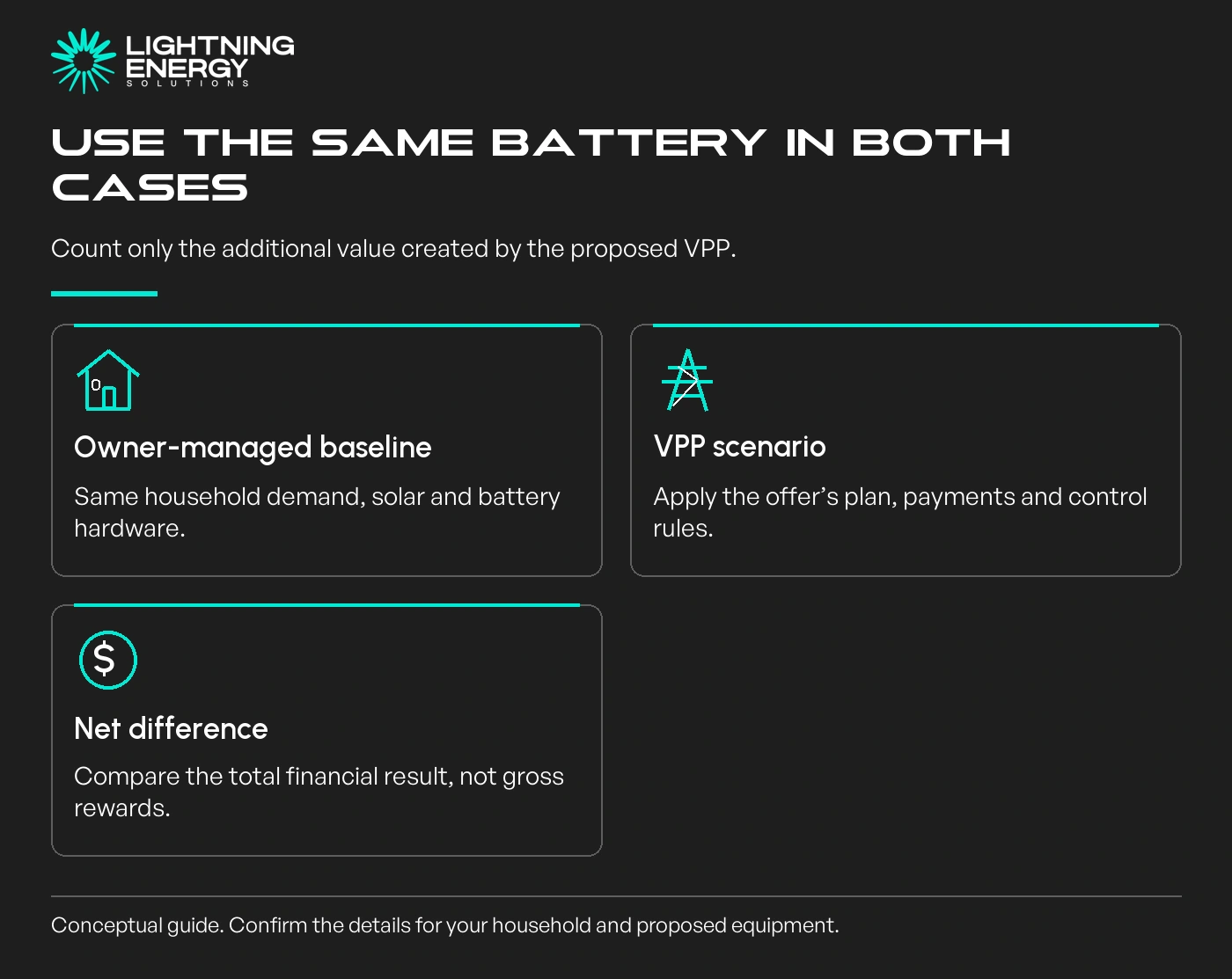
A VPP is worthwhile financially when its additional benefits exceed the additional costs and lost value compared with managing the same battery yourself. The reward headline is only one part of that comparison.
Keep the existing battery's ordinary solar savings in both cases. Otherwise, the VPP can appear to create benefits that the battery would have delivered without enrolment.
Estimate the annual electricity bill under a suitable plan and supported battery settings without the proposed VPP. Include supply charges, imports, exports and any existing subscription.
Then model the VPP offer using the same household demand and solar assumptions. Allow its operating rules and required electricity plan to change the energy flows and charges where appropriate.
Our battery value guide explains why comparing like-for-like starting points matters.
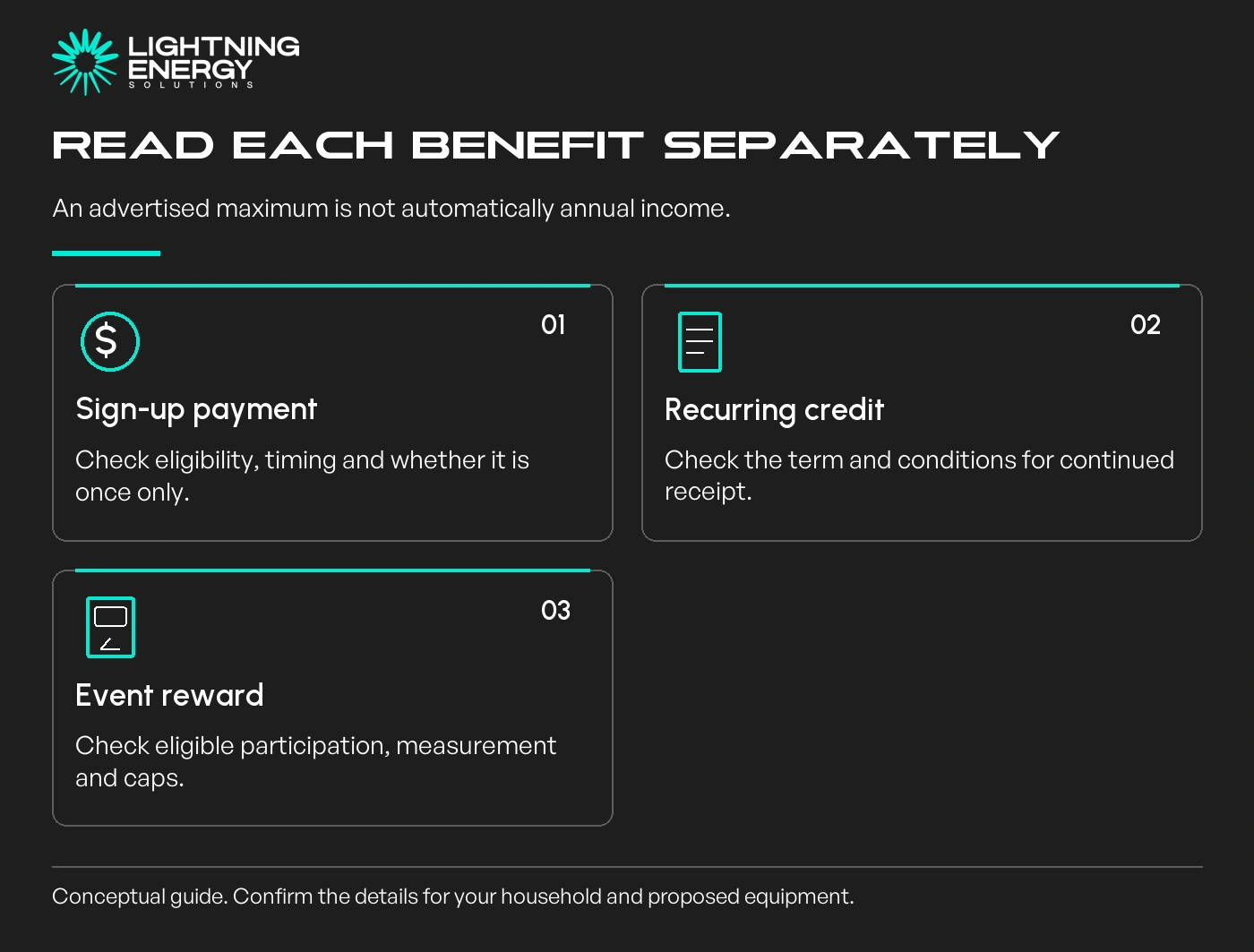
List any sign-up payment, recurring credit, event payment, export rate or other benefit. Record its eligibility rules, caps, timing and duration instead of adding every advertised maximum together.
A first-year bonus should not automatically be repeated through a long-term forecast. An event-based reward depends on eligible participation and the energy or service actually provided.
The Clean Energy Regulator advises consumers to assess VPP contracts, cost implications and battery-warranty effects. It does not set a universal amount households will earn.
Clean Energy Regulator consumer guidance.
Our VPP explainer provides the operating context behind those payments.
A VPP event may affect what remains for household use, later charging or export at another time. Use the offer's actual accounting and rates to work out the net result.
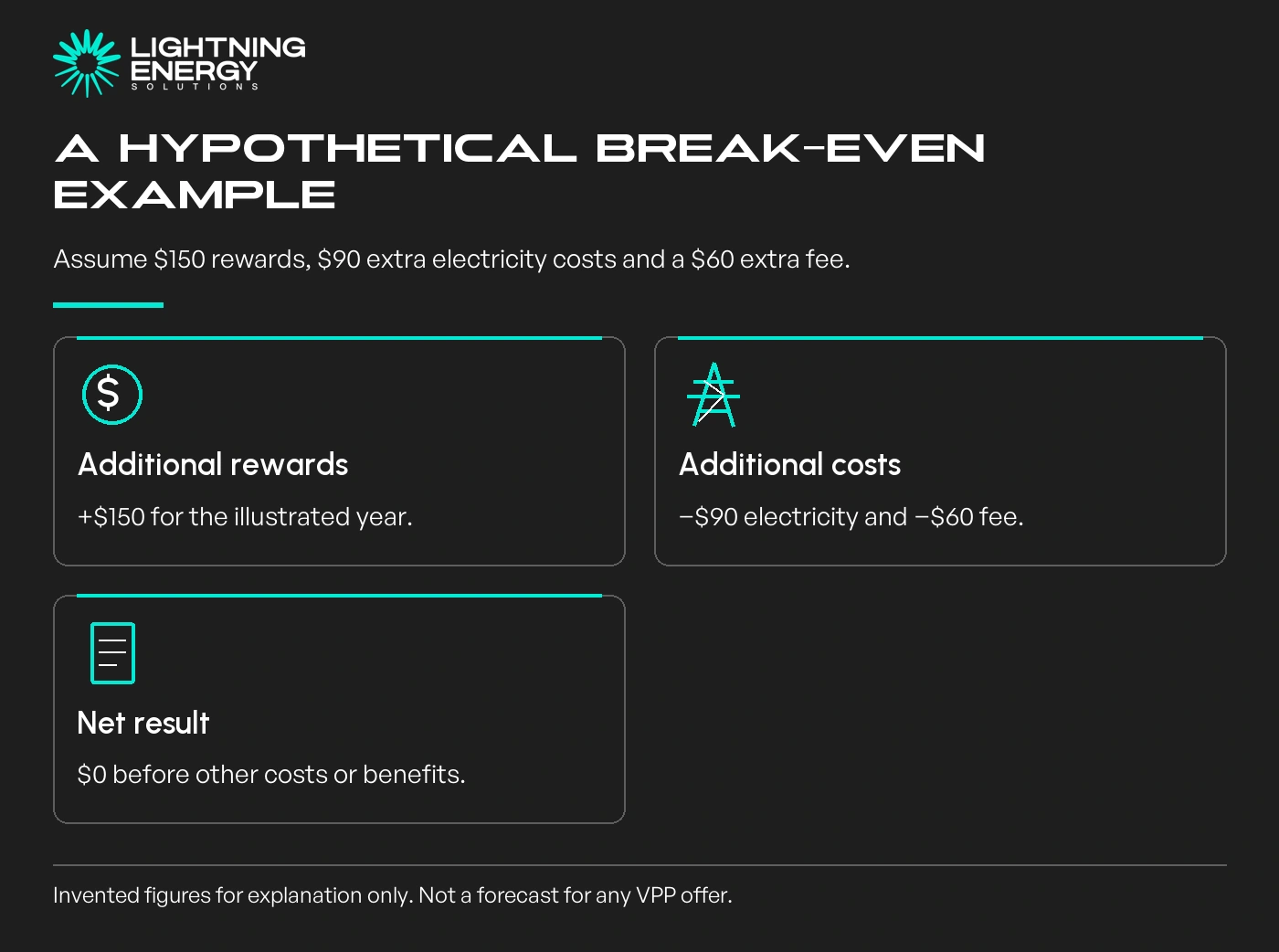
For a deliberately simple illustration, assume $150 in additional annual rewards, $90 in extra net electricity costs and a $60 extra annual fee. The financial difference is zero before other factors.
Those figures are invented to show the method. A different offer could produce a positive or negative result. Do not treat gross event income as profit without checking the accompanying bill.
Also include any required hardware or paid integration. Spread a one-off cost over a clearly stated assessment period rather than hiding it outside the comparison.
Ask whether the intended VPP operation complies with the exact Australian battery warranty. Check any limits involving time, throughput, cycles, retained capacity, connectivity or operating modes.
More battery use should not automatically be described as voiding the warranty, and a long warranty should not be treated as permission for every possible operating strategy. Read the actual terms.
Some offers attach extra benefits to participation. Check whether a warranty extension is available to new entrants, and what happens when a program closes or you leave.
Tesla’s current plan closure FAQ.
Tesla says its Energy Plan ended on 30 September 2025, with eligible existing extended warranties continuing. Old promotional pages should not be treated as current offers for new customers.
Check the contract term, notice period, exit fees, any incentive repayment and the process for ending remote control. Record which terms belong to the VPP and which belong to the electricity plan.
A promise of no exit fee does not settle every question. Check whether a sign-up reward must be repaid, another plan has conditions, or remote access needs to be removed.
Request the complete current contract, not just a marketing summary. Save a dated copy with your battery warranty and electricity rates.
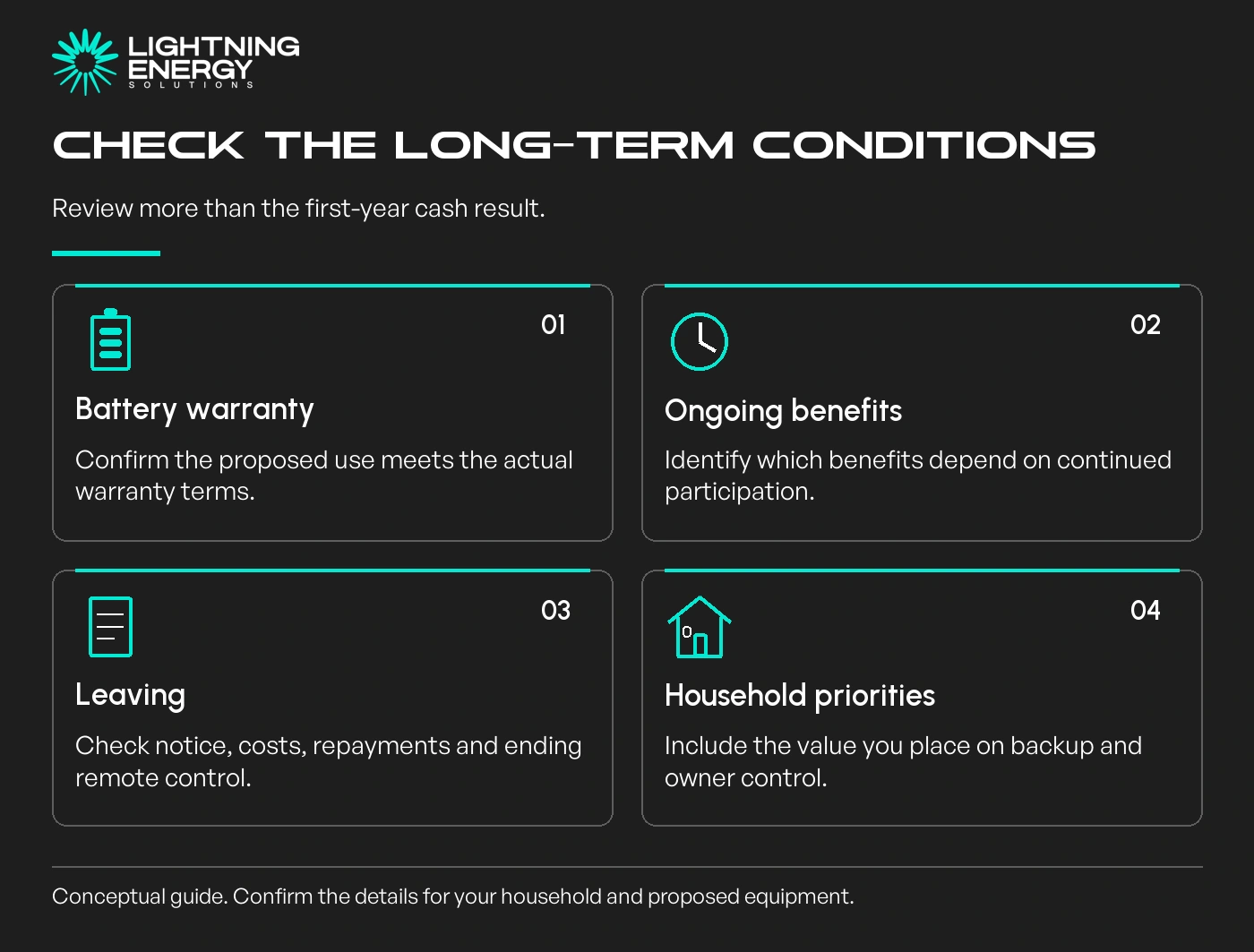
If expected gains are small and the controls do not suit your priorities, remaining owner-managed can be a sensible choice. A well-designed home battery does not need every available service layered onto it.
Plan your battery upgradeBring the VPP offer, current electricity plan and warranty documents. We can help define the technical assumptions for a fair comparison with owner-managed operation.Available times
Book a consultation and we'll map solar, storage, hot water, and the rebates around your bills and your goals.
Question 1 of 6
