
Clear Communication for Your Home Electrification Project
Keep an electrification project clear with an agreed household brief, plain-language written scope, accessible explanations and a shared handover checklist.
Keep an electrification project clear with an agreed household brief, plain-language written scope, accessible explanations and a shared handover checklist.

Clear communication helps a household choose an electrification project it understands and can use. Everyone affected should know what is proposed, what it costs and what will change at home.
Start with a shared written brief and ask for unfamiliar terms to be explained. Where language or accessibility support is needed, arrange it before important decisions are signed.
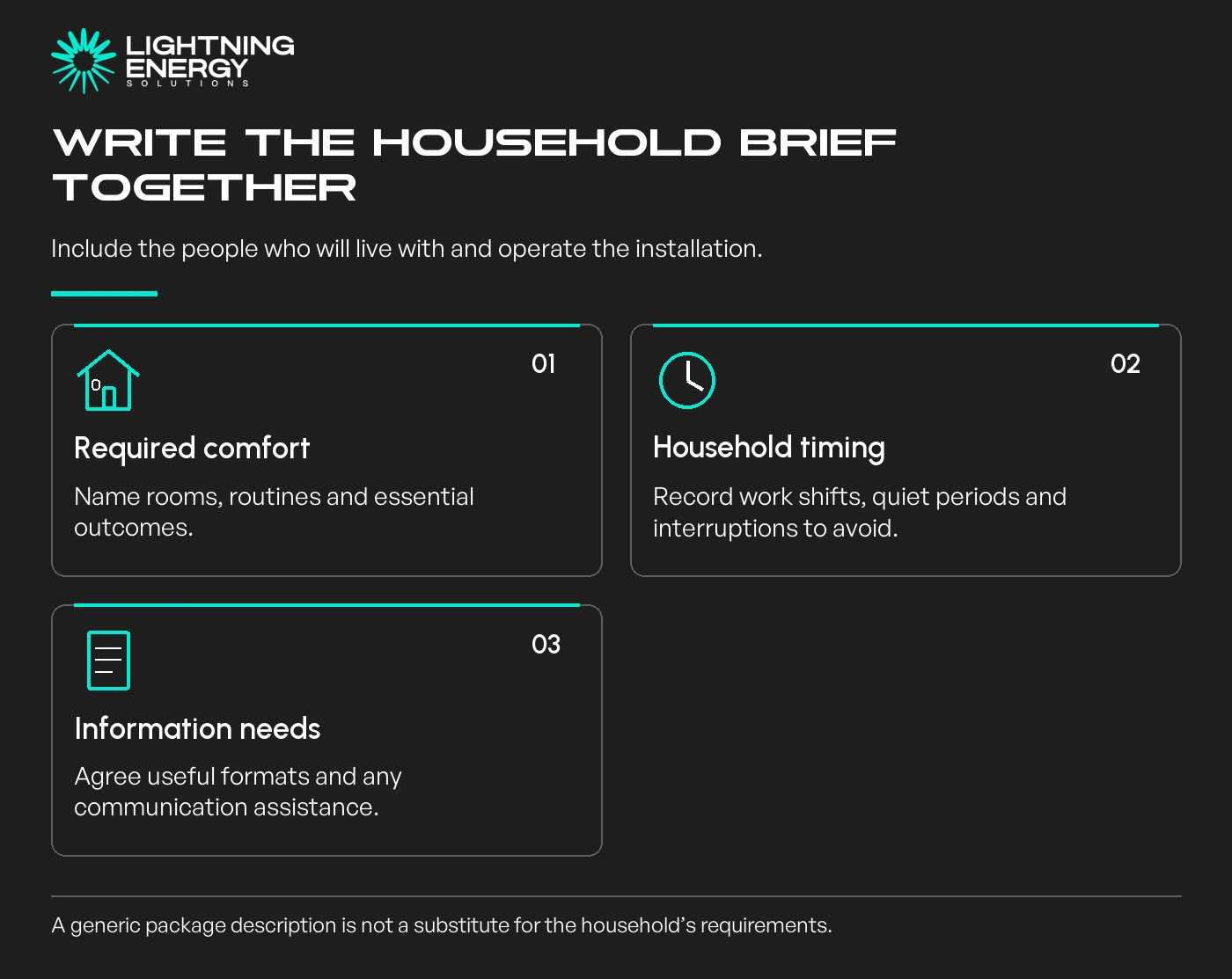
List the rooms that need heating and cooling, normal hot water use, existing appliances and any planned electric vehicle. Add working-from-home patterns and the times when quiet or uninterrupted services matter.
Separate essential requirements from preferences. “Warm bedrooms by bedtime” gives the designer a clearer task than “a bigger system”, while still leaving room to discuss practical options.
Ask household members how they prefer to receive information: written steps, diagrams, a demonstration or another accessible format. Do not assume the person arranging the quote is the only future user.
Our whole-home guide can help frame the discussion. The shared brief should reflect your household rather than copy a generic package description.
For an illustrative family with different work shifts, the quiet-time requirement may affect equipment location and operating schedules. Include it before the location is finalised.
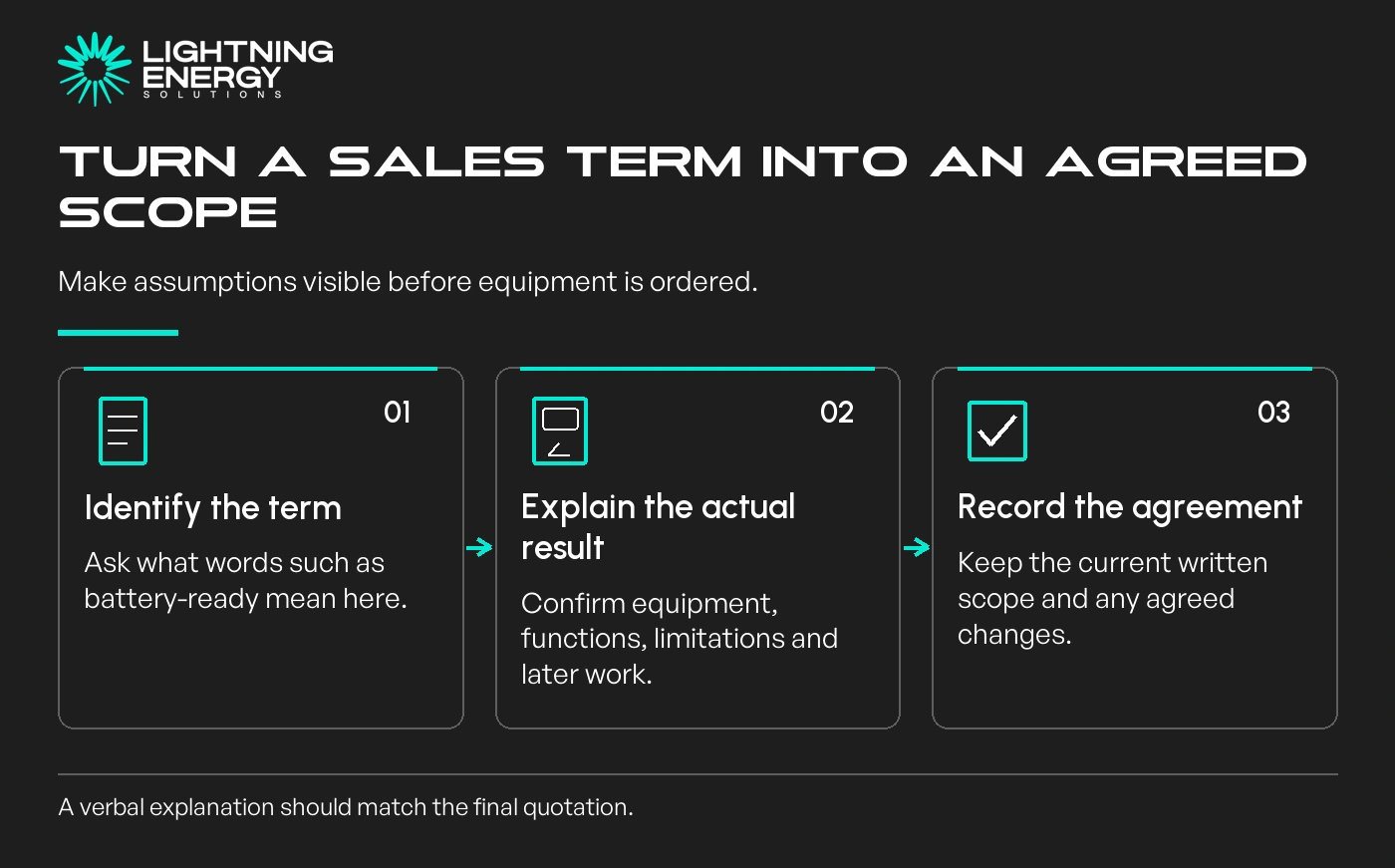
Ask the supplier to explain what each important term means for the proposed installation. “Battery-ready”, for example, needs an explanation of the actual equipment, compatibility and extra work needed later.
A label such as “whole-home cooling” should be tied to rooms, zones and expected simultaneous operation. It should not leave family members with different ideas about what they are buying.
Consumer Affairs Victoria recommends understanding the quoted scope, documenting discussions and agreeing how variations or delays will be handled.
CAV guidance on tradesperson quotes.
For air conditioning work, request a marked floor plan where it helps. For other equipment, a simple location drawing can reveal an assumption that a written model number does not.
Keep the latest agreed version in one place and identify superseded quotes. A verbal change should be written into the scope before the affected work proceeds.
Ask the business what communication assistance it can provide and whether an interpreter or support person can join the discussion. Confirm arrangements rather than assuming every installer offers translated contracts.
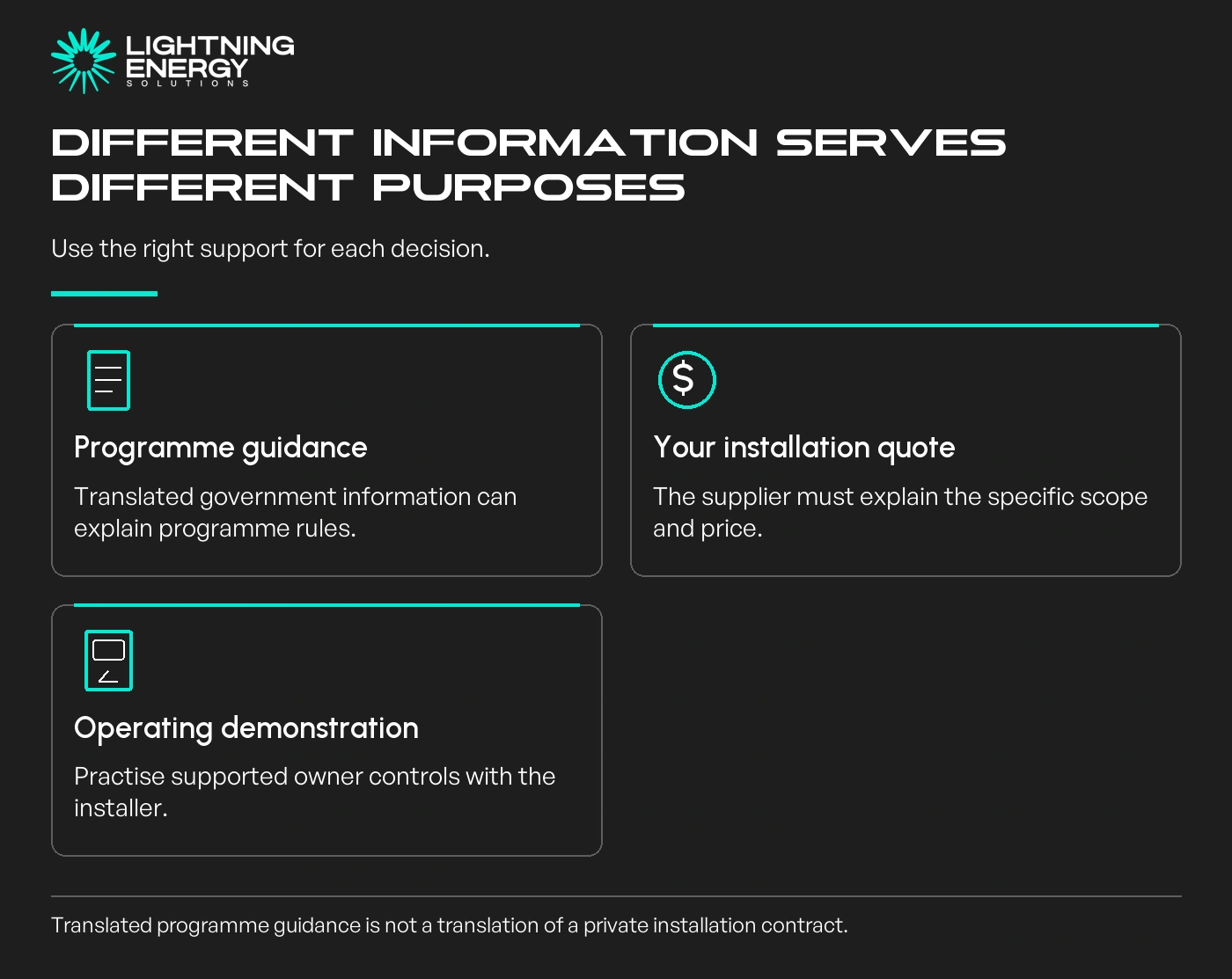
Solar Victoria provides programme information in several community languages and explains how to obtain telephone interpreter assistance for its services.
Solar Homes information in your language.
Translated programme guidance explains the programme; it does not translate your private installation contract or confirm your eligibility. Ask the relevant party to explain each document you must agree to.
For a hot water replacement, request a clear explanation of the operating schedule, safe owner controls and service contact. A demonstration may be more useful than several pages of unfamiliar terminology.
Allow time for household questions before accepting a material change. Do not treat silence, a hurried signature or a language barrier as proof that the scope was understood.
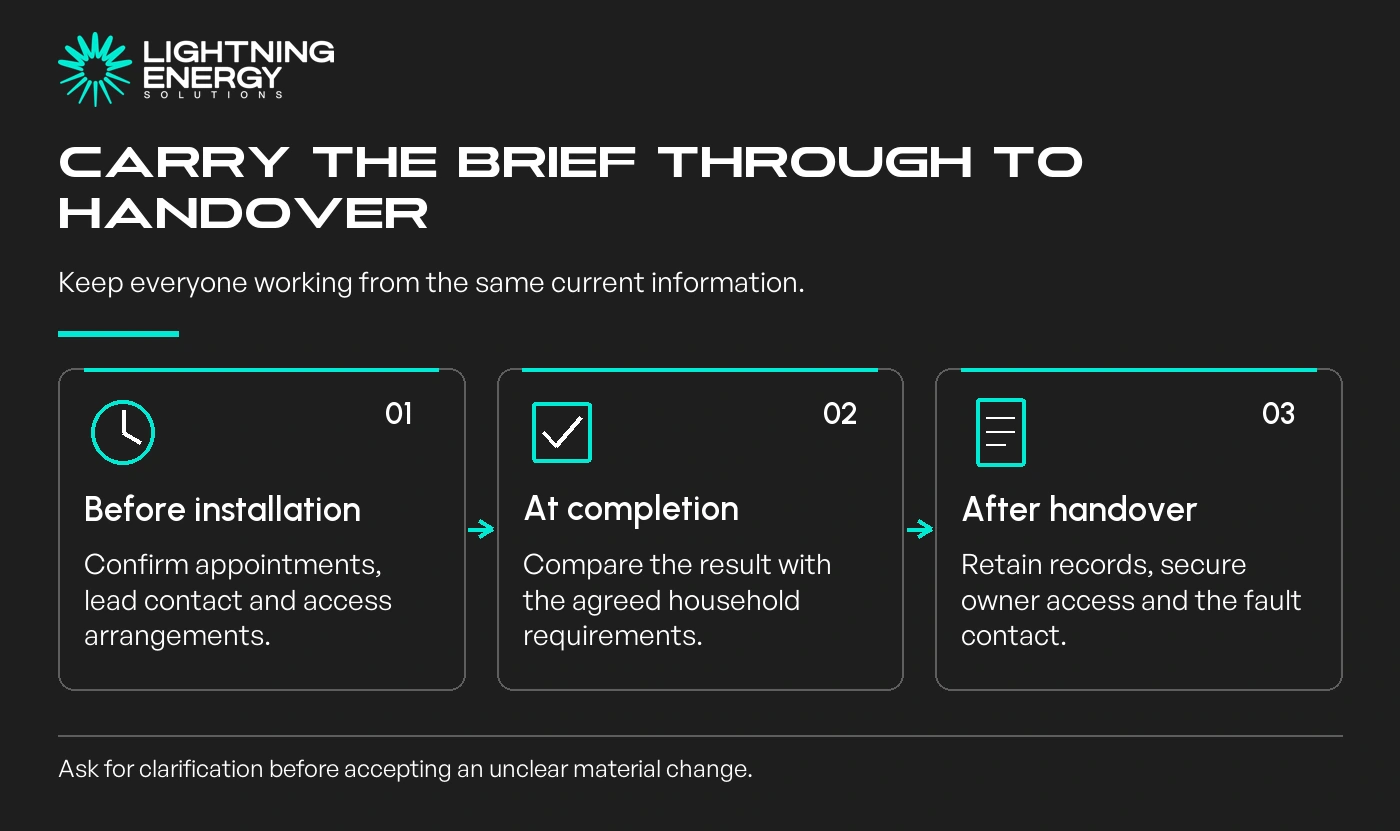
Record the lead contact, trade appointments, expected interruptions and any access arrangements. Tell the project contact if household circumstances change before work begins.
At handover, compare the completed work with the agreed brief. Ask the person who will normally use the controls to practise the supported functions while the installer is available.
Keep model details, manuals, warranty terms, required certificates and unresolved items together. Identify who will respond to a fault, not just the salesperson’s first name.
Do not share account passwords across an open group message. Use the equipment’s supported owner-access arrangements and keep recovery details secure.
If an explanation remains unclear, pause that decision and ask for a simpler written description or another demonstration. Understanding the installation is part of making it useful over its working life.
Share the household brief and any communication needs when you request an assessment. Clear decisions, agreed records and practical handover help every user get value from the project.
Available times
Book a consultation and we'll map solar, storage, hot water, and the rebates around your bills and your goals.
Question 1 of 6