
NSW Home Energy Saver Loans: Income Limit Changes on 10 November
NSW Home Energy Saver loan eligibility changes at 9 am on 10 November 2026. Check the income limits, eligible upgrades, repayments and discount timing.
NSW Home Energy Saver loan eligibility changes at 9 am on 10 November 2026. Check the income limits, eligible upgrades, repayments and discount timing.

NSW’s Home Energy Saver loan is open for applications, offering eligible property owners up to $15,000 at zero interest. It can spread the cost of an energy upgrade, but the money still has to be repaid.
The separate Home Energy Saver discount of up to $4,000 is still marked coming soon, checked on 4 November 2026. It is not yet an approved deduction from your quote.
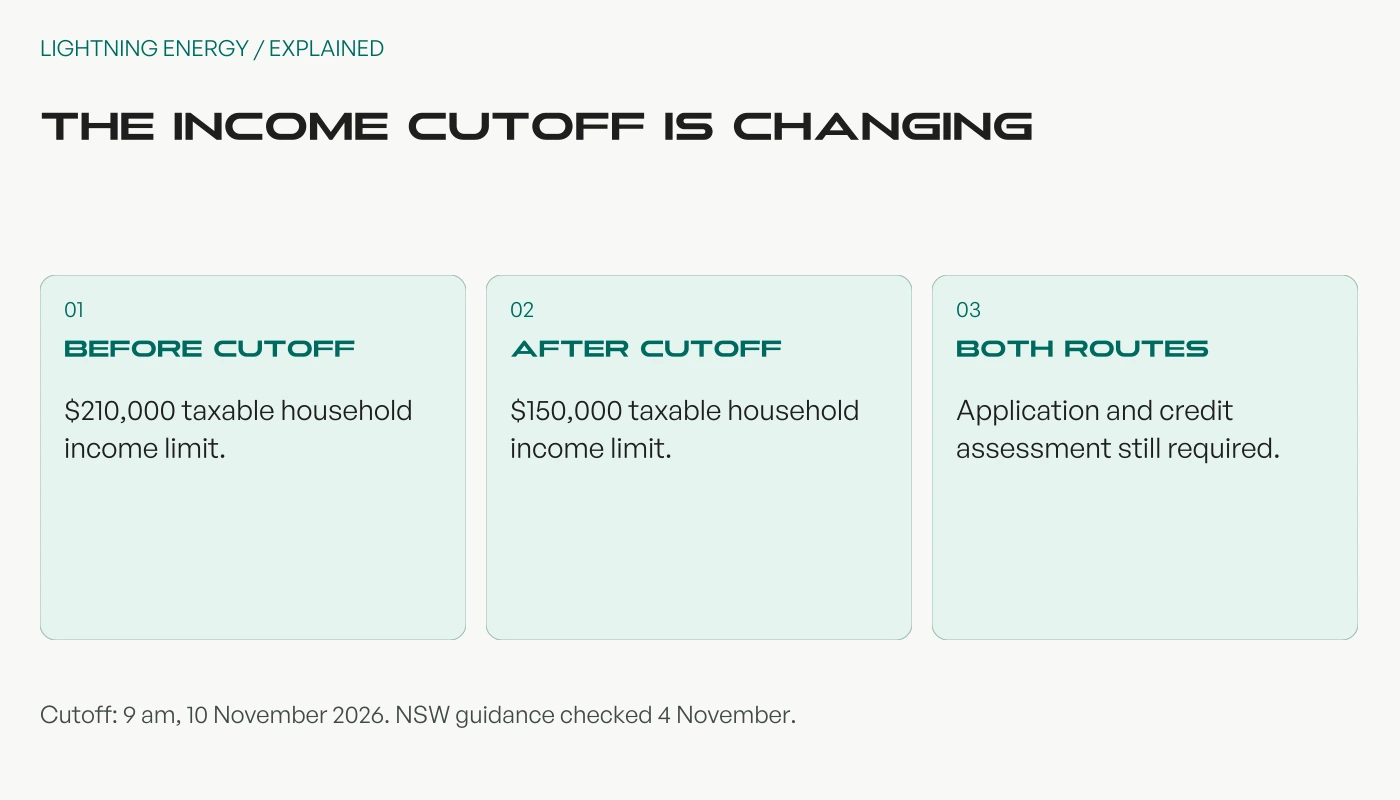
NSW says applications submitted before 9 am on 10 November 2026 will be assessed against a combined taxable household income limit of $210,000. After that cutoff, new applications face a $150,000 limit.
Finance providers also assess the application. Passing the headline income test does not guarantee approval, an approved amount or a particular repayment term.
If you want both the planned discount and the loan on one purchase, NSW recommends waiting and applying for the discount first. Check the program’s current instructions before committing to an installation.
NSW’s eligibility change and application-cutoff FAQ.
Applicants must own the NSW property and be Australian citizens or permanent residents. Ask your lender to confirm the evidence and eligibility rules for your application date.
If the lower limit could affect you, contact a participating lender promptly. Ask what constitutes a submitted application and keep its acknowledgement. A quote request alone is not a completed finance application.
Do not rush into unsuitable equipment or unaffordable debt to meet a deadline. Compare the installed scope and repayment commitment before signing.
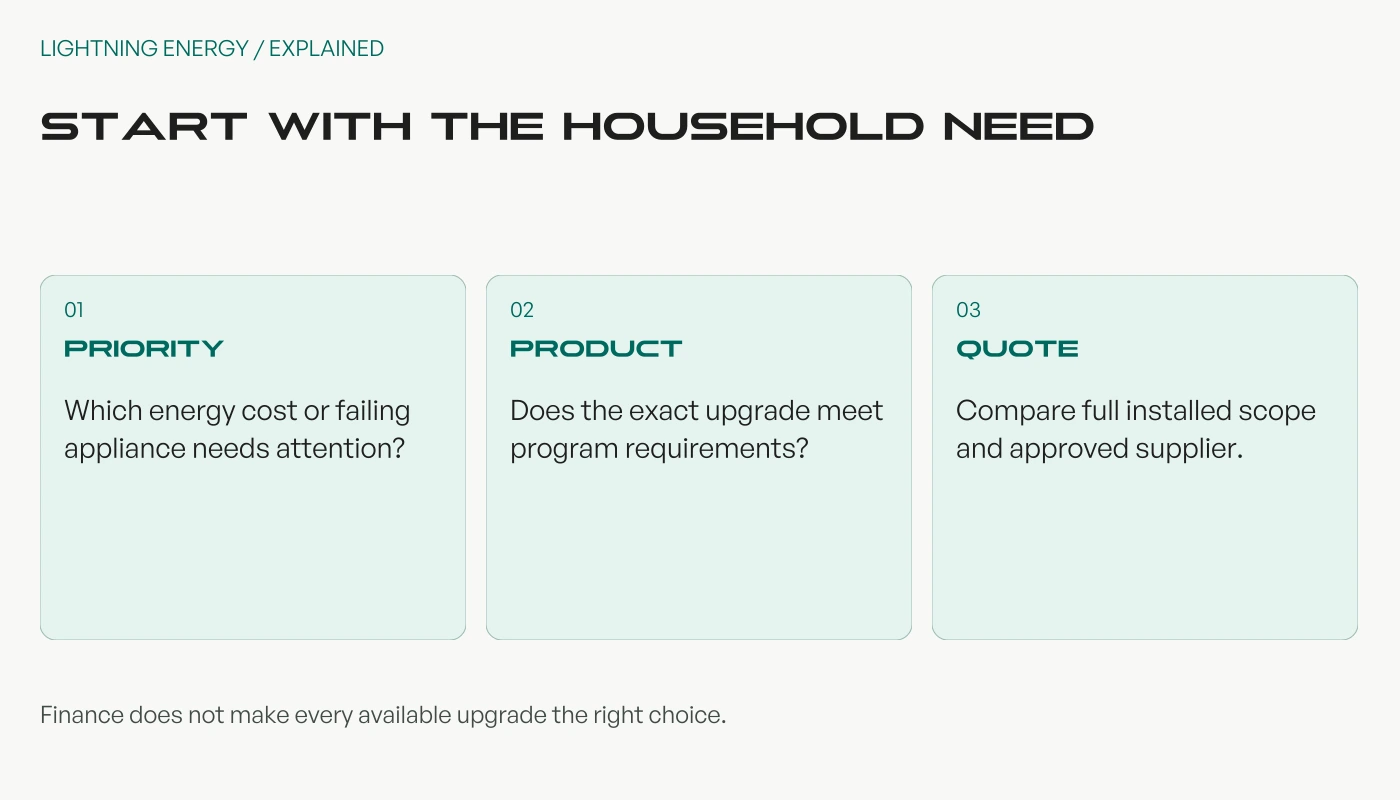
Brighte lists solar, batteries, EV chargers, heat-pump hot water, reverse-cycle air conditioning and induction cooking among the upgrade options. The exact product and approved supplier must satisfy the program requirements.
Provider availability is not identical to a broad technology wish list. For example, Brighte marks insulation, draught proofing and ceiling fans as coming soon on its page. Check the chosen provider’s current offering.
Brighte’s Home Energy Saver offer.
Choose the upgrade around a real household need. A failing hot-water system, high heating demand and surplus daytime solar are different starting points. Financing does not make the largest available system the right one.
Our heat pump guide and air conditioning guide explain equipment considerations before you decide how to fund a replacement.
Brighte advertises terms of up to ten years, subject to approval. Its fee table lists no establishment or account-keeping fee but says a $4.99 late-payment fee may apply, capped at $49.90 a year.
Read the actual finance contract, including missed payments and early repayment. Compare available providers rather than assuming every government-supported loan has identical terms.
Plenti’s Home Energy Saver offer is another participating-provider starting point. This article does not recommend one lender over another.
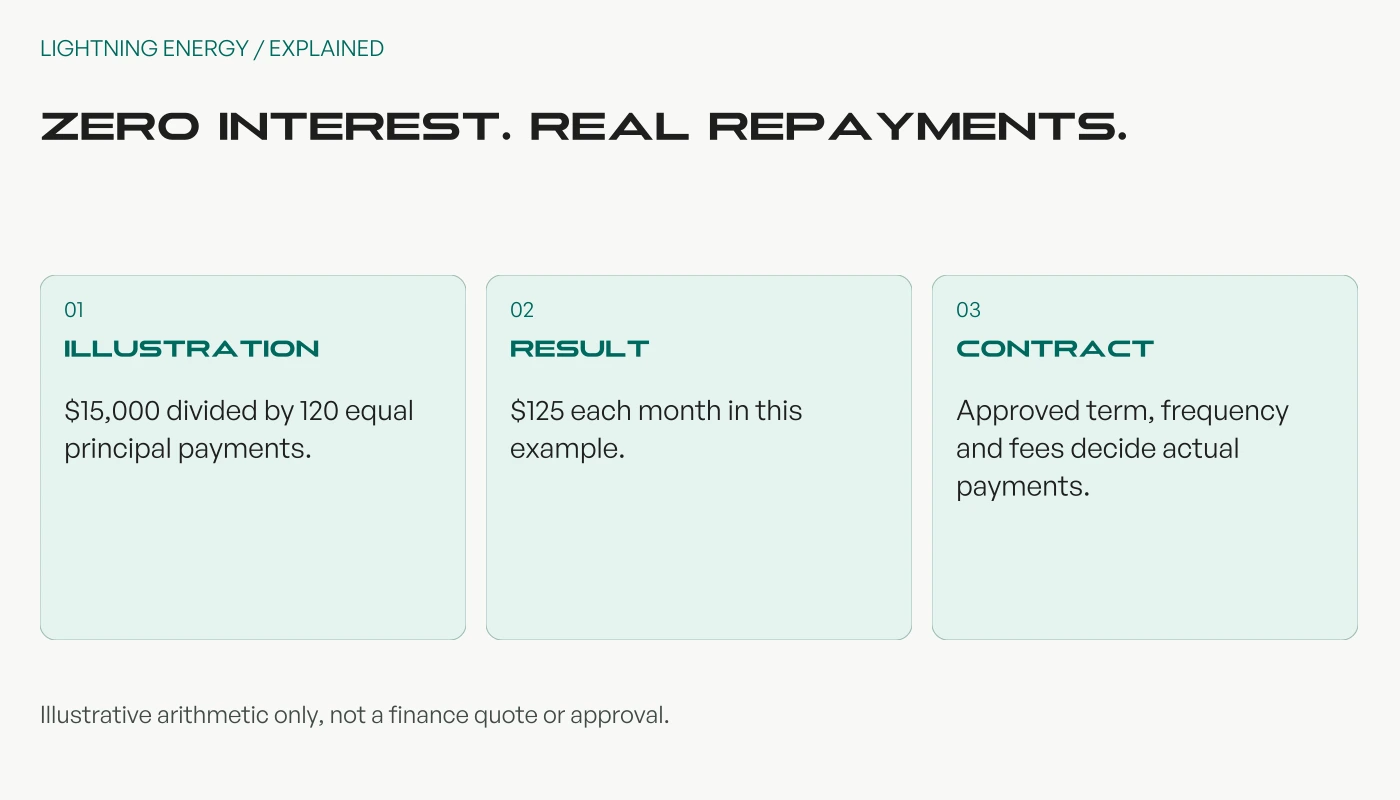
As simple arithmetic, $15,000 divided over 120 equal monthly principal payments is $125 a month. That is an illustration only; the approved amount, payment frequency and contract determine your real schedule.
Test that payment against your budget without assuming promised electricity savings will cover it. Household use, weather, tariffs and equipment performance can all change the result.
The loan guidelines describe an approved supplier’s quote, finance application and assessment, agreement, installation and settlement process. The finance provider pays the supplier following completion confirmation.
The guidelines also call for itemised pricing and relevant installation and product warranties. Any other federal or NSW incentive has its own eligibility and paperwork; stacking is not automatic.
NSW loan guidelines currently linked by the program. Use the newer November eligibility notice for the income-change date.
Keep the cash price, any confirmed discount, your contribution and the financed balance visible as separate numbers. This makes it easier to see whether two quotes are offering the same scope.
For solar and battery quotes, ask about switchboard work, monitoring, connection requirements and backup equipment. An attractive finance headline does not resolve those technical details.
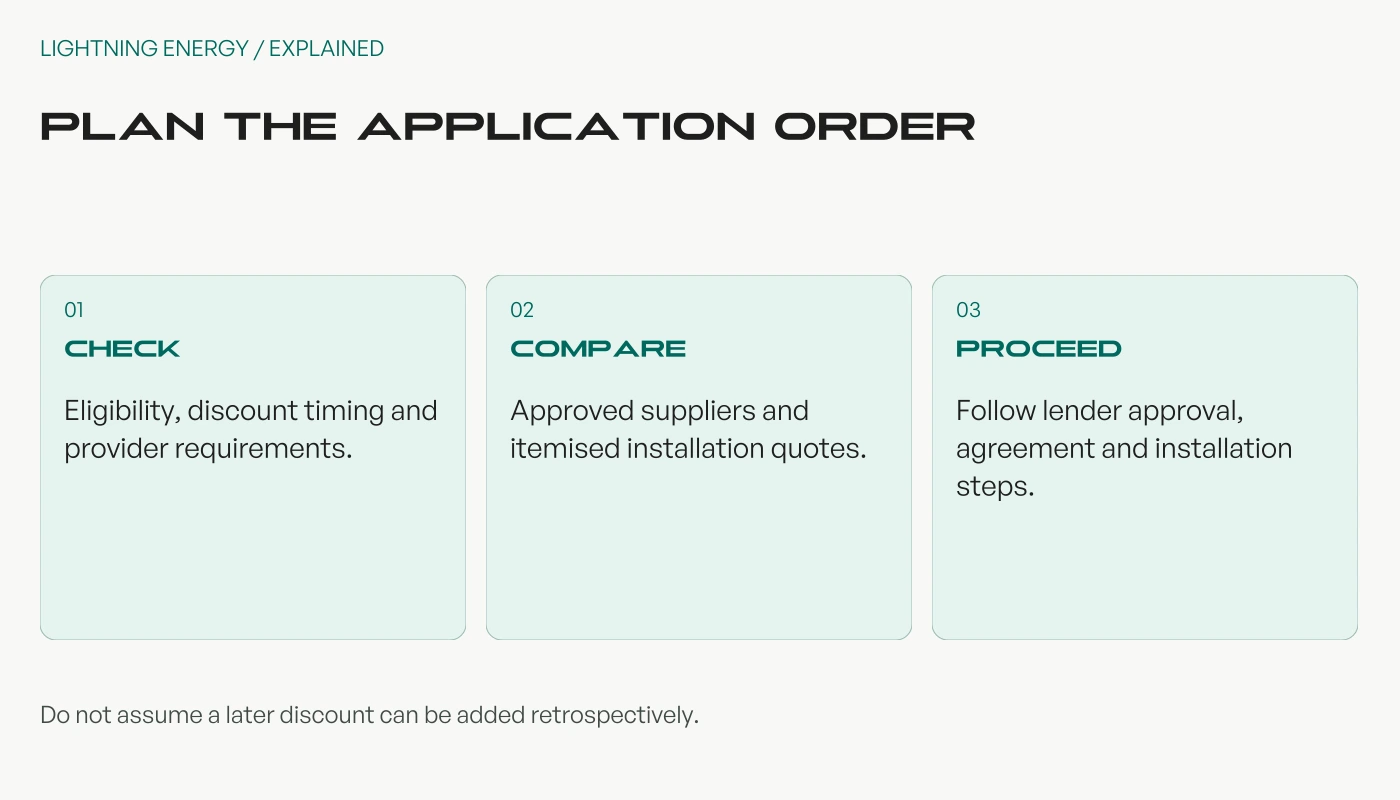
Under the current NSW instructions, taking the loan first prevents a later Home Energy Saver discount being applied to that same purchase. A separate eligible purchase is a different case.
For households eligible for both, the discount-first route may leave a balance that can be financed, subject to approval. The discount is still coming soon; there is no confirmed application date to build an installation promise around.
Check the discount rules and availability.
A practical decision starts with urgency. If an appliance has failed, record the cost and practicality of a temporary alternative. If it still works, compare that situation with waiting for an application pathway that is not open yet.
Keep two written scenarios: the complete installed cash price with the available loan, and a future discount scenario marked conditional. Do not subtract an unapproved discount or assume eligibility for the two programs is identical.
Ask the provider to confirm the purchase, supplier and application sequence before accepting a quote or paying a deposit. Keep the response with the quote so the decision is based on the current program rules.
Prepare your current electricity bill, household usage, property details and preferred upgrade. Then verify the supplier’s status with the chosen finance provider before arranging program-funded work.
You can contact Lightning Energy about the technical scope of a proposed upgrade. Program participation, finance eligibility and approval must be confirmed with the relevant provider; they are not implied by this article.
Updated 4 November 2026 against the linked NSW and finance-provider information. General program information only; approval, savings and future discounts are not guaranteed.
Available times
Book a consultation and we'll map solar, storage, hot water, and the rebates around your bills and your goals.
Question 1 of 6
