
One Bedroom Stays Cold: Tracing Uneven Ducted Heating
Trace a cold bedroom with safe temperature and operating observations, then ask for airflow, return paths and room heat loss to be assessed.
Trace a cold bedroom with safe temperature and operating observations, then ask for airflow, return paths and room heat loss to be assessed.

If one bedroom stays cold while the rest of the house is comfortable, start by recording the pattern. The cause could involve measurement, air delivery, the return path or the room’s heat loss.
A higher whole-house set point or an extra sensor may not address the cause. Give the installer enough information to distinguish a single-room problem from poor heating throughout the home.
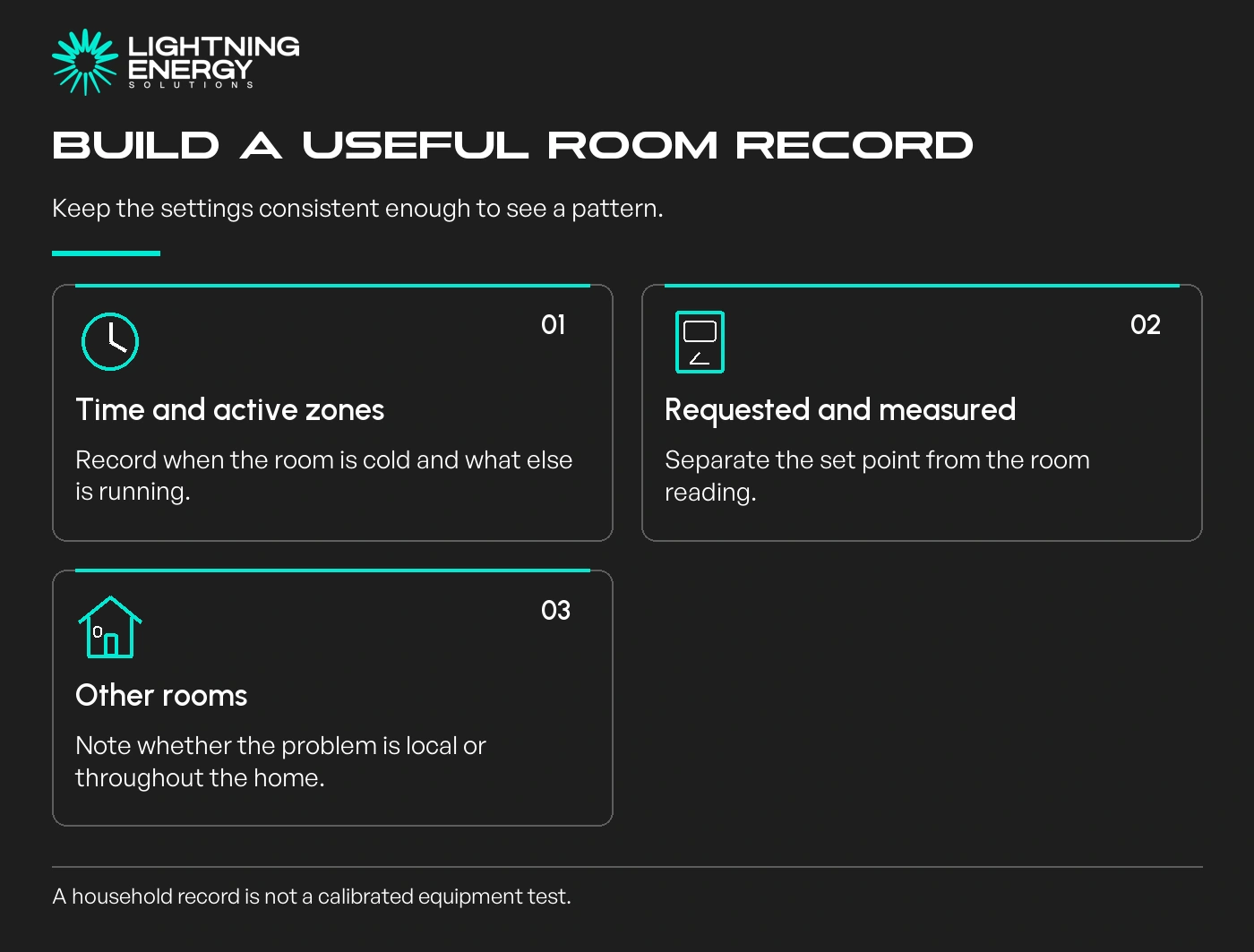
Write down the bedroom, time, requested set point and any displayed room reading. Note which other zones are operating and whether the rest of the home feels comfortable.
If using a separate room thermometer, place it consistently away from direct sunlight and the outlet’s air stream. Treat small differences between devices cautiously; this is a comfort record, not a calibrated performance test.
Ask which sensor controls the main unit. A warm reading elsewhere in the house may not describe the bedroom, even when that bedroom’s zone is selected.
Bring these observations to an air conditioning service discussion. A repeatable pattern is more useful than changing the temperature repeatedly and losing track of the original behaviour.
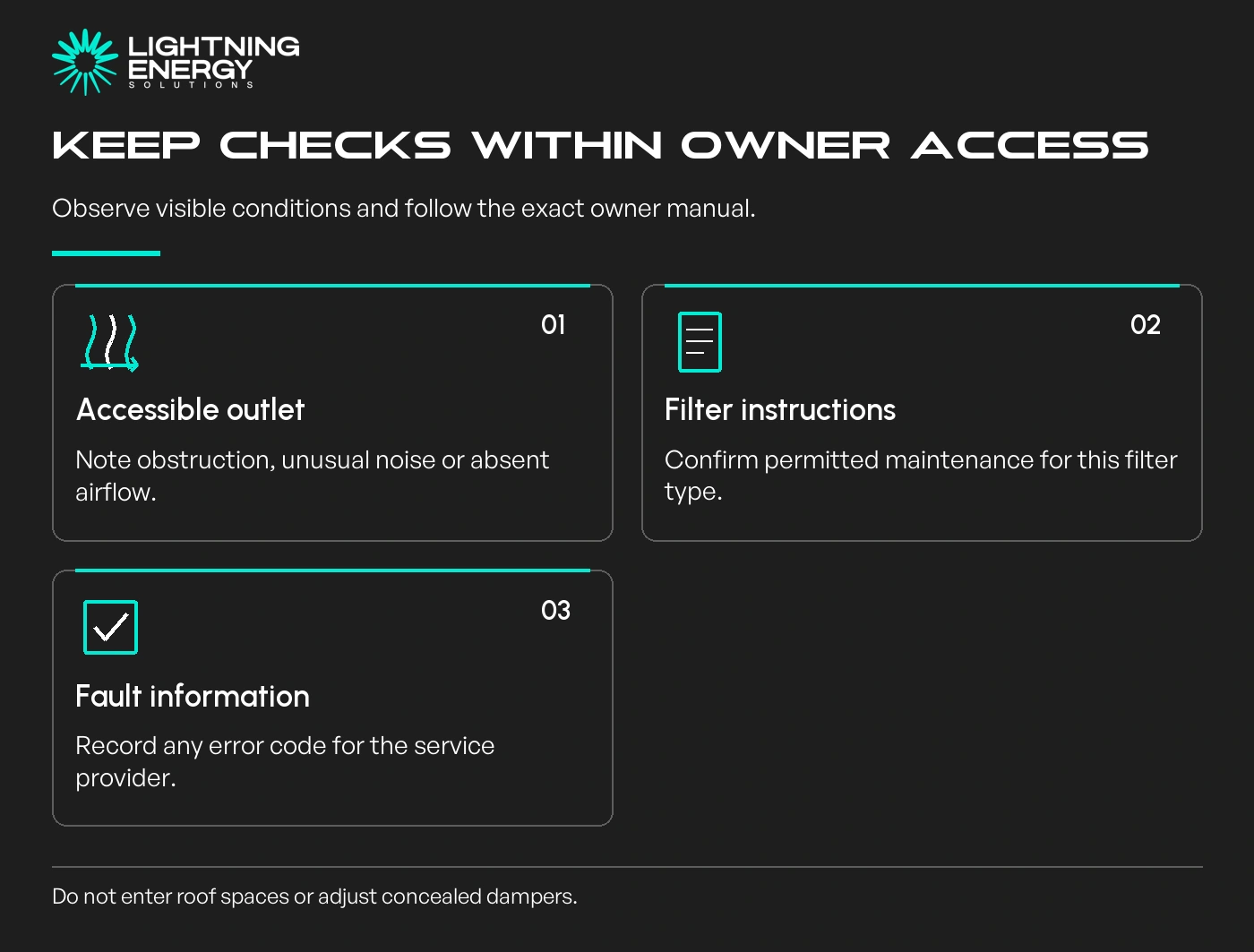
From the occupied room, note whether furniture or curtains obstruct an accessible outlet. Record unusual noise, whether air seems to arrive and whether the problem began after servicing, renovations or a settings change.
Check the filter instructions for your exact system. Daikin’s guidance distinguishes washable and disposable filters and directs owners to the model’s instructions; do not wash a filter simply because another model permits it.
Daikin’s filter-care guidance.
Arrange help if the filter cannot be accessed safely. Do not enter the roof, remove equipment covers or adjust concealed dampers to test a theory.
If the system displays a fault, record the code and contact the service provider rather than repeatedly resetting it and erasing useful evidence.
Note whether the issue occurs with the bedroom door open, closed or both. Report that observation to the installer so the intended return-air path can be assessed.
Do not treat sleeping with the door open as a required permanent fix. The design discussion should reflect the way the room actually needs to be used.
YourHome explains that ducted systems need an appropriate return path from rooms supplied with air.
YourHome’s air-distribution guidance.
Consider an illustrative bedroom at the exposed end of a house, with large glazing and a recurring draught. Its heat-loss assessment may differ from that of an internal room, even if both have an outlet.
Coordinate any building remedy with your home upgrade plan so a control change is not asked to solve a fabric problem.
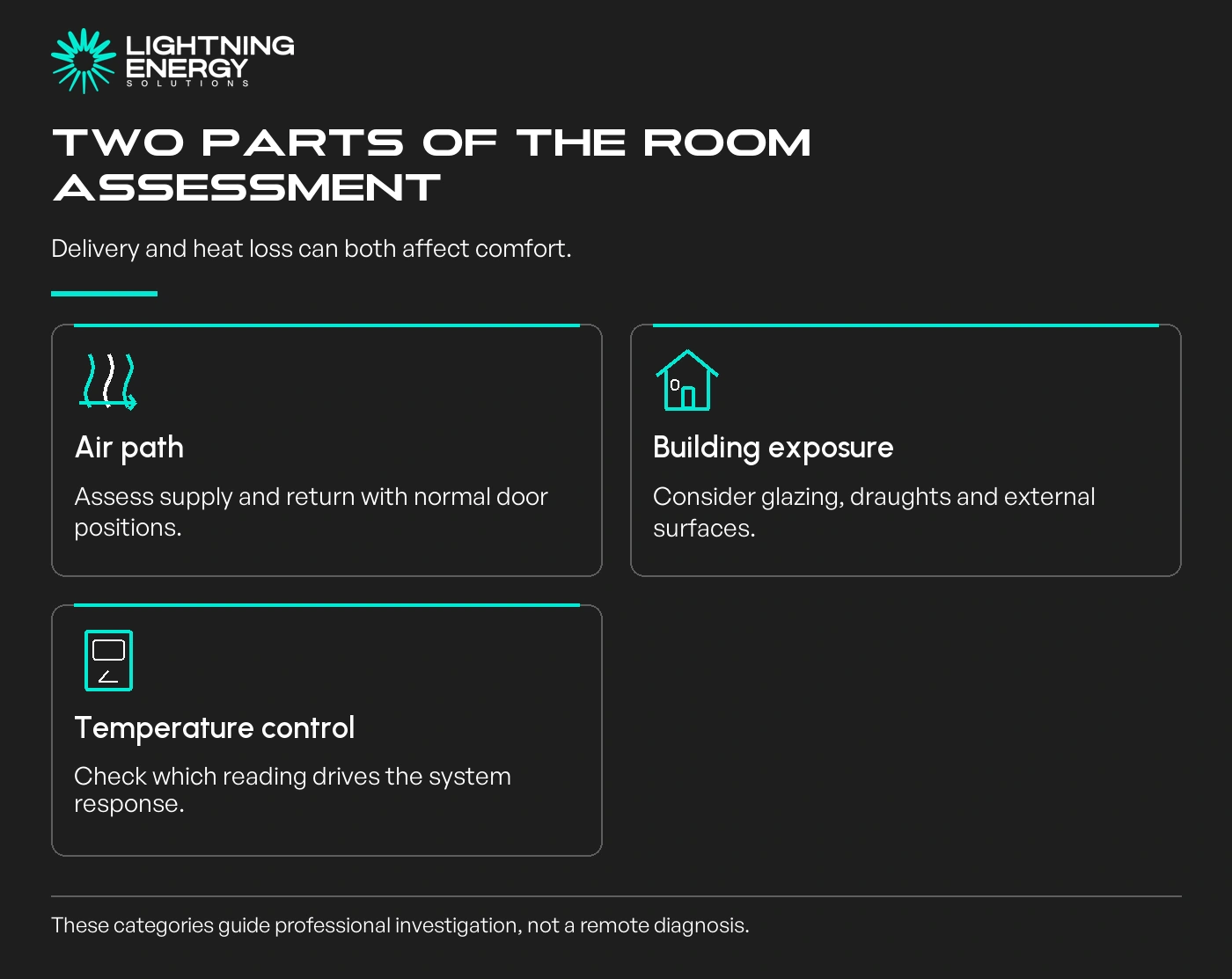
AirTouch notes that a zone can close after reaching its target, while a zone that does not operate may need professional checks of its control and air path. Those are different situations.
AirTouch’s zone-operation guidance.
Ask the technician to check the room’s delivered airflow, return arrangement, relevant controls and heat-load assumptions. Request an explanation of the evidence supporting the proposed remedy.
Adding solar can change the source of electricity used for heating, but it cannot correct an air-distribution fault. Keep the comfort diagnosis separate from an energy-generation purchase.
If the suggested remedy is a larger central unit, ask how the single-room findings justify it. Where the problem is local, a targeted correction may deserve assessment before replacing the entire system.
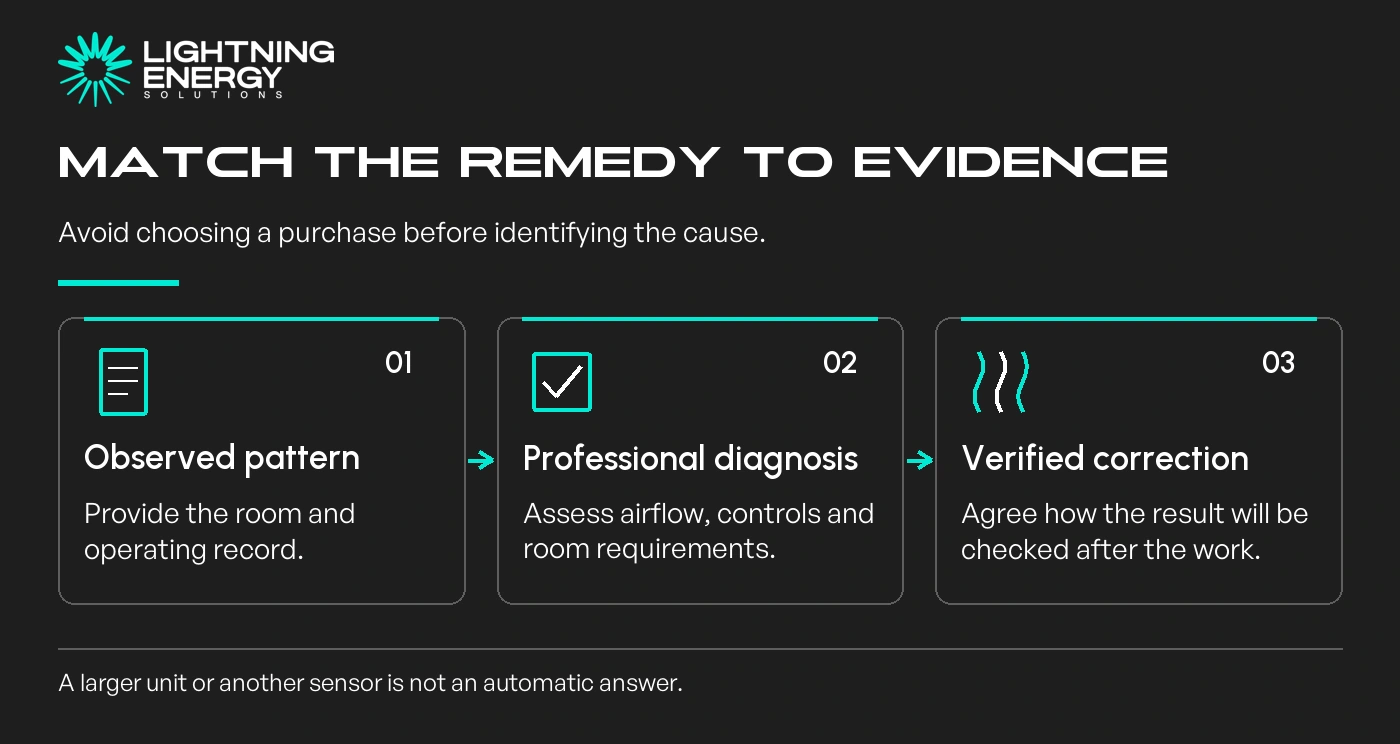
Keep a short record across several normal operating periods, then arrange an assessment. The next step should explain why this bedroom is different and how the proposed correction will be checked.
Available times
Book a consultation and we'll map solar, storage, hot water, and the rebates around your bills and your goals.
Question 1 of 6