
Replacing Gas Ducted Heating: The Financial Case When Other Gas Appliances Remain
Compare gas-heating replacement costs and household bills while keeping remaining gas appliances, daily charges and verified incentives in the calculation.
Compare gas-heating replacement costs and household bills while keeping remaining gas appliances, daily charges and verified incentives in the calculation.

Replacing gas ducted heating can reduce gas consumption while increasing electricity use. If a gas cooktop or water heater remains, do not assume the gas supply charge disappears from the household budget.
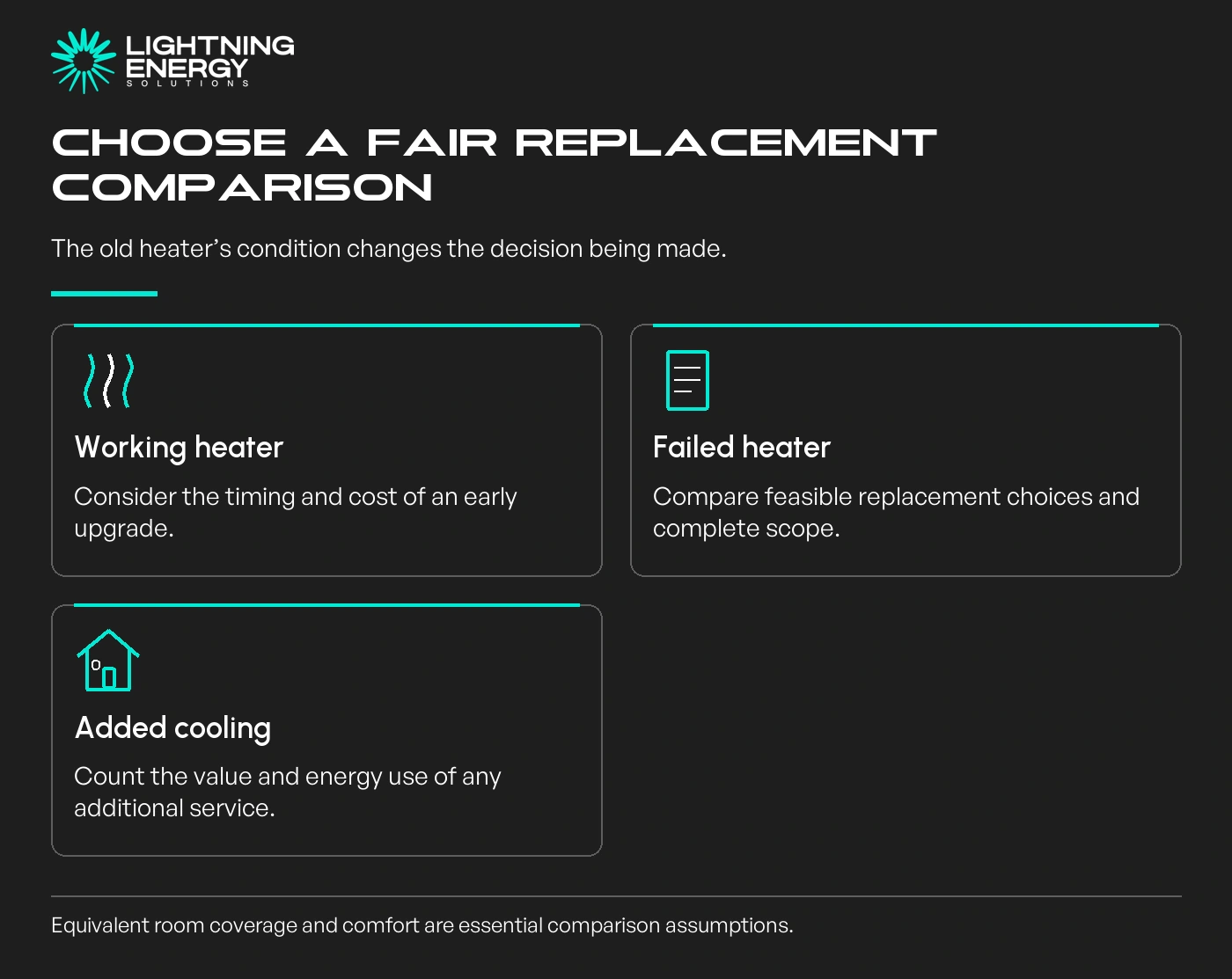
Compare the full installed project and both energy bills. Whether replacement makes sense now also depends on the old heater’s condition, required comfort and the other work the project includes.
If the existing heater is functioning, one option may be retaining it for now with appropriate servicing. If it has failed, compare feasible replacement choices and their full scope rather than treating continued use as free.
Include cooling if the proposed reverse-cycle system adds that service. Added comfort can be valuable, but any new summer electricity use belongs in the comparison.
Check room coverage, duct replacement, electrical work, controls, removal and making good. Two headline installation prices are not comparable if one leaves necessary work outside the quote.
Ask for repair and replacement findings in writing where the decision depends on the old heater’s condition. This avoids building the calculation around an assumed remaining life that nobody has assessed.
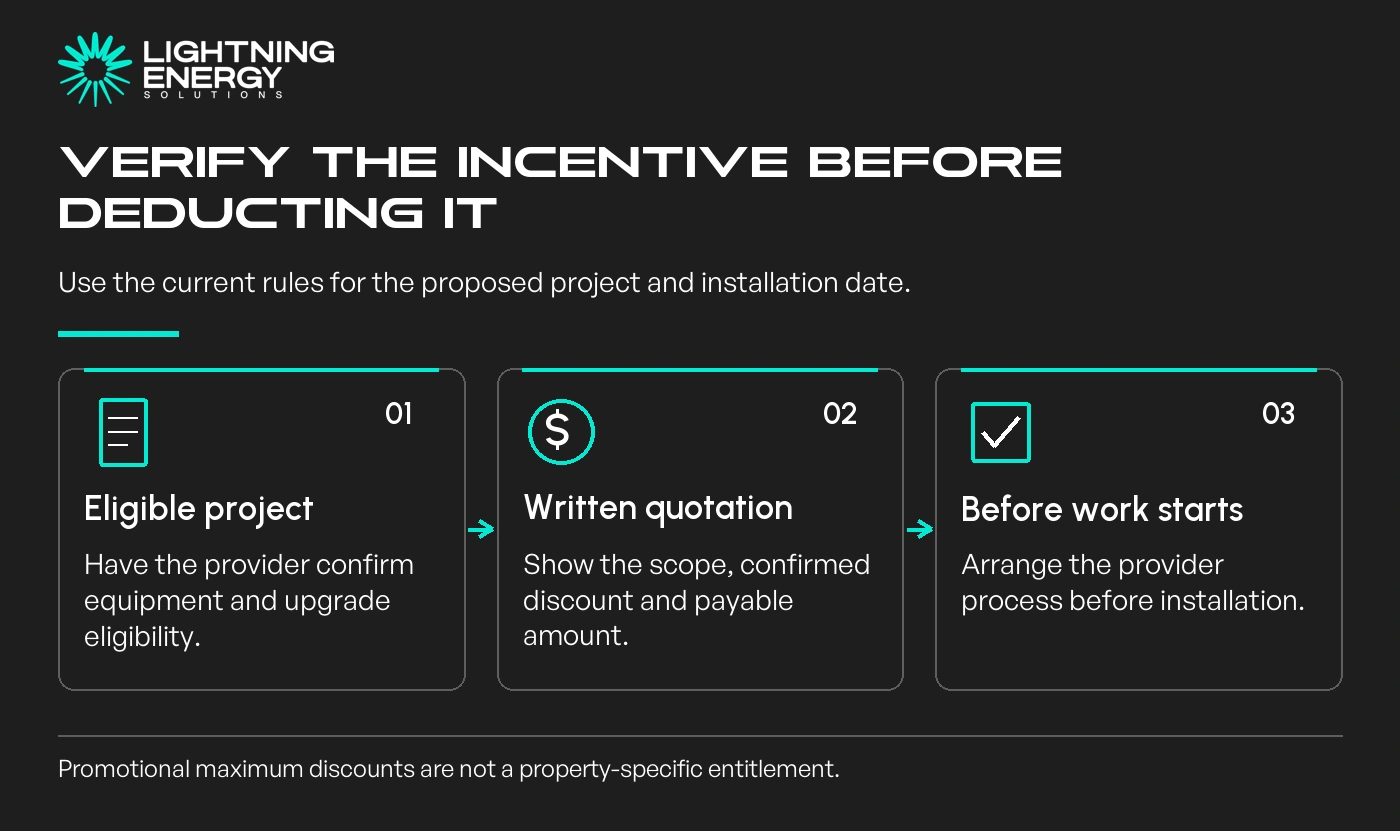
Victorian Energy Upgrades can provide eligible heating and cooling discounts through an accredited provider or partner installer. Eligibility and the quoted benefit depend on the actual upgrade and current rules.
The Victorian Government says the provider confirms eligible models and supplies a quote including the discount. Where an installer works with a provider, the discount must be arranged before work starts.
Current Victorian heating and cooling discounts.
Use our VEU guide for the broader process, then obtain written confirmation for your property, equipment and installation date.
Treat a promotional maximum as a question to verify, not money already deducted from your project. Keep the undiscounted scope, confirmed discount and final payable amount visible.
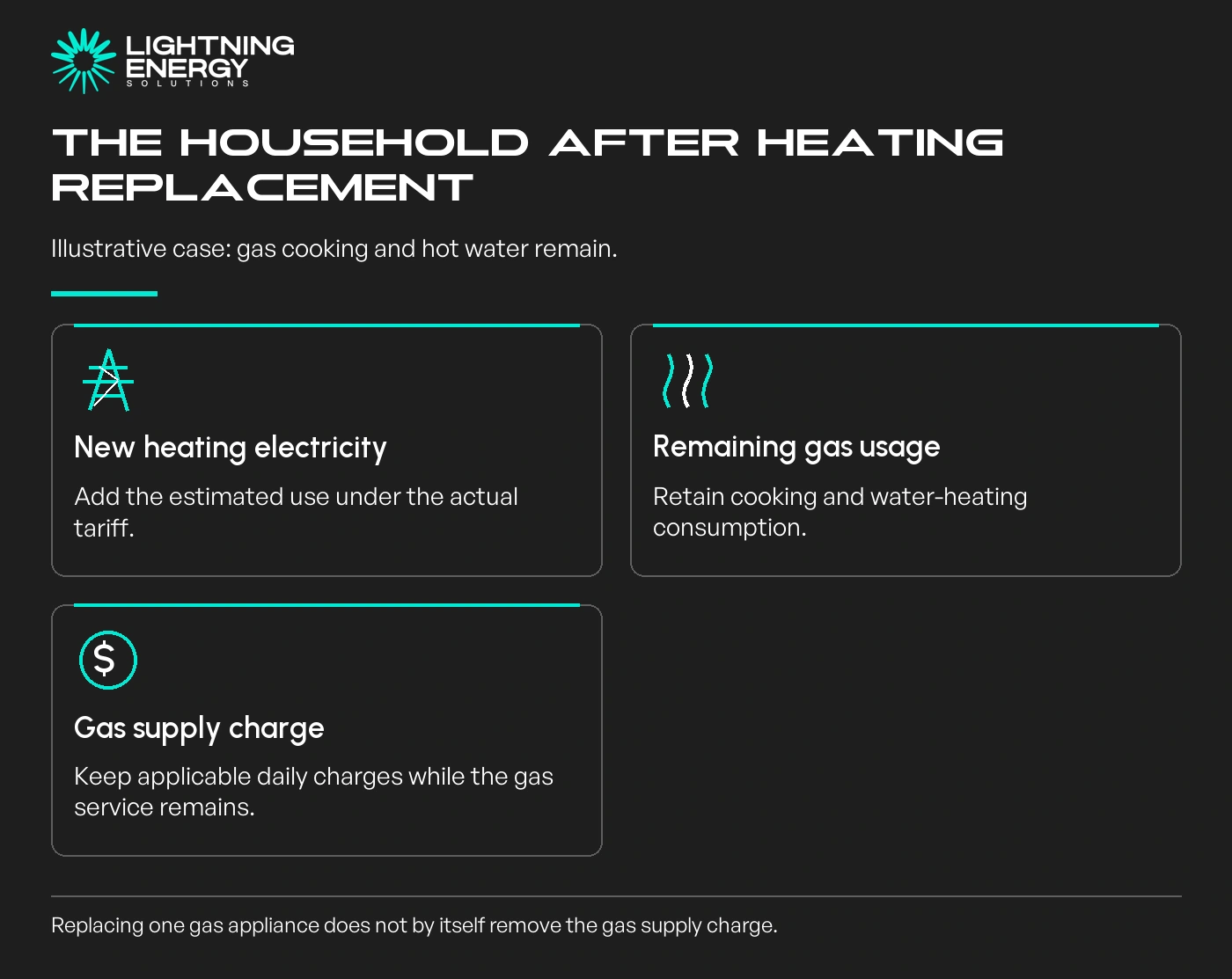
Consider an illustrative household replacing ducted gas heating while retaining gas cooking and hot water. Its future budget still includes those appliances’ gas use and applicable daily gas supply charges.
The new heating electricity must be added using the actual operating routine and tariff. Do not subtract the entire old gas bill and then label the result heating savings.
The Victorian Government links avoiding gas supply charges with moving away from the gas connection, rather than replacing one appliance while others still need gas.
Victorian all-electric home guidance.
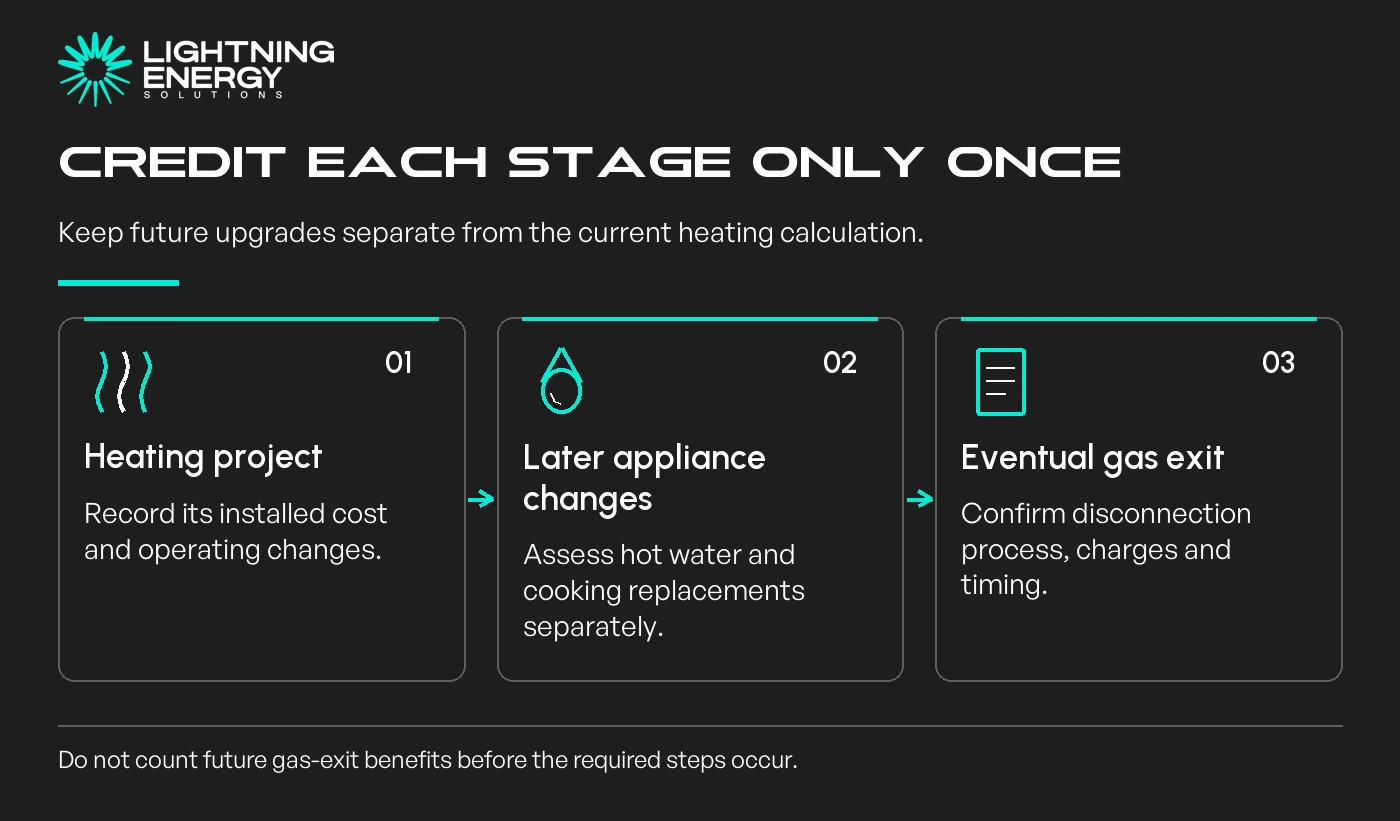
If heat pump hot water is a later project, show it as a separate stage. Its installation cost, energy changes and eventual role in a gas exit should not be credited to today’s heating project twice.
Estimate annual running costs under comparable room coverage, comfort and weather assumptions. Keep tariffs, servicing and any finance costs explicit, and test a less favourable operating scenario.
A simple payback divides the relevant additional upfront cost by an assumed annual saving. It is only as reliable as that saving estimate and does not fully describe comfort, repair risk or changing prices.
For a failed heater, compare the extra cost over another feasible replacement. For an early upgrade, make clear that the household is choosing to spend before the old equipment necessarily needed replacement.
Do not rush an otherwise unsuitable installation solely to secure an advertised discount. Poor coverage, unresolved ductwork or an incomplete electrical scope can outweigh a headline incentive.
Keep any future gas disconnection, remaining-appliance replacement and associated charges as explicit later decisions. The staged plan should show when each cost and benefit actually occurs.
Gather both bills, the heater assessment and complete quotations for a replacement discussion. Ask for a staged whole-house comparison that retains every gas charge still payable after the heating change.
Available times
Book a consultation and we'll map solar, storage, hot water, and the rebates around your bills and your goals.
Question 1 of 6