
Battery Backup for Three-Phase Homes with Large Solar and Future EV Loads
Plan three-phase battery backup around the circuits, per-phase limits and future EV loads that matter, rather than the size of the solar array alone.
Plan three-phase battery backup around the circuits, per-phase limits and future EV loads that matter, rather than the size of the solar array alone.

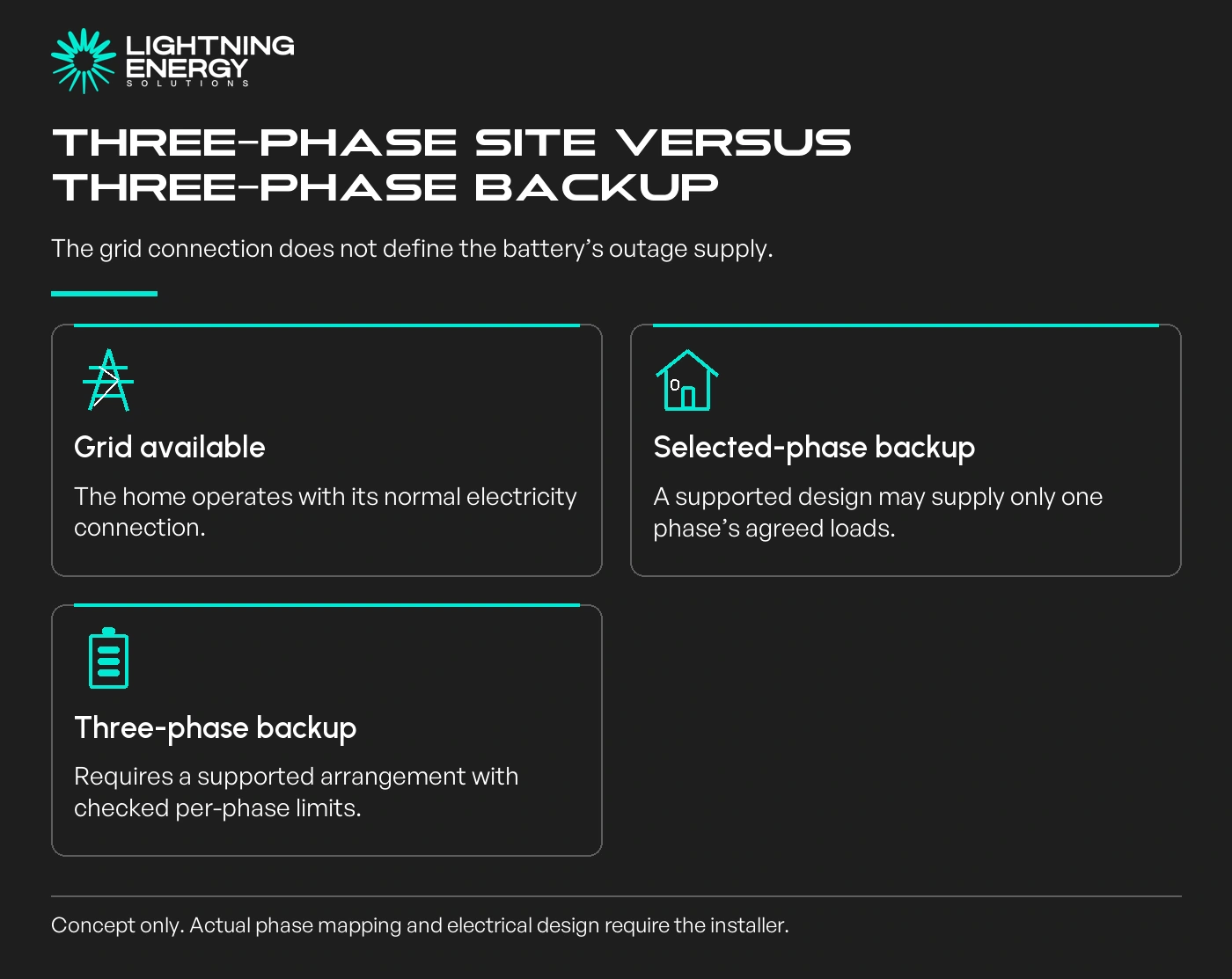
A battery at a three-phase home does not automatically provide three-phase backup. Ask which phases and circuits receive power during an outage, then check the output available to each of them.
A large solar array or a three-phase electricity connection does not answer that question. Everyday operation with the grid available can differ substantially from the supply available when it fails.
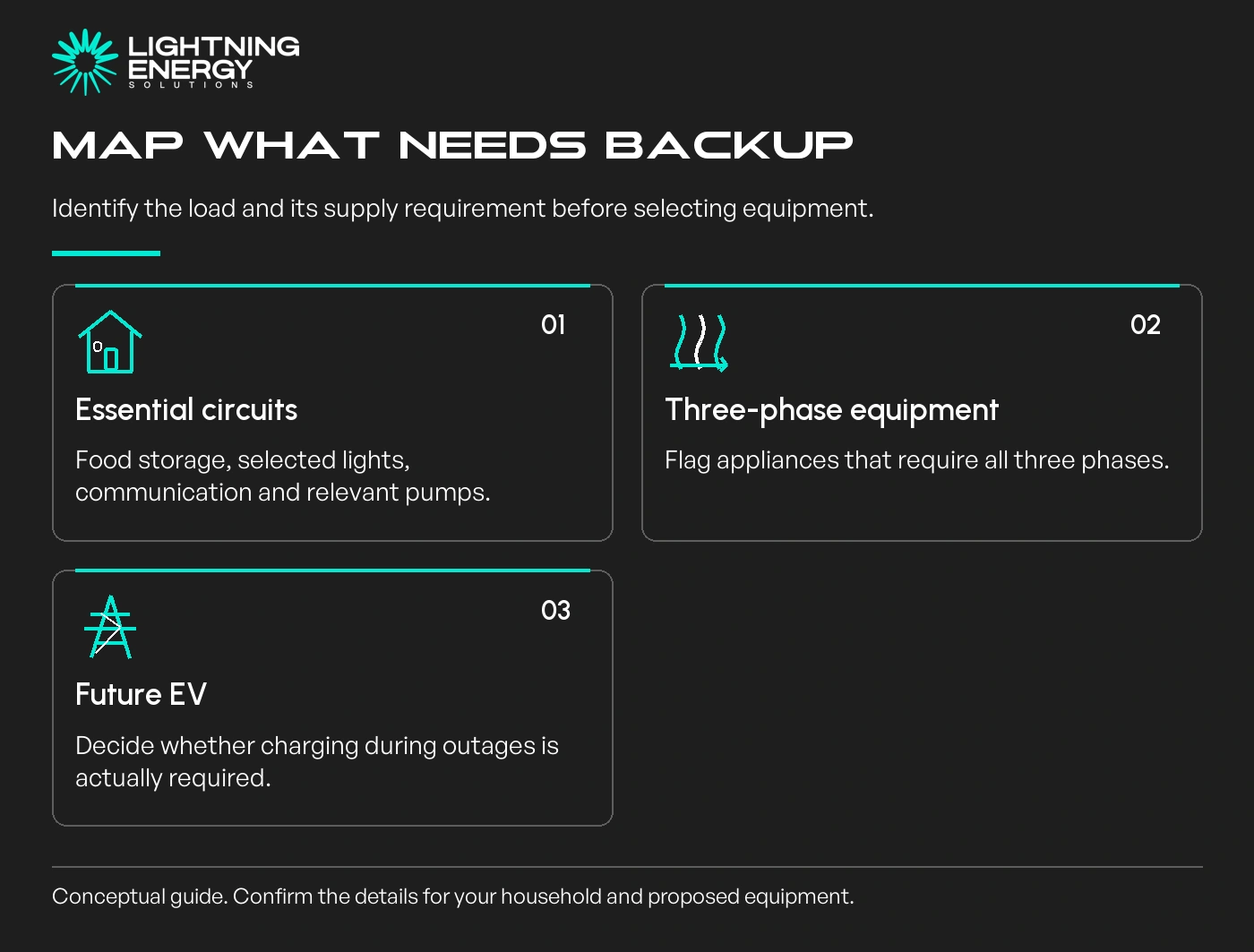
Ask the installer to identify which phase supplies each important circuit. Include refrigeration, lighting, communication equipment, pumps and any heating or cooling that you hope to use during an outage.
Then identify equipment requiring a genuine three-phase supply. Do not assume it can operate from a backup arrangement that only supplies selected single-phase circuits.
Our blackout planning guide helps build the household priorities before the electrical design is assessed.
Tesla's Australian Powerwall 3 installation guidance with Backup Gateway 2 describes selecting one backup phase. It is a useful example of why a three-phase site and three-phase backup are different concepts.
Tesla Australian phase guidance.
Other supported equipment can provide a three-phase arrangement. Enphase's Australian FlexPhase launch, for example, describes separate single-phase and three-phase configurations with per-phase output figures.
Enphase Australian FlexPhase launch.
These examples do not select a product for your house. Ask for the exact battery, controller, configuration and local requirements, then compare the actual outage scope.
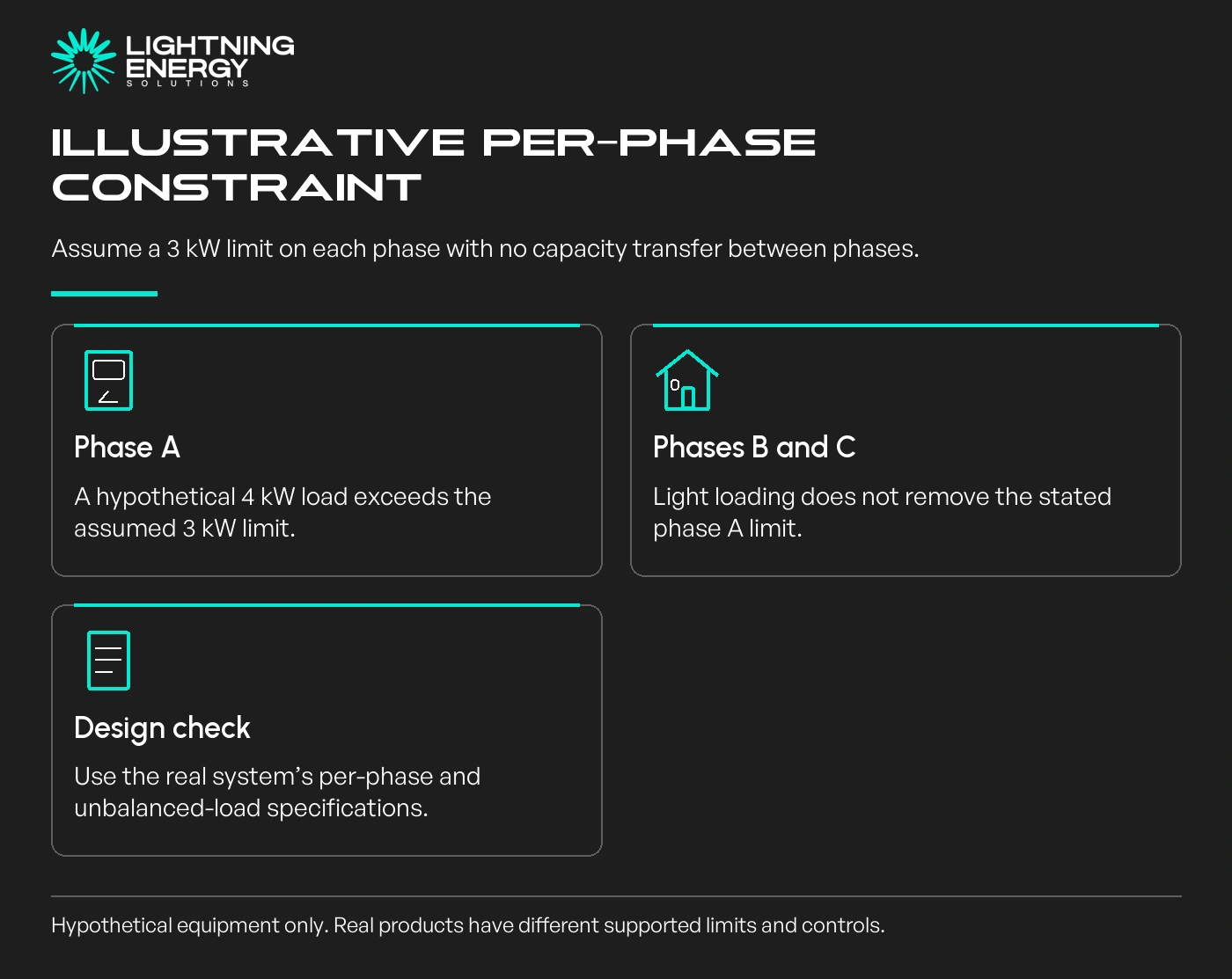
Consider a hypothetical three-phase backup supply rated for 3 kW on each phase, with no ability to move unused capacity between phases. A 4 kW load on one phase exceeds its limit even if the other two phases are lightly loaded.
Real systems have their own limits and unbalanced-load capabilities. The installer needs to check those limits, starting demand and simultaneous loads against the manufacturer's documents.
Do not divide the total household demand by three and assume the result describes every phase. Nor should a total power headline be treated as power available to any single appliance.
Decide whether the future EV needs outage charging at all. Preserving energy for household essentials may matter more than maintaining an ordinary charging schedule through a blackout.
If charging is required, specify the vehicle, charger, intended charging rate and supported control arrangement. Include the charger in the simultaneous-load and phase assessment.
Our solar EV charging guide explains how household, car and battery priorities can compete for the same available power.
An EV-ready cable route or space for later equipment is different from a promise that today's backup system can supply a future charger. Record the remaining design work rather than assuming compatibility.
As checked on 22 September 2026, Tesla's Australian support page says Powerwall 3P is not yet available in Australia or New Zealand. An overseas announcement is therefore not a current Australian installation offer.
Tesla Australian Powerwall 3P availability.
Our Powerwall 3P article separates the announcement from local availability. Ask for current Australian documentation when comparing any future product with an available design.
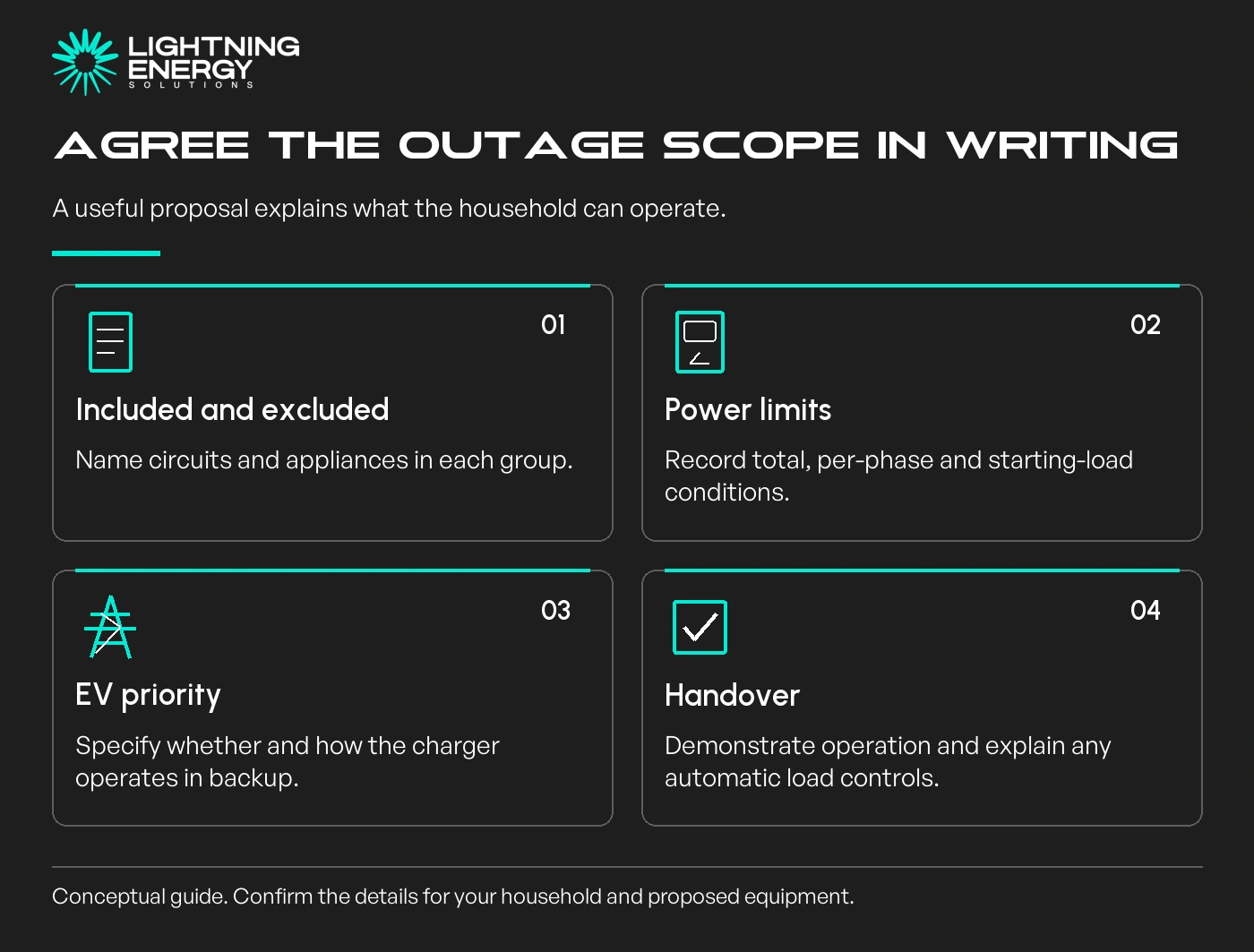
The handover should identify backed-up circuits, excluded loads, per-phase limitations and any automatic load controls. Ask the installer to demonstrate the agreed behaviour and explain what happens if demand is excessive.
You may not need every phase backed up if the essential tasks can be supported by a simpler assessed arrangement. Conversely, a three-phase appliance requirement needs an explicitly suitable design.
Plan your battery upgradeShare your essential-load list, solar equipment and future EV plans. We can assess the phase requirements and document a realistic backup scope for your home.Available times
Book a consultation and we'll map solar, storage, hot water, and the rebates around your bills and your goals.
Question 1 of 6