
Single-Phase and Three-Phase Solar: Inverters and Export Are Different Decisions
See how single-phase and three-phase supply affect solar inverter options, phase balance and network approval, without confusing capacity with export rights.
See how single-phase and three-phase supply affect solar inverter options, phase balance and network approval, without confusing capacity with export rights.

Your home's electrical supply influences the inverter arrangement you can install, but it does not determine an automatic solar export entitlement. Supply type, equipment capacity and network permission are separate decisions.
Start by confirming the supply already connected to the property. Then ask which supported inverter arrangements fit it and what the distributor will approve. A large roof does not answer either question.
Our solar design service can assess the existing installation before proposing equipment or an expensive supply change.
Do not infer the number of phases from a neighbour's house or an unfamiliar switchboard label. Ask the electrician to confirm the supply and record the existing solar, battery and significant household loads.
A single-phase supply requires an appropriate single-phase inverter arrangement. A three-phase property can have different supported arrangements, subject to the equipment, phase balance and distributor conditions.
The Australian Government inverter guide explains the basic supply and inverter distinctions. It is a starting point, not the connection approval for your address.
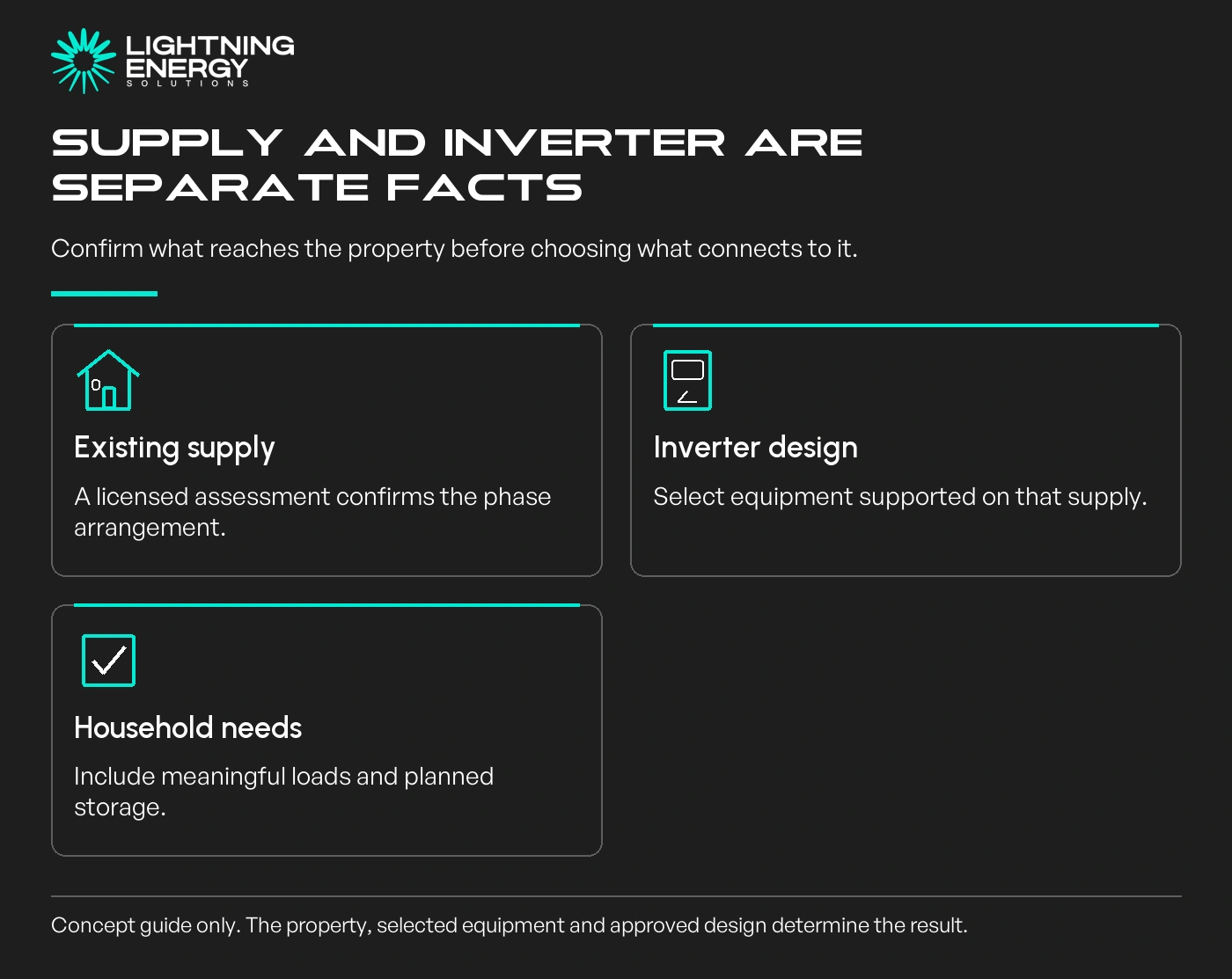
Three-phase equipment is not automatically necessary just because three phases reach the house. Equally, installing a single-phase inverter is not automatically permitted at any desired rating on that supply.
The designer should explain the proposed arrangement and why it meets the property's needs. Unusual supply descriptions need confirmation rather than an assumption based on a sales form.
A distributor may assess total inverter capacity, capacity on individual phases, phase imbalance and the export at the connection point. These are related constraints, but they describe different things.
AusNet, for example, explicitly uses combined inverter ratings for solar and batteries in its connection assessment. The panel array's DC rating is not the same number.
AusNet's small-system connection guidance explains its assessment route and property-specific pre-approval.
Jemena publishes different connection categories for single-phase, three-phase and combined solar-and-battery installations. Its table should not be transferred to another distributor's network.
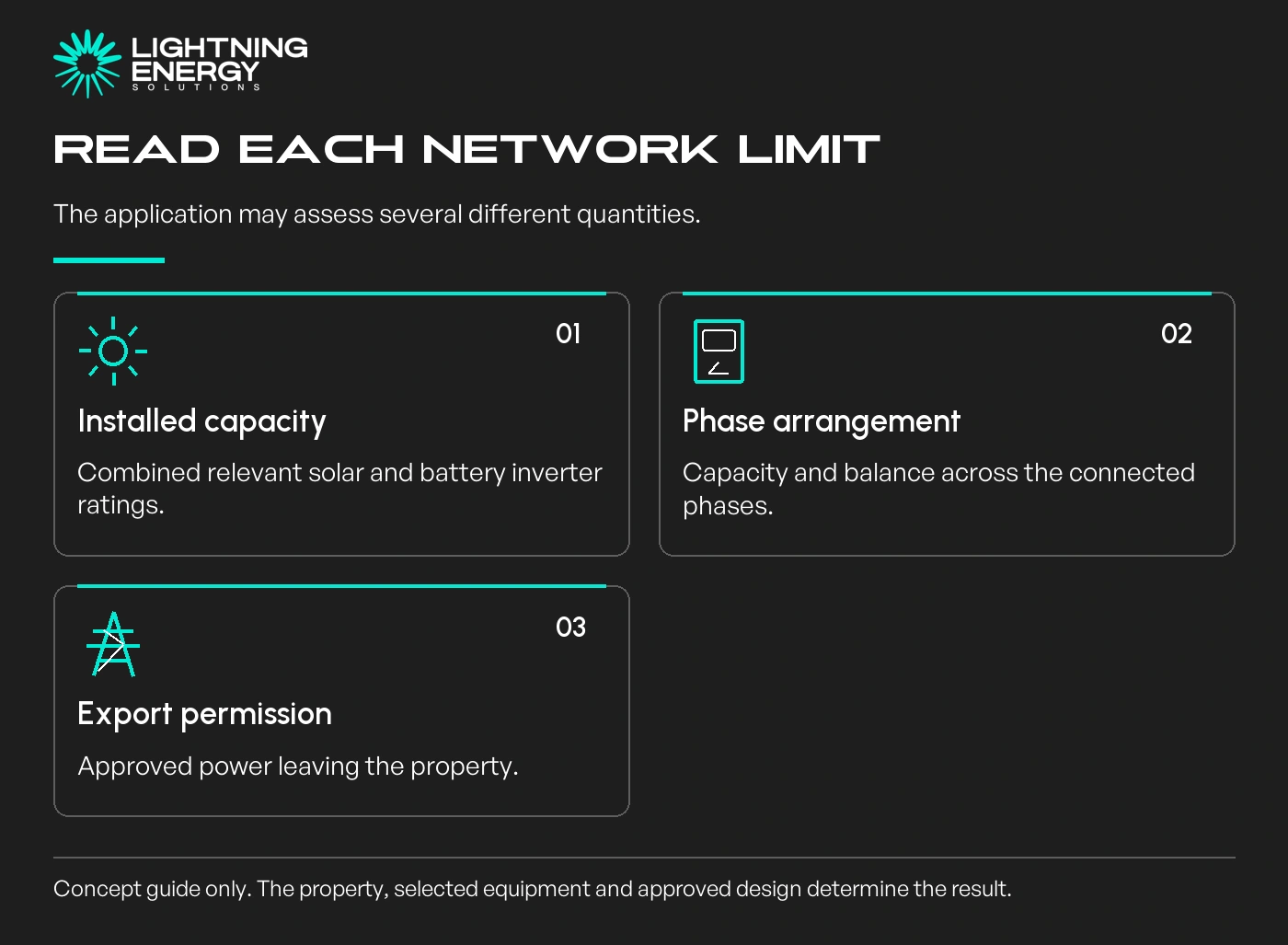
Our export-limit guide explains how to read the approved outcome without confusing it with the inverter nameplate.
If a battery is part of the proposal, include its inverter and intended operating modes in the initial assessment. Adding it later may require a new application even if the solar panels remain unchanged.
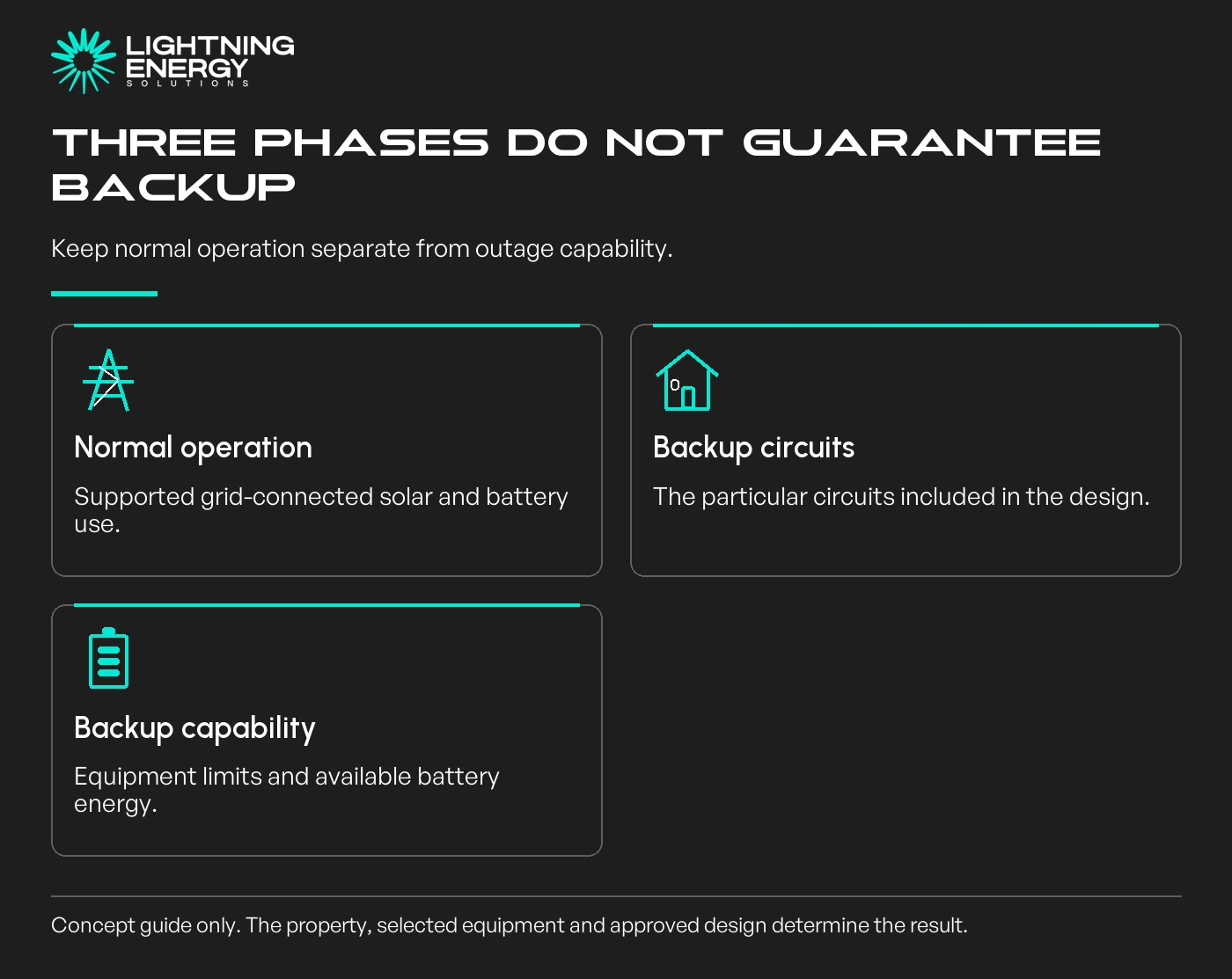
Grid-connected bill management and blackout backup also deserve separate questions. Ask which phases and circuits the particular backup design can support, rather than assuming the whole property will remain powered.
Our battery service can assess those requirements alongside solar. A supply with three phases does not itself create a three-phase backup system.
Imagine a home with an existing three-phase supply and a modest daytime load. A compliant solar option on that supply may meet its needs without maximising every theoretical equipment limit.
Another home may have substantial simultaneous loads or a larger planned system. That can justify different equipment, but the installer still needs the actual connection conditions and an electrical assessment.
A supply upgrade can involve more than changing the solar inverter. Before spending money, establish what additional capability is needed, what work is required and whether the distributor will approve the desired export.
If the existing supply supports a suitable system and the added generation has little useful value, upgrading solely for a bigger number may not be worthwhile.
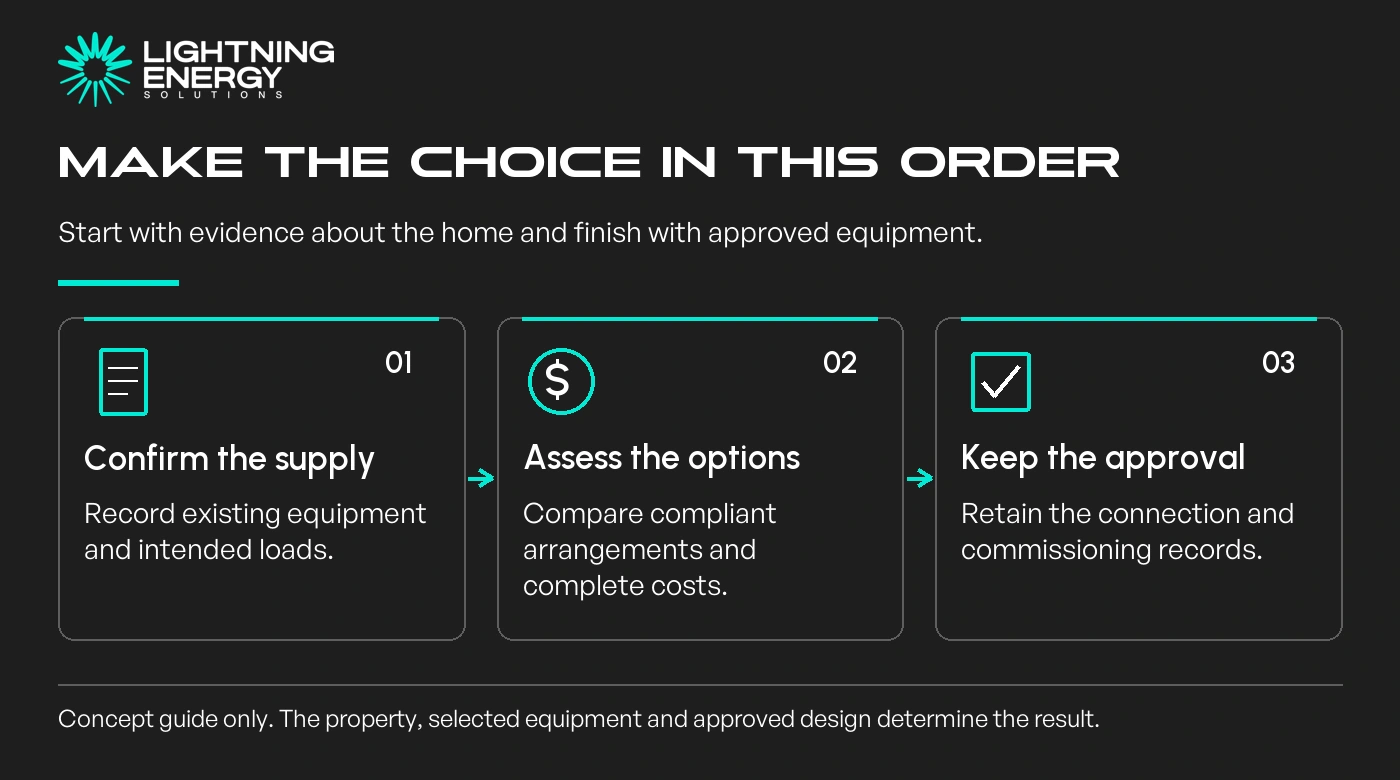
Request a record containing the confirmed supply, inverter models, allocation across phases, combined capacity and approved export conditions. Keep it with the commissioning and electrical safety documents.
Ask us to compare the supported options on your existing supply first. A clear connection outcome is more useful than a generic claim that three-phase solar always earns more.
Available times
Book a consultation and we'll map solar, storage, hot water, and the rebates around your bills and your goals.
Question 1 of 6
