Adding a Battery Before Summer: Start With the Solar Already on Your Australian Roof
October’s battery rebound is no reason to replace working solar or copy the average battery size. Start with generation, evening loads and a clear compatibility plan.
LLuke CoveLightning Energy13 November 2026 · 3 min read
You already own solar. Now you want more of that daytime energy available when the house gets busy in the evening.
That does not automatically mean replacing the panels or buying a bigger battery. Before summer, the useful job is checking whether your existing system and a proposed battery can work together around your household’s routine.
The latest installation figures explain why this is timely. Your own generation and usage records decide what happens next.
October’s battery rebound is context, not a shopping list
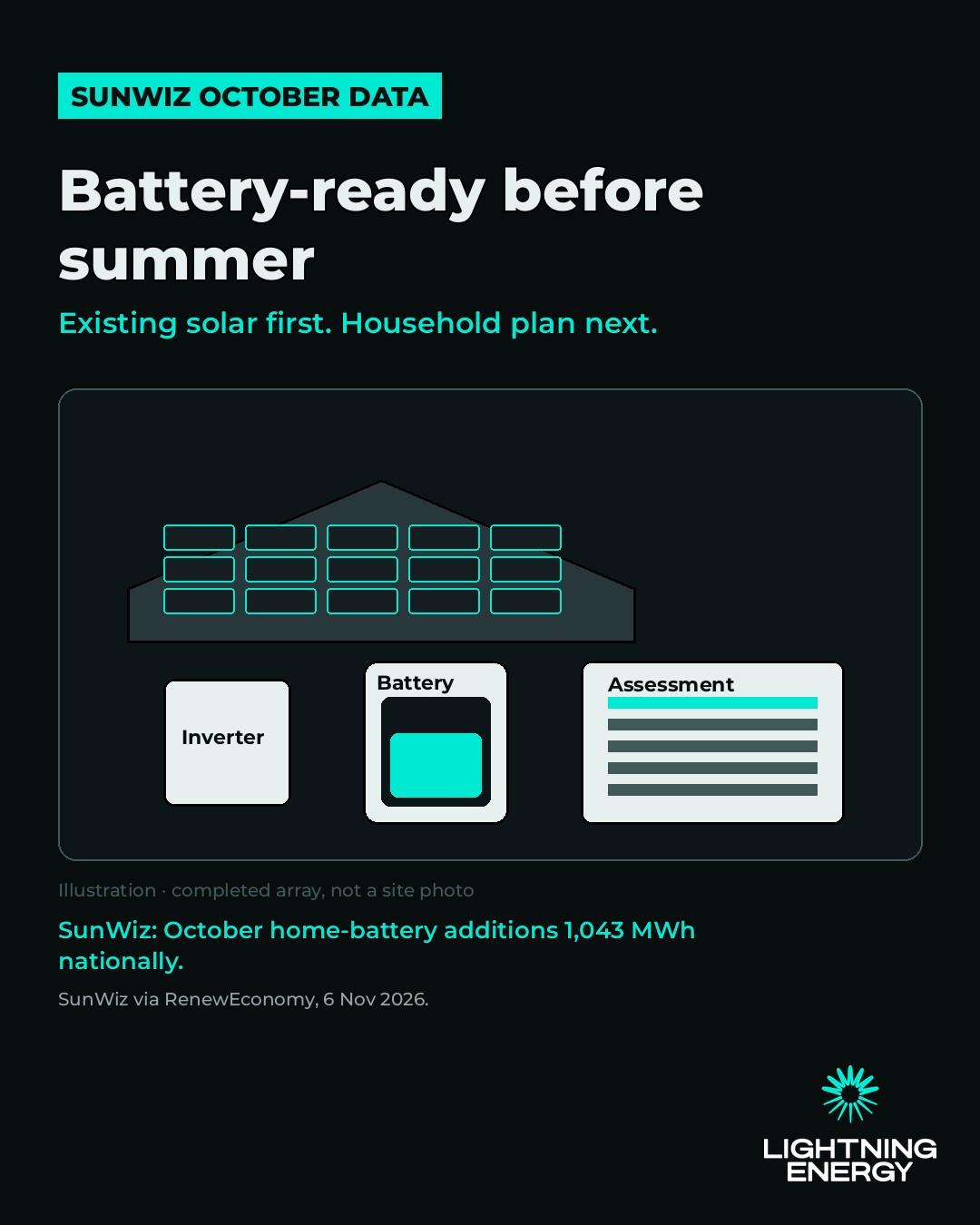
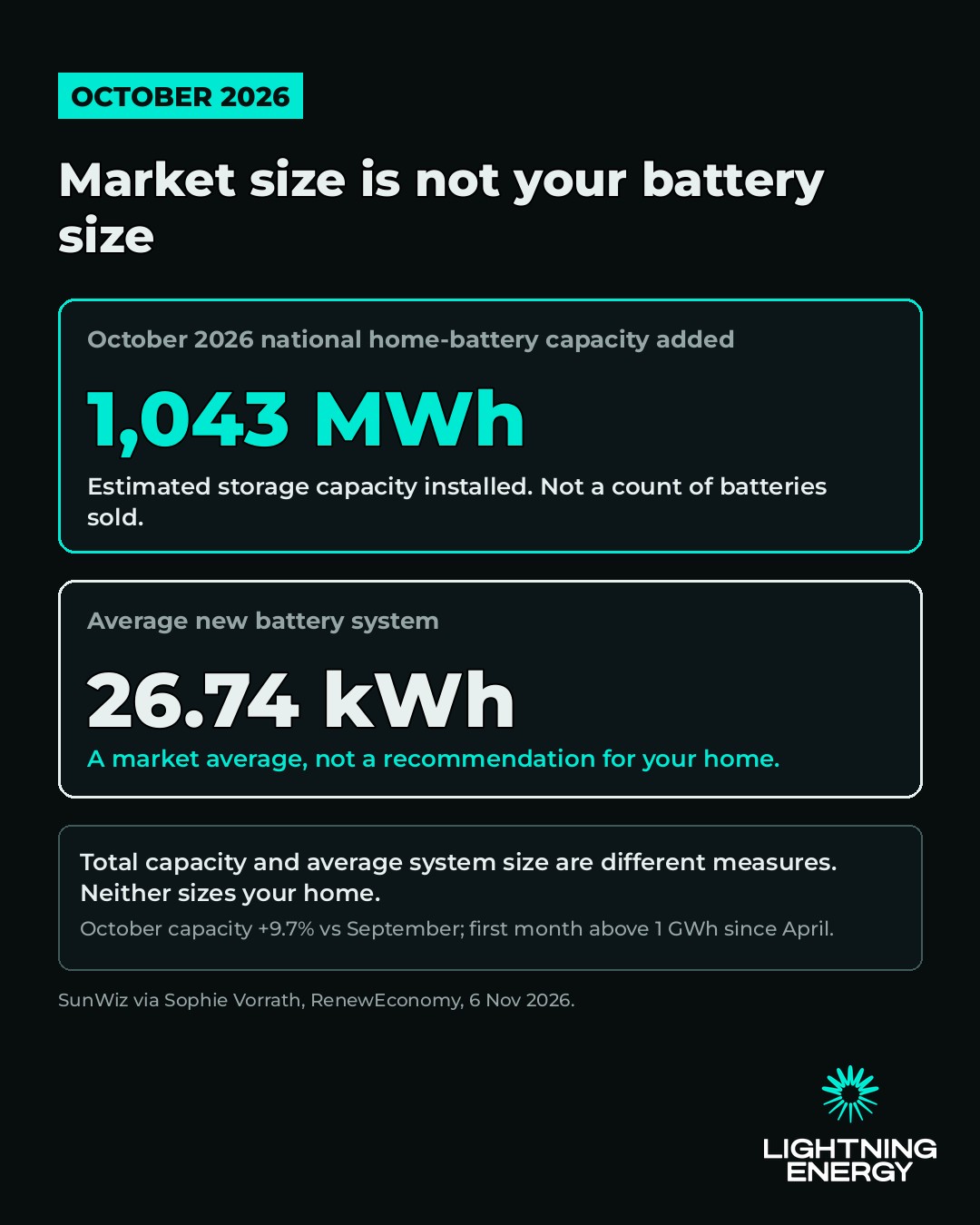
SunWiz estimates Australia added 1,043 megawatt-hours of home-battery storage in October, up 9.7% from September. That was the first month above one gigawatt-hour since April. Those figures describe installed storage capacity, not the number of batteries sold.
The average new home-battery system reached 26.74 kilowatt-hours. It is a market average, not a recommendation for your home. Neither that number nor the popularity of larger systems establishes the right capacity for an existing solar owner.
SunWiz managing director Warwick Johnston describes customers returning in their own time and preparing for summer. That is a reason to plan, not a deadline to buy.
A strong solar month does not mean your roof needs replacing
The same report puts newly registered rooftop solar capacity in the 0–100 kW system range at 305 MW nationally in October. SunWiz says its January–October tally was 41% ahead of the same point in 2025.
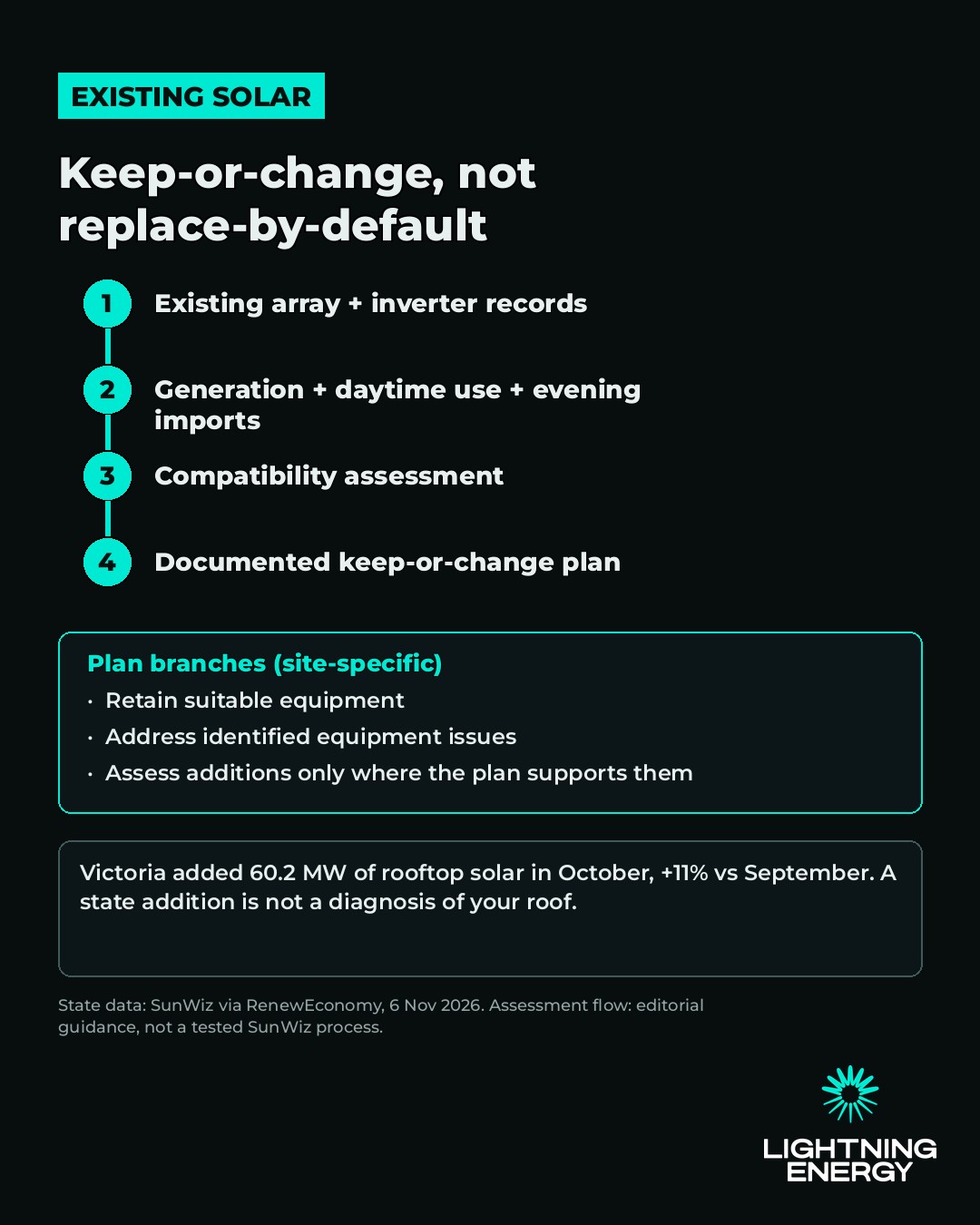
Victoria added 60.2 MW in October, up 11% from September. These are market additions over defined periods—not evidence that any particular older system is inadequate.
The report describes some existing solar households upgrading or replacing their systems alongside storage. It does not establish that every battery addition requires a solar upgrade.
First, establish what your current system actually does
A proper installer starts with the equipment already on site: the panels, inverter, monitoring and available records. Age or a small nameplate capacity alone should not decide the outcome.
The assessment should distinguish actual solar production from electricity exported to the grid. Your household may already use part of the generation during the day; an export reading alone is not the whole production picture.
The useful design inputs are generation, daytime consumption and the electricity still imported during the evening. Review more than one sunny day so the proposed charging plan does not rest on a best-case snapshot.
Then check compatibility before changing equipment
The installer should evaluate how a proposed battery would work with the existing inverter, controls and electrical installation. The design should state what stays, what changes and why.
Keeping working equipment is an option to evaluate, not a promise that every inverter can accept every battery. Replacing equipment also needs a site-specific reason, rather than a blanket recommendation based on age.
Set a clear job for the battery: the evening loads you want it to support, the hours that matter and the charging assumptions behind the proposal. A proper installer checks that plan against the solar available after daytime household use.
Future electric heating, hot water or an EV belongs in the same whole-home plan. Those changes should be explicit, not hidden inside a larger capacity recommendation.
A useful outcome is a clear keep-or-change plan: the existing equipment assessed, compatibility explained, evening loads identified and charging assumptions recorded for handover.
You do not need to match October’s average battery or replace solar simply because other households are doing it. Start with your generation and usage records, then build a battery plan around the home you already have.
Source: Sophie Vorrath, “Australia is headed for its biggest year of rooftop solar growth ever – and the mid-scale boom is yet to come”, RenewEconomy, 6 November 2026, reporting SunWiz data and commentary from Warwick Johnston. Linked above.
Book a consultation and we'll map solar, storage, hot water, and the rebates around your bills and your goals.
Loading consultations…
Lightning EnergyPlan your next energy upgrade.
⚡
Hi, I’m Lightning Energy’s project guide. I’ll ask a few practical questions, explain what usually matters for your project, and help you decide on a useful next step — no guesswork or sales pressure.
First, what kind of property are we planning for?