
Size a Home Battery from Your Evening and Overnight Meter Data
Use interval meter readings to assess evening battery needs, available solar charging and seasonal variation before choosing a storage size for your home.
Use interval meter readings to assess evening battery needs, available solar charging and seasonal variation before choosing a storage size for your home.

Start with the electricity your household buys after solar production fades, not the largest battery a sales package offers. Interval meter data shows when that demand occurs and how consistently it repeats.
A monthly bill total is useful context, but it cannot show whether most electricity was used at lunchtime or after midnight. A battery assessment needs timing as well as the total amount.
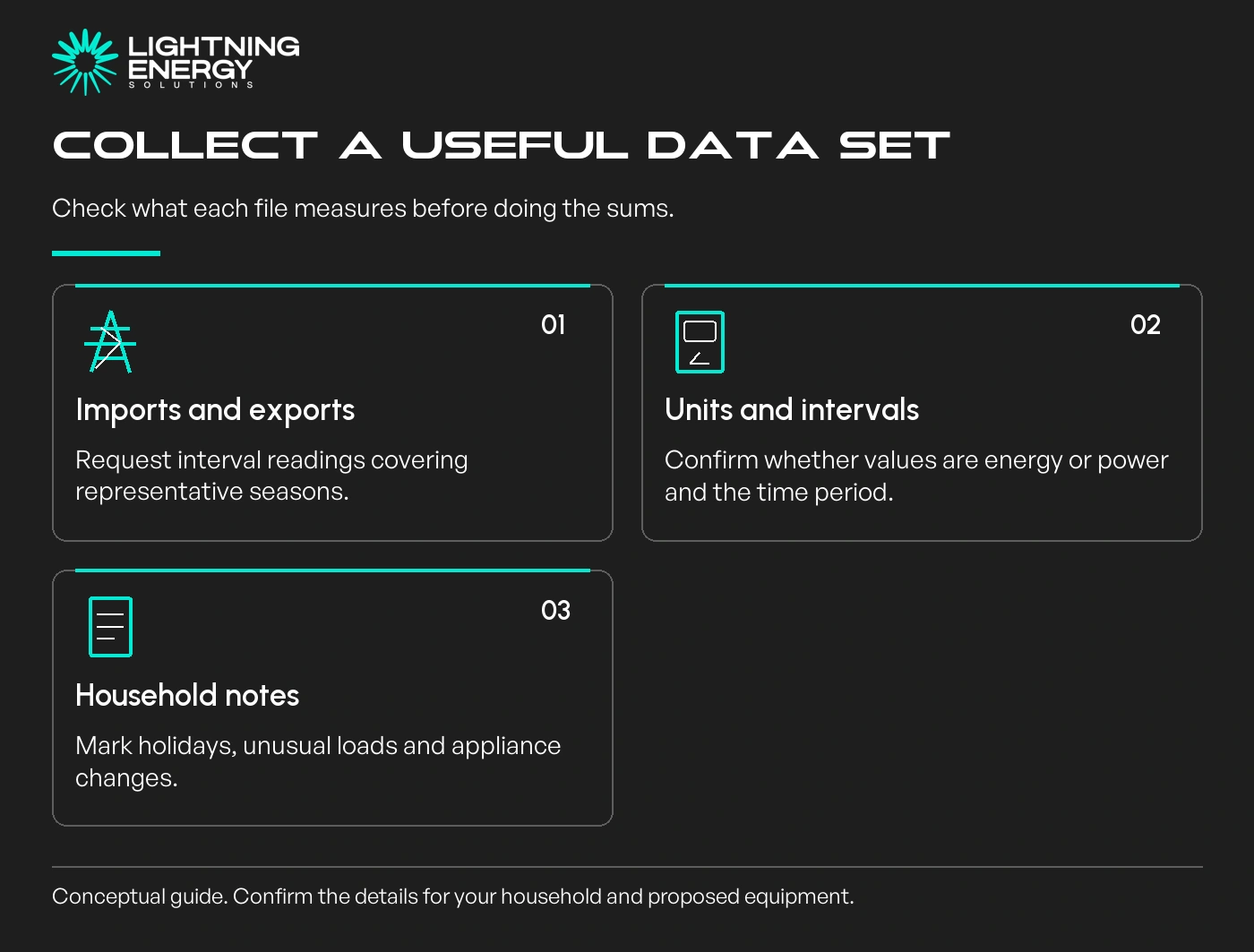
Ask your retailer or distributor how to obtain interval imports and exports. Check the interval length, units and dates before adding anything together. Keep a note of holidays, guests or a period when the home was empty.
CitiPower and Powercor customers can view their energy use through myEnergy. Other distributors have their own access arrangements, so start with the company named on your bill.
CitiPower and Powercor myEnergy.
Use several seasons where records are available. A week of mild weather may say little about a household that relies heavily on electric heating in July or cooling during a heatwave.
Choose an evening and overnight window that suits the home's routine. Add the grid imports in that window for each day. If you already have a battery, its charging and discharging must also be understood before interpreting those imports.
Then look at daylight exports. They show energy that left the property, not total solar production. Household appliances have already used some generation before the meter records any remaining export.
The solar inverter guide explains why generation monitoring and consumption monitoring answer different questions. Ask the designer to reconcile the meter and inverter records.
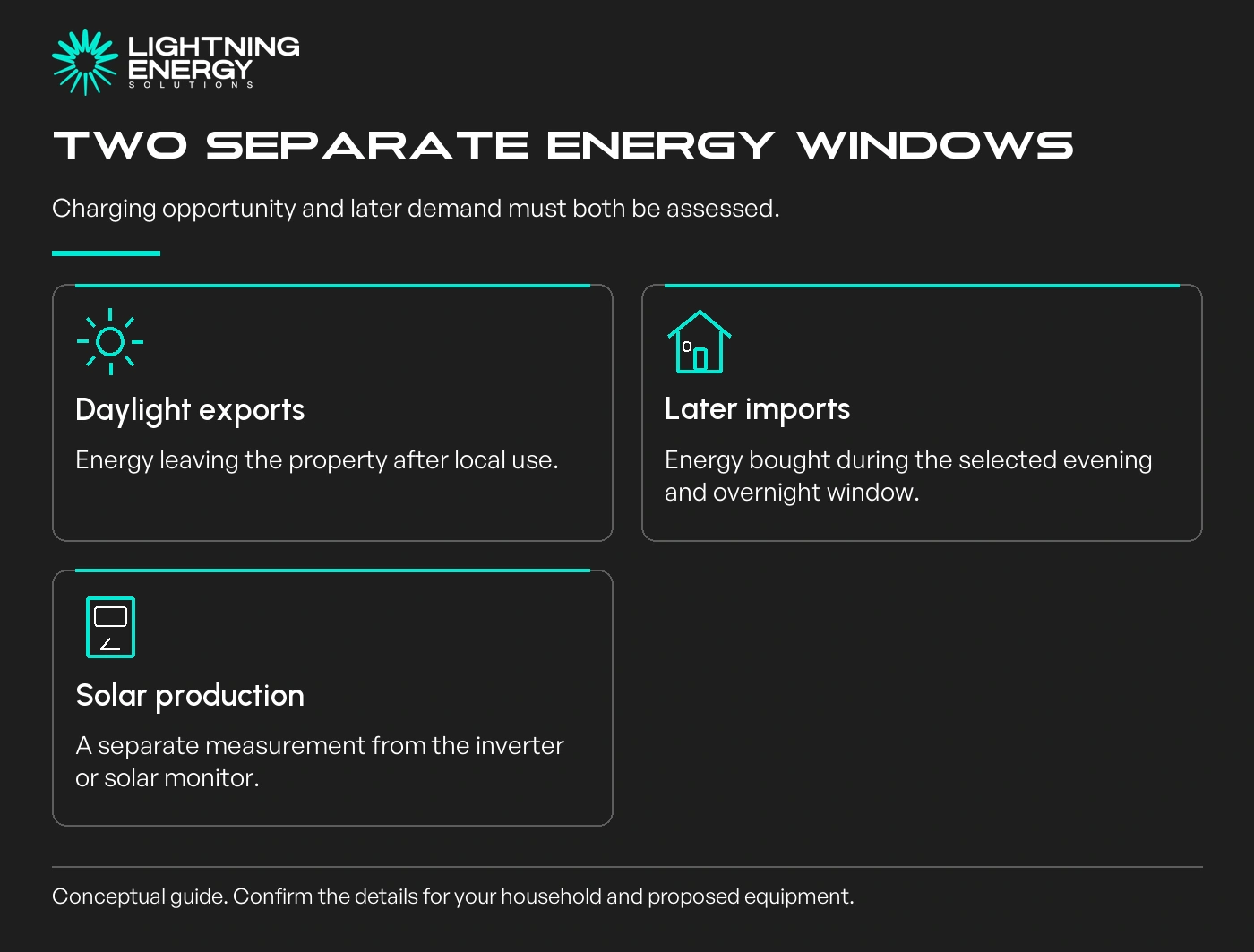
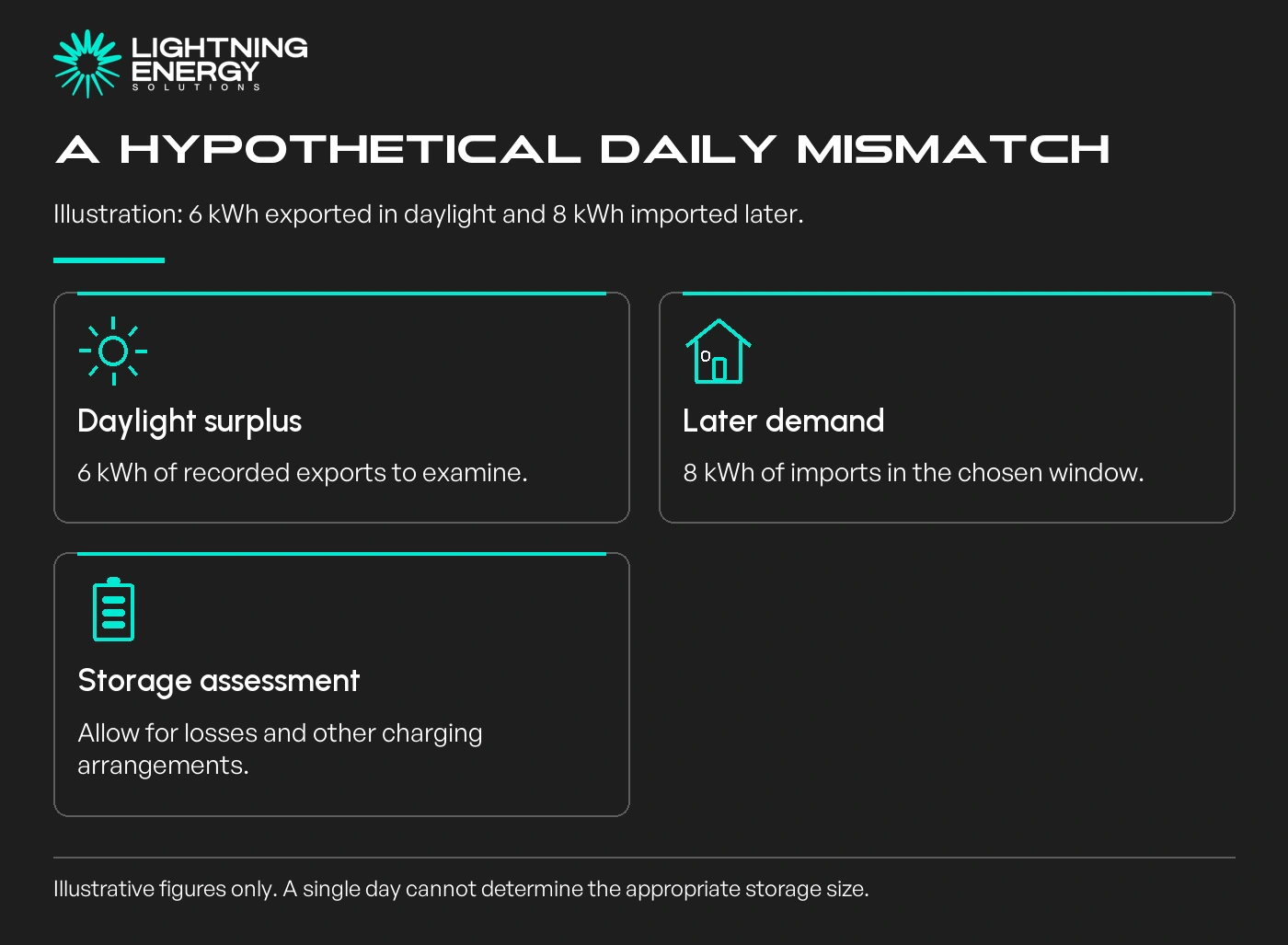
Imagine a hypothetical day with 8 kWh imported after sunset and 6 kWh exported during daylight. The evening demand is not evidence that solar alone can fill an 8 kWh battery that day. Charging losses also need allowance.
Now imagine weekends have more daytime appliance use. Exports may fall even if solar generation stays similar. That is why a proposed storage size should be checked against multiple days and the expected operating schedule.
Solar Victoria identifies overnight consumption, solar system size, future use and backup requirements as relevant sizing considerations. Its guidance supports assessing the household before selecting equipment.
Solar Victoria sizing considerations.
The energy you use over an evening does not establish how many appliances can run together. A short, heavy load raises a different question about output power. Keep that check beside the energy calculation.
Likewise, a backup reserve is a deliberate operating choice. Discuss the desired outage coverage and how reserving energy affects normal evening use. Our blackout guide helps build that brief.
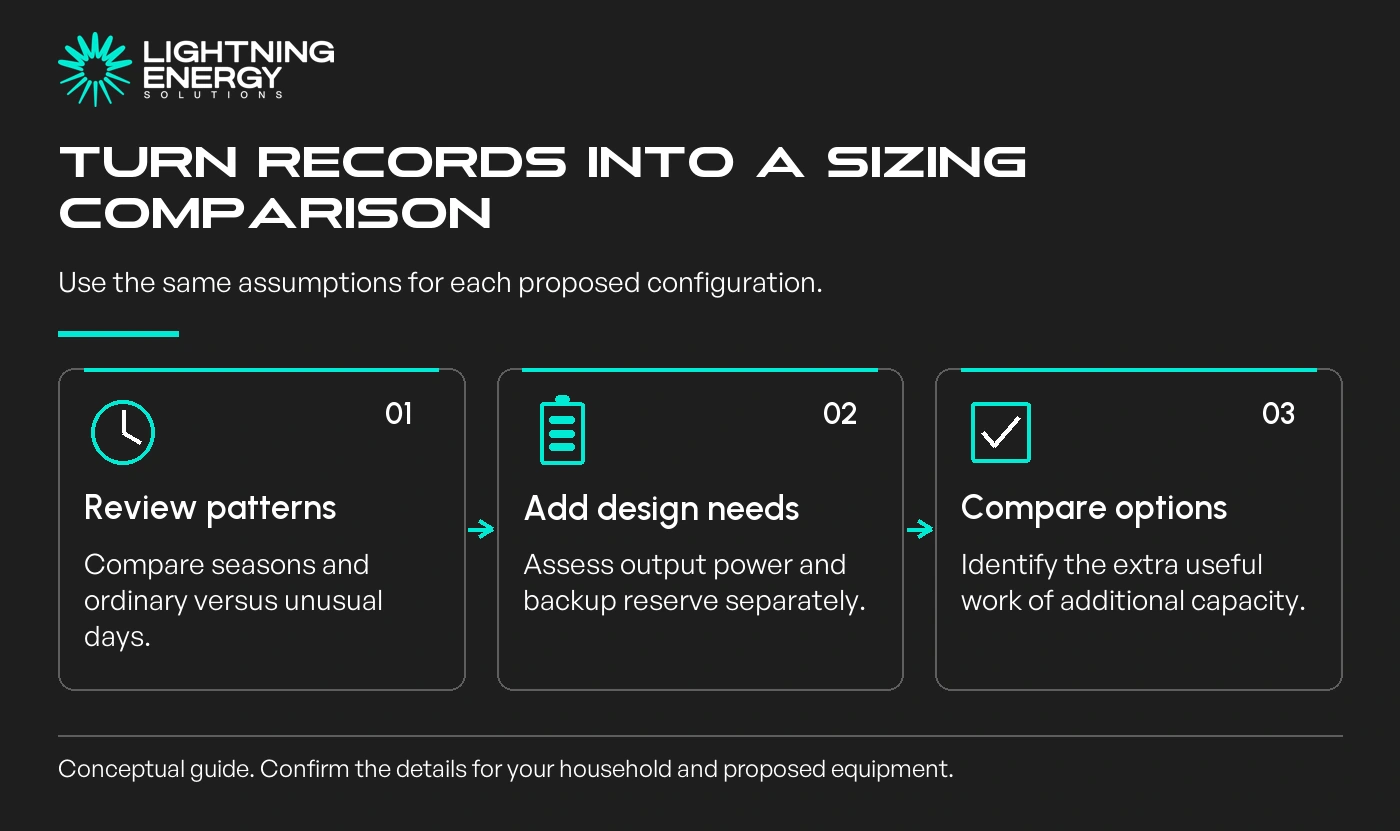
Ask for at least two supported storage configurations modelled against the same records. Compare extra capacity with the amount of additional energy it is likely to shift, rather than assuming every added module earns the same return.
If your records cover only a brief unusual period, gather more data before making a large storage commitment. If a major appliance change is imminent, model it separately and revisit the result when real use is available.
Small evening imports or limited charging surplus may favour a smaller system or a change in appliance timing. The aim is a battery with a clear regular job, plus any explicitly valued backup role.
Plan your battery upgradeBring seasonal bills, interval data and planned appliance changes to Lightning Energy for a sizing discussion based on your household's actual pattern.Available times
Book a consultation and we'll map solar, storage, hot water, and the rebates around your bills and your goals.
Question 1 of 6