
Adding a Battery While Keeping Your Existing Solar Inverter
Keep a working solar inverter or replace it when adding a battery? Compare compatibility, installation scope, backup and support before choosing.
Keep a working solar inverter or replace it when adding a battery? Compare compatibility, installation scope, backup and support before choosing.

You may be able to add a battery and keep your existing solar inverter. A supported retrofit can give working equipment a longer useful life, but keeping it should serve your whole system design.
The decision depends on its condition, the battery connection method and what you expect during an outage. Start with those questions before comparing a discounted package against a replacement proposal.
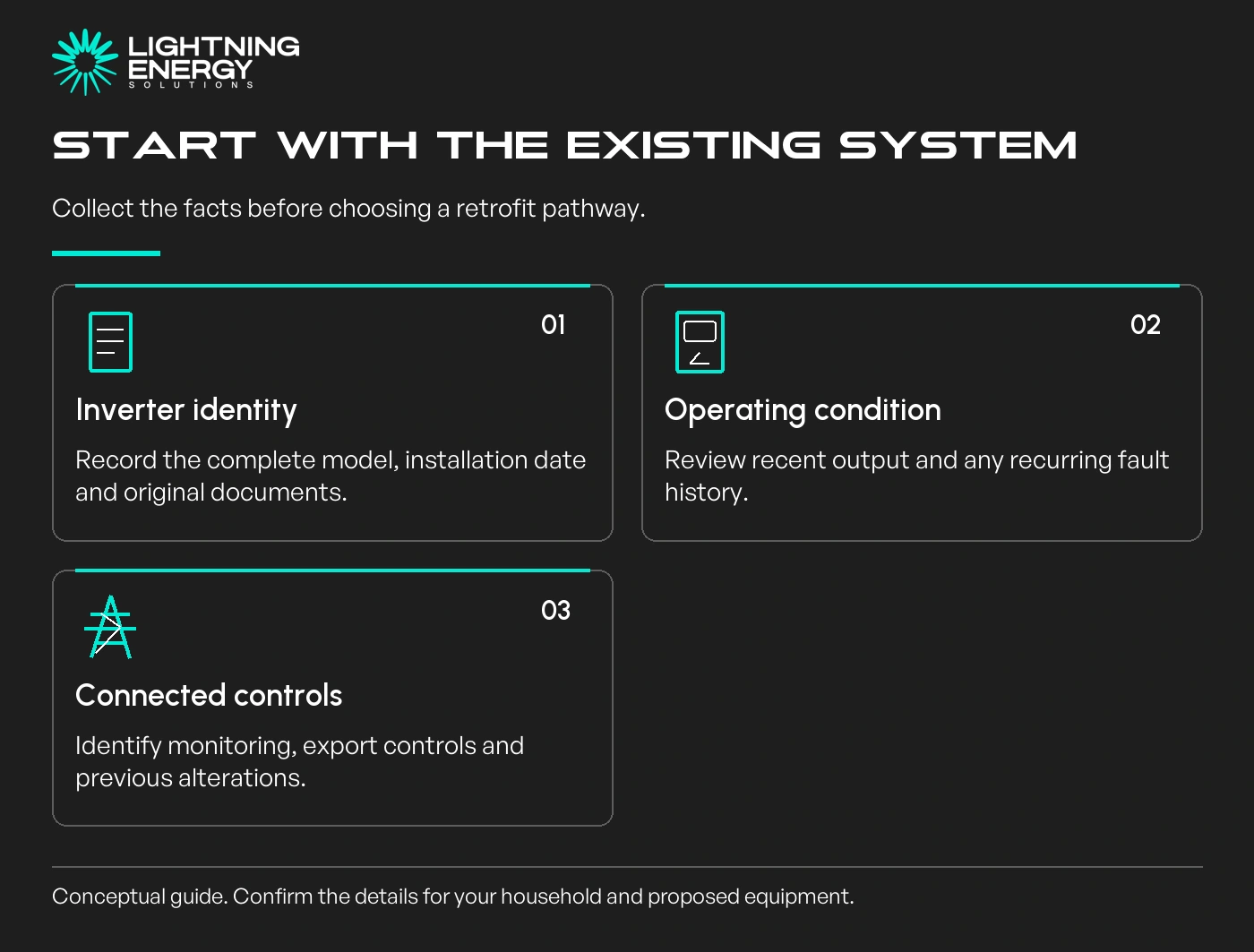
Find the inverter make, complete model number, installation date and original paperwork. Include any monitoring gateway, export-control equipment and changes made since the first installation.
A clear photograph of an accessible external label can help. Leave covers, electrical testing and access to difficult locations to the installer.
Look at recent production records too. An inverter that appears healthy on a sunny afternoon might still need investigation if the system has recurring faults or unexplained production gaps.
Our solar inverter guide explains the main equipment roles.
An AC-coupled battery has its own inverter, providing one possible route to retain an existing solar inverter. A supported hybrid arrangement may instead connect the battery through compatible equipment already installed.
These are pathways to assess, not blanket compatibility promises. The government's Your Home guide explains the underlying arrangements.
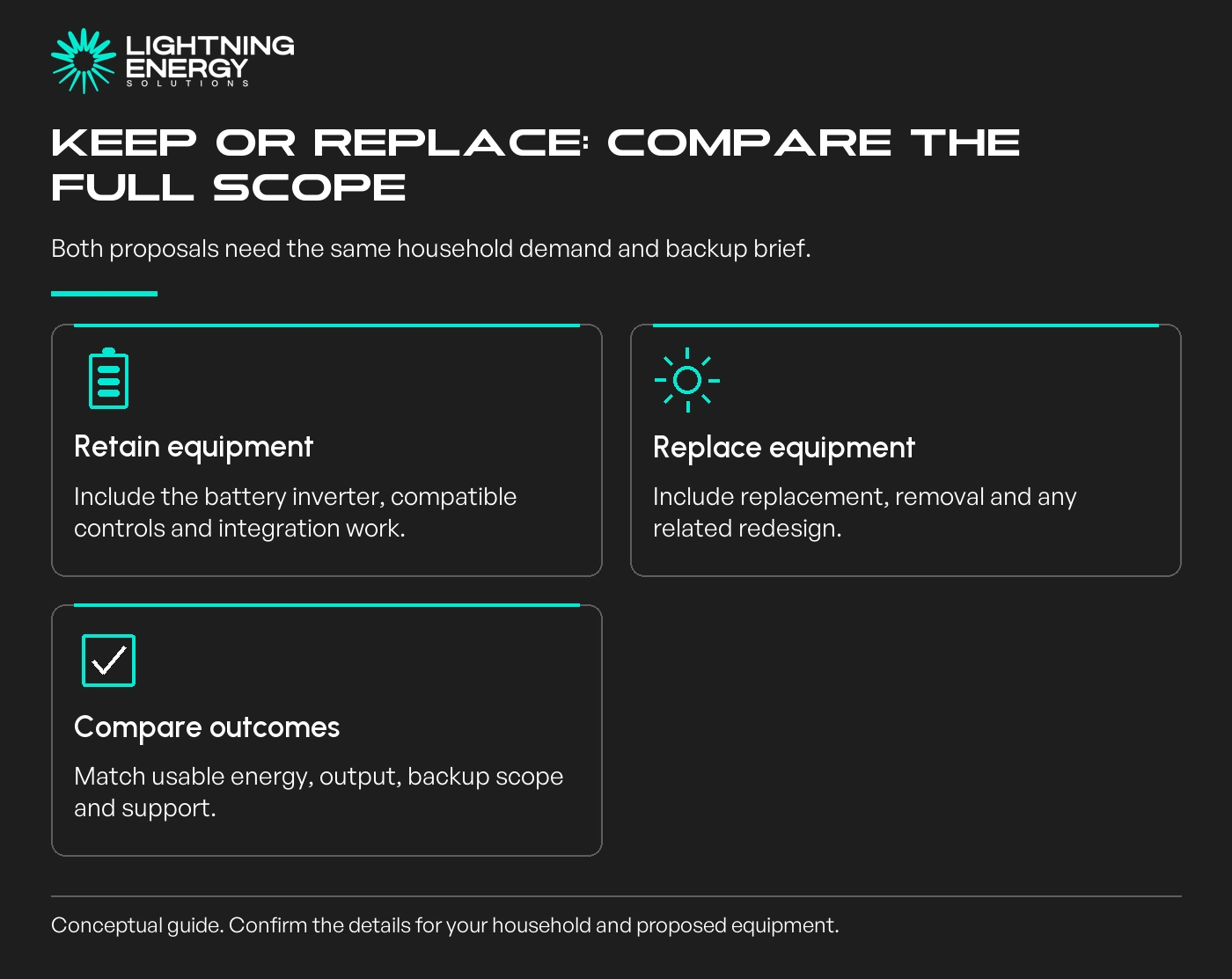
Ask for a keep-existing proposal and, where justified, a replace-existing proposal. Both should use the same household demand, battery energy requirement and backup brief.
Compare the installed totals, including controls, electrical work, commissioning and removal. A replacement proposal may offer useful improvements, but name those improvements rather than assuming new equipment is automatically better.
For example, imagine a working inverter with no fault history. Retaining it could avoid replacement work. If the chosen backup arrangement cannot use that inverter during an outage, that limitation still belongs in the comparison.
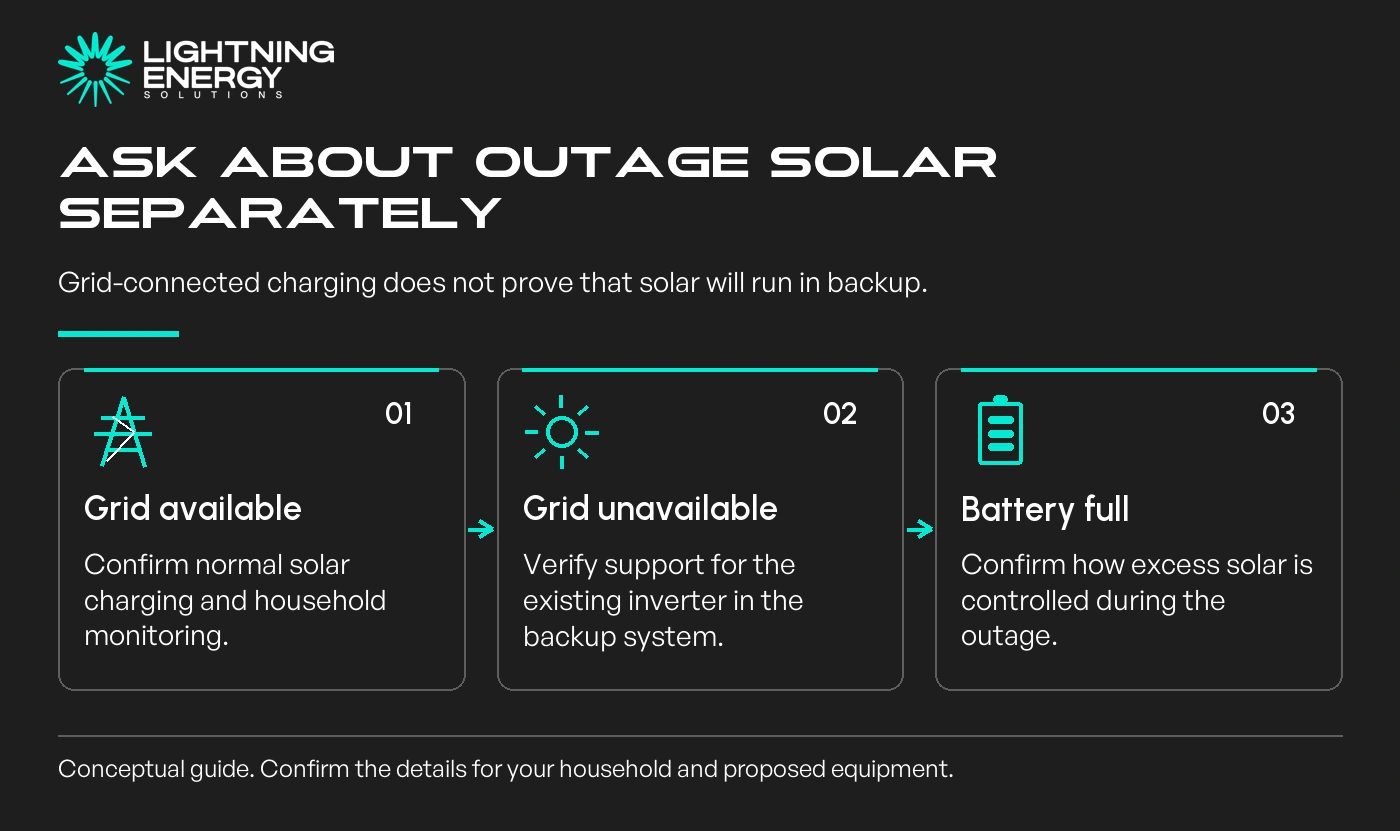
A system can store excess solar successfully while the grid is available yet behave differently when the grid fails. Ask whether the existing solar inverter remains operational in the proposed backup arrangement.
If it does, ask how the system manages excess generation when the battery is full and household demand is low. If it does not, stored energy may still supply selected loads, but outage solar charging could be unavailable.
Get an equipment-specific answer and a documented list of backed-up circuits. Our blackout guide helps turn that answer into household priorities.
Separate apps may also remain after a retrofit. Ask which app shows total household demand, battery charging and grid exchange, and who checks that the measurements agree at handover.
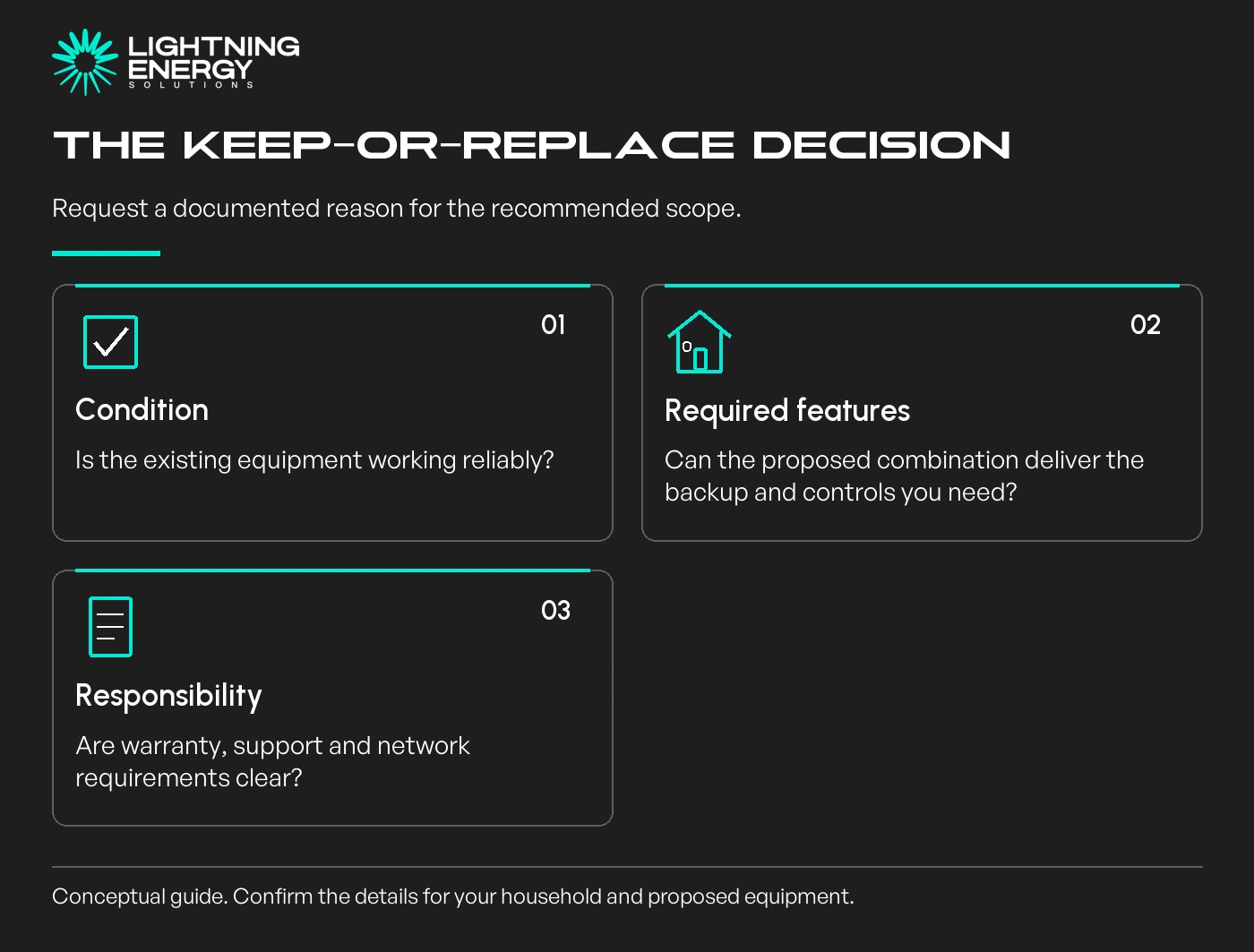
Record who supports the original inverter and who supports the new battery. Ask which original warranties remain applicable and whether the proposed changes affect any conditions.
A verbal assurance that everything is covered is less useful than named contacts, documents and the scope of each supplier's work. Keep the old installation records with the new handover pack.
The distributor's connection process also needs checking. Retaining the inverter does not automatically mean the electricity network has no interest in the new battery or its controls.
CitiPower and Powercor: installer resources.
Replacement deserves serious consideration if the existing inverter needs substantial repair, lacks a supported route to your required features, or would create unnecessary complexity in a planned system redesign.
Conversely, do not replace reliable equipment solely because a battery salesperson prefers a different brand. Ask for the technical or economic reason, in writing.
A useful battery assessment starts with the equipment you own and the jobs the new system must perform. That produces a clearer decision than comparing battery cabinets alone.
Plan your battery upgradeSend us your inverter model, recent electricity data and backup priorities. We can assess the practical options for retaining or replacing your existing equipment.Available times
Book a consultation and we'll map solar, storage, hot water, and the rebates around your bills and your goals.
Question 1 of 6