
Solar on Tile and Metal Roofs: What Changes During Installation?
Compare solar installation on tile and metal roofs, including mounting compatibility, waterproofing, access and the workmanship questions to settle before work starts.
Compare solar installation on tile and metal roofs, including mounting compatibility, waterproofing, access and the workmanship questions to settle before work starts.

Tile and metal roofs need different mounting details, but neither material alone tells you whether solar is suitable or what the final installation should cost.
Start with the condition and construction of your roof. The attachment method, access plan and responsibility for any roof work should be clear before installation day.
A solar site assessment should identify the actual roof profile or tile type, rather than relying on a broad metal-or-tile description.
Request the mounting product and the instructions that apply to the selected roof and panel layout. A suitable attachment on one profile should not be assumed suitable on another.
Clenergy’s Australian range includes distinct tile, penetrative metal-roof and non-penetrative options, with separate documentation. The available categories illustrate why compatibility needs to be specific.
Clenergy Australian mounting information.
This is a question for the installer and designer, not an invitation to choose fixing positions yourself. Structural and loading requirements belong in the supported installation design.
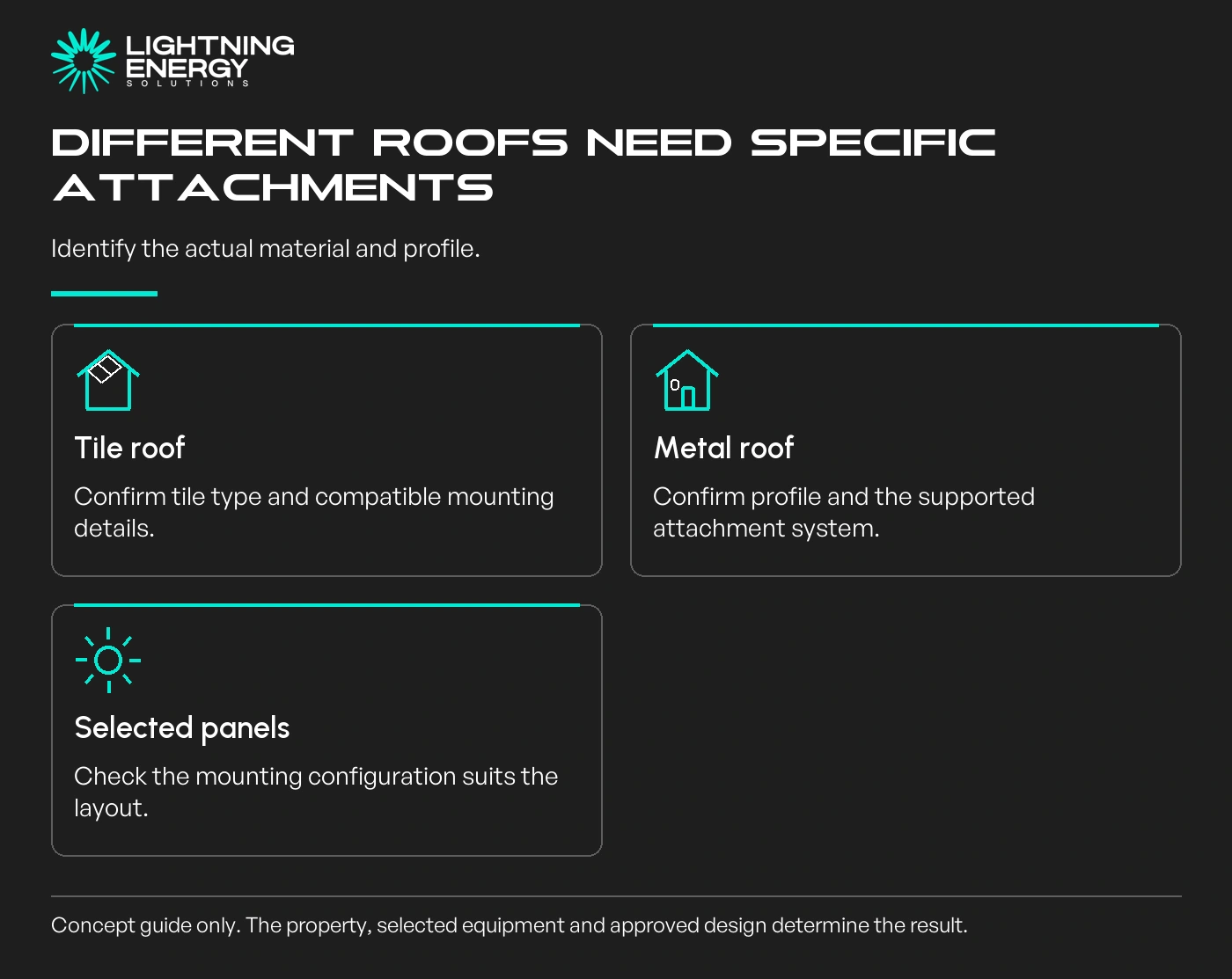
For a tiled roof, discuss existing damage, spare matching tiles and who handles breakages or repairs. For a metal roof, ask about its condition, profile and the compatibility of the proposed attachments.
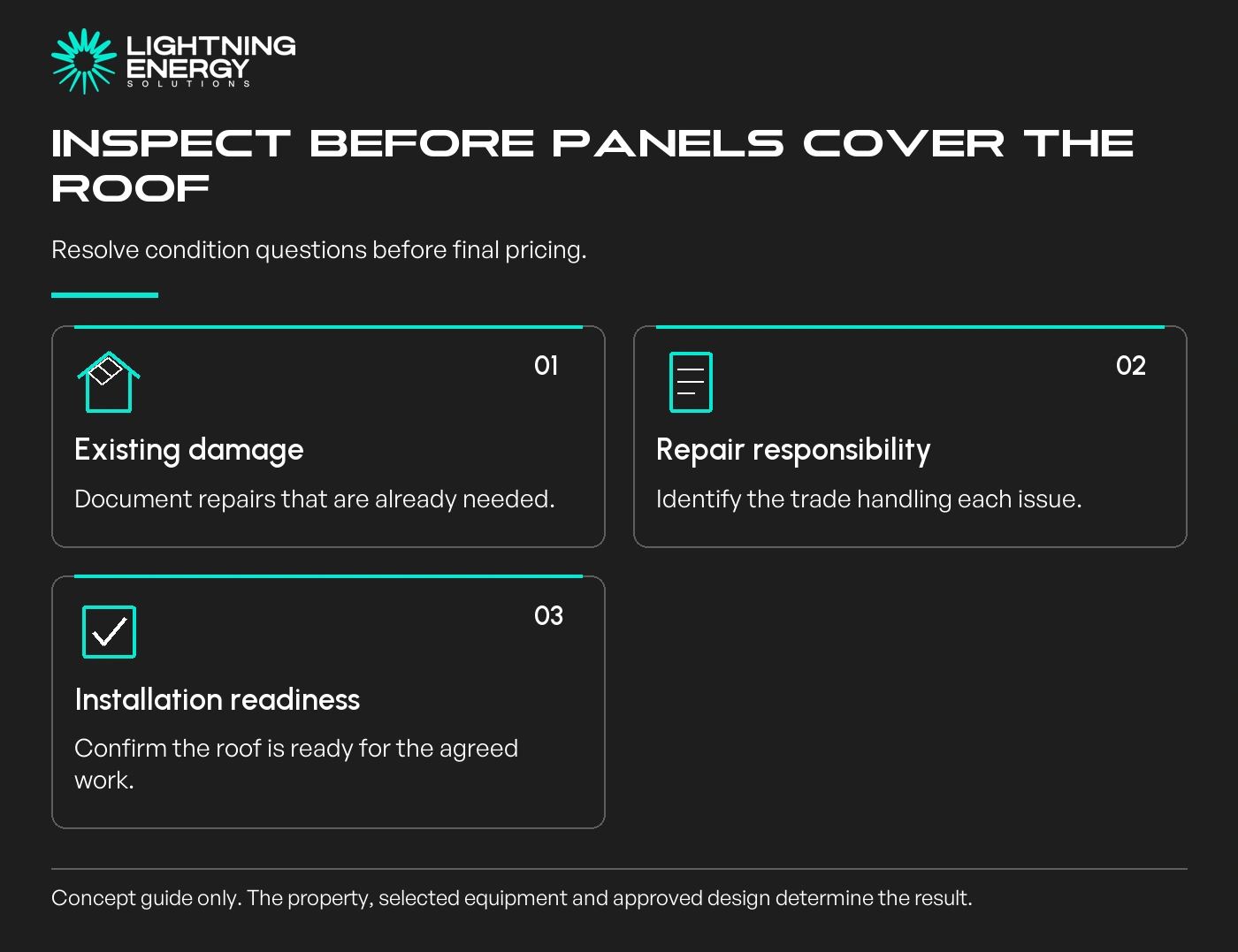
The Government design guide identifies roof type and condition as relevant to installation and recommends addressing near-term roof repairs before solar.
Government roof-condition guidance.
Imagine two proposals using the same panels. One assumes the roof is ready; the other records repairs that need completing first. Resolve that difference before comparing the totals as equivalent jobs.
Ask how the selected mounting arrangement protects the roof’s weatherproofing and who is responsible for the associated workmanship. Keep the answer with the accepted quotation.
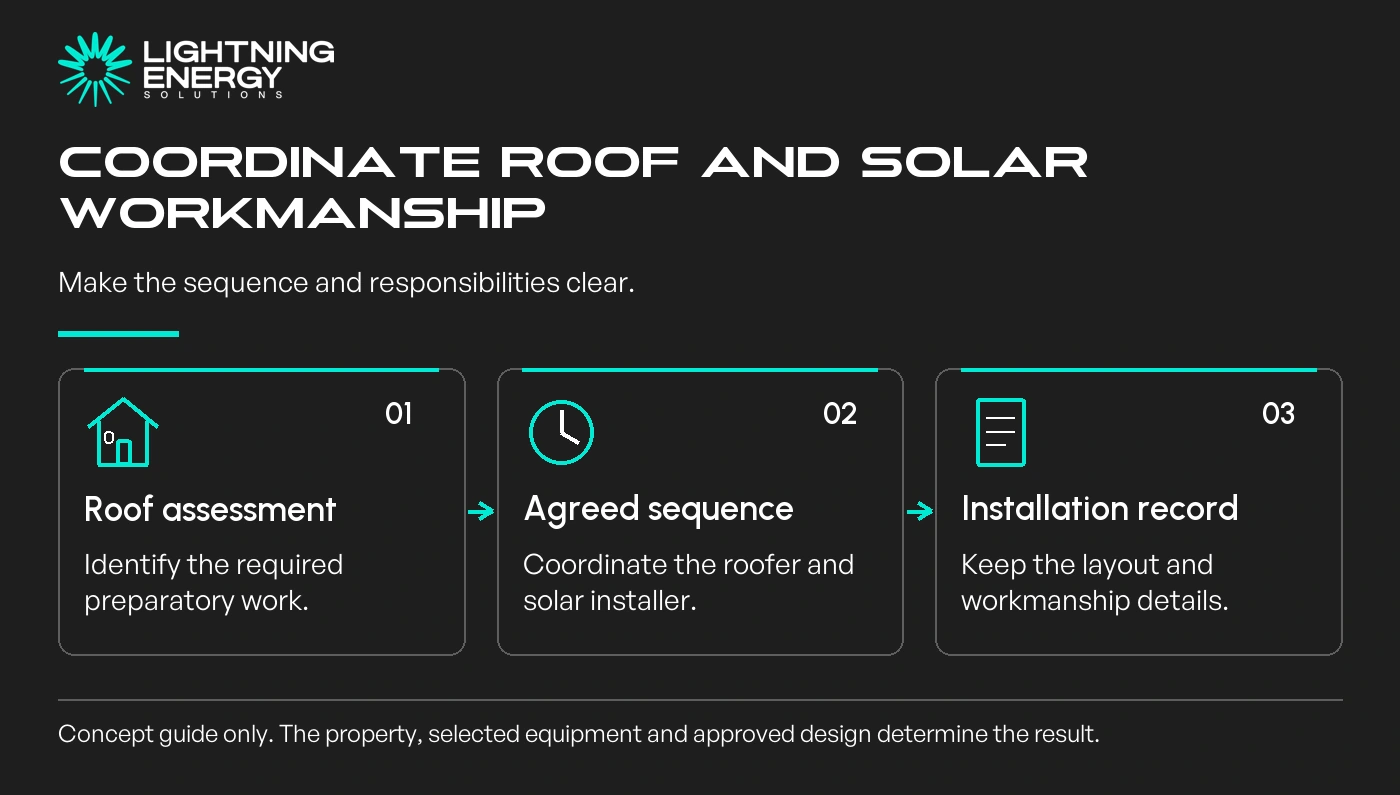
If roof repairs involve another contractor, agree the sequence and contact points. The solar installer and roofer should not each assume the other owns an unfinished part of the job.
Our roof-work planning guide explains the coordination questions when roof replacement and solar interact.
Avoid treating a generic promise of no leaks as sufficient documentation. The scope should identify the actual work and how a later concern will be investigated.
The roof material is only one part of the labour scope. Height, pitch, access and the layout can also affect the work. Ask which conditions have been inspected and which remain assumptions.
Our installed-cost guide helps separate equipment pricing from the other requirements of the job.
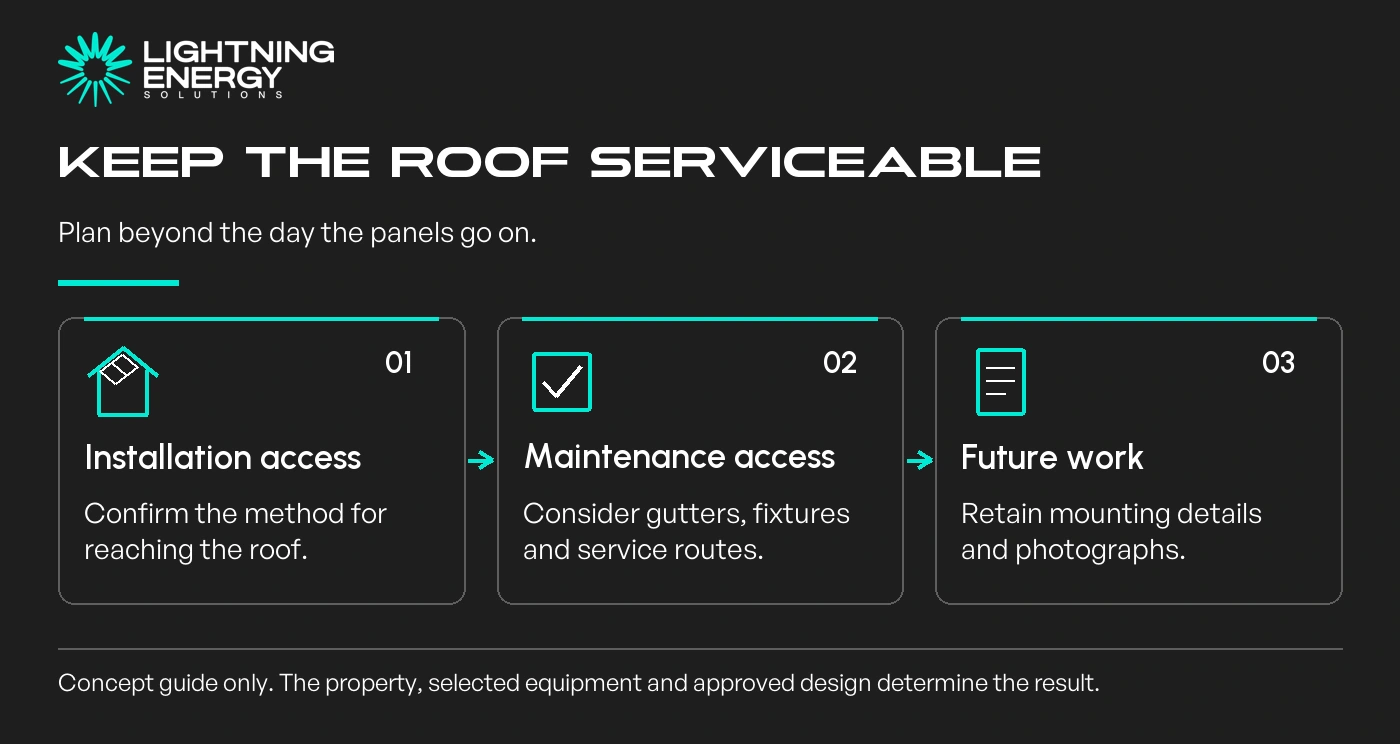
Ask how the installation preserves access to gutters, roof fixtures and relevant maintenance areas. A dense drawing should still be explained in terms of a roof that needs to remain serviceable.
Keep photographs and the final layout with the mounting and warranty records. They can help a future tradesperson understand what was installed without relying on memory.
Do not accept that metal always means simple or that tiles automatically make solar impractical. The actual roof assessment should determine the supported approach and any additional work.
If substantial roof repair is already due, resolve that before paying for a solar layout that may soon need to be disturbed. If the roof is sound, ask for a complete installation scope rather than an unnecessary replacement.
Contact Lightning Energy with roof photographs and any inspection records. The useful next step is confirming mounting compatibility, roof condition and workmanship responsibility for your particular home.
Available times
Book a consultation and we'll map solar, storage, hot water, and the rebates around your bills and your goals.
Question 1 of 6