
Victoria’s Solar Emergency Backstop: How It Differs From Export Limits
Understand Victoria’s solar emergency backstop, which systems it applies to, and how emergency control differs from everyday fixed or flexible export limits.
Understand Victoria’s solar emergency backstop, which systems it applies to, and how emergency control differs from everyday fixed or flexible export limits.

Victoria's solar emergency backstop is a grid-security measure for rare emergencies. It is different from the normal export limit in your connection agreement and from a flexible allowance that responds to local network capacity.
A backstop-capable system can have generation or export remotely reduced under the applicable arrangements. That does not mean every ordinary dip in your solar app is an emergency intervention.
Our export-limit guide explains the everyday connection conditions that should be understood separately.
When rooftop solar production is high and demand on the wider system becomes very low, electricity-system operation can become difficult. The backstop provides a last-resort way to reduce relevant solar generation in an emergency.
The Victorian Government describes the mechanism as remote turn-down or switch-off capability, not a household electricity tariff. It should not be confused with a retailer rewarding battery exports through a VPP.
Victorian Government backstop guidance sets out the purpose and current installation requirements.
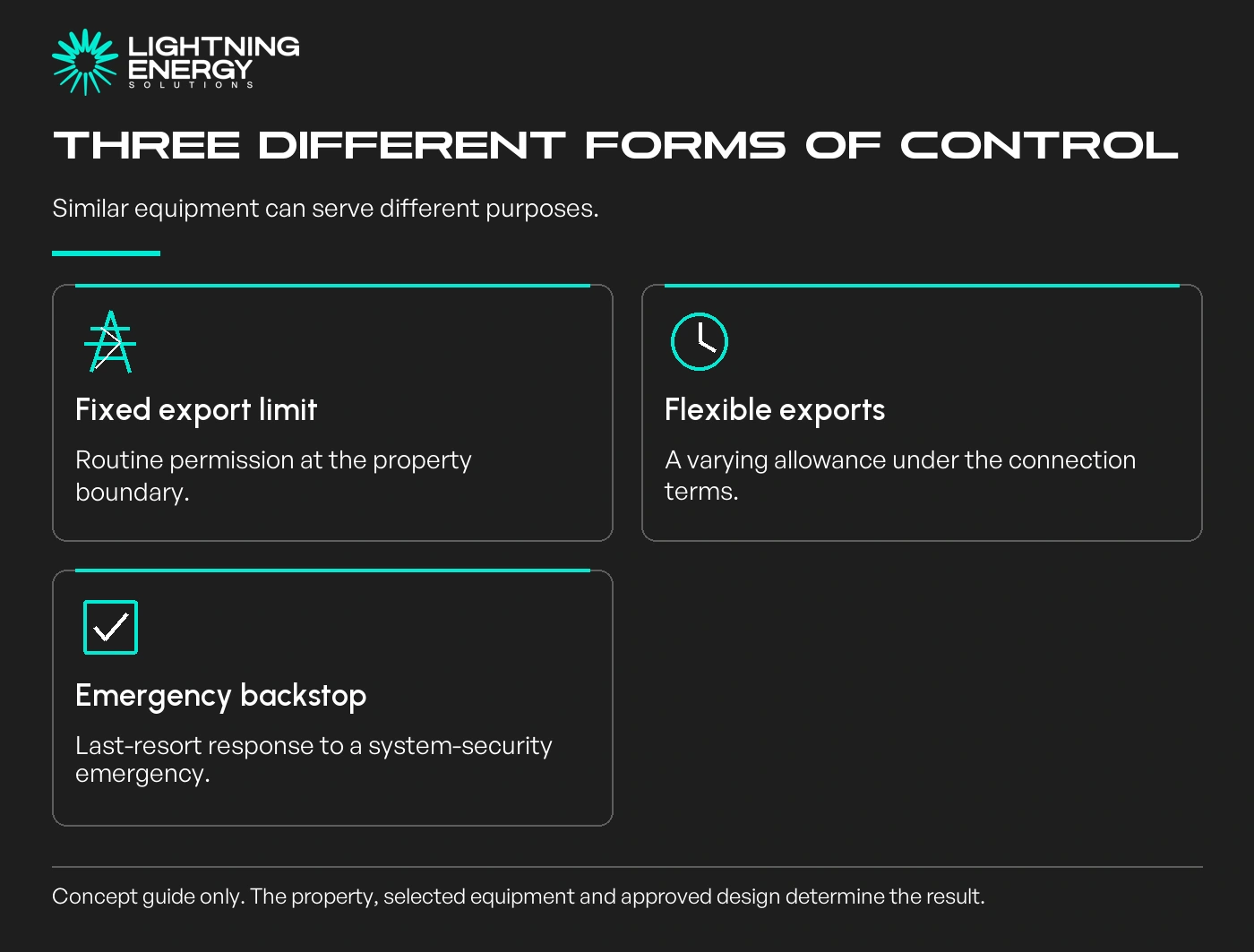
Normal export control concerns the power leaving a site. Flexible exports can vary that allowance. Emergency backstop control addresses a wider system-security event, although compatible communications can support several functions.
Our VPP overview explains the separate commercial decision about participating battery operation.
Government guidance says the small-and-medium-system requirements began on 1 October 2024 for new rooftop solar systems up to 200 kW. Relevant inverter replacements on older systems can also bring requirements into scope.
The guidance identifies exceptions for like-for-like replacements and replacements under warranty. An installer should confirm whether the actual job qualifies rather than treating every replacement identically.
A pre-existing, unchanged system is not automatically required to be replaced simply because the backstop exists. Equally, its age does not exempt every future upgrade.
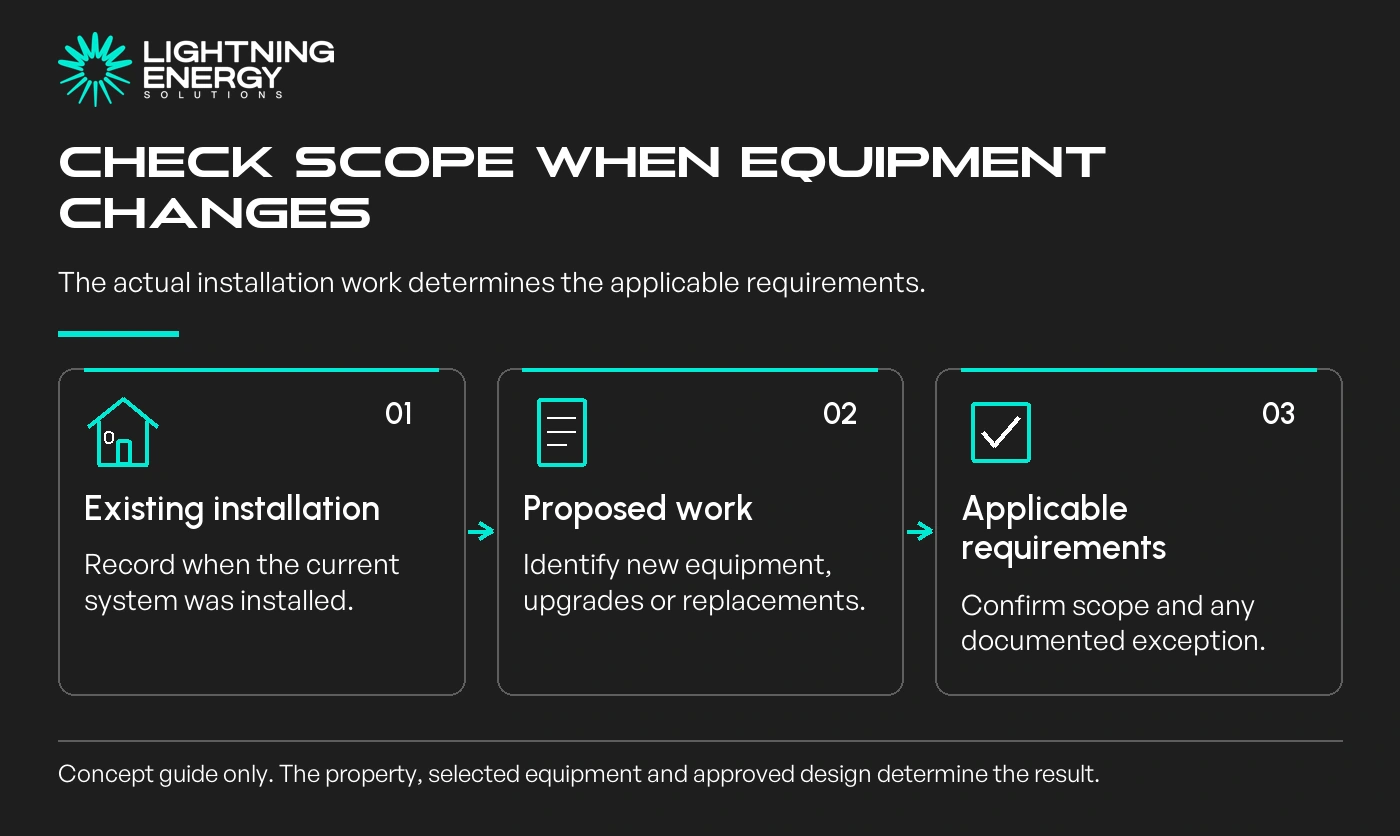
These details were checked on 14 October 2026. Confirm the current rules and distributor requirements before work is quoted, particularly where several old and new inverters share the property.
For systems within scope, compatible equipment and reliable communications are central requirements, unless an applicable exception has been approved. The installer must commission the supported arrangement properly.
Ask which device needs internet access, how it connects and what to do after changing your router or service provider. Keep the manufacturer's customer instructions with the handover documents.
AusNet publishes a process for situations where internet is unavailable. That network-specific arrangement should not be assumed to apply elsewhere.
AusNet connection requirements.
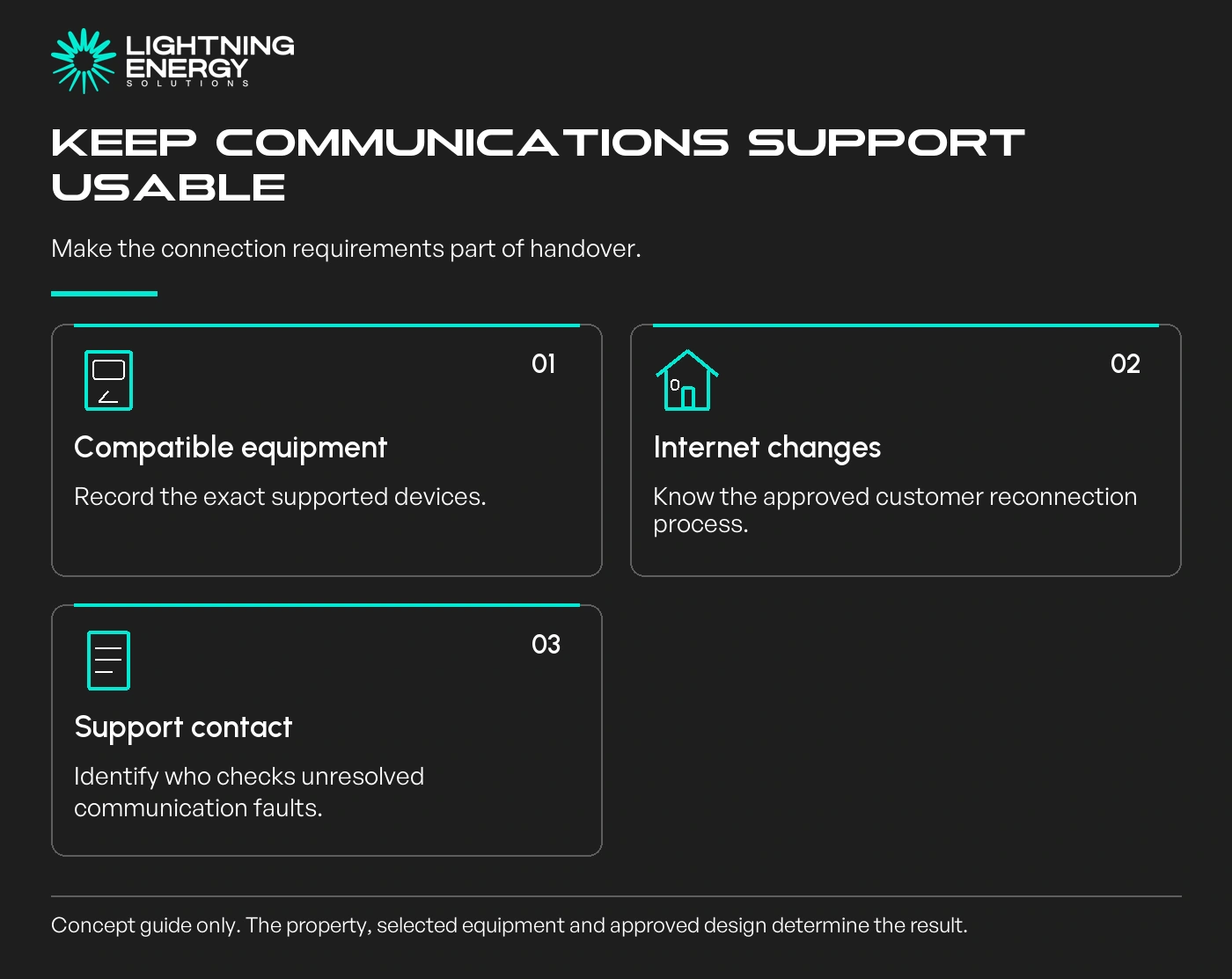
A reliable connection is an operational requirement, not just a convenience for viewing a colourful app. However, an app that has stopped refreshing does not prove that the network control connection has also failed.
Ask the installer to explain how those separate connections are checked. Avoid changing protected inverter settings or disconnecting controls in an attempt to restore generation.
Start with the timestamp, weather, system alerts and measured household use. Compare the event with any distributor notification, rather than inferring a backstop event from a flat or falling production trace.
Possible explanations include cloud, normal export limiting, battery behaviour, a communications issue or an equipment fault. The evidence should determine which party investigates.
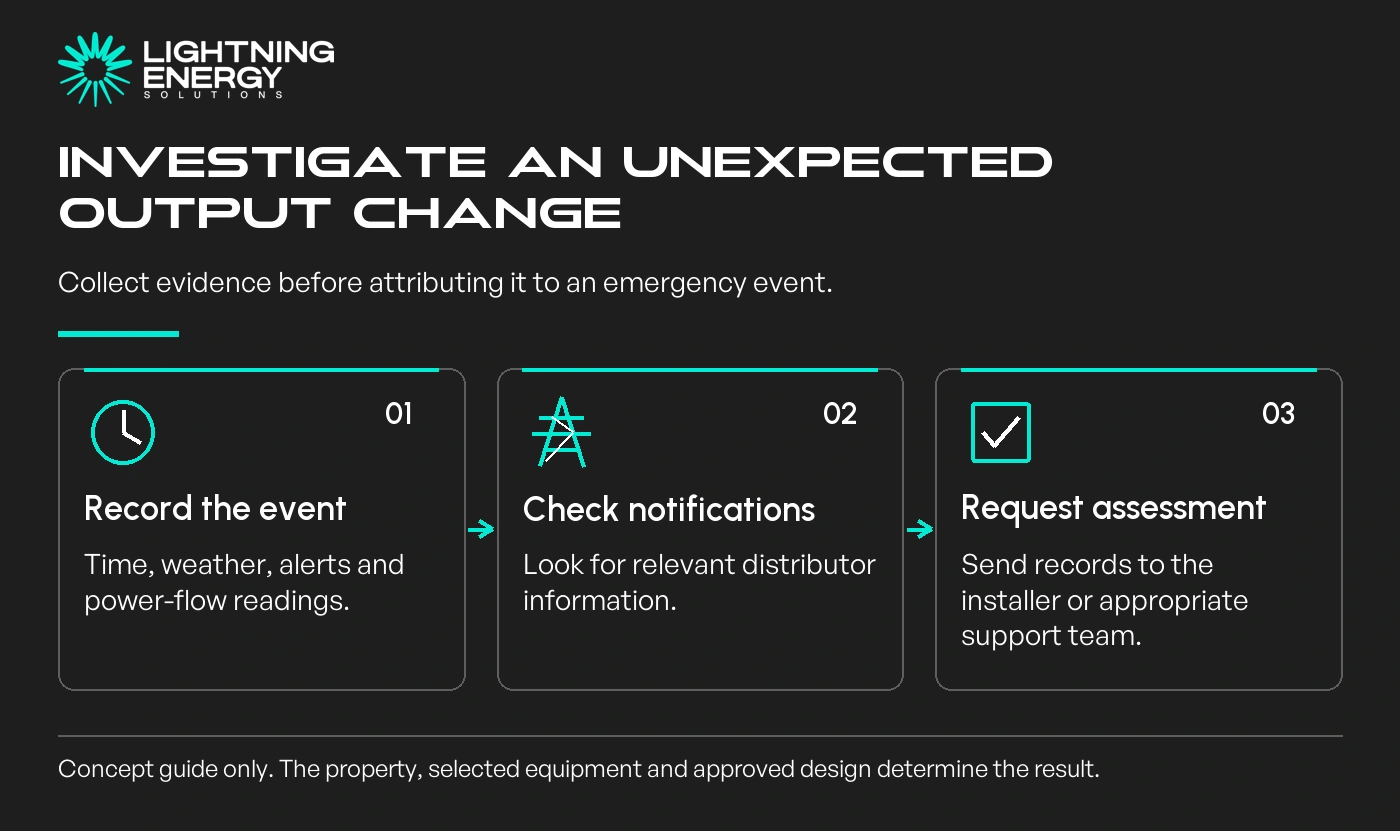
Our solar team can review the system information and identify the appropriate support route. A genuine electrical warning or damaged equipment requires prompt professional attention.
Do not buy storage on the assumption that it avoids every backstop requirement or preserves all generation in every event. The complete approved configuration and event response need to be understood first.
Ask for a clear handover explanation covering ordinary export control, emergency capability and communications support. Homeowners should know what the system is designed to do without becoming its electrical operator.
Available times
Book a consultation and we'll map solar, storage, hot water, and the rebates around your bills and your goals.
Question 1 of 6
