
What size heat pump tank does your household need?
Choose a heat-pump tank using peak hot-water demand, shower flow and recovery opportunities. Household headcount is useful, but it is only a starting point.
Choose a heat-pump tank using peak hot-water demand, shower flow and recovery opportunities. Household headcount is useful, but it is only a starting point.

The right heat-pump tank size depends on how much hot water the home needs in its busiest period and how effectively the system can reheat between uses. Household headcount alone cannot give a reliable answer.
Ask for a sizing explanation that includes the tank, heat-pump model and permitted heating schedule. A large cylinder and a small cylinder can each be the wrong choice if the rest of the design is ignored.
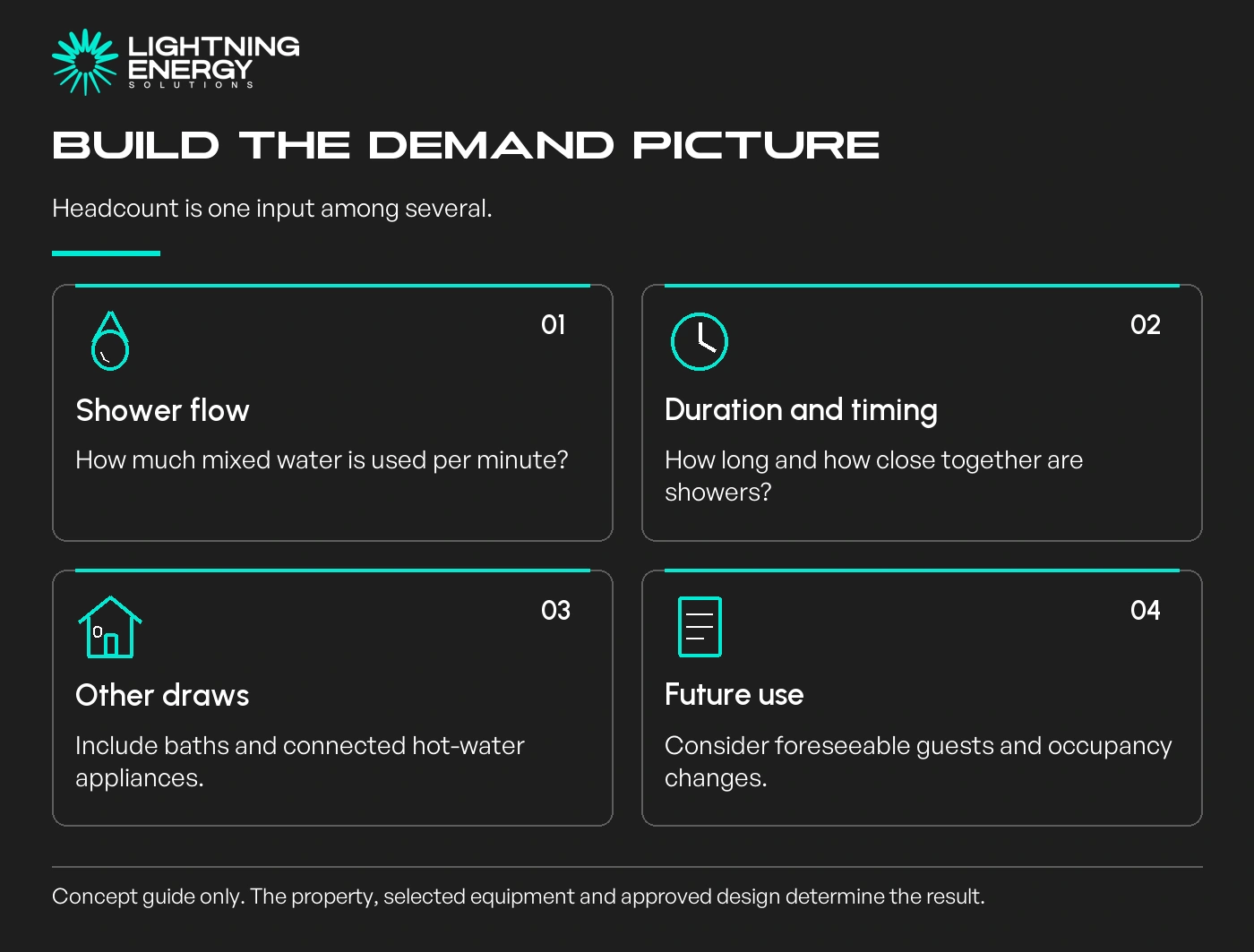
Start with shower flow, typical duration and how closely showers occur together. Add baths and any appliances that actually draw from the household hot-water service.
A dishwasher or washing machine with its own heater may not draw the hot-water volume you expect. Confirm its connection rather than adding its entire water use to the tank requirement.
Imagine two four-person households. One spreads short showers across morning and evening; the other takes consecutive long showers before work. Their peak storage needs can differ despite identical headcount.
For heat-pump selection, include likely guests and foreseeable household changes. Also avoid sizing permanently for an extreme event that happens rarely without considering supported recovery options.
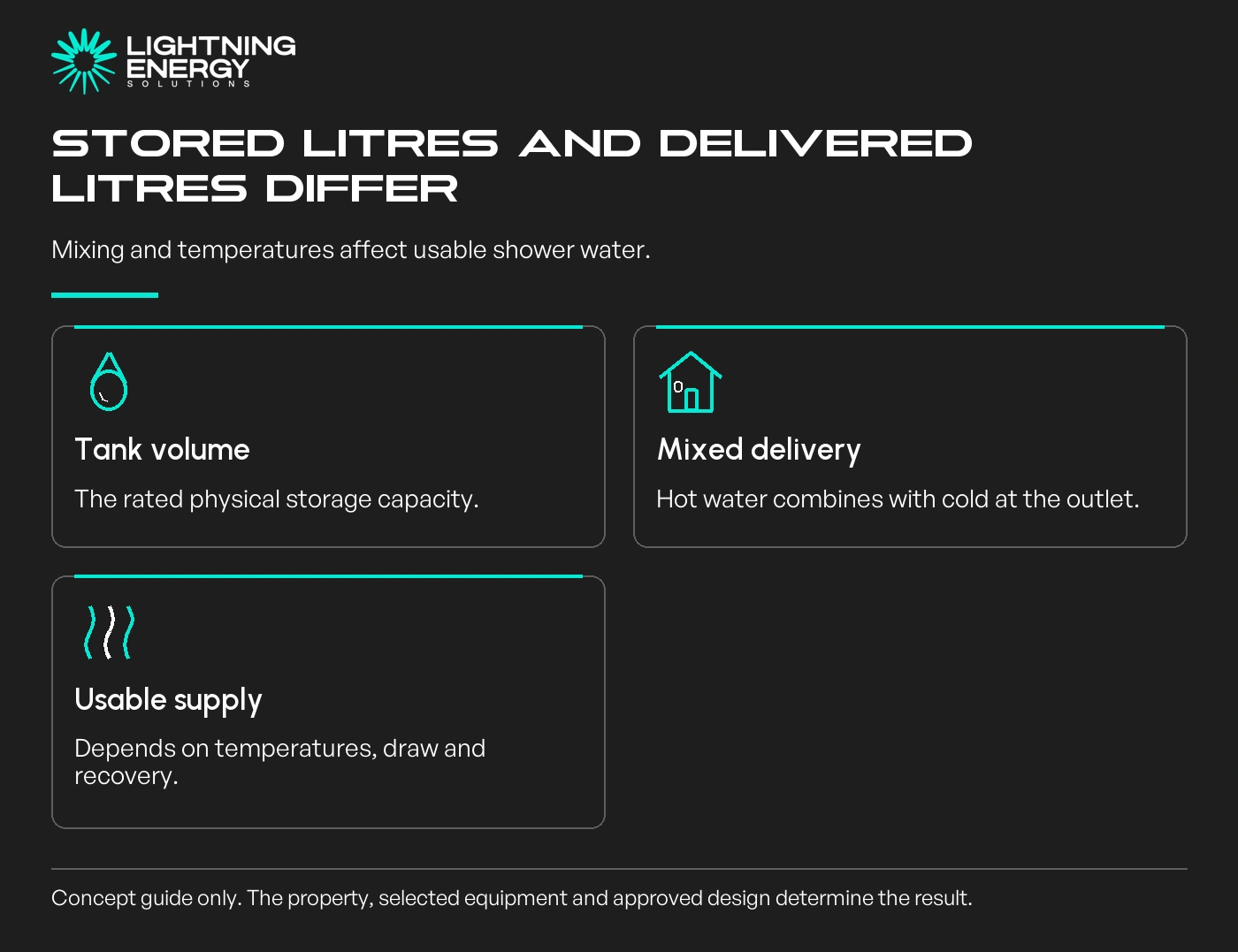
Nominal storage volume describes the tank. Water delivered at a shower is usually a mixture of hot and cold water, so those litres are not interchangeable with the tank's rated capacity.
Available mixed water depends on temperatures, controls and the system design. It also changes as water is drawn and replaced. Do not convert capacity into a guaranteed number of showers without stated assumptions.
Solar Victoria's sizing guidance treats system selection as a balance between performance and cost.
Manufacturer-specific guidance is needed to apply that balance to the proposed model.
Do not raise temperatures or alter tempering equipment to compensate for an inadequate sizing decision. Storage hygiene and safe delivery temperatures belong in the compliant installation design.
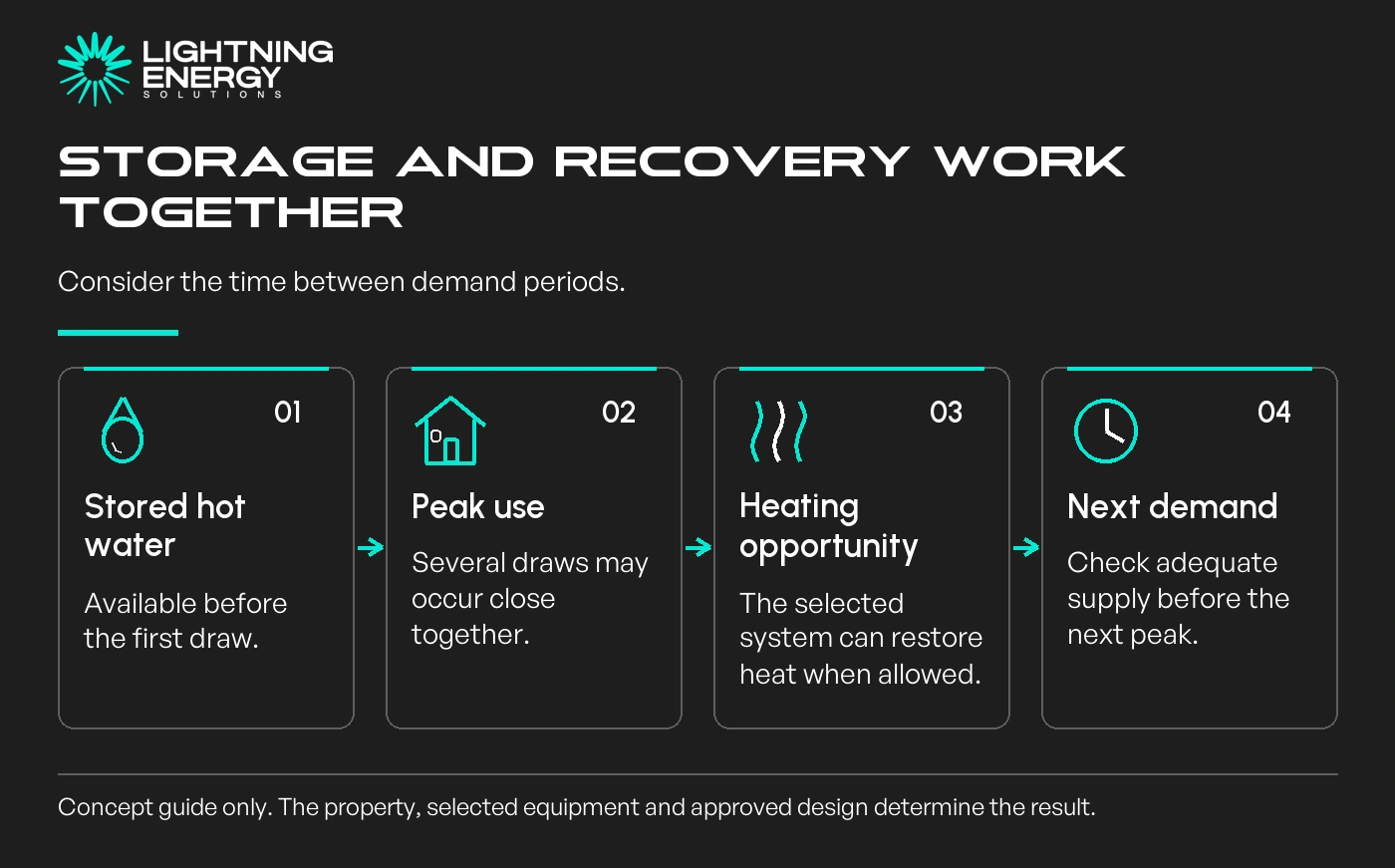
A heat pump may restore hot water between demand periods. How much it can restore depends on the equipment, air and incoming-water conditions, and time available.
If you want most normal heating inside a solar window, the tank may need to carry the household through a longer interval before the next planned heating period.
Our winter timer guide explains why the permitted window must still support adequate recovery. A short timer setting should not be assumed to suit every tank and climate.
Ask how the proposed system handles the busiest winter morning. An advertised heat-up time measured under different conditions is not automatically the answer for your home.
Check the actual tank dimensions, filled weight, access path and required service clearances. A tank that fits on a plan may be difficult to move into place or maintain once installed.
For an integrated unit, airflow around the heat-pump section matters too. For a split design, the tank and outdoor unit each need an appropriate location and connecting services.
Solar Victoria's planning guide explains the distinction between these arrangements.
The available space may affect which complete system is practical, not just which cylinder has the most litres.
A larger tank can provide more stored capacity, but it also changes space and cost. Do not pay for extra volume without understanding the demand or operating constraint it is intended to solve.
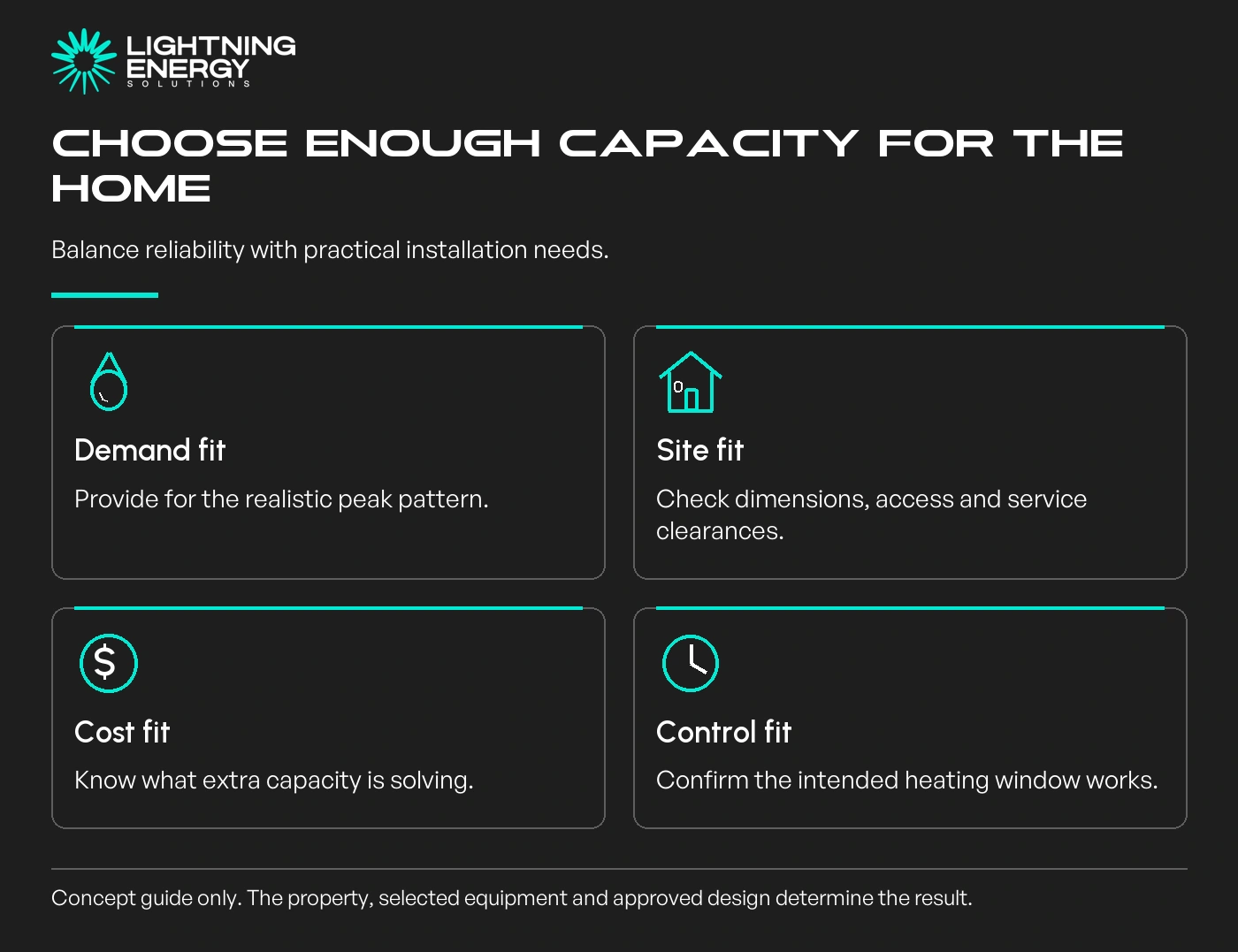
Give the installer a realistic description of shower routines, peak demand, planned solar timing and future occupancy. Ask which assumptions led to the proposed tank and heat-pump combination.
Request the expected recovery conditions and any role for a boost function. Clarify how ordinary demand differs from an occasional high-use day and what supported options are available for each.
There is no need to replace a correctly sized, reliable system just because a larger model exists. Equally, choosing the smallest tank purely to reduce the quote can create avoidable shortages.
Contact us with the current system details and household routine. A good recommendation should explain why the selected storage and recovery suit the dwelling, rather than stopping at a people-per-tank chart.
Available times
Book a consultation and we'll map solar, storage, hot water, and the rebates around your bills and your goals.
Question 1 of 6