
When Could South-Facing Solar Panels Make Sense in Melbourne?
Could south-facing solar suit your Melbourne roof? Compare pitch, seasonal generation, shade and the incremental cost before adding another panel group.
Could south-facing solar suit your Melbourne roof? Compare pitch, seasonal generation, shade and the incremental cost before adding another panel group.

South-facing panels can be worth assessing on a constrained Melbourne roof, but they need their own case. Spare roof area is a starting point, not evidence that another group will be good value.
Compare the additional generation from the proposed southern face with its extra installed cost and your household’s use. Do not apply the performance of a north-facing group to the whole enlarged system.
Start with a roof-specific solar design that shows each group separately.
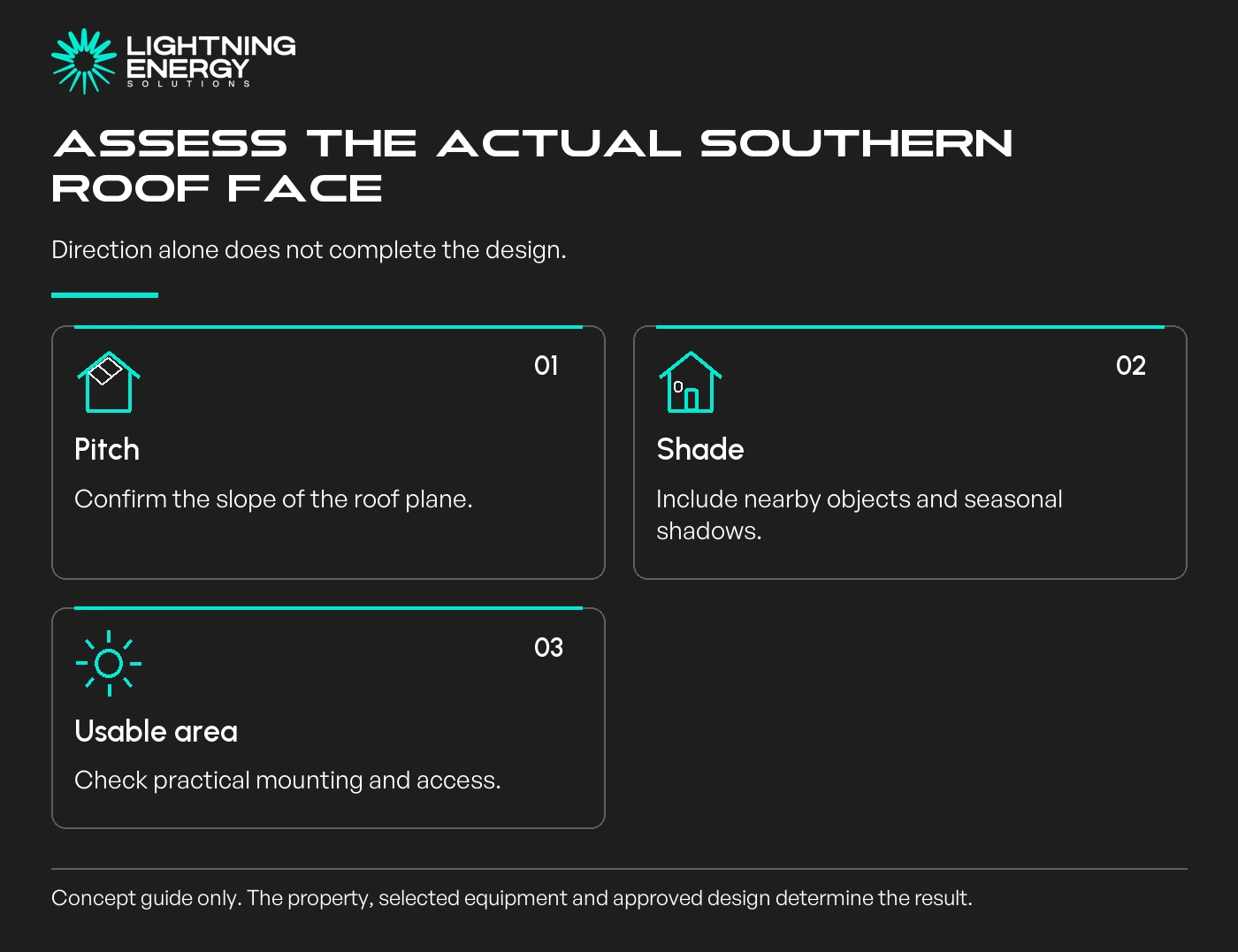
The Australian Government guide notes that south-facing panels produce less electricity, particularly on steep roofs, and may not be cost-effective. The actual pitch and obstructions therefore deserve attention.
Government roof-direction guidance.
Ask the designer to identify the roof bearings and slope rather than using a rough compass impression from the street. Nearby shade may also change which apparently suitable areas are worth using.
A clear south-facing plane and a shaded northern corner present different constraints. Comparing them requires a model of those actual conditions, not a universal compass ranking.
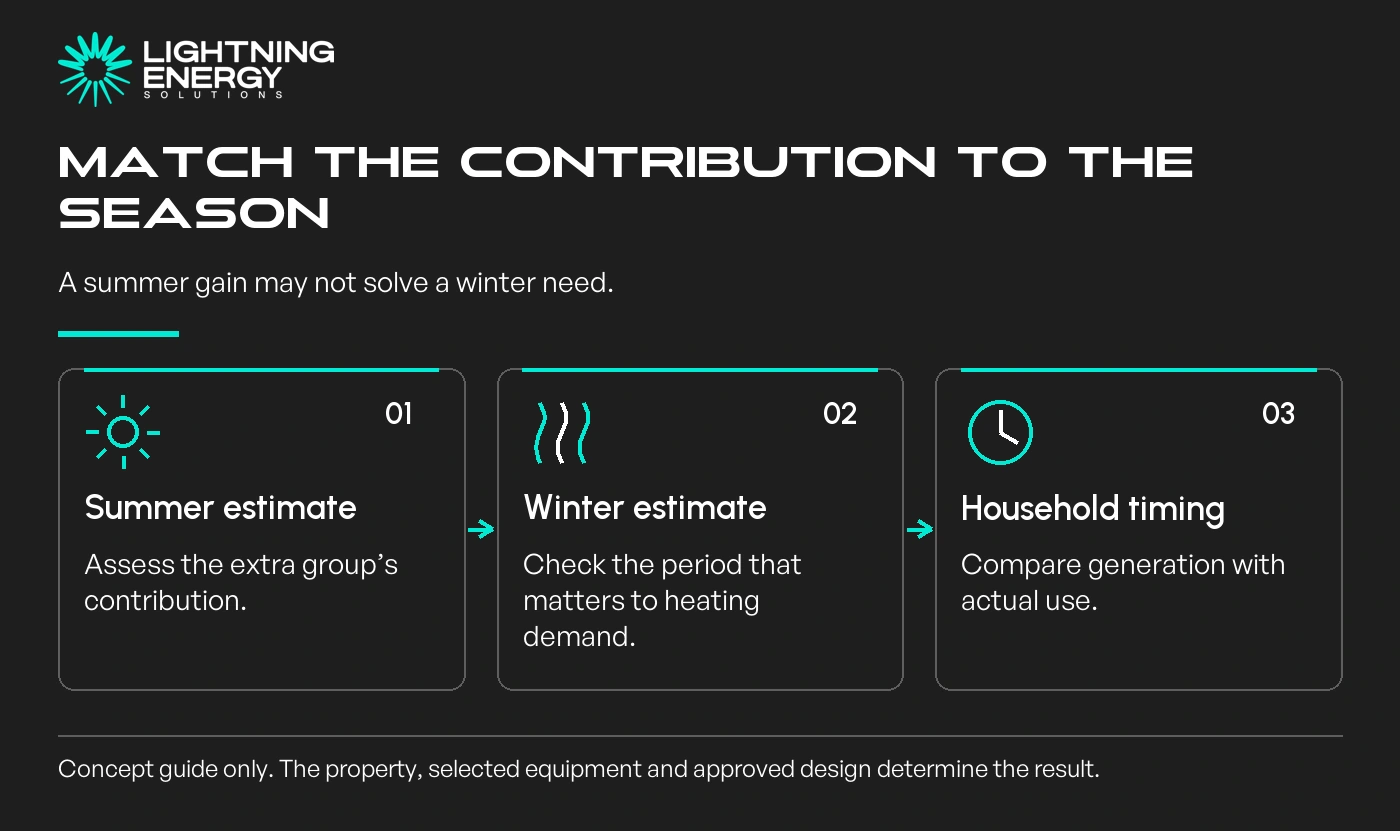
Ask for the expected contribution of the proposed additional group by season. A strong summer contribution cannot be assumed to solve a winter energy requirement.
SunSPOT allows comparisons of panel-group position and seasonal estimates, with input quality remaining important to the result.
Our Melbourne winter solar guide explains why annual totals alone can hide an important mismatch.
Imagine an illustrative household planning electric winter heating. Ask what the southern addition contributes during that season and at the hours heating is used, rather than judging it only from summer output.
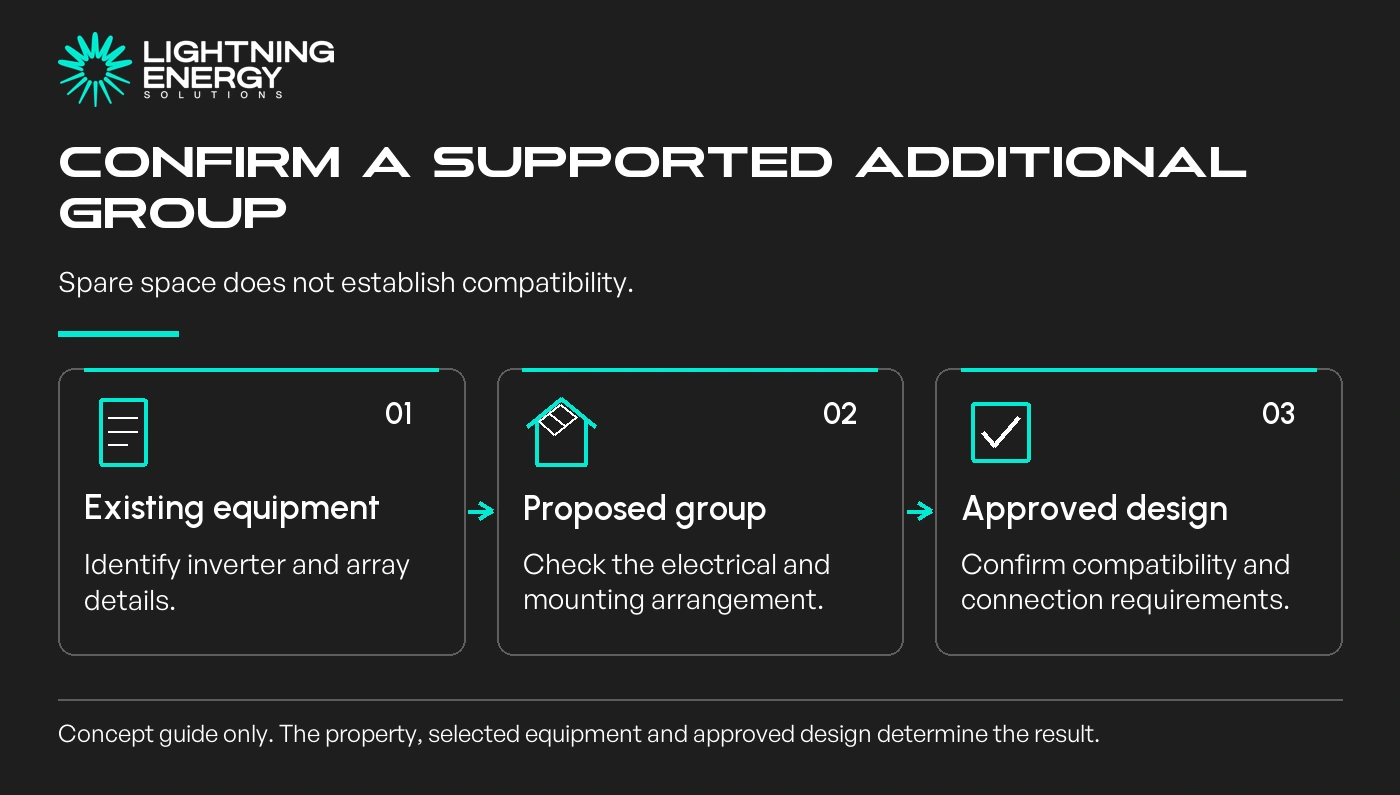
Multiple orientations require an inverter and panel-group arrangement that suits the proposed system. Ask how the new group connects and which manufacturer limits apply.
The inverter overview explains the main architectures. It does not replace the model-specific assessment needed to confirm a supported configuration.
For an existing array, adding panels is a separate project. Check existing equipment condition, compatible mounting, network approval and any effect on warranties before assuming expansion is straightforward.
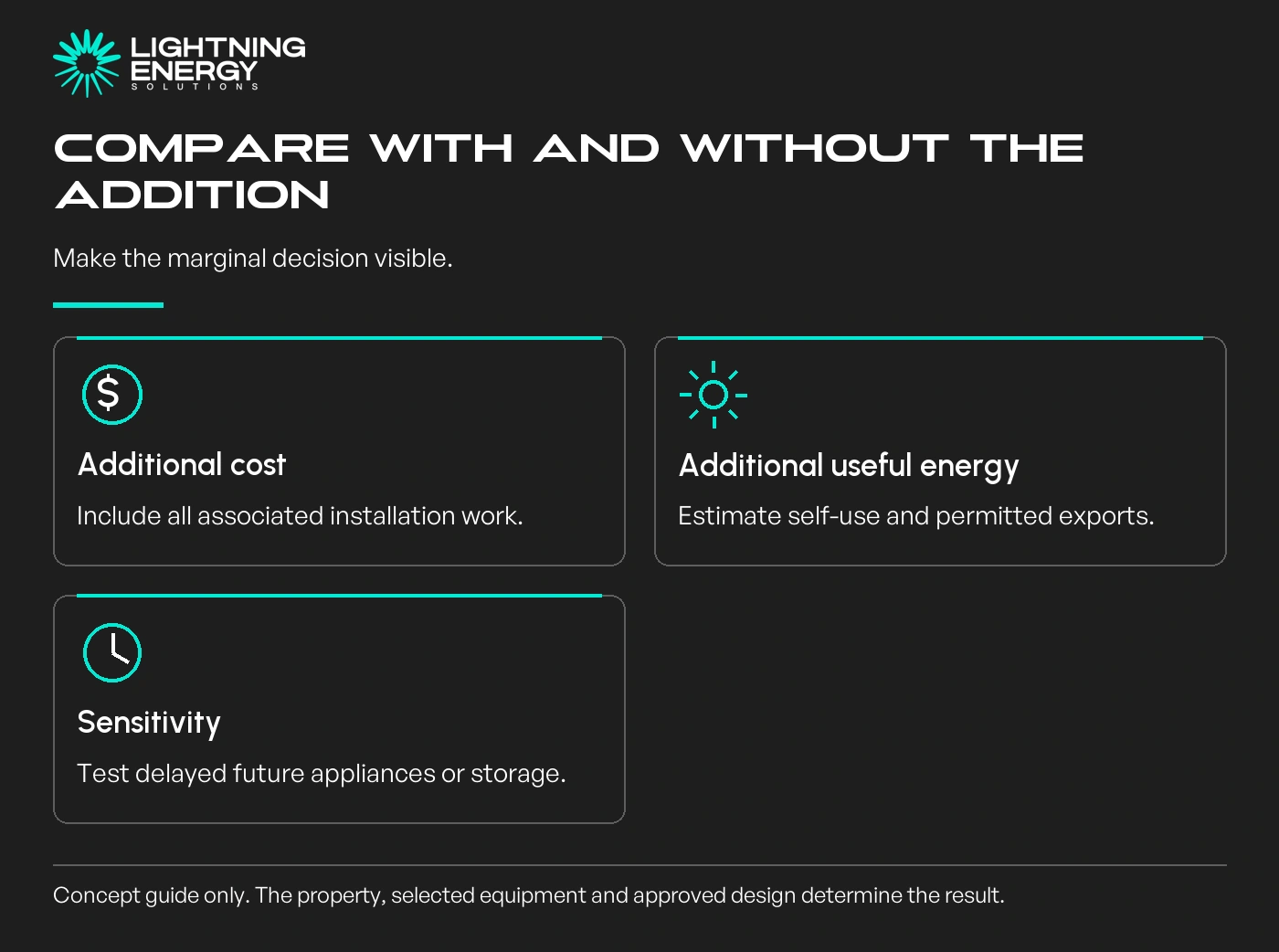
Ask for two complete proposals: the system without the southern group and the system with it. Show the difference in installed cost, expected self-use and exports using the same household assumptions.
If extra electronics, mounting or electrical work are needed, include them in that difference. A panel price alone understates what the additional roof face may require.
Test a less favourable case, especially when the argument depends on a future battery or appliance purchase. The planned equipment may arrive later or operate differently from the initial assumption.
A southern face is not something to fill simply because it is available. If the expected useful contribution is small relative to the work and cost, the simpler proposal deserves preference.
It can still remain on the shortlist when a supported design and a transparent household comparison justify it. The key is seeing that case separately rather than hiding it inside the larger array total.
Do not move existing panels or change electrical connections yourself to test the idea. This is a design and installation assessment.
Contact Lightning Energy with the current system details and roof information. Ask what the extra face contributes, when it contributes and what it costs before deciding whether to include it.
Available times
Book a consultation and we'll map solar, storage, hot water, and the rebates around your bills and your goals.
Question 1 of 6