
Where Can a Home Battery Go? Garage, Outdoor and Access Checks
Compare garage and outdoor home battery locations using access, openings, weather, vehicle movement and the selected product’s installation requirements.
Compare garage and outdoor home battery locations using access, openings, weather, vehicle movement and the selected product’s installation requirements.

A garage or outdoor wall may suit a home battery, but neither is automatically an approved location. The installer must assess the selected product, the building and the applicable installation requirements together.
Choose the location during the site assessment, before accepting a quote that assumes a straightforward installation. Moving the battery later can change the cabling, mounting, protection and cost.
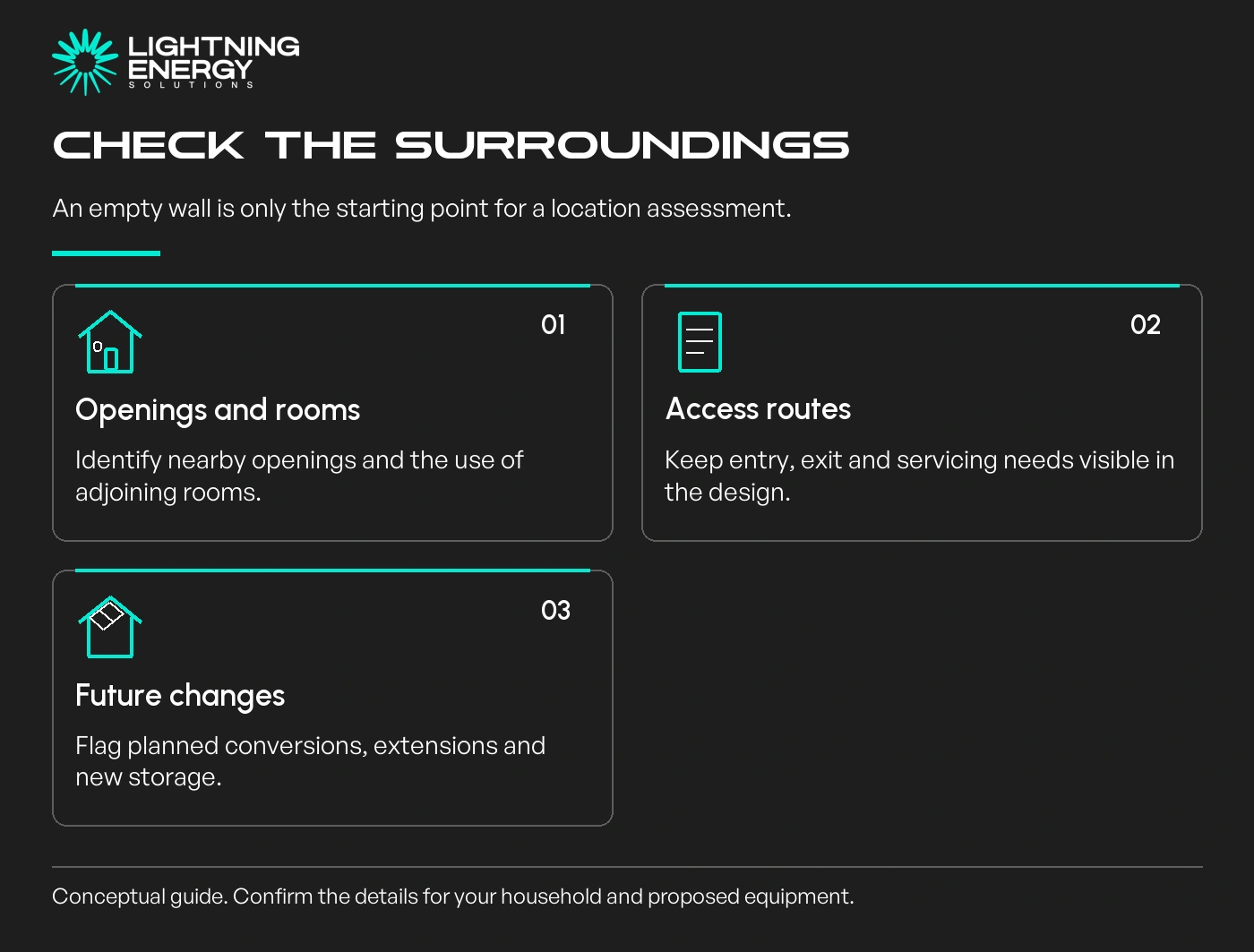
Identify nearby doors, windows, ventilation openings and the rooms behind the wall. Include pathways people use to enter or leave the house and the access needed for future service.
Tell the installer about planned renovations. A wall that suits the installation today may be affected by a new doorway, converted garage or future storage enclosure.
Energy Safe Victoria places battery installation and inspection responsibilities with appropriately licensed electrical professionals. A photograph can support an initial discussion, but it does not replace the required assessment.
Energy Safe Victoria: battery energy storage systems.
Our battery quote checklist helps capture site work that should be priced before installation.
Think about how cars, bicycles, shelving and stored items move through the garage. A neatly cleared wall on installation day can become obstructed once the household returns to its normal routine.
Ask whether vehicle-impact protection is required and include it in the quote where applicable. Do not treat placing a cabinet out of sight as more important than access and protection.
Tesla's Powerwall 3 APAC safety instructions, for example, address vehicle paths and garage positioning. Other products need their own manual checked rather than borrowing that product's details.
Manufacturer safety instructions.
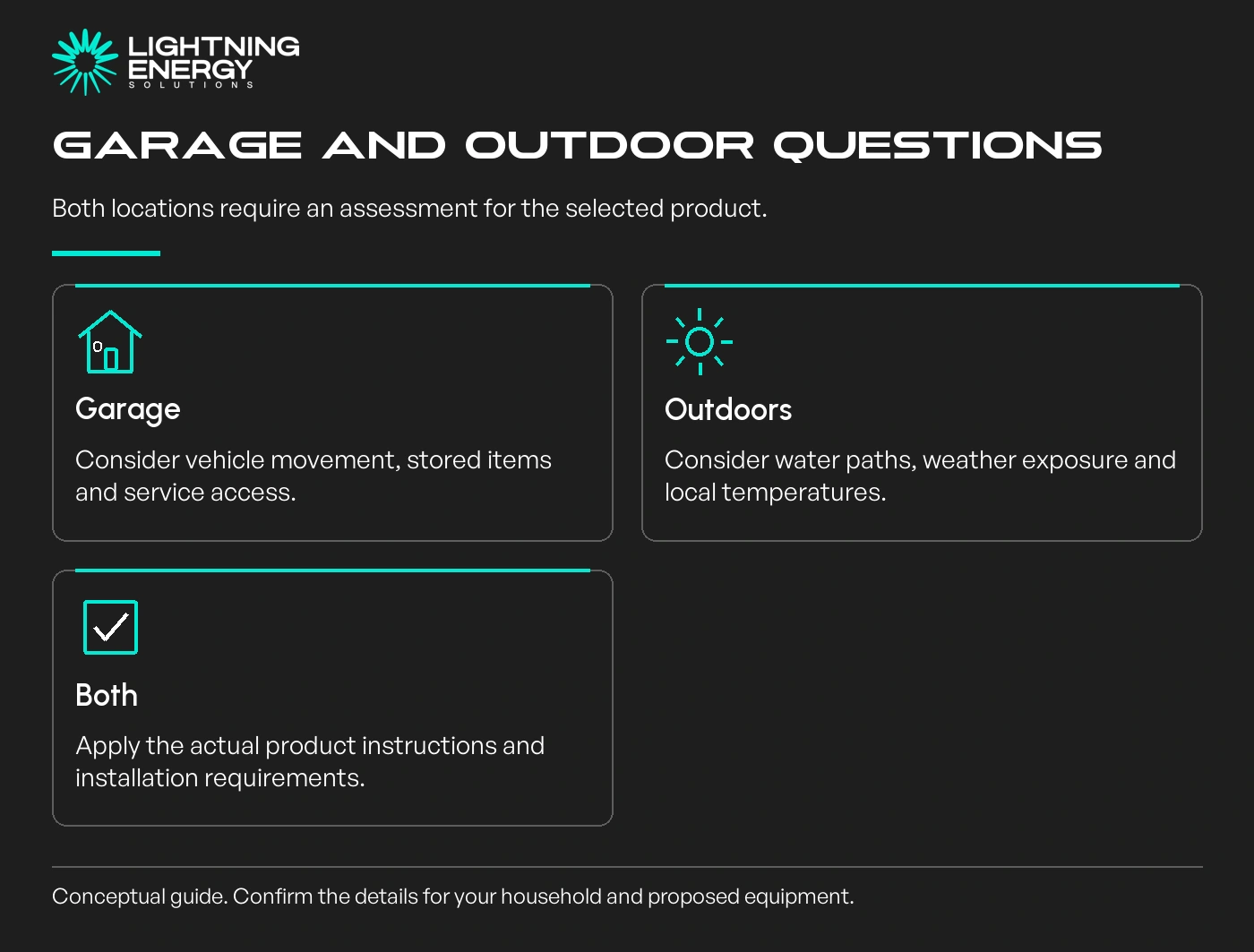
An outdoor rating is not permission to ignore drainage, flooding or the manufacturer's environmental limits. Look for downpipes, leaking gutters, irrigation, low ground and anything directing water towards the proposed location.
Consider seasonal sun and heat as well. Ask how the selected product performs at the temperatures expected there, including whether output can be reduced under particular conditions.
The Powerwall 3 care instructions are one example of a manufacturer distinguishing its operating range from conditions where performance may be reduced.
Manufacturer environmental guidance.
Do not build a cover, screen or enclosure around a battery without approval for that design. An attempt to improve appearance or weather protection can interfere with required airflow and service access.
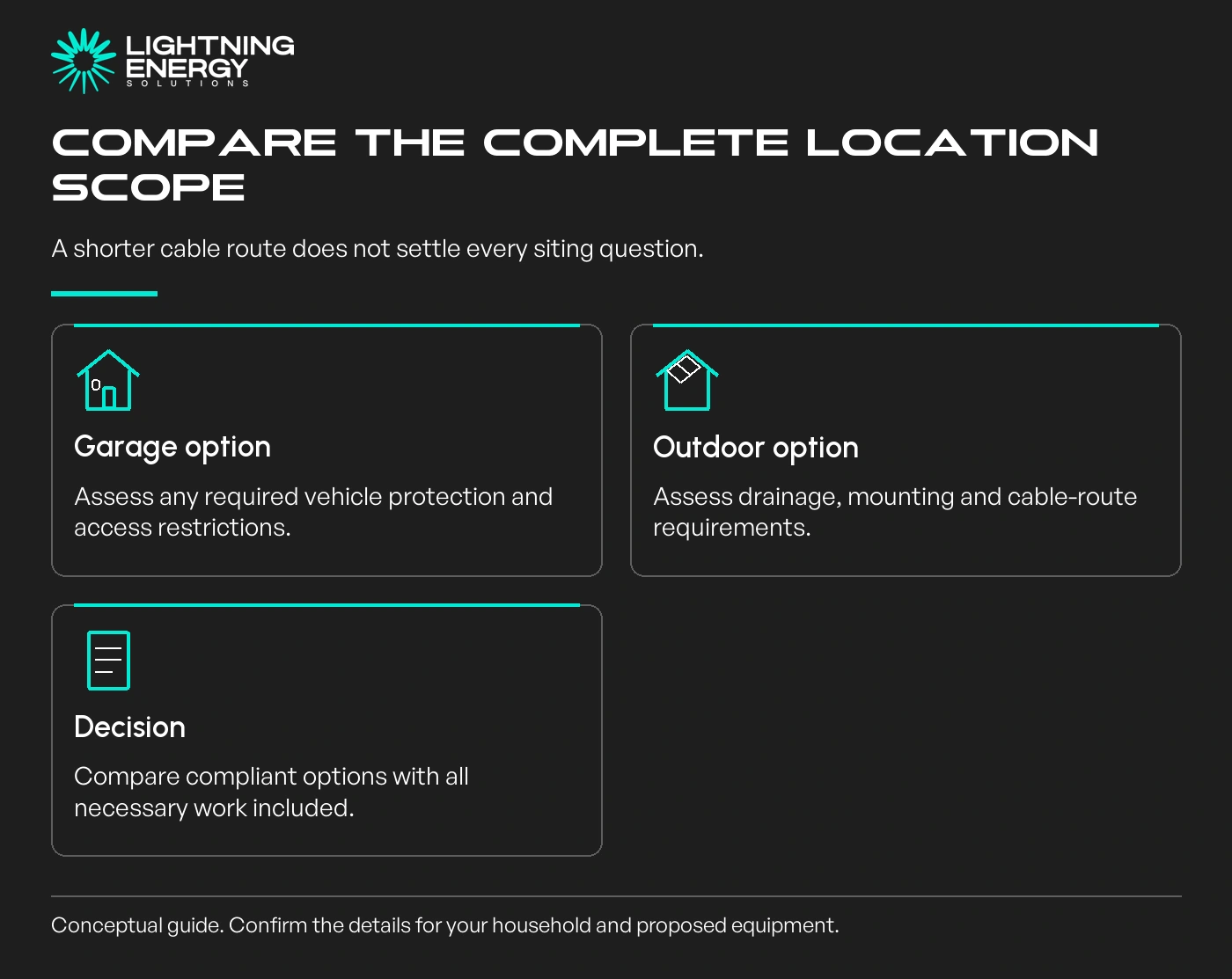
Imagine a hypothetical home with a convenient garage wall and a more distant outdoor wall. The garage position may require protection from vehicle movement; the outdoor option may require a longer cable route and drainage assessment.
Neither option wins purely on distance from the switchboard. Ask the installer to explain the required work and the practical implications of each compliant option.
Our home electrification guide can help place storage alongside future equipment plans.
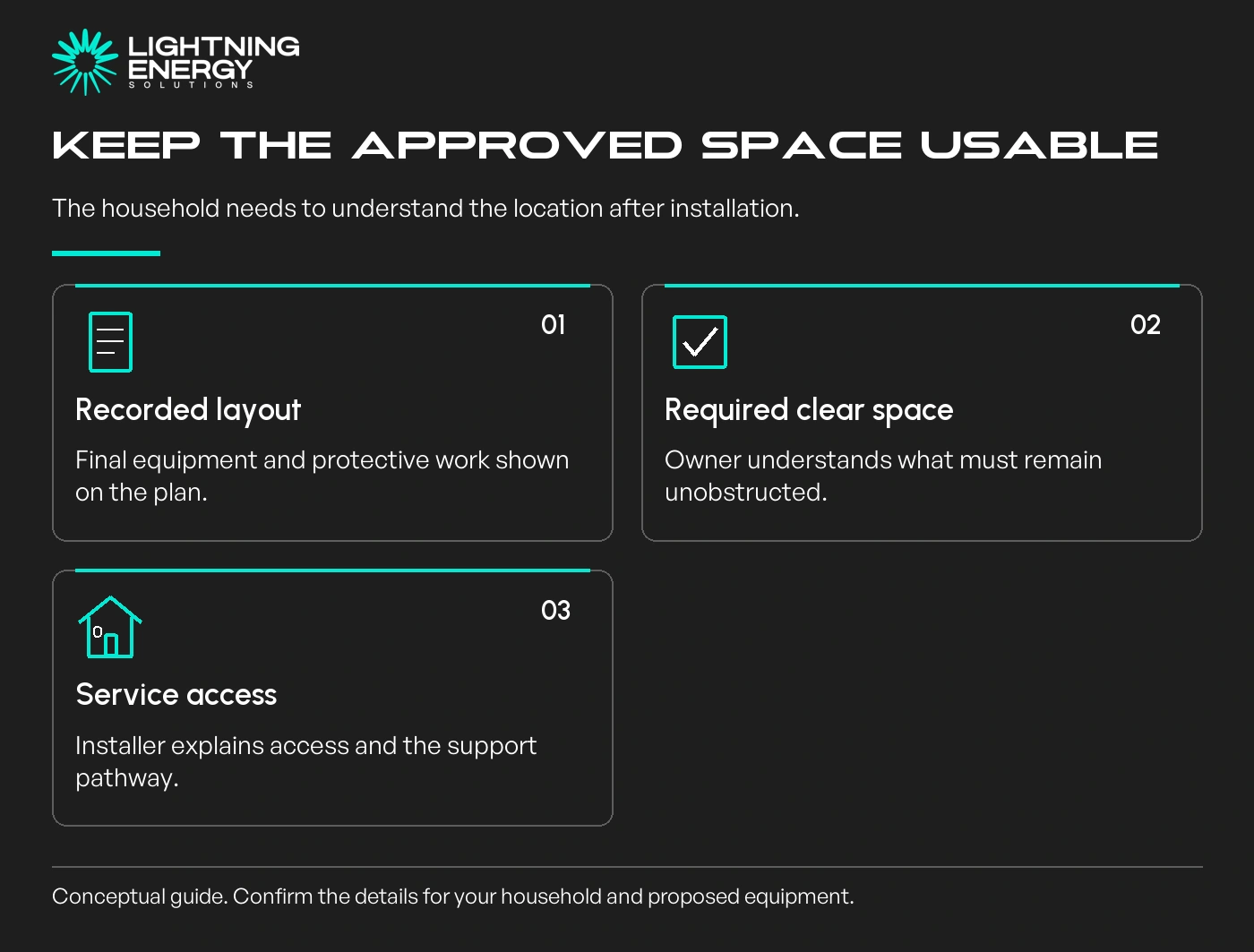
Ask for the final location to be shown clearly on the proposal or site plan, including the battery, associated equipment and protective work. Record the product-specific space that must remain clear.
Clearances are not a universal number that can be copied from a neighbour's system. The installer must apply the relevant standards and manufacturer requirements to the actual site.
At handover, ask what can be stored nearby, what must remain accessible and how to arrange service. Keep the approved layout with the equipment manuals.
If no suitable location can be agreed, pause the purchase rather than squeezing equipment into an unsuitable space. A well-planned battery installation includes a location the household can keep usable over time.
Plan your battery upgradeSend us accessible photos of potential locations and any renovation plans. We can assess practical options and identify the site work that belongs in the quote.Available times
Book a consultation and we'll map solar, storage, hot water, and the rebates around your bills and your goals.
Question 1 of 6