
Where should a heat pump go near a neighbour’s bedroom?
Locate a hot-water heat pump with neighbouring bedrooms in mind, including sound paths, operating hours, airflow and service access before installation.
Locate a hot-water heat pump with neighbouring bedrooms in mind, including sound paths, operating hours, airflow and service access before installation.

Choose a heat-pump location that reduces noise reaching bedrooms while meeting the manufacturer's installation requirements. The shortest pipe route or an empty patch beside the fence is not automatically the best position.
There is no universal setback distance that guarantees a satisfactory outcome for every unit and property. Assess the equipment, surrounding surfaces and nearby rooms together.
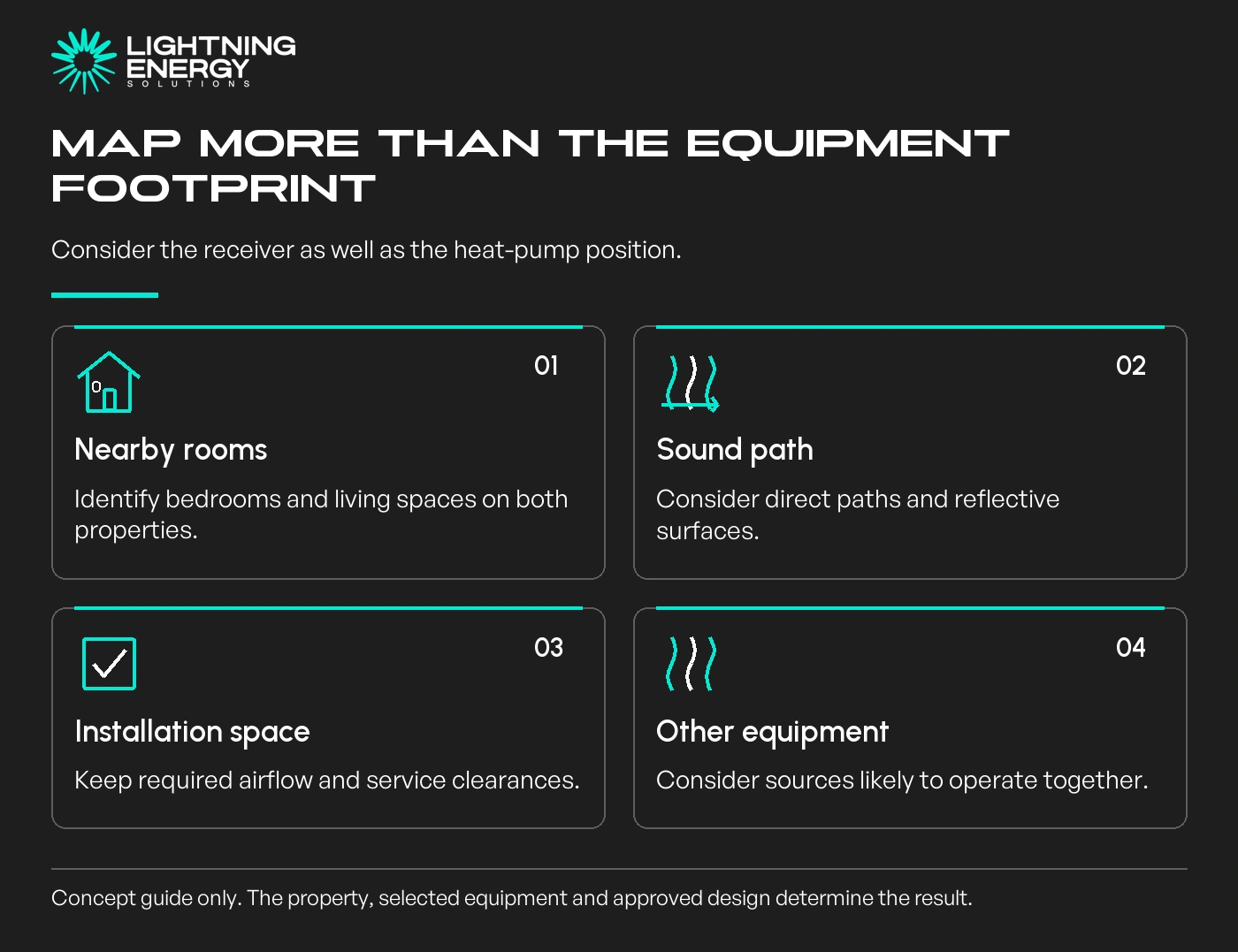
Identify your own bedroom windows and those of neighbouring homes, along with living rooms and outdoor areas. Consider where sound can travel directly and where walls or fences may reflect it.
A narrow side passage can behave differently from an open yard. A location that looks hidden from the street may still place the fan and compressor close to someone else's sleeping area.
When planning heat-pump hot water, mark candidate locations on a site plan. Include airflow clearances, drainage, access and the actual outdoor-unit position for a split system.
Solar Victoria's planning guide recommends considering bedrooms when locating heat-pump equipment.
That decision should be made before the installation position becomes expensive to change.
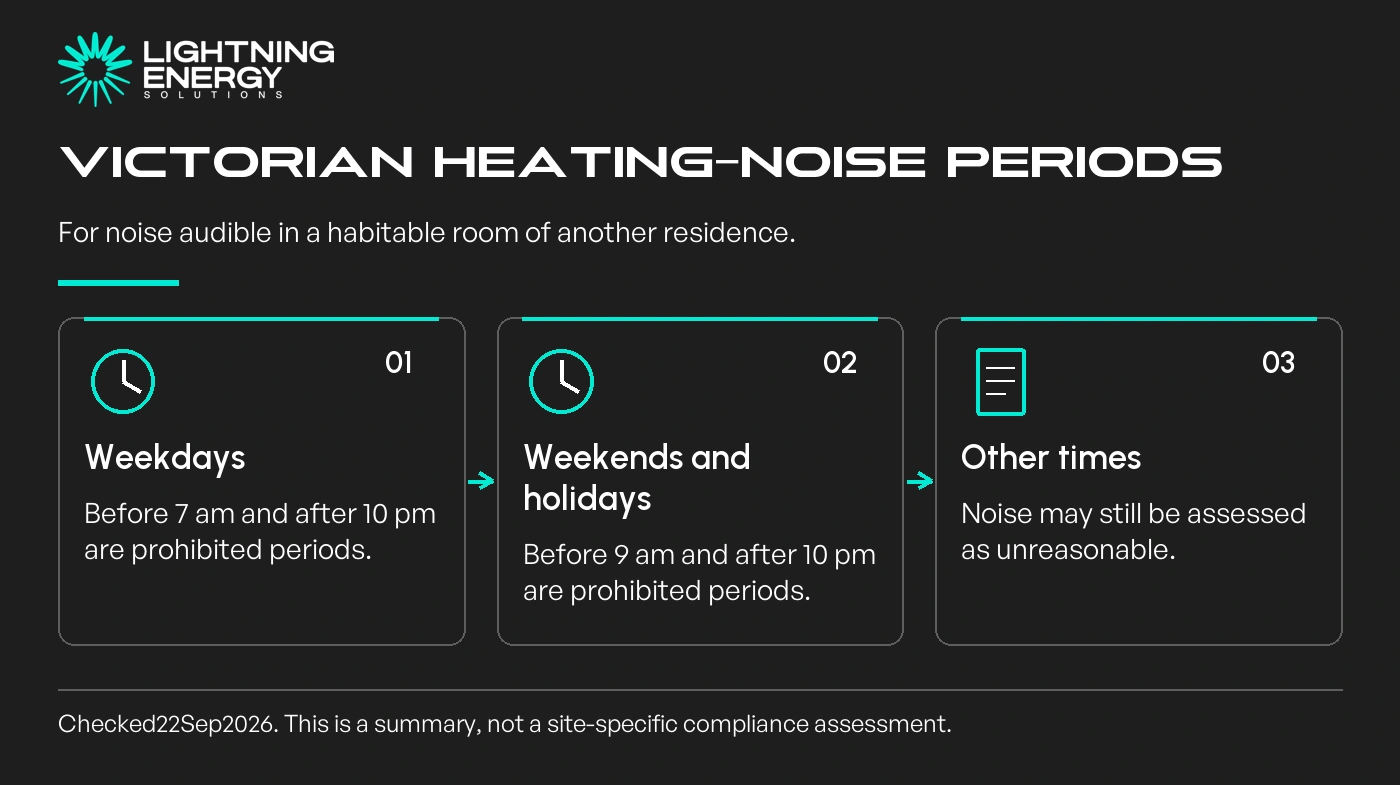
EPA Victoria includes hot-water systems and heat pumps used for heating in its residential heating group.
The prohibited audible periods are before 7 am and after 10 pm on weekdays, and before 9 am and after 10 pm on weekends and public holidays.
The relevant test is noise heard in a habitable room of another residence during those periods, subject to applicable exceptions. It is not a blanket rule that all equipment must be switched off regardless of audibility.
Read EPA Victoria's residential guidance. Noise can also be assessed as unreasonable at other times, so operating within daytime hours does not automatically resolve a disturbance.
For an uncertain site, ask the installer whether a noise assessment is needed and check with the local council. EPA identifies councils as the body that investigates residential noise reports.
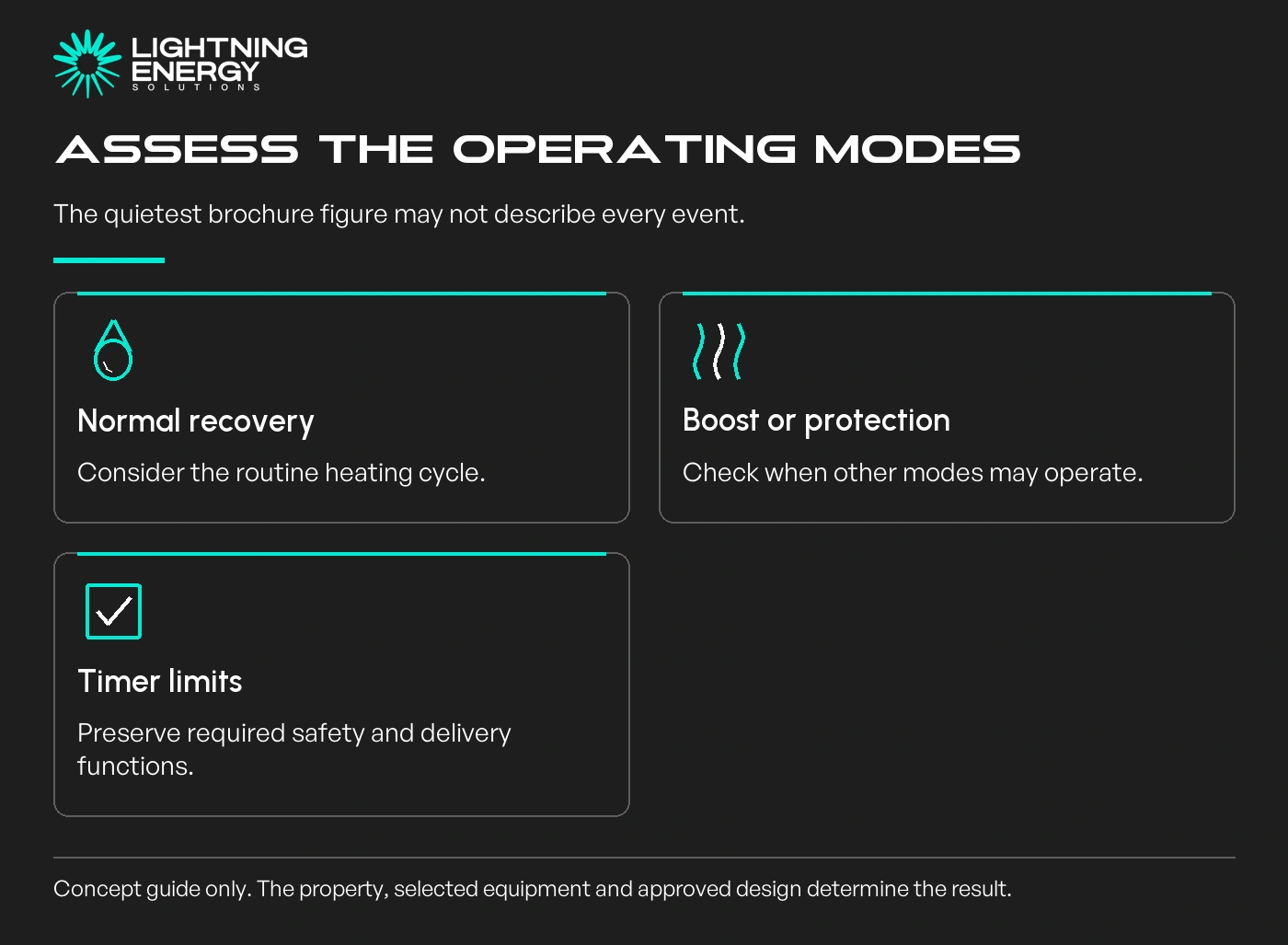
Ask for the manufacturer's acoustic information and the operating mode behind it. A favourable normal-operation number may not describe every recovery, boost or protective cycle.
A supported daytime schedule can reduce disturbance at sensitive times, but the system may need required hygiene or protective operation outside the preferred window. Do not design around disabling those functions.
Our hot-water timer guide explains this constraint. The location should remain appropriate for the actual system behaviour, not only its quietest setting.
If an air conditioner or another machine is nearby, discuss the combined situation. Two individually modest sources can still create a more noticeable environment when they operate together.
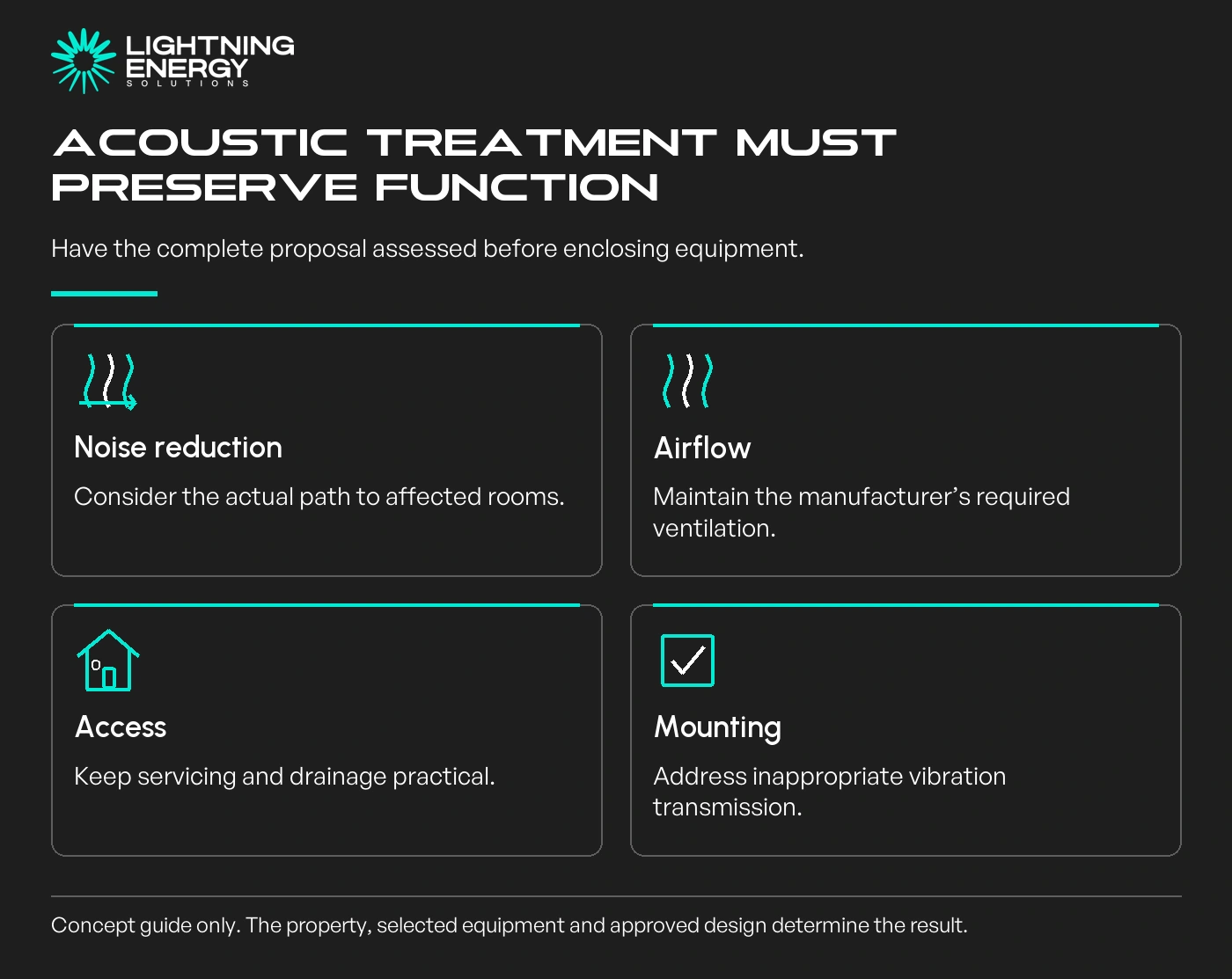
A screen or enclosure needs professional consideration of sound, airflow, clearances and service access. A tightly wrapped box can create operational problems even if it hides the unit visually.
Mounting and vibration transmission also deserve attention. A rattle, loose fitting or vibration reaching the building can require correction rather than simply selecting a quieter mode.
EPA's fixed-equipment assessment guide considers the character, duration and context of sound.
A single brochure decibel figure does not establish compliance at a neighbour's window.
Imagine two possible locations: one beside a bedroom and one nearer a utility area with adequate clearances. Compare the complete pipework, access and noise implications before choosing the cheaper initial route.
Record the equipment model, position and any mounting or acoustic treatment included. Ask who is responsible for confirming the proposed arrangement meets applicable requirements.
If space is tight, assess an alternative configuration or location before purchasing. There may be a suitable design, but it should not depend on promising that nobody will ever hear the compressor.
For an existing disturbance, record times and operating conditions and ask the installer to investigate. Avoid altering protective settings or placing an improvised barrier around the unit.
Contact us with a site plan and photographs of the proposed area. Good placement protects useful airflow, reliable hot water and the neighbour's ability to enjoy their home.
Available times
Book a consultation and we'll map solar, storage, hot water, and the rebates around your bills and your goals.
Question 1 of 6