
Wholesale Electricity Plans vs Fixed Retail: A Battery Owner’s Checklist
Compare wholesale-exposed and fixed retail plans for a home battery, including negative exports, price protection, automation, reserve and whole-bill costs.
Compare wholesale-exposed and fixed retail plans for a home battery, including negative exports, price protection, automation, reserve and whole-bill costs.

A home battery gives you more control over when you buy and use electricity. It does not remove every risk or cost in a wholesale-exposed electricity plan.
The fair comparison uses your household’s imports, exports and operating limits across a meaningful period. One expensive evening or a screenshot of export earnings is not an annual result.
This guide was checked on 4 November 2026. Amber is used as a documented Australian example; other providers and future offers may have different terms.
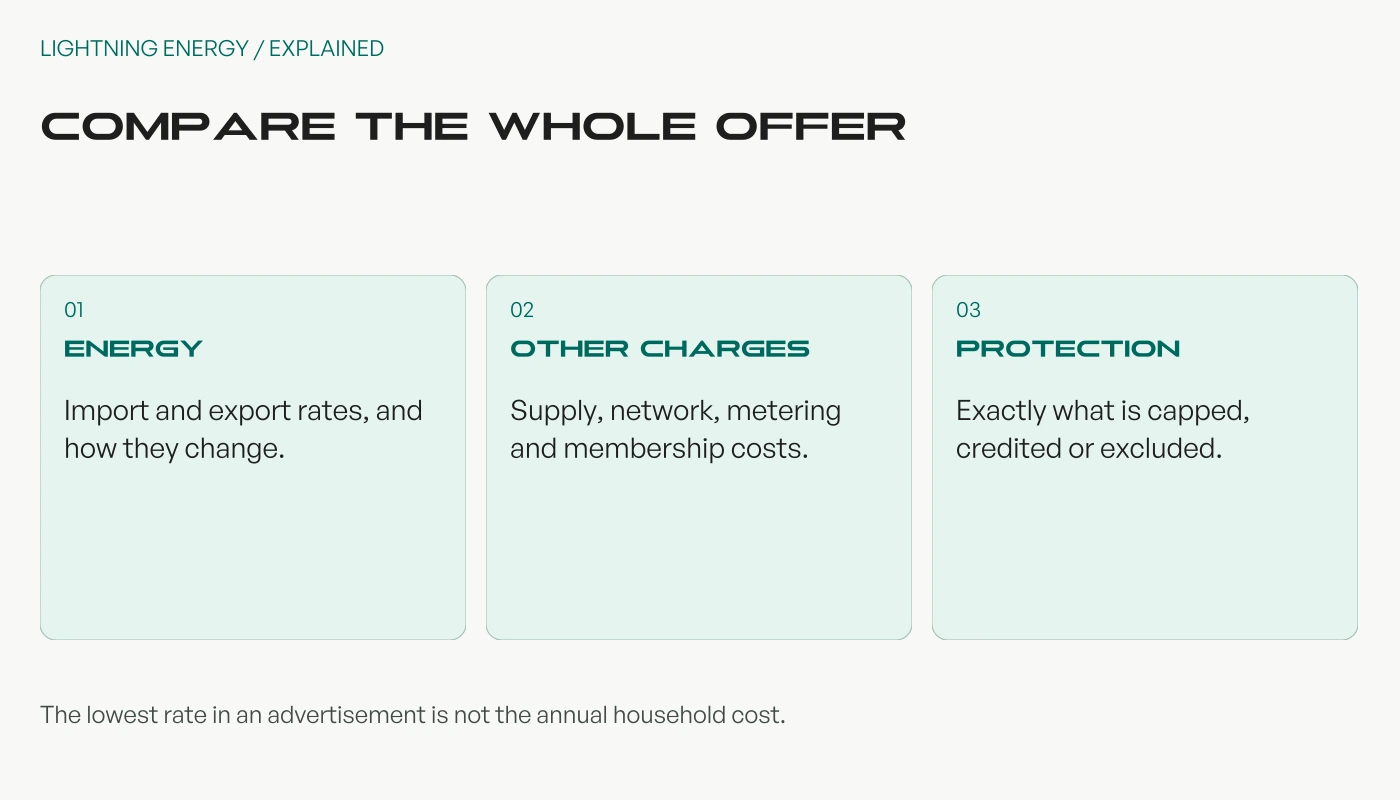
A conventional retail offer may have flat or time-of-use energy rates set in its tariff. Those rates can still be subject to the contract’s variation rules. A fixed retail tariff is not always a fixed total bill.
A wholesale-exposed plan passes through market-linked energy pricing. Read the complete offer for the pricing interval, network charges, membership fees, export rules and any protection mechanism.
Our flat, time-of-use and demand tariff guide covers the underlying structures. Wholesale exposure is a separate feature to understand alongside them.
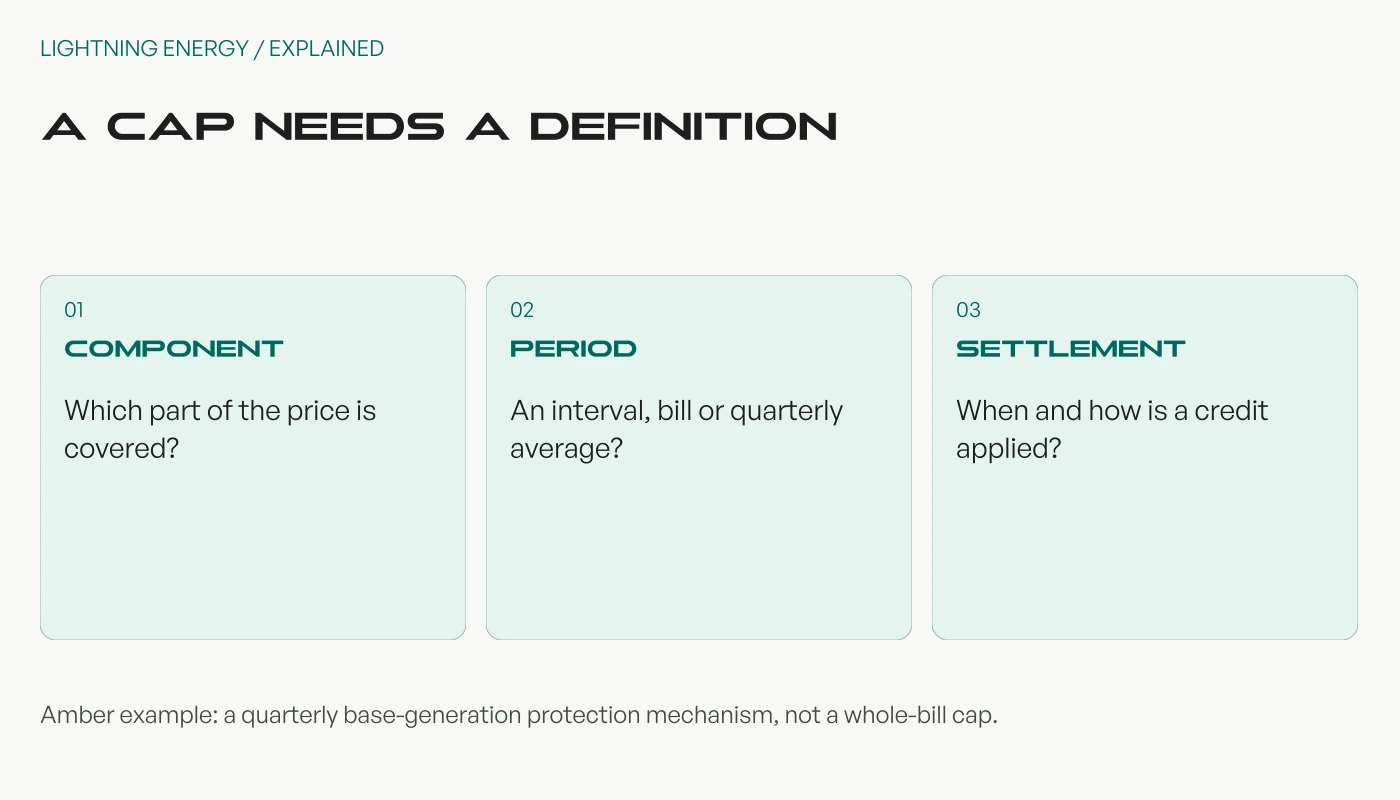
Amber’s published explanation describes half-hourly wholesale pass-through and a quarterly average cap on the base wholesale generation component. A credit applies if that average exceeds the applicable cap.
Its explanation excludes other components such as network, hedging, metering and environmental charges. It is not an instantaneous ceiling on every displayed price or a cap on the whole household bill.
Source: Amber’s price-protection explanation. Check the current terms for your offer before switching.
Ask how the protection is calculated, which billing period it uses and when a credit appears. Include those answers in the comparison instead of assuming all plans labelled protected work alike.
Amber explains that its wholesale feed-in tariff can become negative. Exporting at those times may create a cost, so the timing of exports matters as well as their total volume.
Source: Amber’s explanation for solar customers.
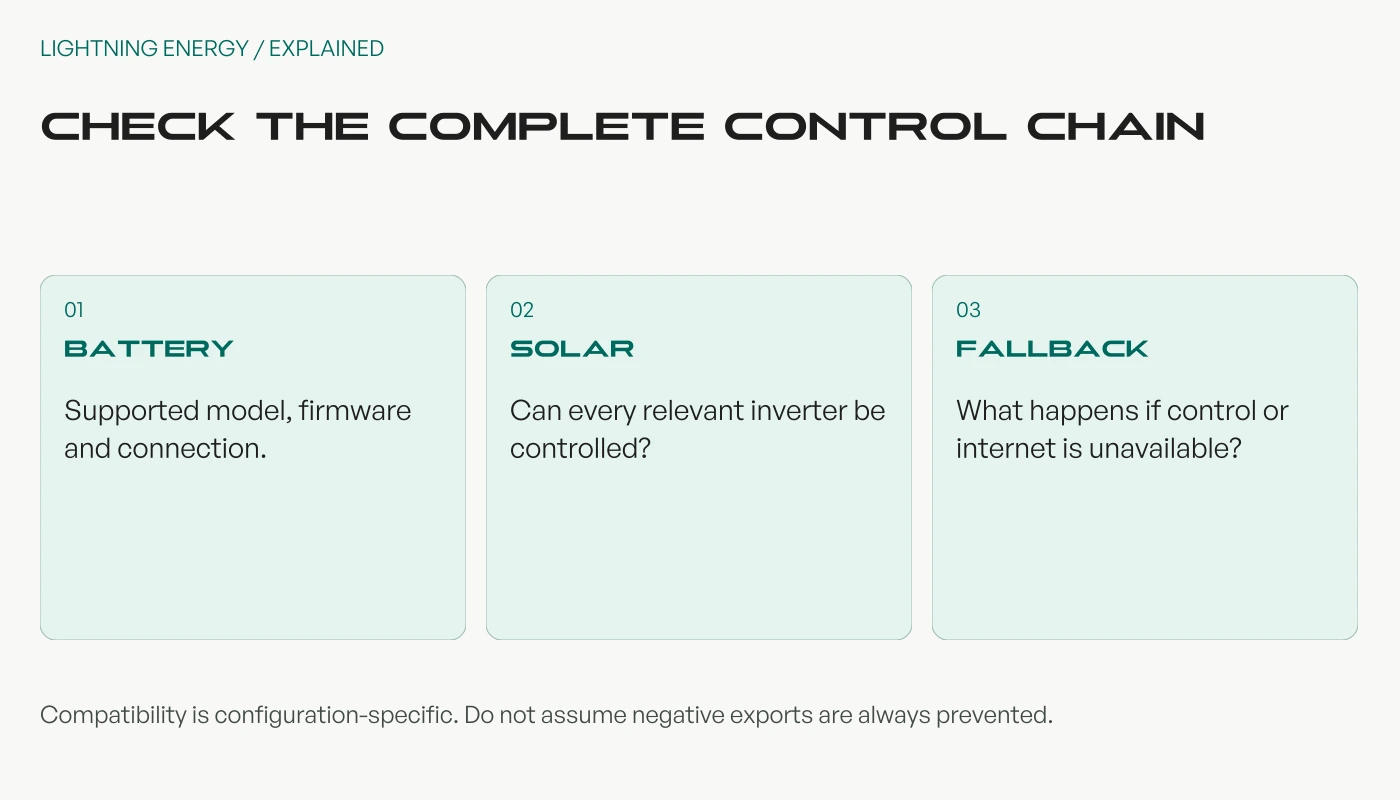
Battery compatibility does not automatically establish full control of every solar inverter on the property. Check the exact equipment, metering, firmware and supported functions.
Amber’s SmartShift compatibility checker distinguishes configurations and notes limits on solar control with some AC-coupled arrangements.
Energy retained for an outage is not available for routine price trading at the same time. Decide how much reserve matters to you and compare offers with that constraint included.
Ask how retailer automation interacts with the manufacturer app, existing schedules and your ability to override it. Check warranty conditions and any throughput limits before relying on frequent cycling.
Our home battery quote checklist helps document the equipment and control responsibilities.
Our backup test guide covers a different question: what actually operates when the grid fails.
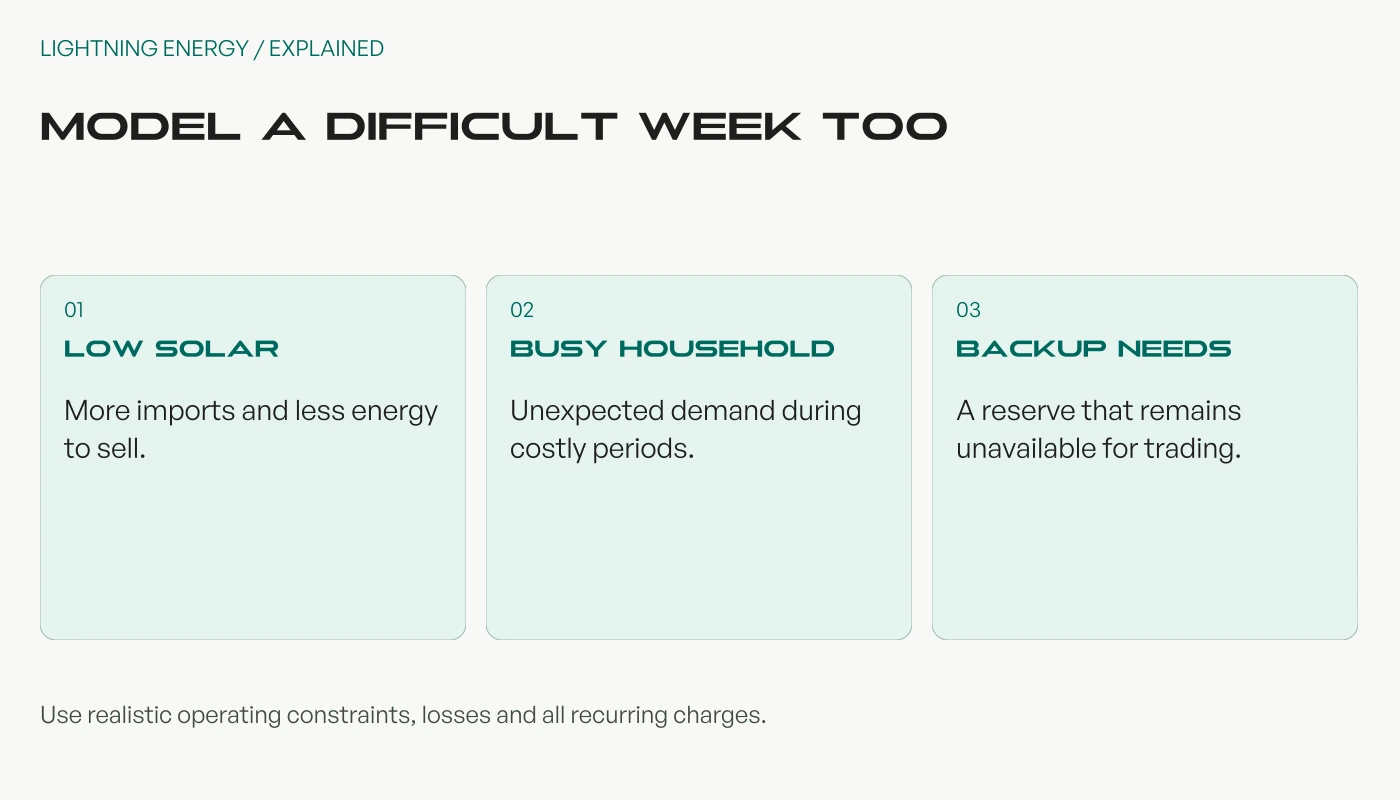
Illustration only: receiving $6 from exports while paying $4 for replacement energy leaves $2 before other costs. The original $6 is revenue, not profit. Real results depend on timing, losses and the full tariff.
Use interval data where available and include seasons with different solar output and demand. Compare the proposed plan with a suitable conventional offer using the same assumptions.
Contact Lightning Energy if you need help checking the battery and control arrangement. Ask the retailer to confirm the actual plan terms and compatibility in writing before switching.
Available times
Book a consultation and we'll map solar, storage, hot water, and the rebates around your bills and your goals.
Question 1 of 6
