
Why is my heat pump using its electric boost element?
An electric boost element can run for several reasons. Identify the actual heat source, operating mode and trigger before assuming your heat pump has failed.
An electric boost element can run for several reasons. Identify the actual heat source, operating mode and trigger before assuming your heat pump has failed.

An electric boost element does not automatically mean the heat pump is faulty. Depending on the model, it may assist recovery, support a particular mode or provide backup when compressor operation is restricted.
First confirm that an element is actually operating. Some products use “boost” to describe an extra compressor heating cycle, so the button name alone is not enough.
Identify the exact heat-pump model, controller and selected mode. Look for the manufacturer's explanation of the compressor indicator, electric-heating indicator and any boost symbol.
Haier's HP200M1-U1 and HP250M1-U1 controller guide describes a boost function using the heat pump and backup element together. It also distinguishes an electric-only mode.
Haier's Australian product page links that guide. Reclaim's Controller V2 documentation instead describes a boost request that starts its connected heat pump.
Reclaim's document library separates controller generations. These examples show why advice for another owner's equipment may not fit your own system.
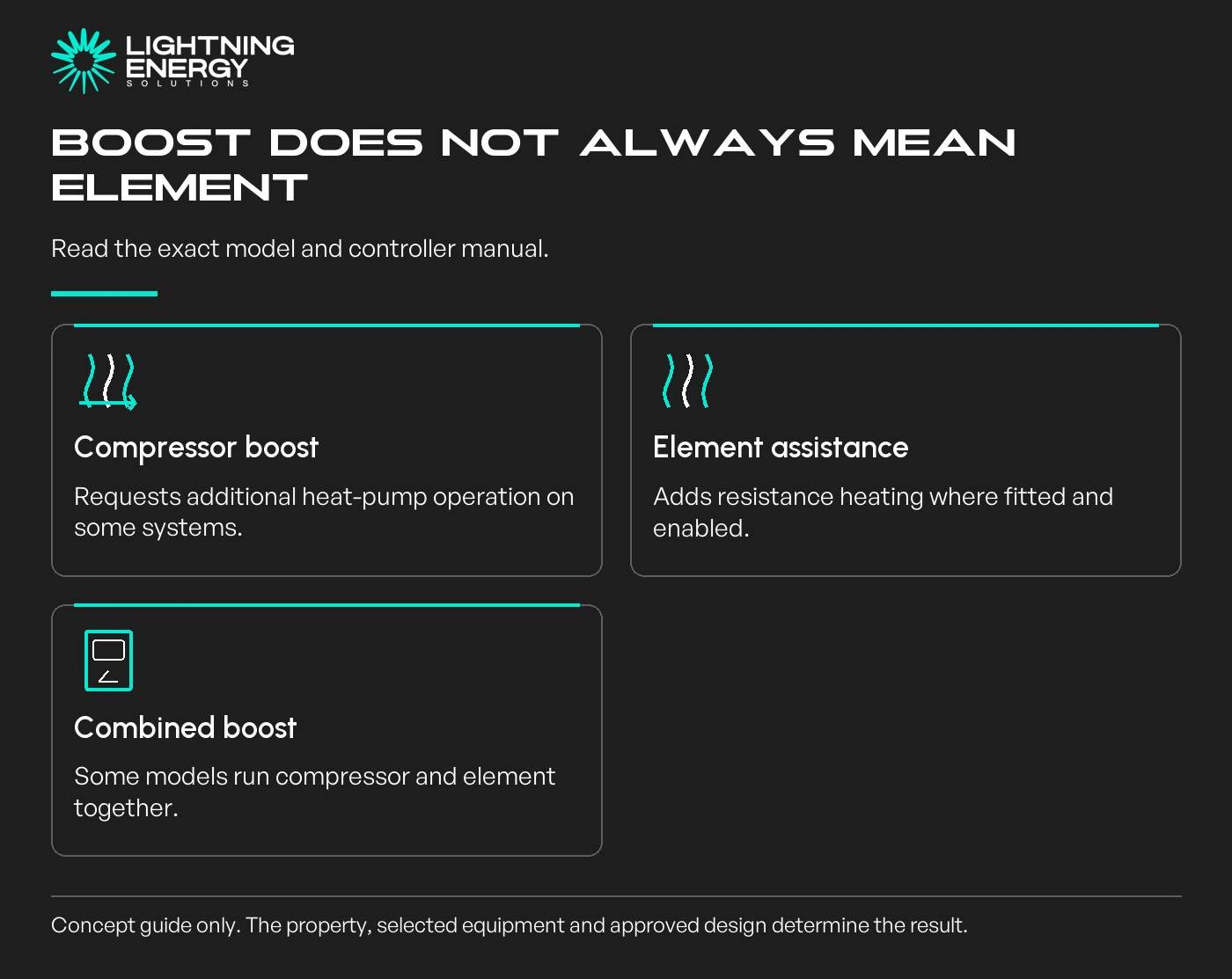
An unusually large draw of hot water may require additional recovery. Cold conditions, selected control settings or a model-specific operating limit can also change which heat source is used.
Some systems use an element for a scheduled hygiene cycle or as a backup during a fault. Confirm the actual logic in the installed model's manual rather than assuming every element event has the same purpose.
Government heat-pump planning guidance discusses resistance boosting in cold conditions.
It does not mean all heat pumps require an element whenever Melbourne weather becomes cold.
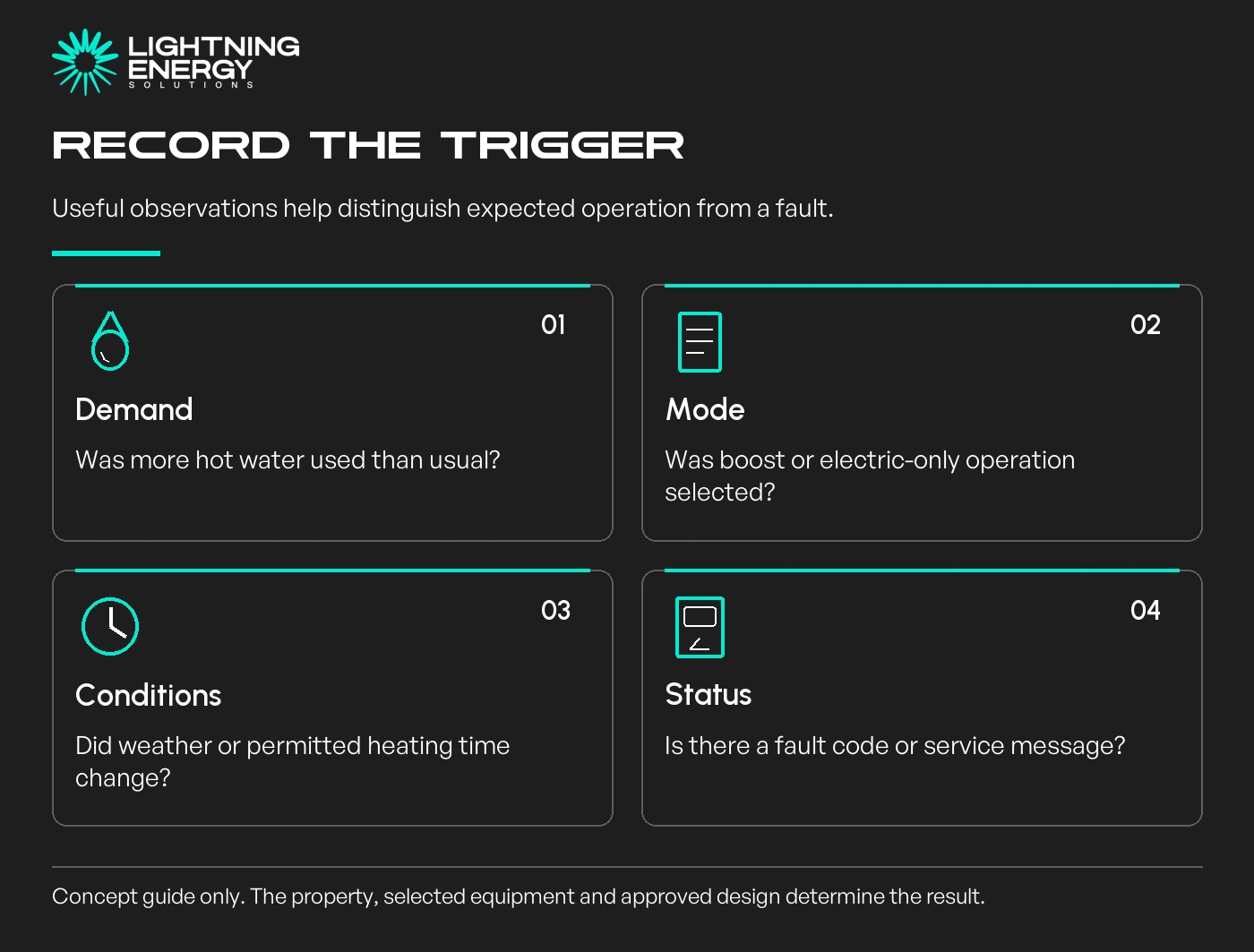
Record the time, mode, displayed symbol and any fault code. Note whether someone selected boost manually, changed the timer or used more hot water than usual.
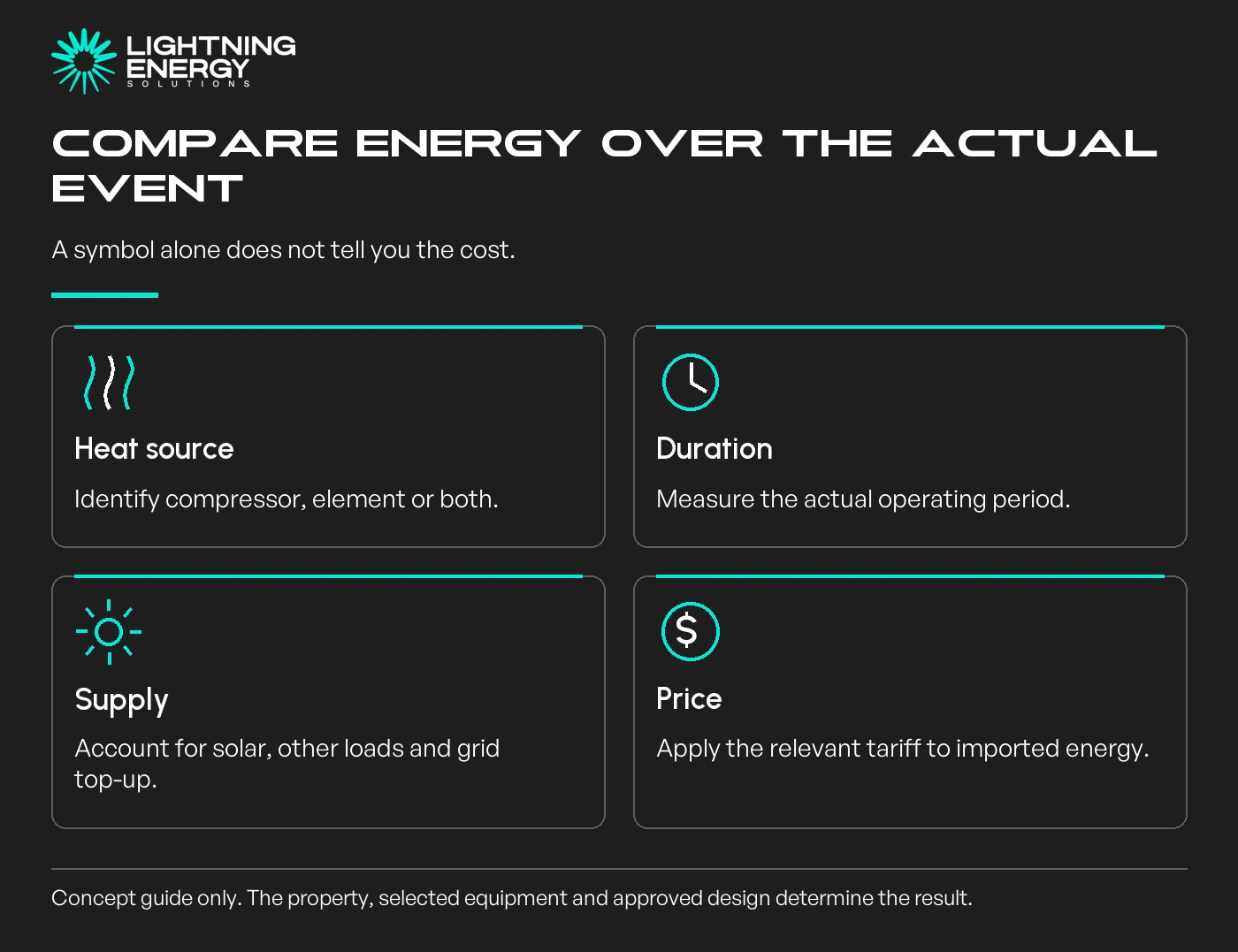
A resistance element turns electrical energy into heat directly. A heat pump also draws heat from surrounding air, so the electricity needed to deliver a given amount of heat can differ substantially between the modes.
Actual cost depends on how long each operates and the electricity source and tariff. A brief boost event is not the same as a system left in electric-only operation for weeks.
If solar is generating, some or all demand may be met on site, depending on other loads. The presence of solar does not make an element's electricity use disappear.
Our solar timer guide explains why adequate recovery matters when shifting operation. Restricting normal heating too heavily can create a need for later catch-up.
Imagine a household hosting guests for a weekend. A supported one-off boost may be a reasonable response to extra demand; the same event every ordinary morning calls for closer review.
Check whether the main heating window is appropriate and the clock is correct. Ask whether compressor operation is normal and whether the selected mode matches the commissioned arrangement.
Do not disable hygiene functions, remove electrical covers or change installer parameters to suppress a symbol. Necessary protective operation should be preserved while the reason is investigated.
A high bill alone cannot identify element runtime if other household loads share the meter. Appliance-level records or professional measurement may be needed to separate its contribution.
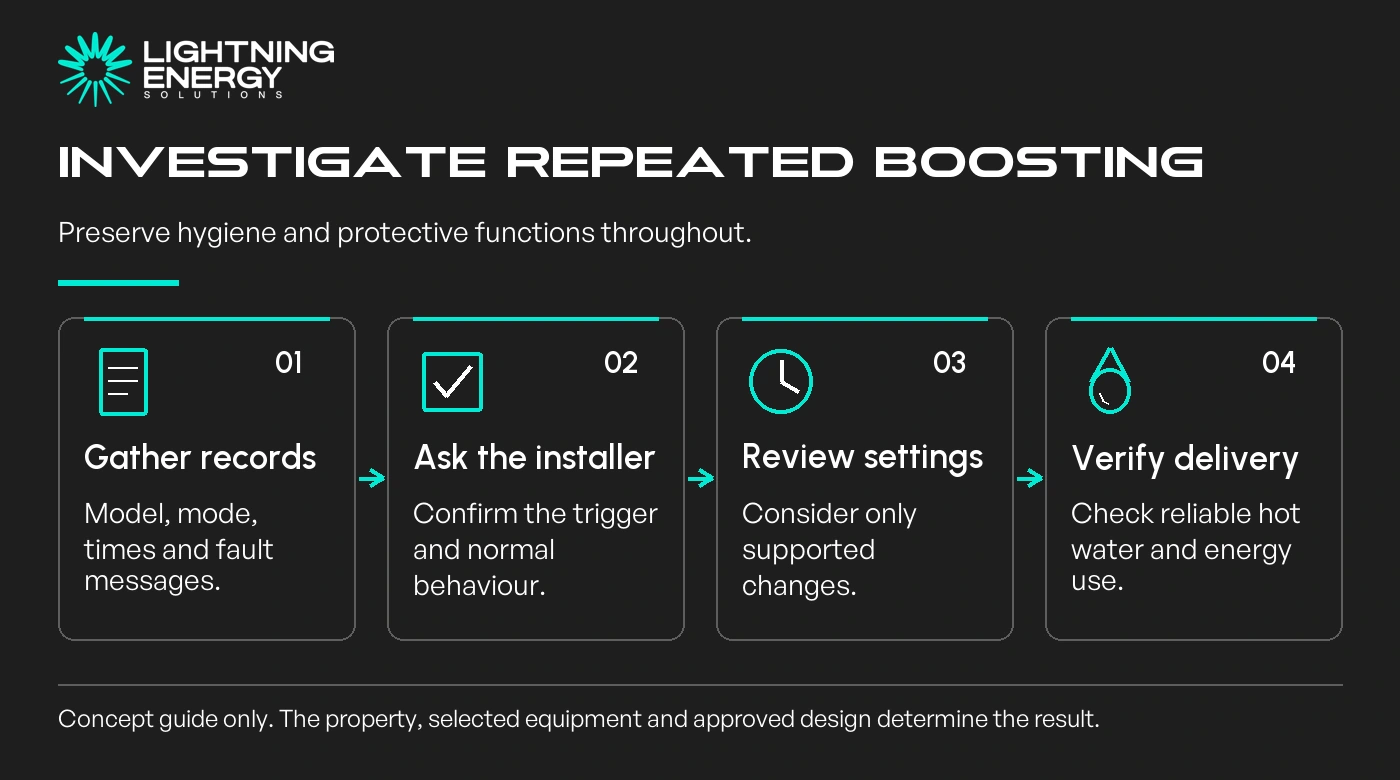
Send the installer the model, current mode, event times and any fault messages. Ask which heat source operated, why it was called and whether the behaviour is expected for the recorded demand.
If it is expected, ask whether a supported schedule adjustment would reduce unnecessary boosting without reducing hot-water reliability. If it is unexpected, request diagnosis before accepting a replacement recommendation.
You do not need to replace a working system because you saw the boost icon once. You do need an explanation if repeated element operation is new, unexplained or accompanied by inadequate hot water.
Contact our team with those details for a focused review. Understanding the trigger is the first step to deciding whether anything should change.
Available times
Book a consultation and we'll map solar, storage, hot water, and the rebates around your bills and your goals.
Question 1 of 6