
Air Conditioner Warranties: Product Cover, Workmanship and Local Support
Understand air conditioner product warranties, installation workmanship and consumer guarantees, then agree who handles diagnosis and support after installation.
Understand air conditioner product warranties, installation workmanship and consumer guarantees, then agree who handles diagnosis and support after installation.

An air conditioner’s manufacturer warranty, the installer’s workmanship promises and Australian Consumer Law rights are related but different protections. Read all three before deciding that a quoted warranty period covers everything.
The practical question is who will investigate a problem, arrange the appropriate remedy and keep you informed. That responsibility should be clear before installation.
Ask for the manufacturer warranty document for the exact indoor and outdoor equipment. Check the term, start date, parts and labour provisions, claim process and stated exclusions.
Then ask for the installer’s workmanship terms. These should explain how installation concerns are reported and assessed, rather than leaving you to guess whether the manufacturer deals with them.
For example, Daikin’s warranty guidance distinguishes product cover from faults caused by incorrect installation, consumables and ordinary filter cleaning.
This is a reason to understand the scope, not a prediction that a particular claim will be accepted or rejected. Our air conditioning quote should identify equipment and installation responsibilities separately.
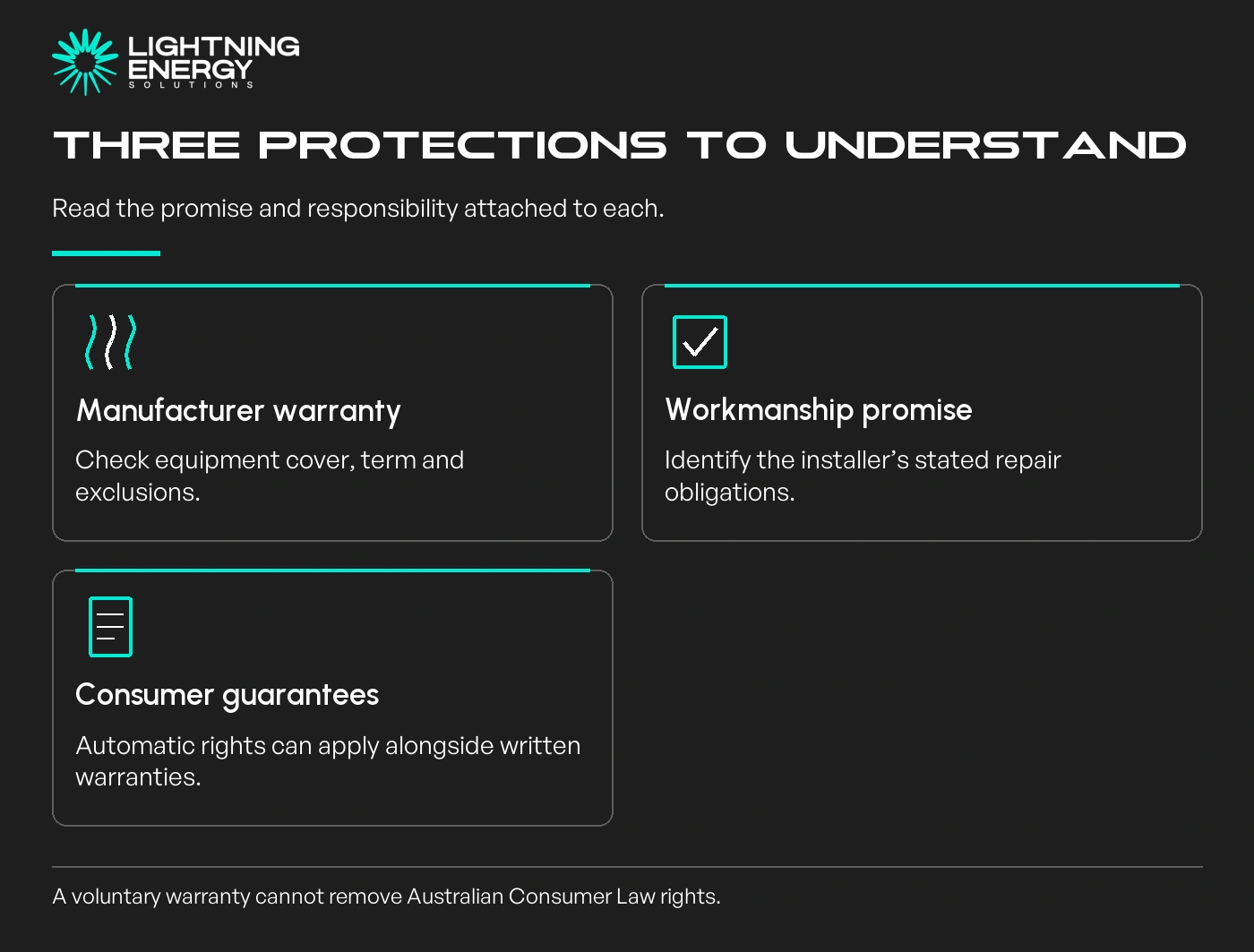
The ACCC explains that voluntary warranties are additional to automatic consumer guarantees. A warranty cannot remove those rights, and their duration can extend beyond the written warranty period depending on the circumstances.
A supplier cannot simply refuse to help with a covered consumer-guarantee problem by directing you to the manufacturer. The appropriate remedy depends on the problem and its seriousness.
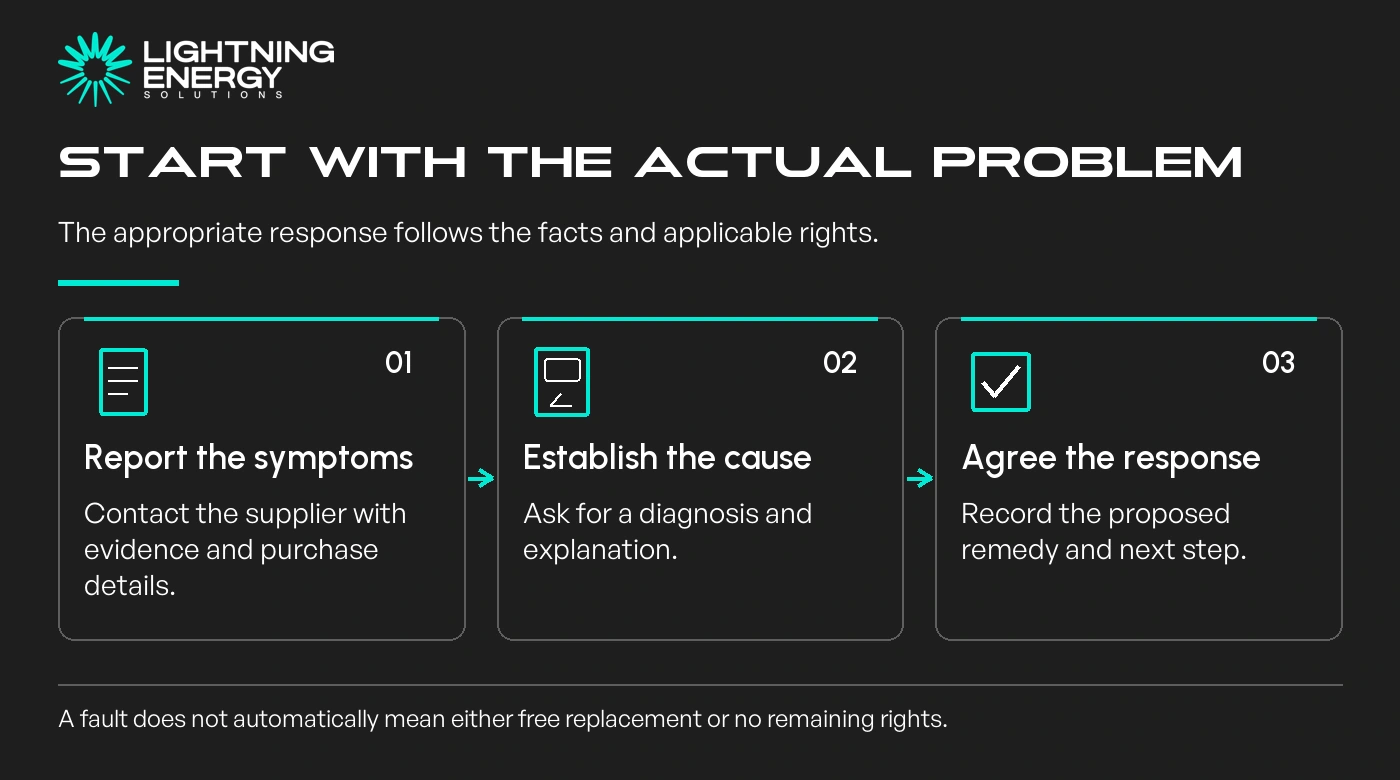
Do not assume every fault guarantees a brand-new system, or that an expired voluntary warranty means no rights remain. Describe the actual issue and ask the supplier to explain its proposed response in writing.
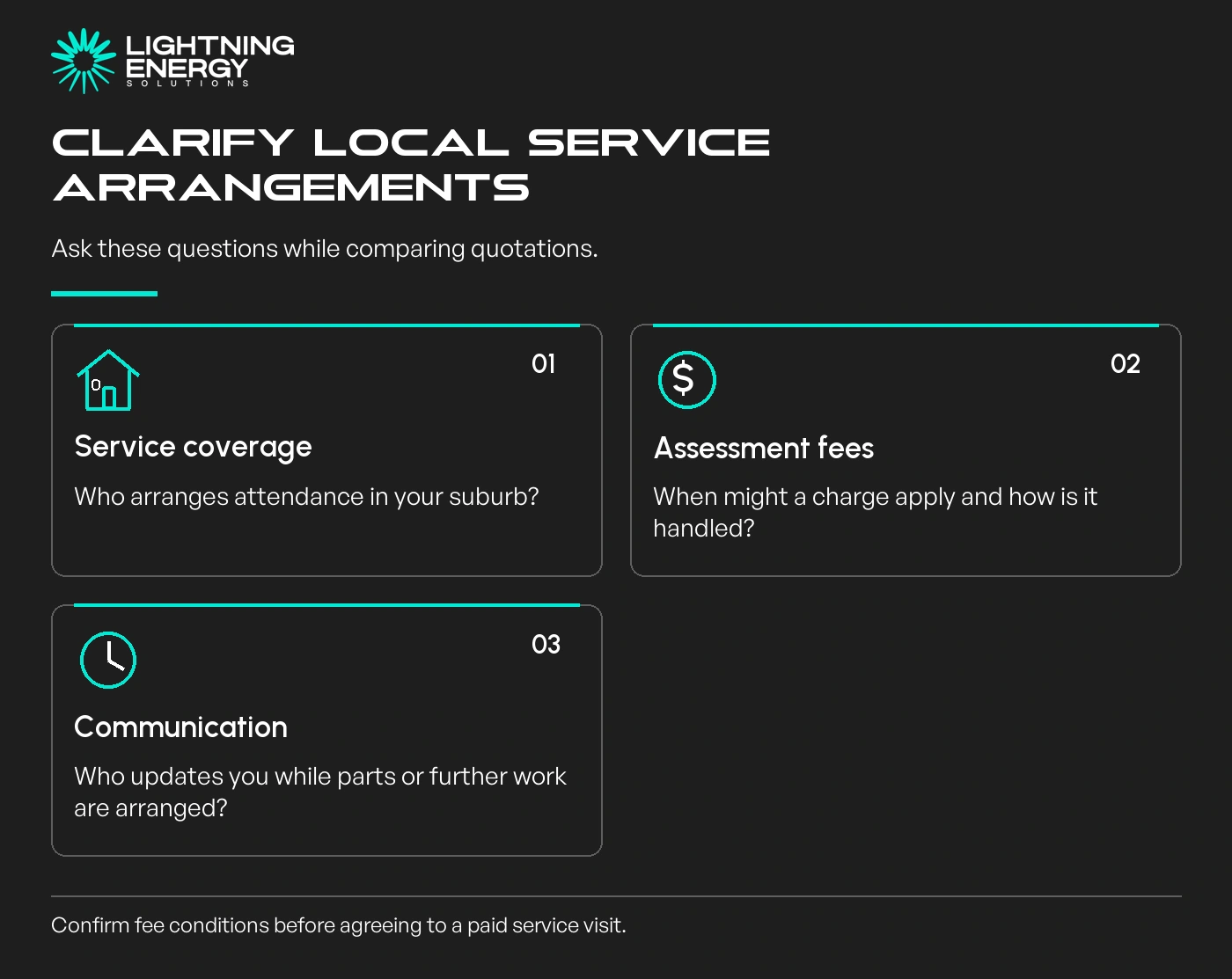
Before accepting the quote, request the first contact for a breakdown, how service is arranged in your suburb and whether the initial assessment might attract a charge.
Ask how any diagnostic fee is handled if the fault is covered. Obtain the conditions before agreeing to a paid call-out, rather than assuming that all visits are either free or chargeable.
For an illustrative problem, poor airflow could involve a dirty filter, control setting, duct defect or equipment fault. Diagnosis should establish the cause before responsibility is assigned.
Check the installed scope against the ducted package description, particularly third-party controls and sensors that may have separate manufacturer terms.
If another trade undertook electrical enabling work, keep that contractor’s details too.
The customer should still have a clear lead contact for coordinating the installation concern.
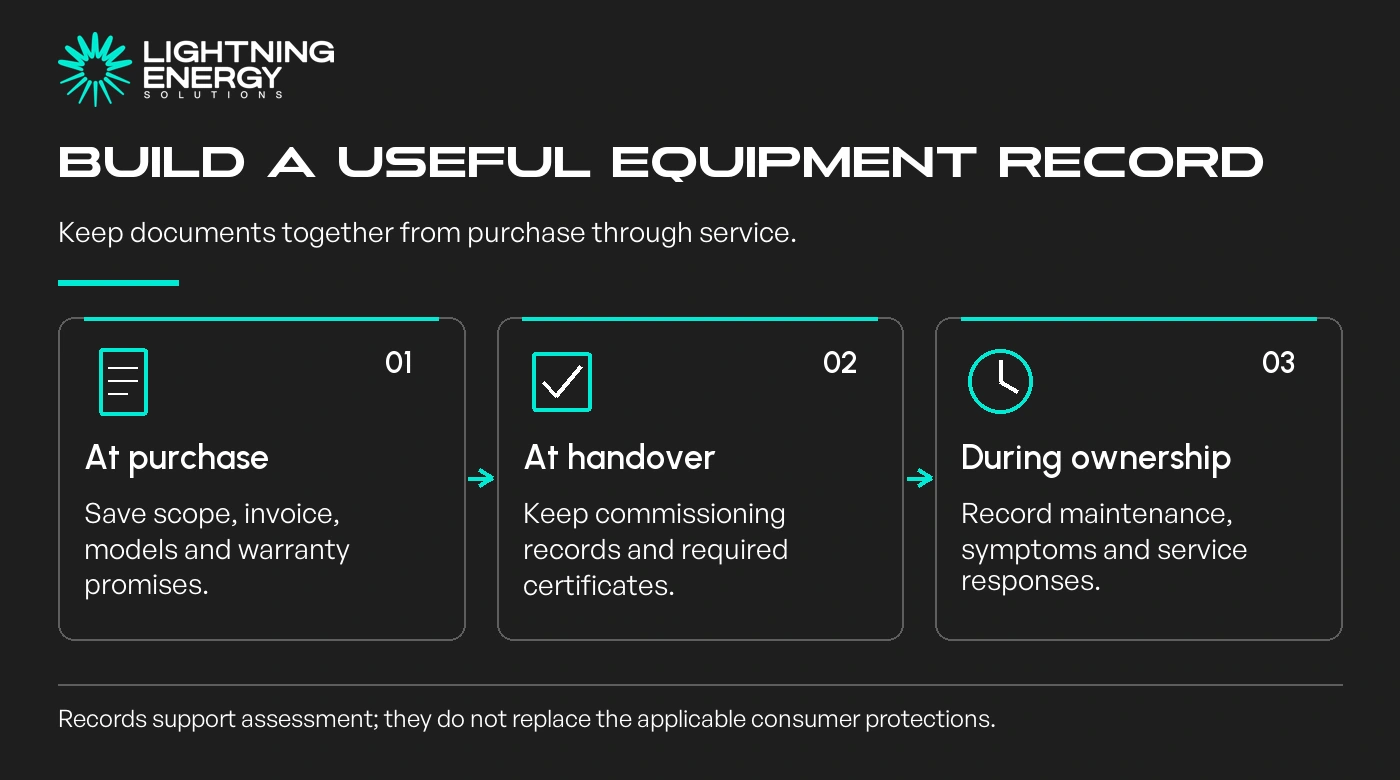
Save the tax invoice, accepted scope, model and serial numbers, commissioning records, certificates, manuals and any written warranty promises. Store photos of accessible rating labels without opening equipment.
Keep a simple maintenance record and follow the owner manual. Do not treat a maintenance omission as an automatic answer to every legal or technical question; causation and the applicable protection matter.
When reporting a fault, include the date it began, settings, affected rooms and any error message. Avoid repeatedly resetting the system and losing useful evidence.
Ask for a written diagnosis, remedy and expected next step. Record unresolved items and follow-up dates, especially if temporary operation is proposed while parts are sourced.
Do not buy an extended warranty without checking what it adds to existing rights and cover. A longer headline period may be less useful than clear scope and a workable local service process.
Ask us to explain the proposed equipment, workmanship and support arrangements when you discuss your quotation. Clear documents and a known contact make aftercare much easier to navigate.
Available times
Book a consultation and we'll map solar, storage, hot water, and the rebates around your bills and your goals.
Question 1 of 6
