
Battery Retrofits in Victoria: Inverter Limits, Approvals and Metering
Adding a battery in Victoria? Separate inverter ratings, export permission, network applications and metering so the retrofit is properly scoped.
Adding a battery in Victoria? Separate inverter ratings, export permission, network applications and metering so the retrofit is properly scoped.

Adding a battery to existing solar is a change to the electricity installation, not just an extra box. The installer needs to check the applicable distributor process and the conditions for your particular connection.
There is no single inverter or export limit that describes every Victorian home. Start with your electricity distributor, existing equipment and the complete proposed system.
Your retailer sends the bill. Your distributor operates the local electricity network. In Victoria, the relevant electricity distributor may be CitiPower, Powercor, United Energy, Jemena or AusNet.
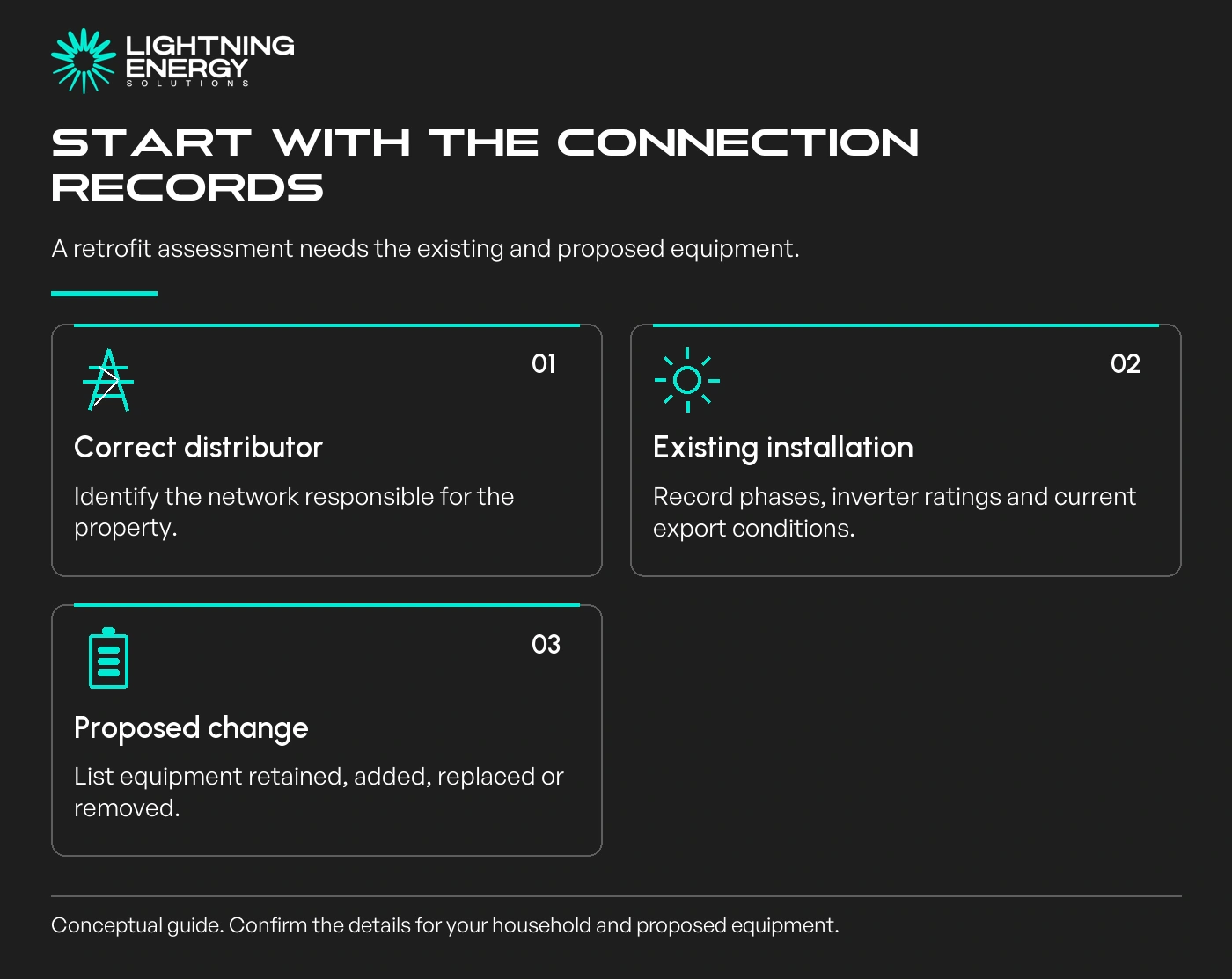
Use your bill and connection records to establish the correct network. Ask for the existing solar connection approval if you do not already have it.
Record the property's supply phases, solar inverter model and rating, current export conditions and any existing battery. The new application should reflect equipment that remains as well as equipment being added or removed.
Our inverter guide helps separate panel capacity from inverter equipment.
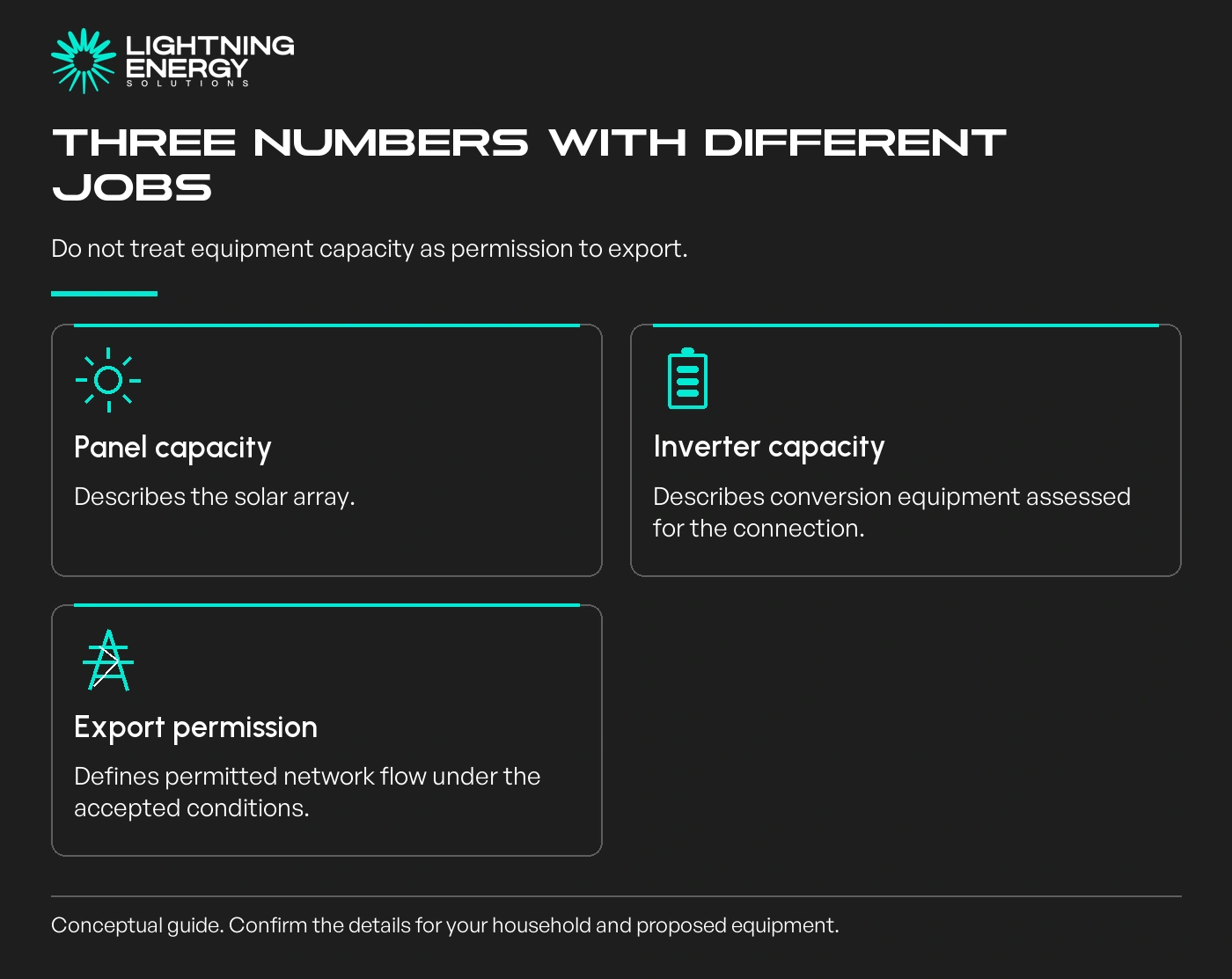
Solar panel capacity describes the array. Inverter capacity describes conversion equipment. An export limit describes the permitted electricity flow to the network under the connection conditions.
They are related, but they are not interchangeable. Adding a battery inverter can change the equipment being assessed without giving you an equivalent increase in export permission.
For a hypothetical example, an existing 5 kW solar inverter and a proposed separate 5 kW battery inverter give the installer two inverter ratings to declare. That does not establish a 10 kW export entitlement.
A hybrid replacement may have a different configuration again. Ask the installer how the distributor assesses the proposed design, rather than adding marketing numbers yourself.
Our export-limit explainer covers the distinction between generating electricity and sending it to the network.
CitiPower and Powercor publish installer resources covering applications, commissioning and completed-work records. AusNet and United Energy provide their own connection pathways and conditions.
CitiPower and Powercor: installer resources.
AusNet: solar and battery applications.
United Energy: connecting your home.
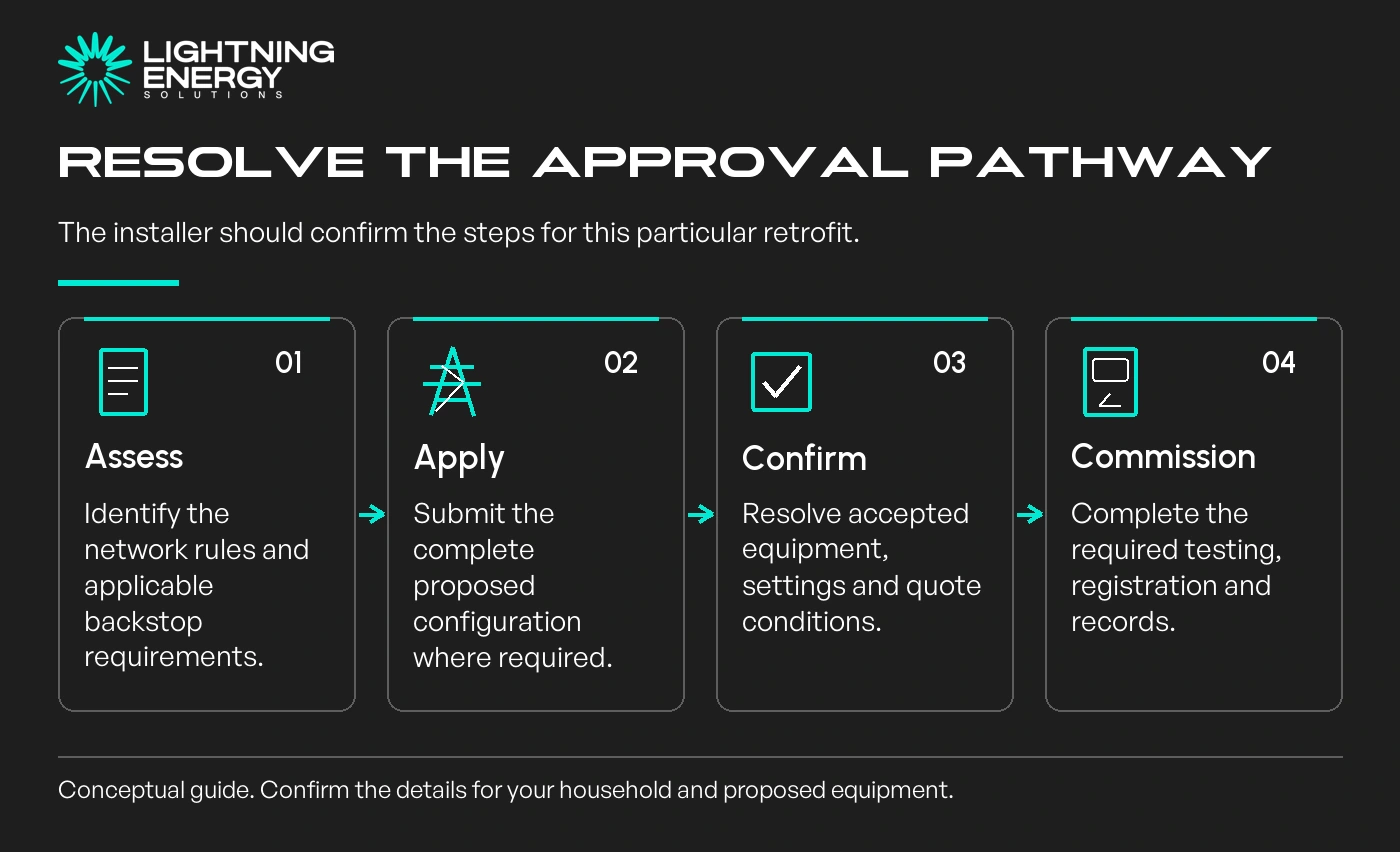
Ask who submits the application, what approval is required before work proceeds, and whether the quote depends on that approval. Check the accepted equipment, permitted settings and any expiry date.
Do not assume a neighbour's approval or a previous quote determines yours. The equipment, phases and local connection conditions may differ.
Victoria's solar backstop rules distinguish new or altered systems and certain legacy situations. Adding storage and replacing an existing inverter are not necessarily treated identically.
Ask the installer to identify which requirements apply to the actual work, including any registration, communications or commissioning obligations. Get the answer for the complete installation rather than relying on a blanket exemption.
Victoria: emergency solar backstop.
Ask whether the existing meter needs reconfiguration and who arranges any service order. Then ask the retailer whether the change affects your plan, billing or export payments.
Jemena's guidance separates installer, distributor and retailer responsibilities. For its solar meter configuration process, the retailer arranges the service order to Jemena.
That example does not mean every battery retrofit needs a new physical meter. The relevant question is what your existing meter and proposed connection require.
Request written confirmation of fees and responsibilities before accepting assumptions about free changes or unchanged tariffs.
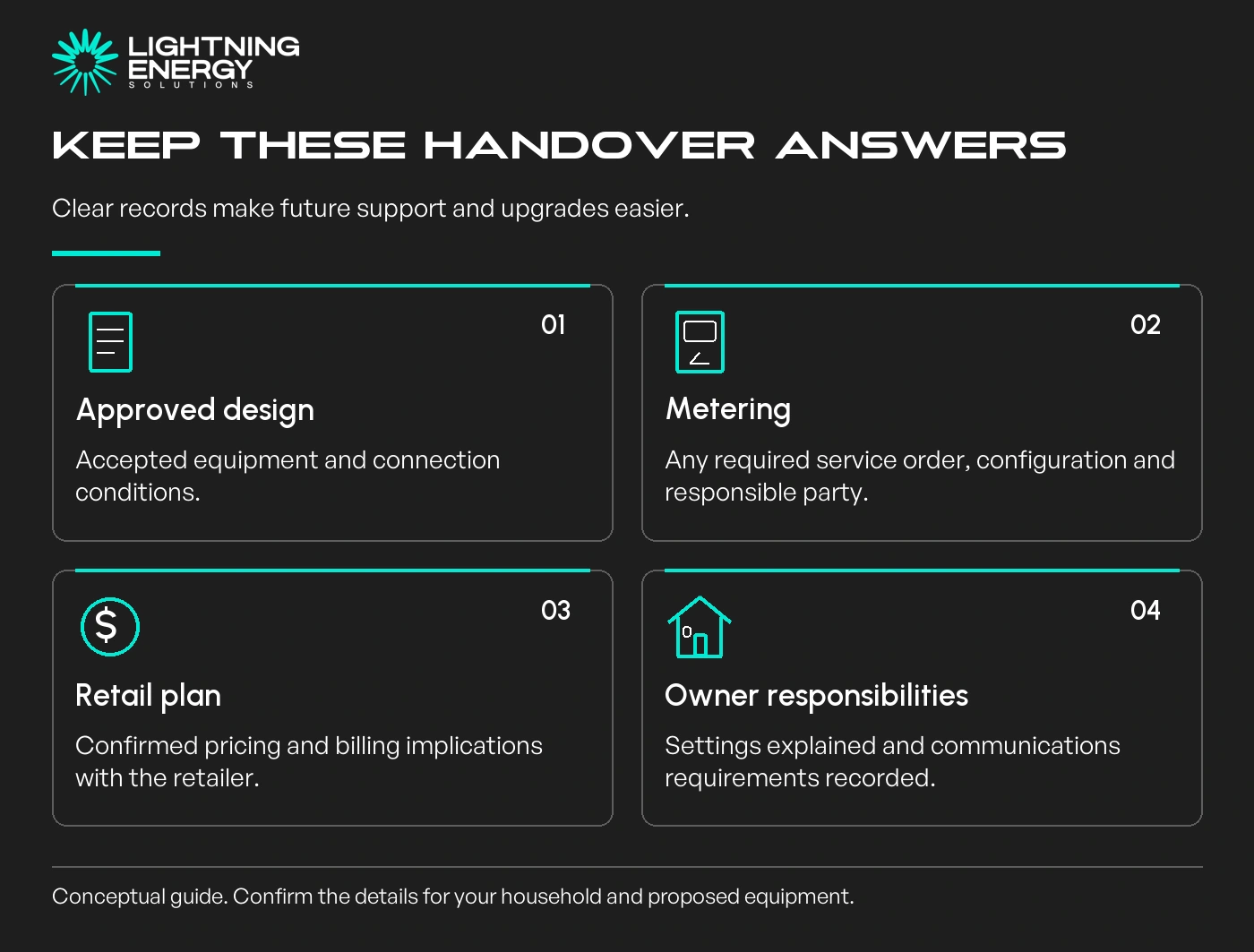
Retain the accepted connection conditions, final equipment list, commissioning records and electrical safety documents. Ask for an explanation of the export settings and any owner responsibilities for communications.
Pause installation planning if the quote assumes approval that has not been confirmed or leaves metering responsibilities unclear. Resolving those gaps early is part of a well-scoped battery installation.
Plan your battery upgradeShare your existing solar details and electricity bill. We can assess the retrofit scope and explain the connection and metering questions that need resolution.Available times
Book a consultation and we'll map solar, storage, hot water, and the rebates around your bills and your goals.
Question 1 of 6