
Buying a House With Solar: Records, Monitoring and Warranty Transfers
Buying a house with solar? Gather the equipment records, monitoring access and warranty details, and plan a suitable condition check before relying on the system.
Buying a house with solar? Gather the equipment records, monitoring access and warranty details, and plan a suitable condition check before relying on the system.

Treat the solar system as part of the property due diligence. Before settlement, find out what is installed, who owns it, how it is performing and which records will be handed over.
Panels visible from the street do not answer those questions. A neat inverter or an app screenshot is useful context, but neither replaces the equipment history and an appropriate condition assessment.
Our solar service can help assess an existing installation once the basic records and access arrangements are available.
Request the original invoice, panel and inverter models, installation date, serial information, connection records and service history. Include any battery, monitoring meter or later modification.
Ask the seller whether the equipment was purchased outright or is subject to an agreement. Have your conveyancer review any contract or ownership issue rather than assuming it transfers with the roof.
The ACCC explains that solar purchases can involve finance, leases or power purchase agreements, with different obligations.
ACCC guidance on solar agreements.
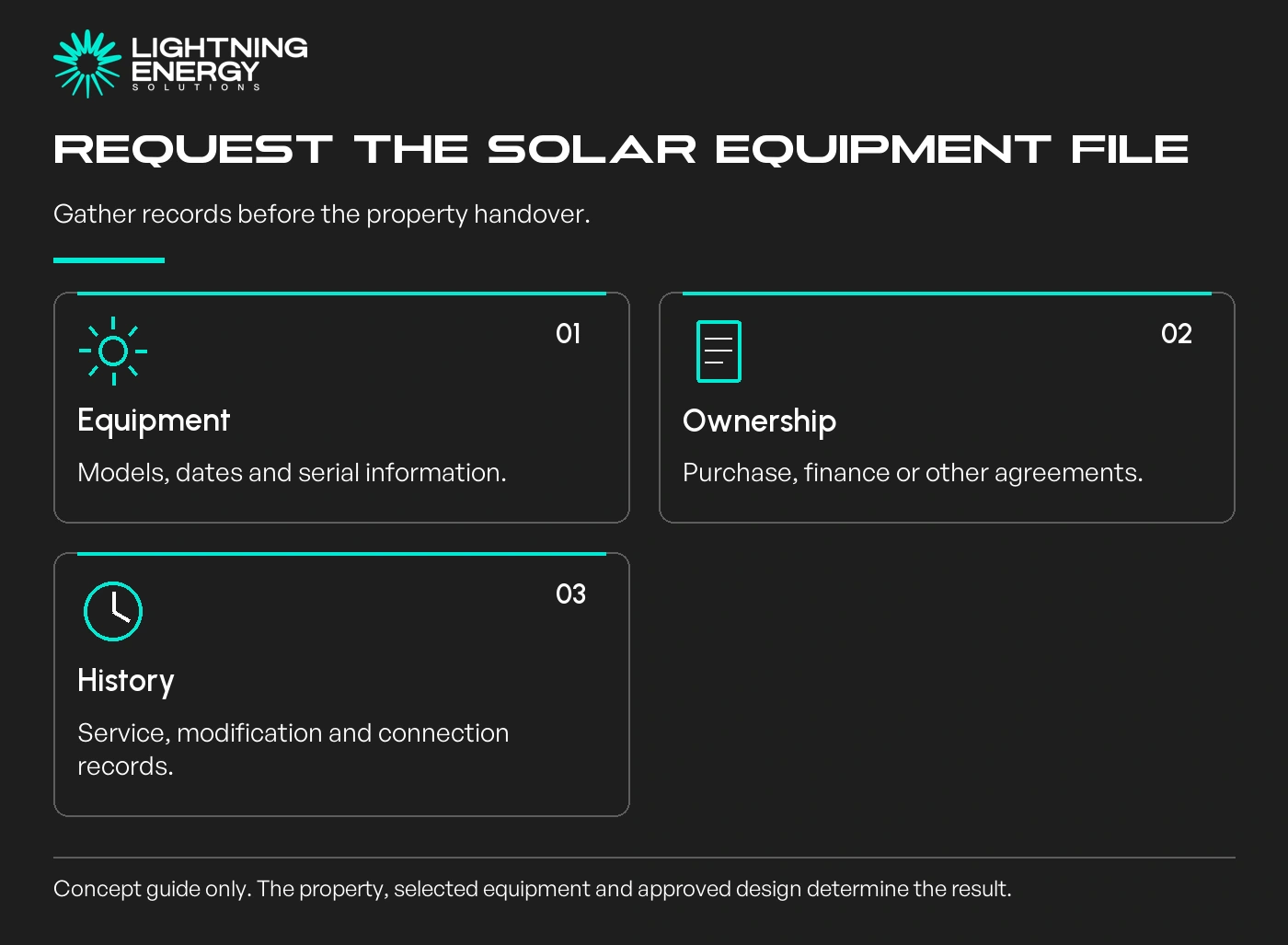
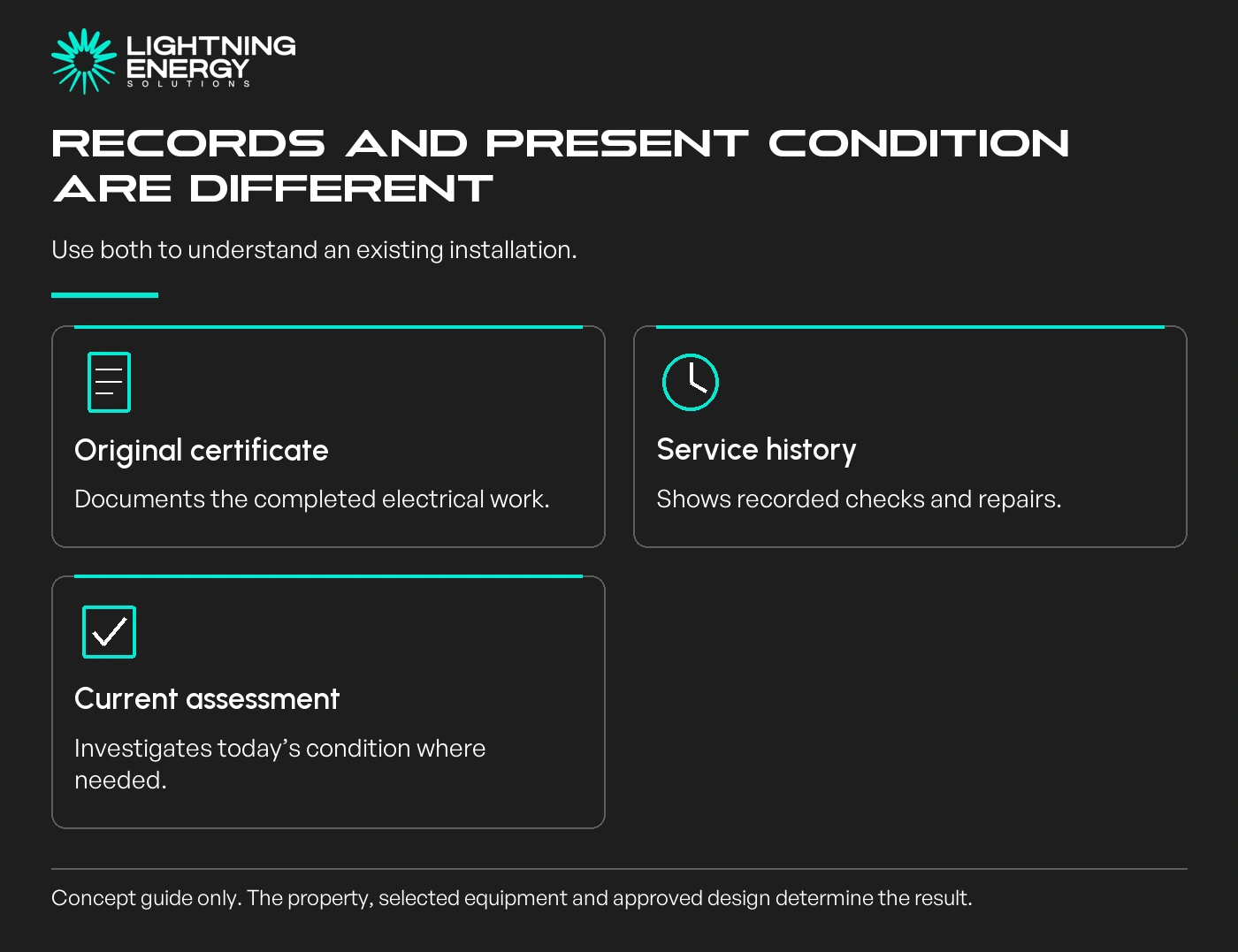
Request the installation’s electrical certificates and any inspection or service reports. If paperwork is missing, ask Energy Safe Victoria about its process for obtaining relevant certificate records.
Energy Safe Victoria certificate guidance.
An old certificate records completed work; it is not a substitute for assessing the equipment’s present condition. Discuss the appropriate scope of a professional check where the age, service history or operation is uncertain.
Energy Safe Victoria’s solar guidance distinguishes servicing from simple cleaning and describes the role of electrical testing and visual inspection.
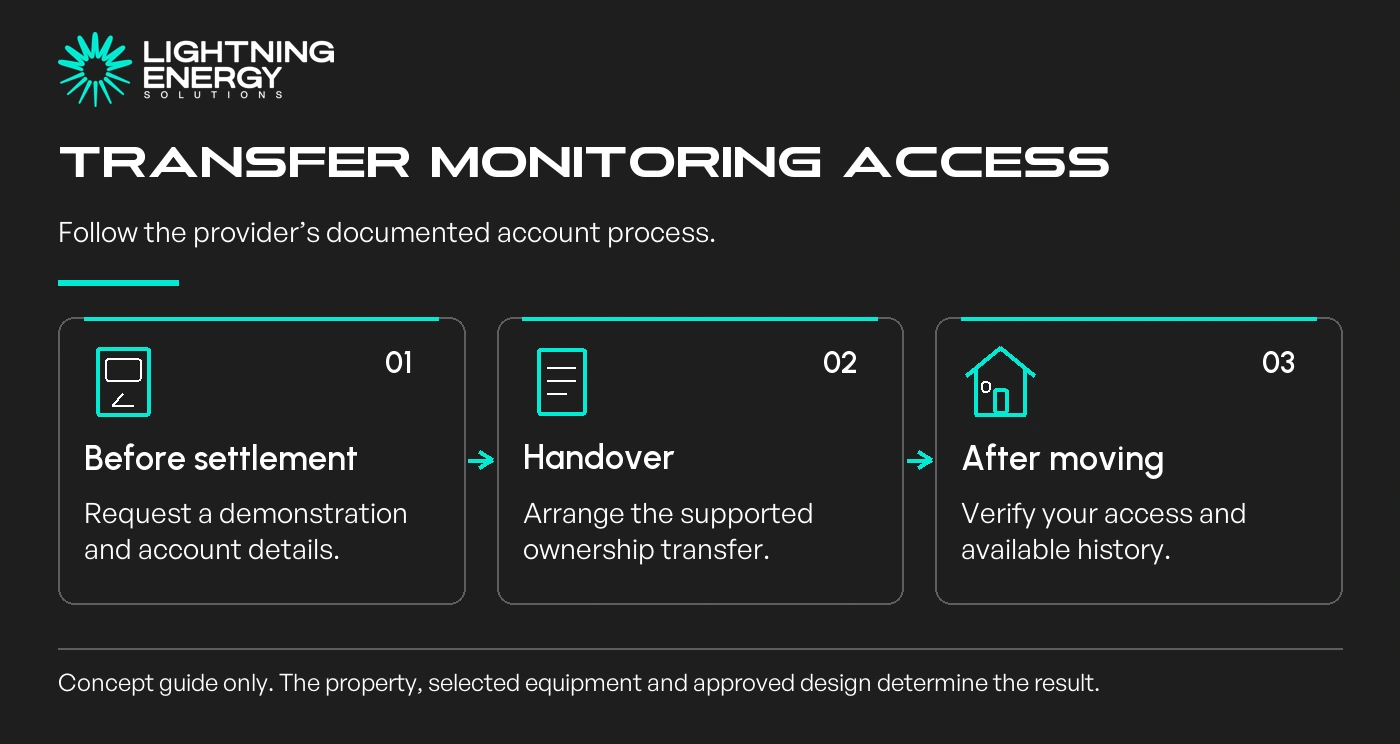
Ask the current owner to demonstrate the app and explain what it measures. Record whether it shows generation only or also household use, imports, exports and any battery operation.
Arrange account transfer through the relevant provider’s documented process. Ask what happens to historical records and remove the previous owner’s access appropriately, rather than casually sharing their password.
Imagine a buyer receives the keys but no monitoring account. The system may still be generating, yet the buyer has no convenient way to review its history. Resolve access while the seller can still assist.
Use the winter performance guide to understand why one low-output day is not enough to judge an existing system.
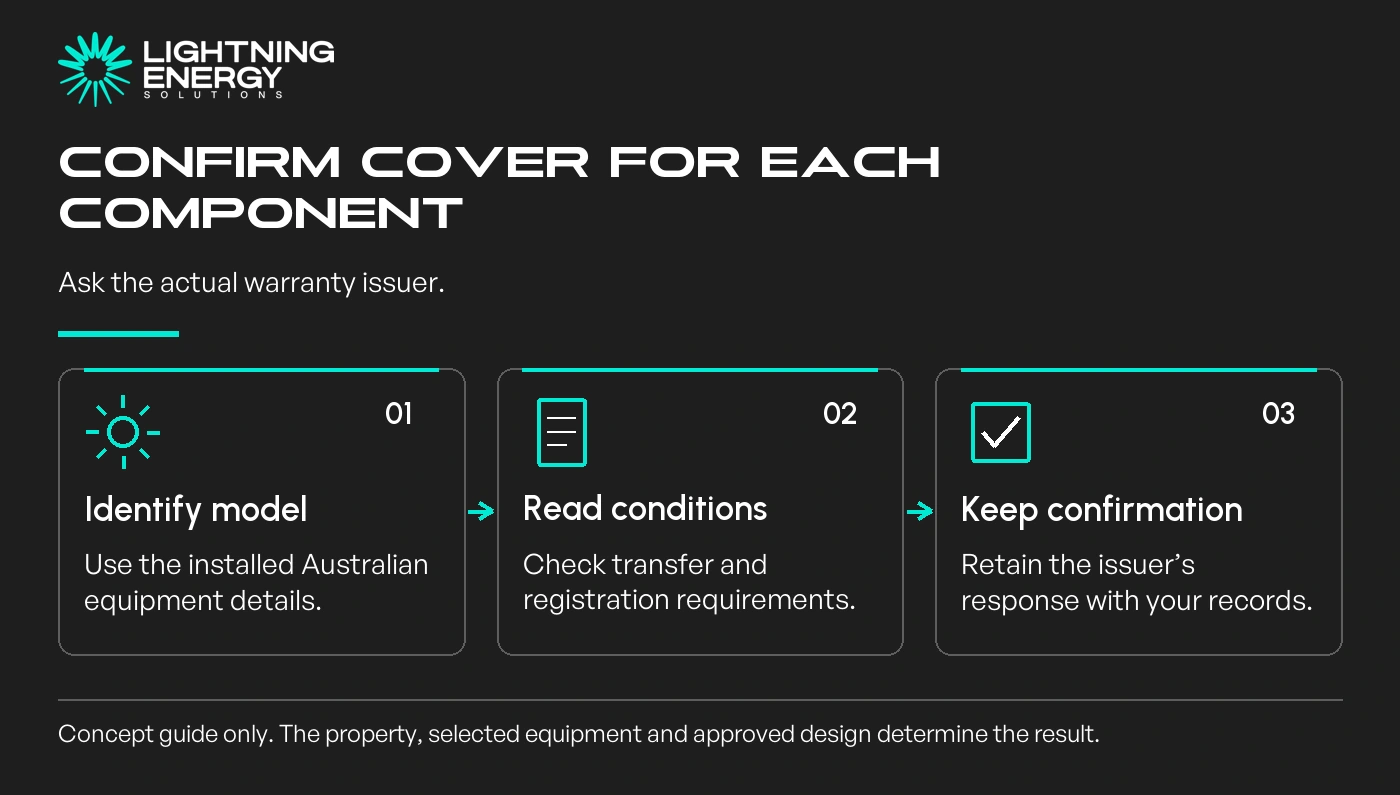
Ask the warranty issuer whether cover transfers, what evidence is required and whether any registration or notification is needed. Use the exact Australian warranty for the installed model and installation date.
The Government guide distinguishes product, performance and workmanship cover. It also recommends checking exclusions and responsibility for associated costs.
A panel performance warranty is not a guarantee of your future electricity bill. Household habits, tariffs, weather and the installation itself all sit outside a headline warranty duration.
Review the electricity plan, insurer notification and ordinary appliance schedule after the move. The previous owner’s favourable arrangement or consumption pattern may not match your own.
Our home insurance checklist helps identify questions about installed equipment and replacement costs for your insurer.
Do not replace a working system just because its brand or age is unfamiliar. Equally, do not budget on promised savings where records are missing and the condition has not been assessed.
Contact Lightning Energy with the equipment file and any concerns. A records review and appropriate inspection are better starting points than guessing at performance from a listing photograph.
Available times
Book a consultation and we'll map solar, storage, hot water, and the rebates around your bills and your goals.
Question 1 of 6