
Can a Ducted Air Conditioner Be Too Large for Your Home?
A larger ducted air conditioner is not automatically a better fit. Compare its operating range, airflow needs and smallest zone with your home’s loads.
A larger ducted air conditioner is not automatically a better fit. Compare its operating range, airflow needs and smallest zone with your home’s loads.

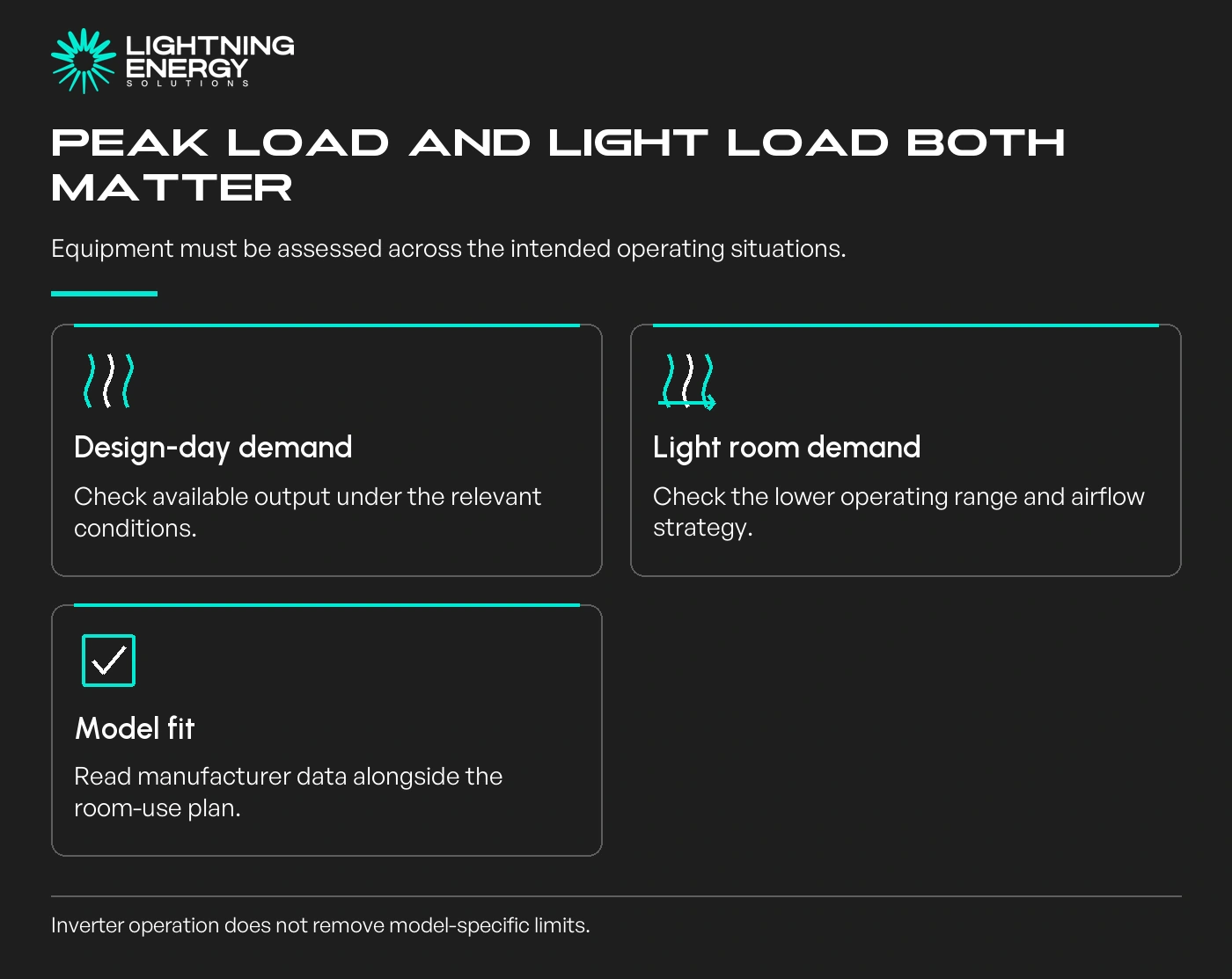
Yes, a ducted air conditioner can be larger than your home needs. The useful question is whether the selected unit can handle both the cold or hot design day and the smaller loads you expect most of the time.
Inverter control broadens the operating range, but it does not make sizing irrelevant. A larger model needs a design explanation, not just reassurance that extra capacity is always better.
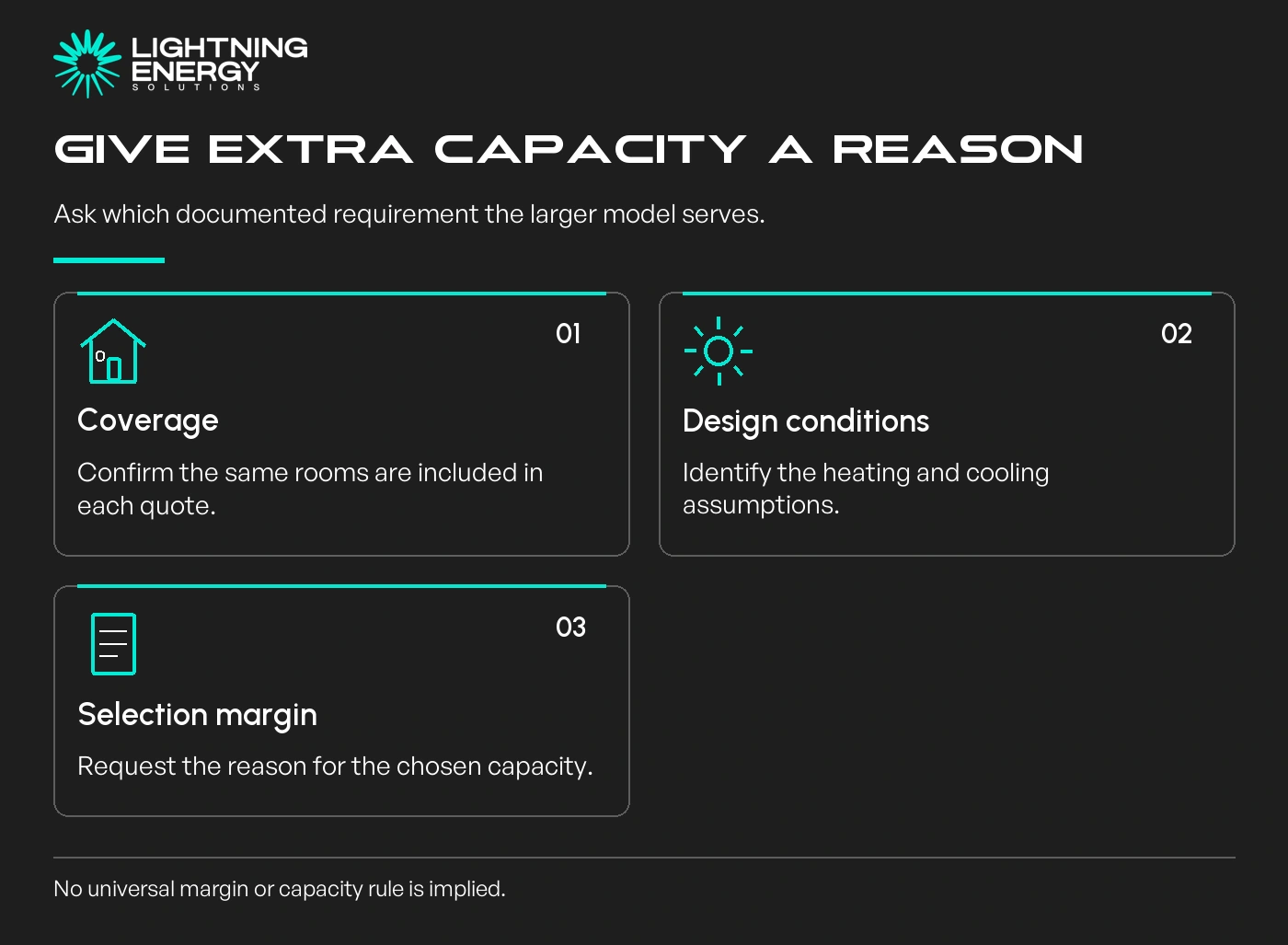
Request the assessed heating and cooling loads and the selected unit’s performance at the stated conditions. Any margin should have a reason that relates to your property or comfort brief.
Perhaps the quote includes an exposed living area that another quote excludes. Perhaps one assumes all rooms operate together. Those are differences in scope that should be resolved before comparing capacities.
Ask the air conditioning designer to separate confirmed requirements from possible future renovations. Paying for capacity now does not guarantee a later extension can use the existing ducts or controls.
Do not use the old heater’s nameplate as the sole replacement target. The proposed layout, building condition and way you use the house may have changed.
An inverter can vary compressor operation, yet each model still has operating limits. Ask for the relevant capacity range and how the proposed design handles light demand.
The Victorian Government’s sizing guide warns that an oversized system costs more to buy, may cost more to run and can cause larger temperature swings. Matching the unit to your home still matters.
Victorian Government sizing guidance.
That is a reason to check the selection, not to declare every larger inverter unsuitable. Manufacturer data and the proposed room combinations are more useful than a blanket rule.
If comfort is already satisfactory and you have no evidence of a fault or mismatch, replacing the equipment purely because its headline rating looks large may achieve little.
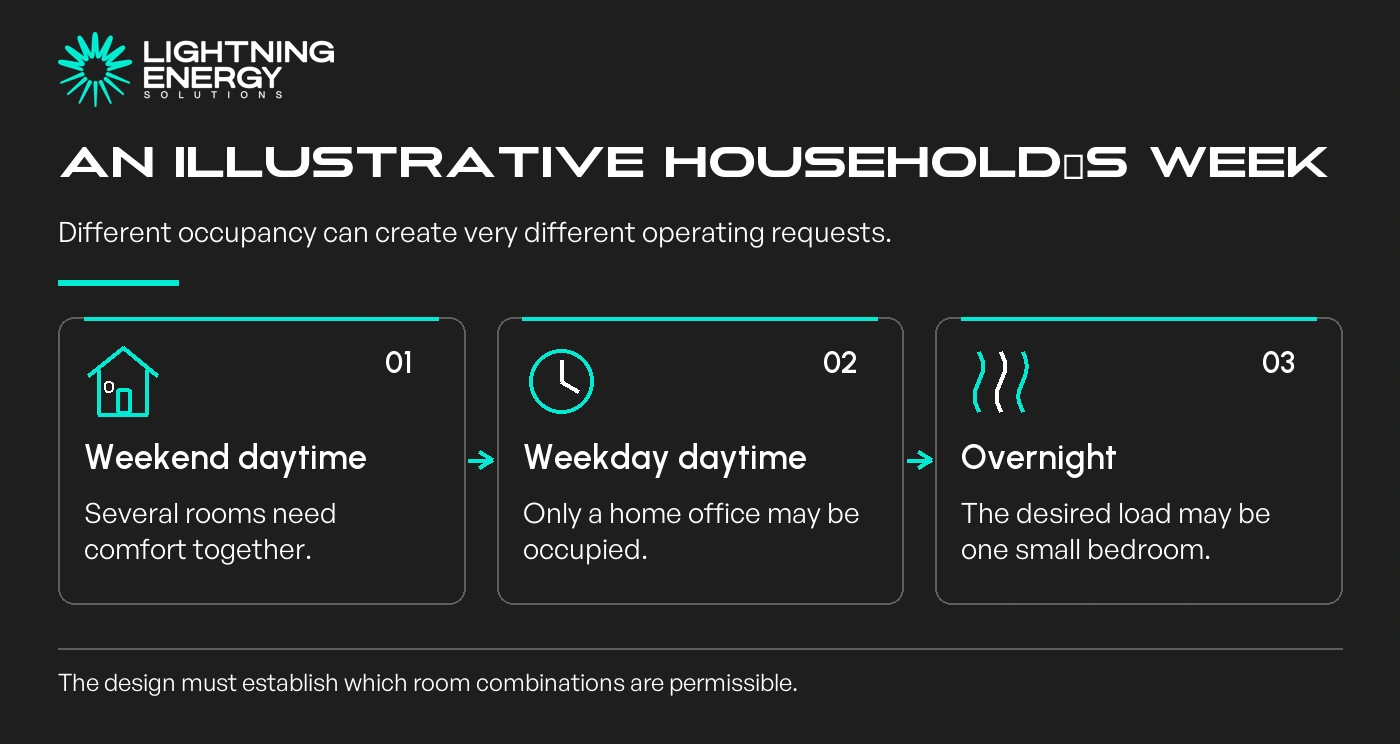
Consider an illustrative household that uses most rooms on a winter weekend but only one bedroom overnight. Its peak-load requirement and smallest-load requirement are very different.
Ask whether the proposed unit and duct arrangement can serve that overnight pattern, and whether additional areas must remain open. A zone button does not prove that a single small room can operate alone.
Airflow restrictions and controller safeguards need to be assessed together. Do not close other outlets or change installer settings to force a bedroom-only arrangement.
The electrical supply discussion is a separate check. A larger thermal rating is not a direct statement of electrical input or proof that an upgrade is needed.
Request a written explanation of the intended small-zone mode, including what other rooms may receive air when that mode is used.
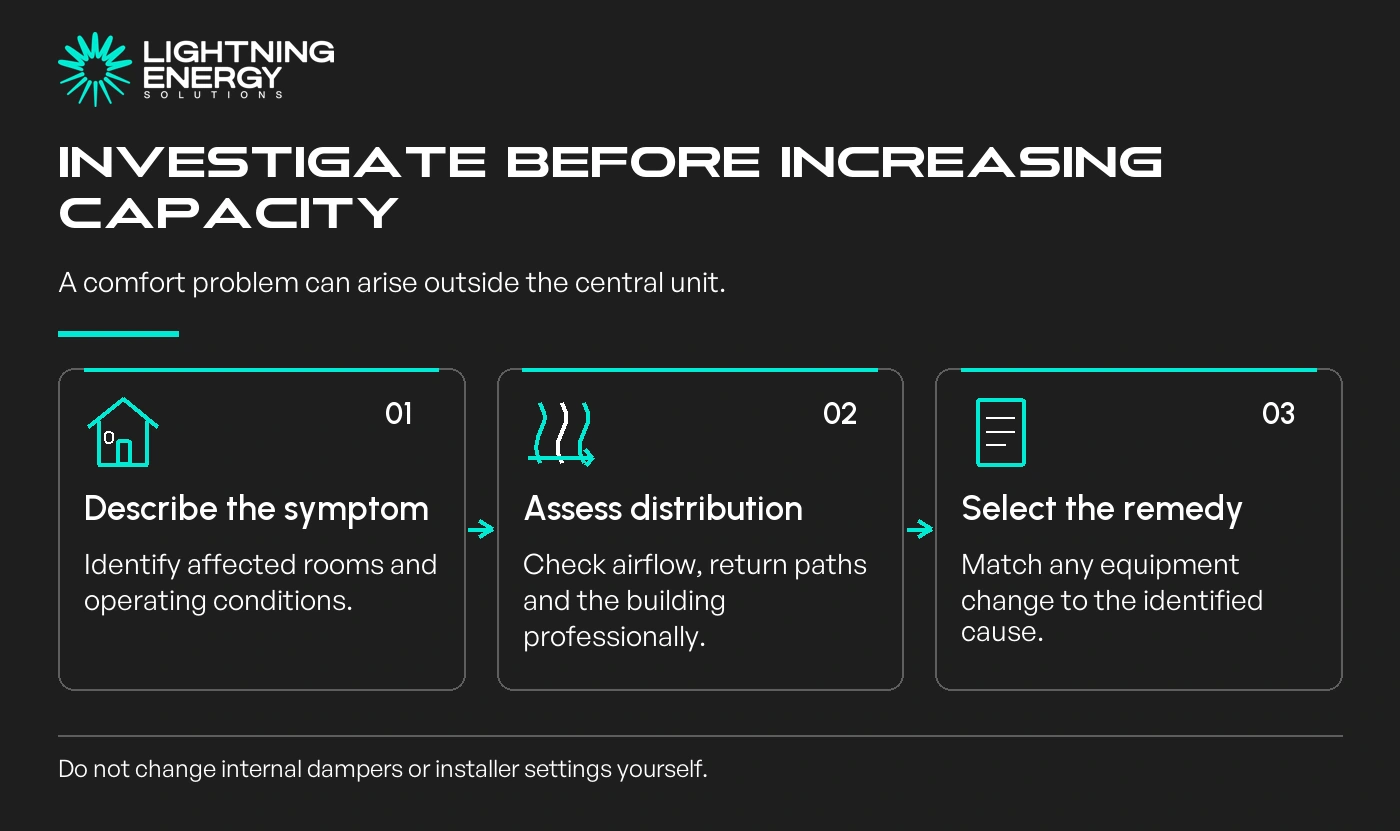
If the concern is a cold bedroom, ask whether airflow, the return path or room heat loss has been assessed. More central capacity may leave the original cause untouched.
YourHome explains that ducts need appropriate sizing, insulation and sealing. The performance of the distribution system belongs in the diagnosis.
YourHome’s heating and cooling guide.
Coordinate any agreed building improvements with your electrification plan.
New insulation or shading can change the design brief, but unconfirmed work should not be treated as complete.
If competing quotes disagree, request their room coverage, design assumptions, model ranges and zone limits in the same format. That creates a comparison you can actually evaluate.
Before paying for the larger option, ask for the selection rationale. It should explain the extra capacity, everyday operation and smallest zone without relying on a bigger-is-better claim.
Available times
Book a consultation and we'll map solar, storage, hot water, and the rebates around your bills and your goals.
Question 1 of 6