
Can a Ducted Air Conditioner Run Just One Bedroom Zone?
One bedroom may be too small a load for a ducted system on its own. Check airflow, operating limits and spill-zone behaviour before accepting a quote.
One bedroom may be too small a load for a ducted system on its own. Check airflow, operating limits and spill-zone behaviour before accepting a quote.

Sometimes a ducted system can serve one bedroom, but a zone switch alone does not establish that it can. The unit, duct design and controller must support the intended small-room operating arrangement.
If bedroom-only heating is important, make it a condition of the design discussion before buying. Ask whether any other area must receive air while that bedroom is active.
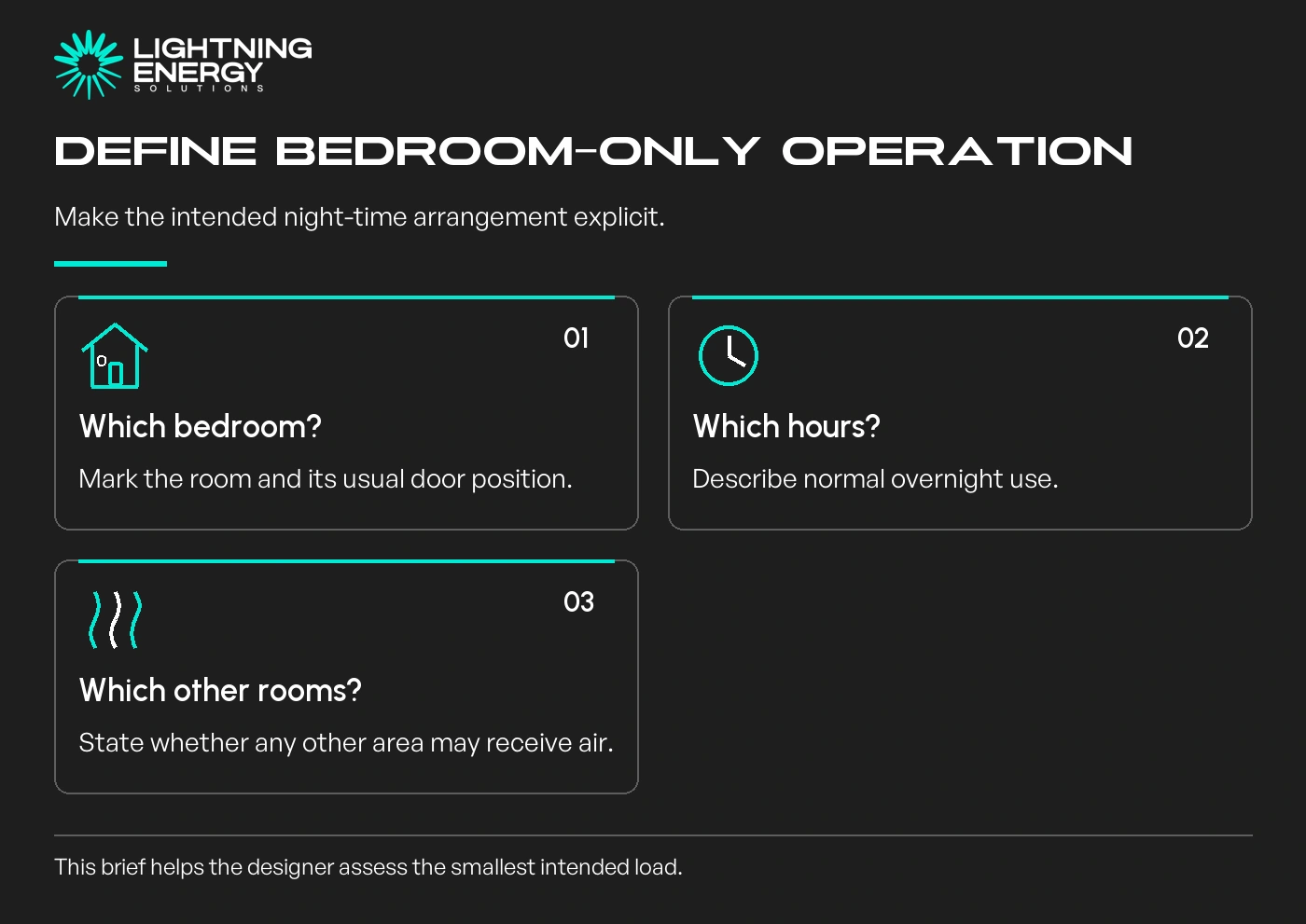
Tell the designer which bedroom you mean, when it is occupied and whether its door will be closed. “Night-time use” is less precise than “this bedroom only, with the living area otherwise off”.
State whether another room occasionally needs a different temperature or a different operating schedule. A system designed around several bedrooms together may behave differently with just one occupied.
Include this brief when comparing air conditioning layouts. A separate room unit may deserve consideration if the smallest load is a dominant part of everyday use.
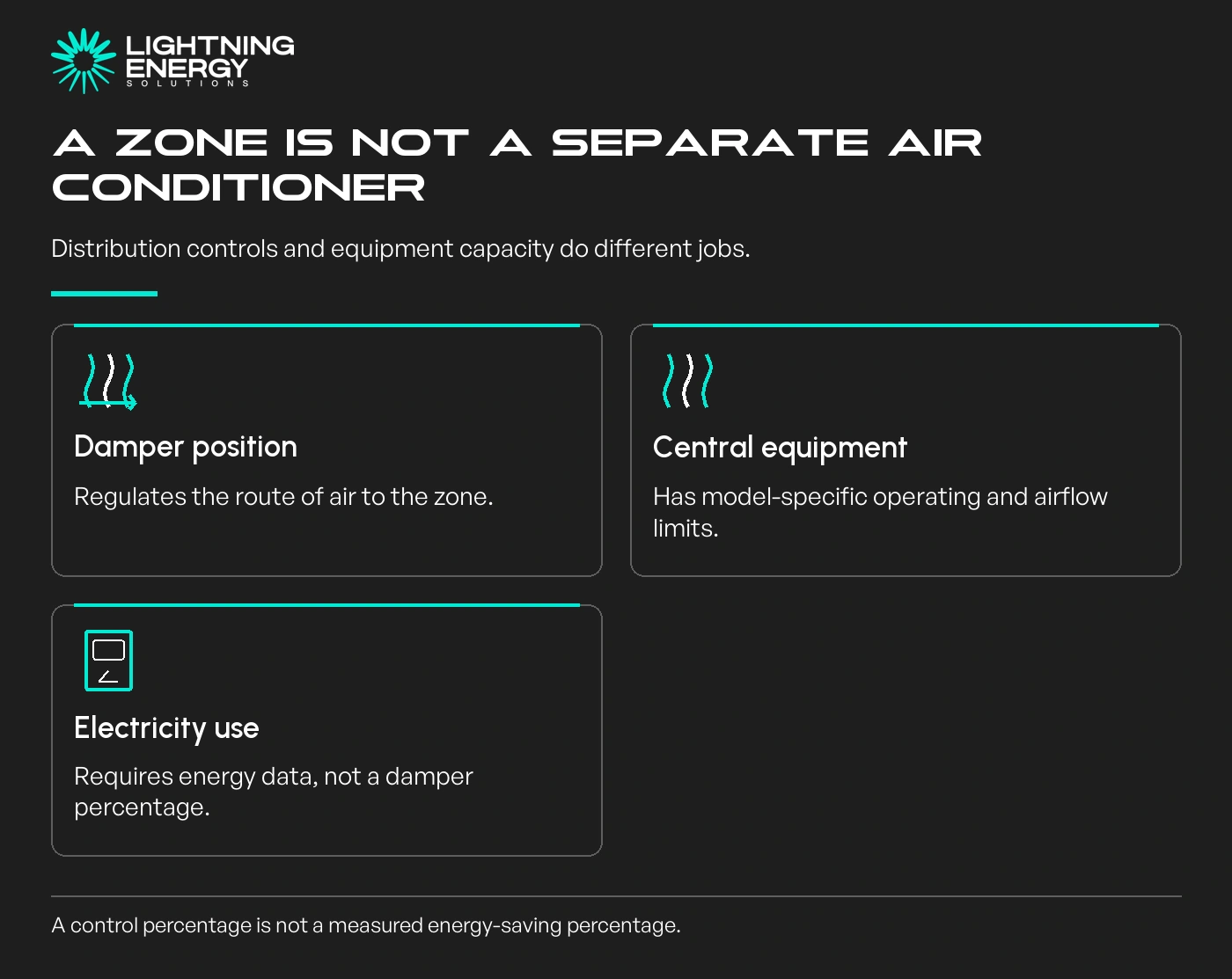
Do not assume an eight-zone controller provides eight independent air conditioners. Zones divide the distribution of a shared system; the equipment still has operating limits.
Daikin describes ducted zoning as motor-controlled dampers regulating air through the ducts. Turning a zone on identifies a distribution request; it does not create a separately sized compressor for that room.
Ask the designer to check the unit’s lower operating range and the airflow needed with the proposed bedroom zone active. Request an answer for the selected model, rather than a general claim about inverter technology.
A controller percentage should not be read as the same percentage of whole-system electricity use. It describes a control setting, not a measured household energy result.
The electrical supply guide addresses a different question: whether the equipment and other household loads can be supplied appropriately.
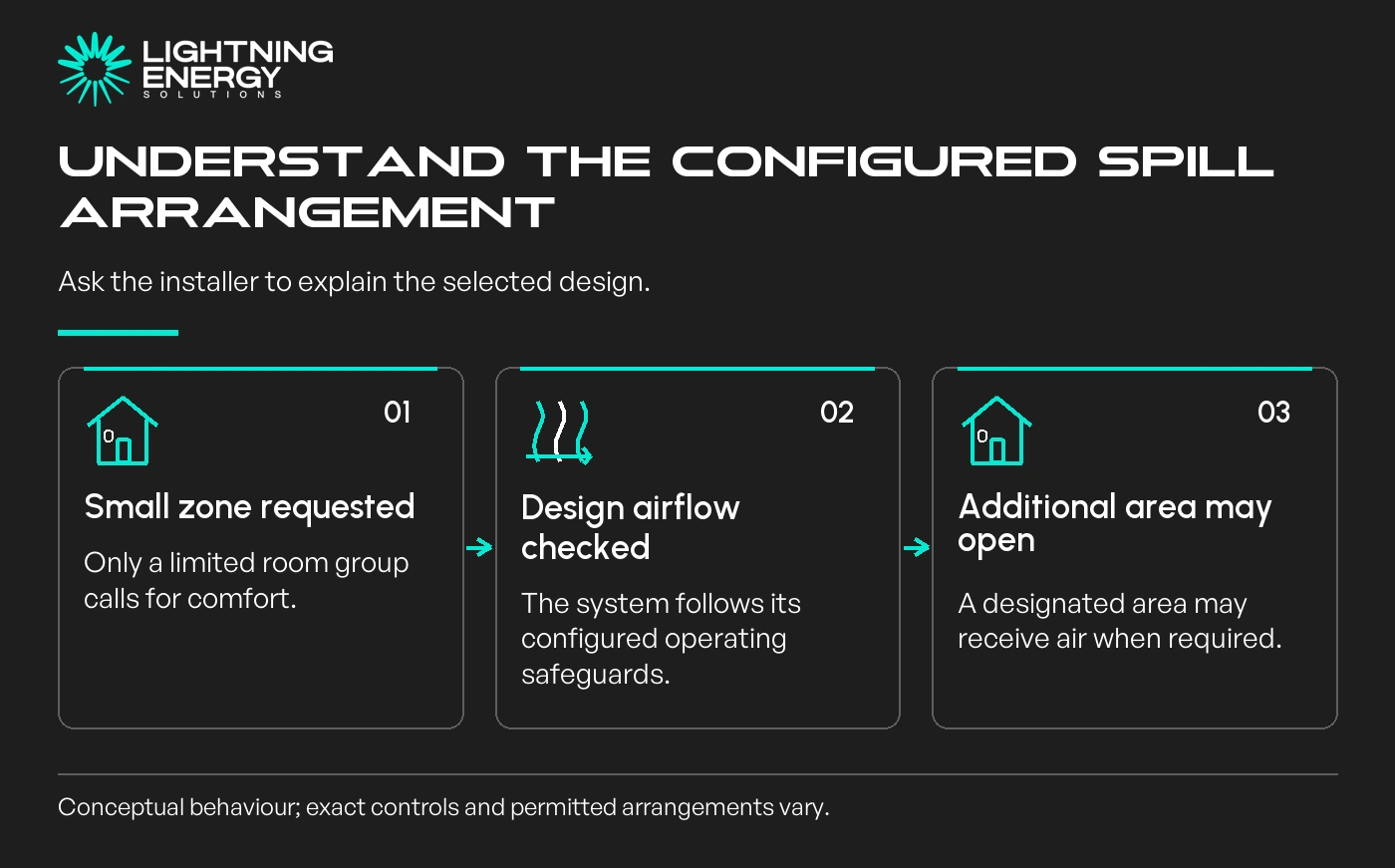
Some designs use a permanently open area or a configured spill zone. Ask which arrangement applies, which room is involved and what you will see on the controller when it operates.
AirTouch explains that a spill zone may open when too many zones are closed, providing a path for air and limiting excessive duct pressure. An apparently inactive area receiving air can therefore be intentional.
AirTouch’s spill-zone guidance.
Consider an illustrative proposal where the living area opens during bedroom-only operation. That may be a valid design, but it is not the same comfort brief as heating only the bedroom.
Ask the installer to demonstrate the expected behaviour and explain any limits. Do not disable a spill arrangement, close extra outlets or change installer settings to prevent that operation.
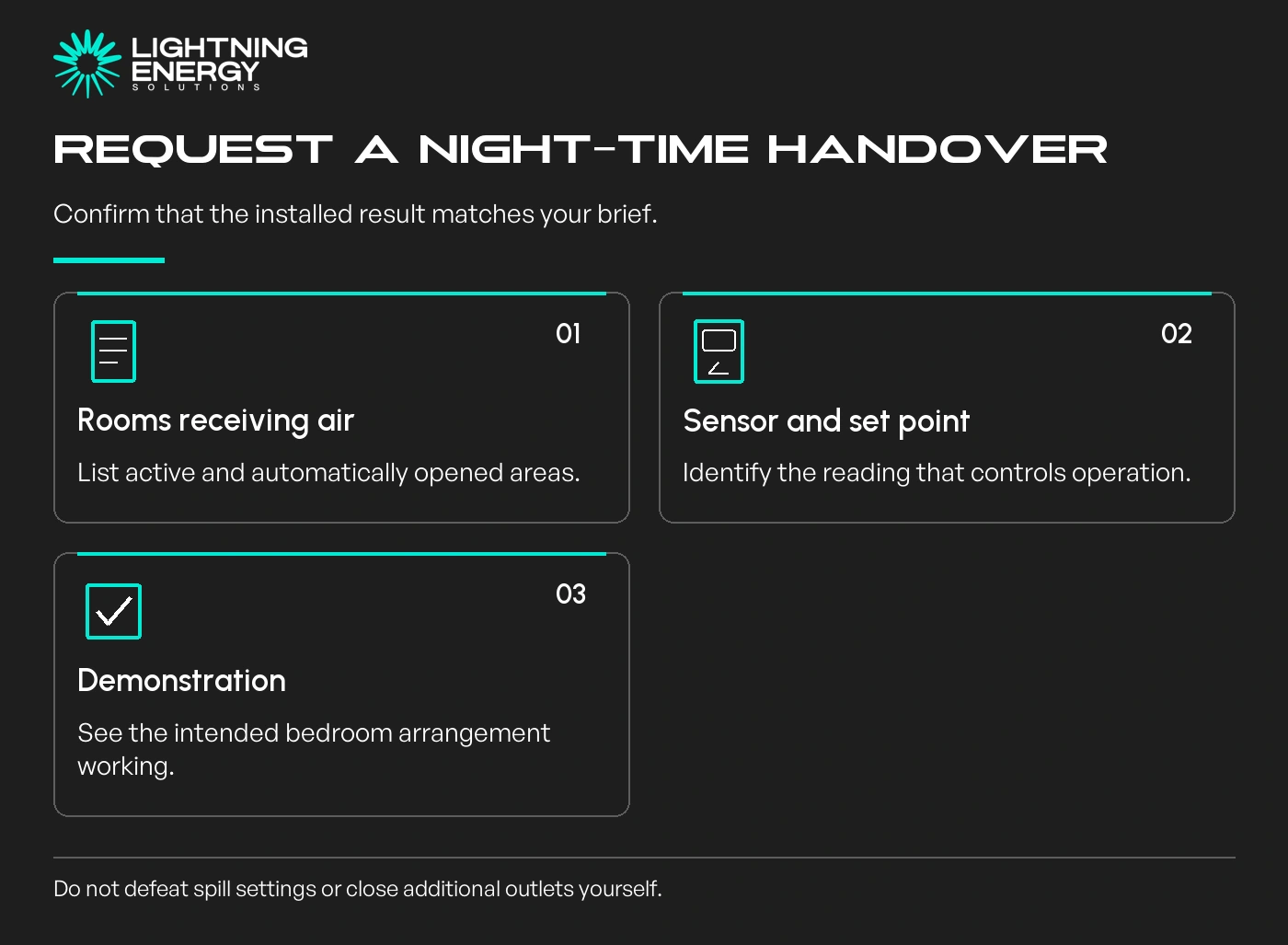
Request a written night-time plan covering the active rooms, required open areas, sensor used and normal fan behaviour. Ask how a closed bedroom door affects the designed return-air path.
If more than one option is feasible, compare installed scope and likely use rather than zone count. Servicing, outdoor-unit location and room appearance may also affect the preferred layout.
A staged electrification plan can retain equipment that already serves a small room well while other areas are upgraded.
If your existing arrangement keeps the bedroom comfortable without unwanted noise or overheating elsewhere, there may be no reason to change it solely for more app controls.
Where the actual behaviour differs from the commissioned design, ask for a service assessment. Adding sensors or increasing central capacity before identifying the cause may not solve it.
Bring your smallest occupied-room scenario to a site assessment. The answer you need is which rooms the selected arrangement will condition at night, and why, rather than a simple yes to individual zoning.
Available times
Book a consultation and we'll map solar, storage, hot water, and the rebates around your bills and your goals.
Question 1 of 6