
Can a hot water heat pump go in a garage?
Garage suitability depends on the exact heat pump and layout. Separate a permissible indoor tank from a heat pump unit that requires an outdoor location.
Garage suitability depends on the exact heat pump and layout. Separate a permissible indoor tank from a heat pump unit that requires an outdoor location.

A hot water heat pump cannot be approved for a garage simply because the tank fits. The answer depends on the exact appliance, its permitted location and the proposed installation design.
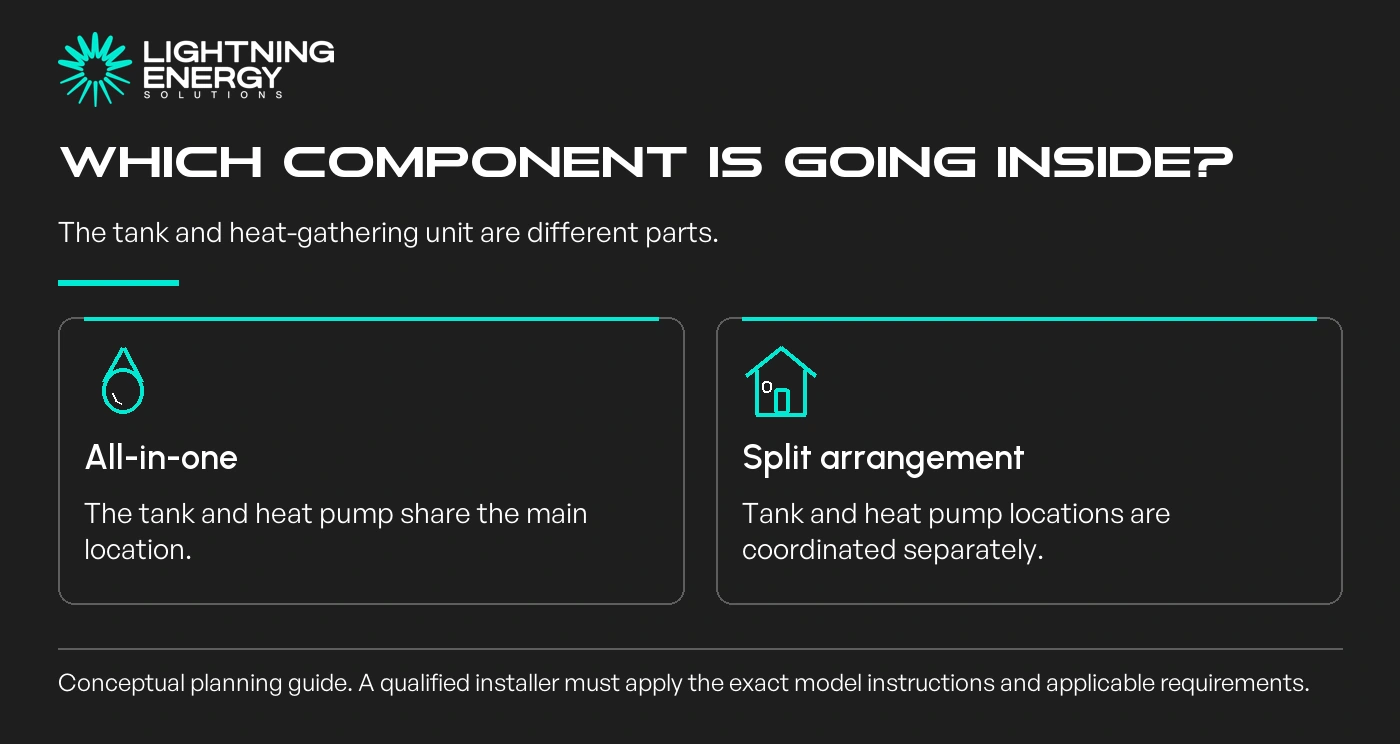
Start by distinguishing the water-storage tank from the machinery gathering heat from the air. In some split arrangements, those components can occupy different locations.
An all-in-one unit combines the tank and heat pump in one main appliance. Moving it into a garage also moves the fan, heat exchanger and refrigeration equipment there.
A split system separates the tank and heat pump. An indoor tank with an outdoor heat pump can offer siting flexibility.
Solar Victoria’s planning guide.
That does not automatically approve every split tank for every garage. Ask for the proposed component locations and the manufacturer’s installation requirements in writing.
Compare heat pump options by complete installation layout. The broad labels “split” and “all-in-one” are only the beginning of that comparison.
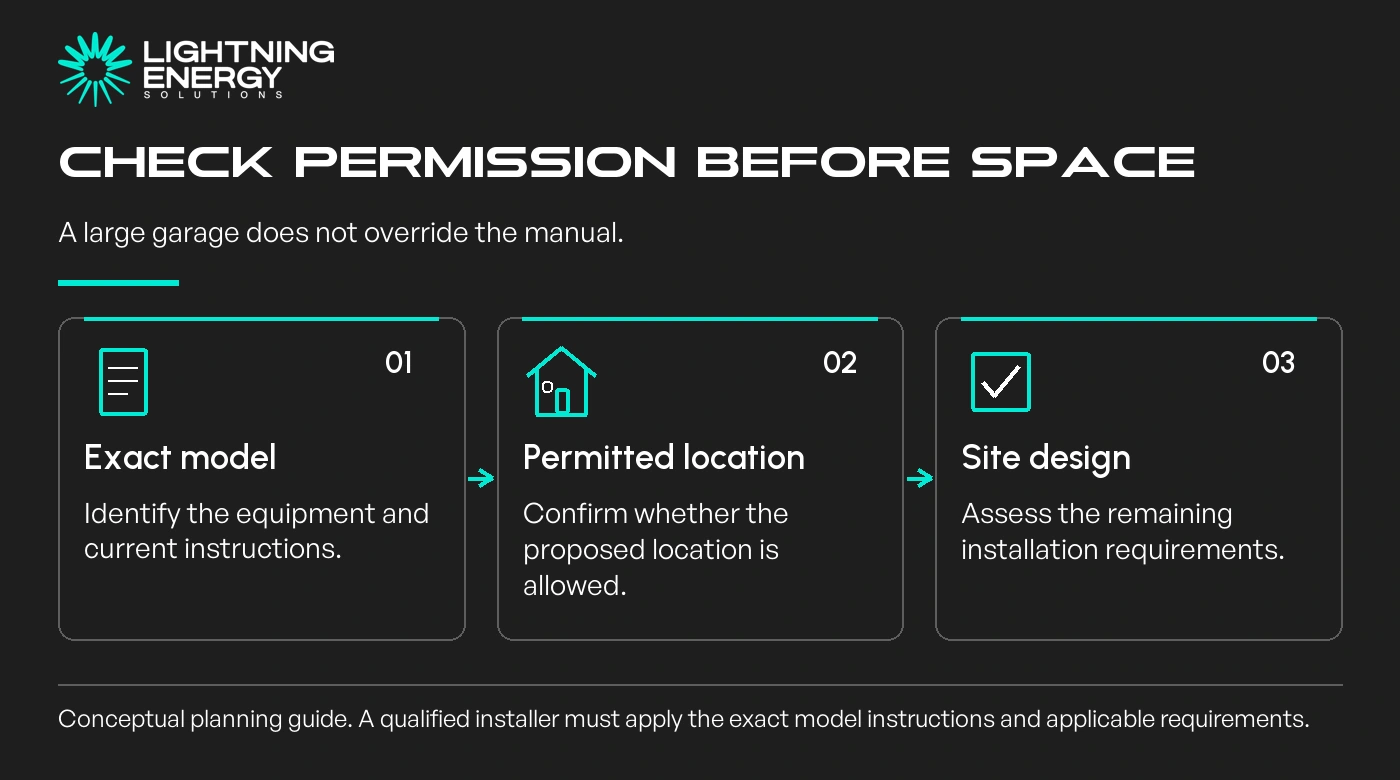
If the installation manual requires an outdoor location, a roomy garage is not an alternative by assumption. A general ventilation argument cannot override a specific product instruction.
Haier Monoblock installation guide.
This range requires the appliance outside in a well-ventilated area. That is a product-specific reason to reject an enclosed garage proposal for that range.
Our Haier range page introduces the equipment. Other equipment must be assessed against its own documentation. Do not transfer permission or restrictions between models because their tanks look similar.
Ask the retailer to identify the manual section supporting the proposed arrangement. If they cannot, resolve the location before ordering equipment.
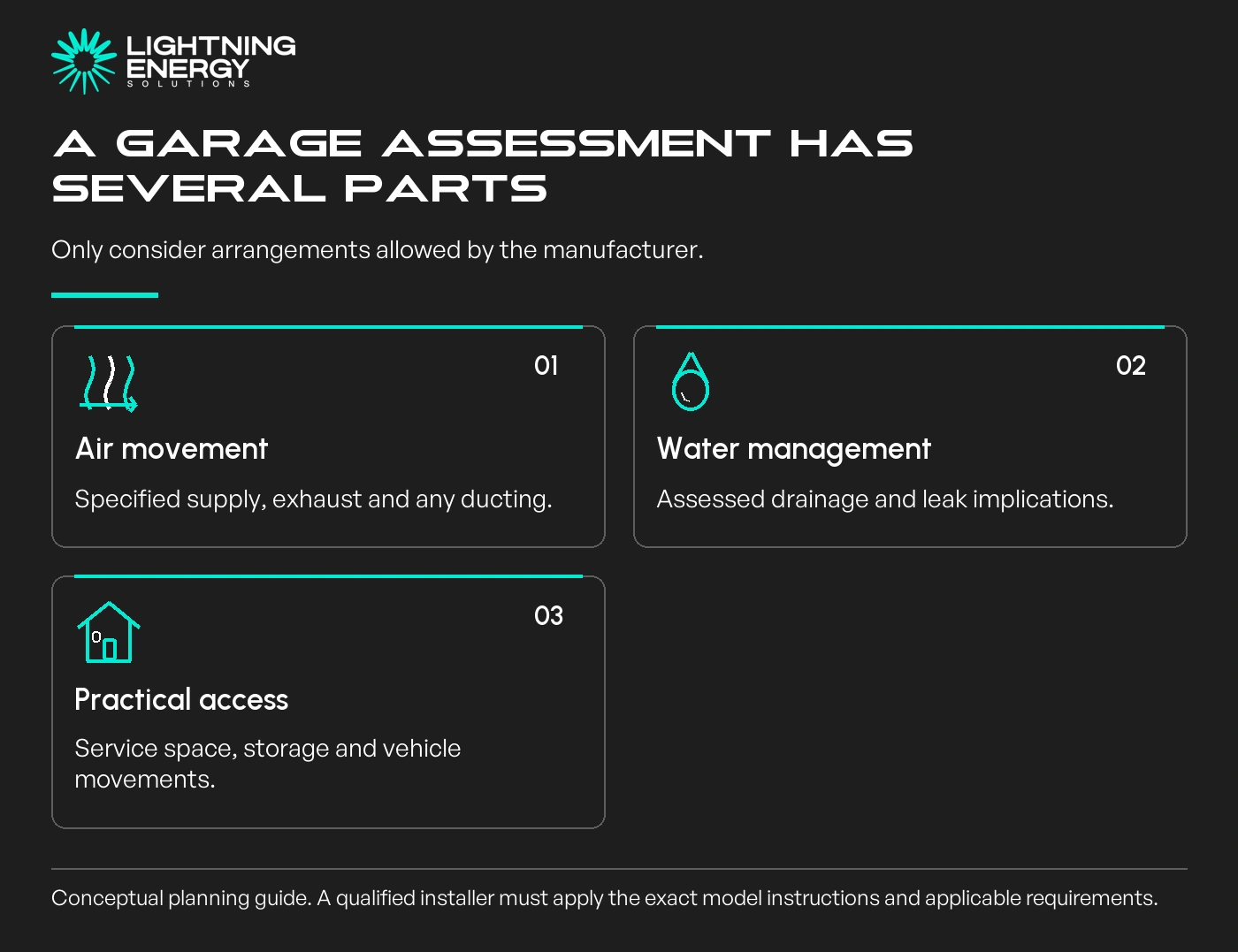
Where a manufacturer permits an indoor arrangement, ask how the design deals with air supply, exhaust and any required ducting. Opening the garage door occasionally is not a documented operating design.
The heat pump removes heat from its air source. Discuss what that means for the surrounding space, rather than treating the appliance as a source of free cooling without consequence.
Also assess clearances, drainage, electrical work, potential vehicle impact and access for service. The garage’s current storage layout may not leave the space shown on an empty floor plan.
An illustrative example: shelves installed beside a heater later obstruct the specified access. The original installation sketch should show which areas must remain clear.
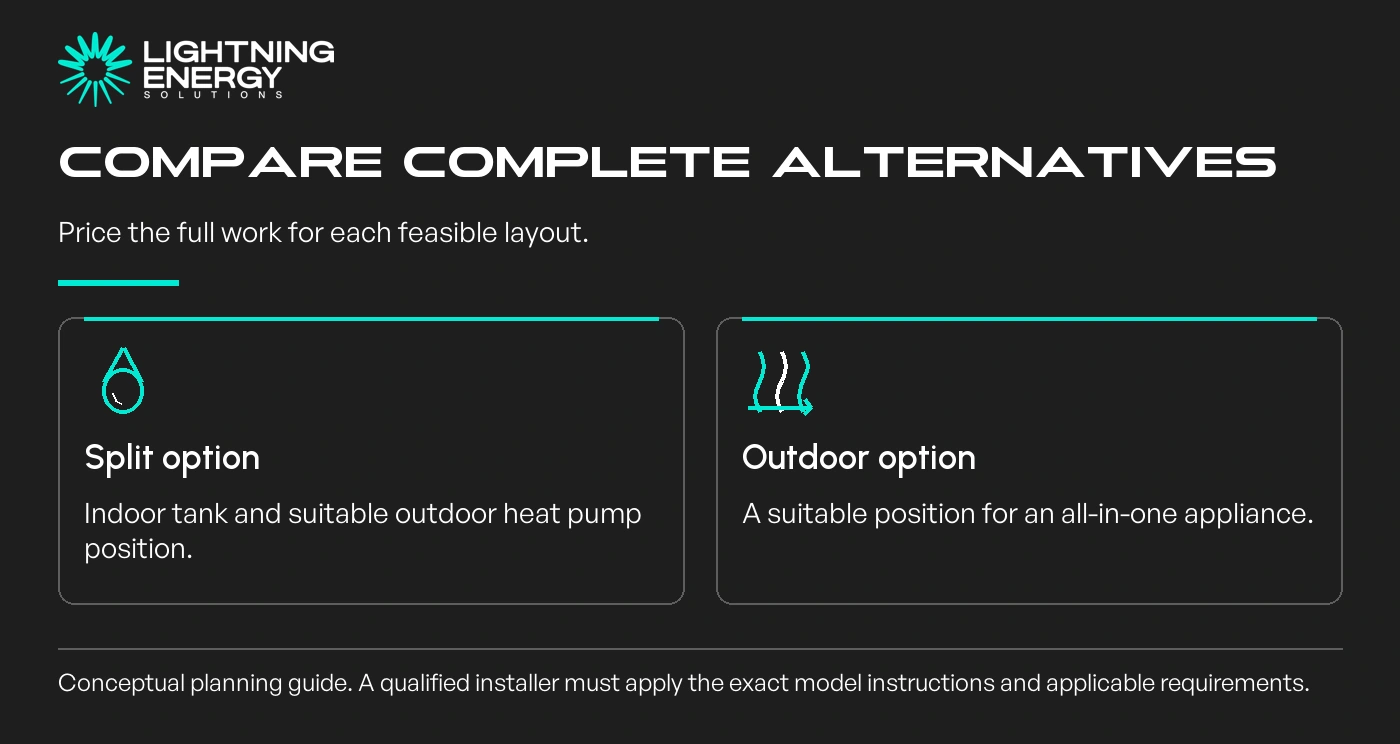
An indoor tank paired with an outdoor heat pump may address one constraint while adding pipework and installation complexity. Compare the complete scope and the permitted connection arrangement.
Another option may be a different outdoor position for an all-in-one model. Include noise, exposure, delivery access and distance to bathrooms in that assessment.
Our whole-home planning guide explains why the right layout depends on the property. There is no universal winner based on component count.
Ask for both feasible options on the same basis: named equipment, proposed positions, enabling work and ongoing access. This makes any additional cost easier to understand.
We would treat an unresolved garage location as a design question, not an installation-day improvisation. Product selection and site planning need to agree before the job is booked.
Keep the relevant manual, accepted layout and any manufacturer clarification with the quote for future servicing. A verbal assurance is difficult to assess if the delivered model changes.
Contact Lightning Energy with garage and outdoor-space photos. Include the current heater, doors, stored items and possible external positions so the assessment considers realistic alternatives.
Available times
Book a consultation and we'll map solar, storage, hot water, and the rebates around your bills and your goals.
Question 1 of 6