
Choosing a Ducted Air Conditioning Installer in Melbourne’s South-East
Compare ducted installers in Melbourne’s south-east through design responsibility, suitable trade credentials, itemised scope, commissioning and local aftercare.
Compare ducted installers in Melbourne’s south-east through design responsibility, suitable trade credentials, itemised scope, commissioning and local aftercare.

Choose a ducted installer by checking who designs the system, who performs the regulated work and who supports the finished installation. A nearby address or a long list of brands is not enough by itself.
For a Melbourne south-east home, the useful comparison is how each installer addresses your property, room use and access constraints in a written proposal.
Bring a floor plan, room priorities and notes about summer and winter discomfort. Explain whether you work from home, use all bedrooms or want different day and night zones.
Ask who assesses the heating and cooling requirement and who decides duct sizes, return air, outlets and controls. A quote should explain why the selected system suits the brief.
YourHome identifies correct sizing and appropriate distribution as important parts of efficient heating and cooling.
YourHome heating and cooling guidance.
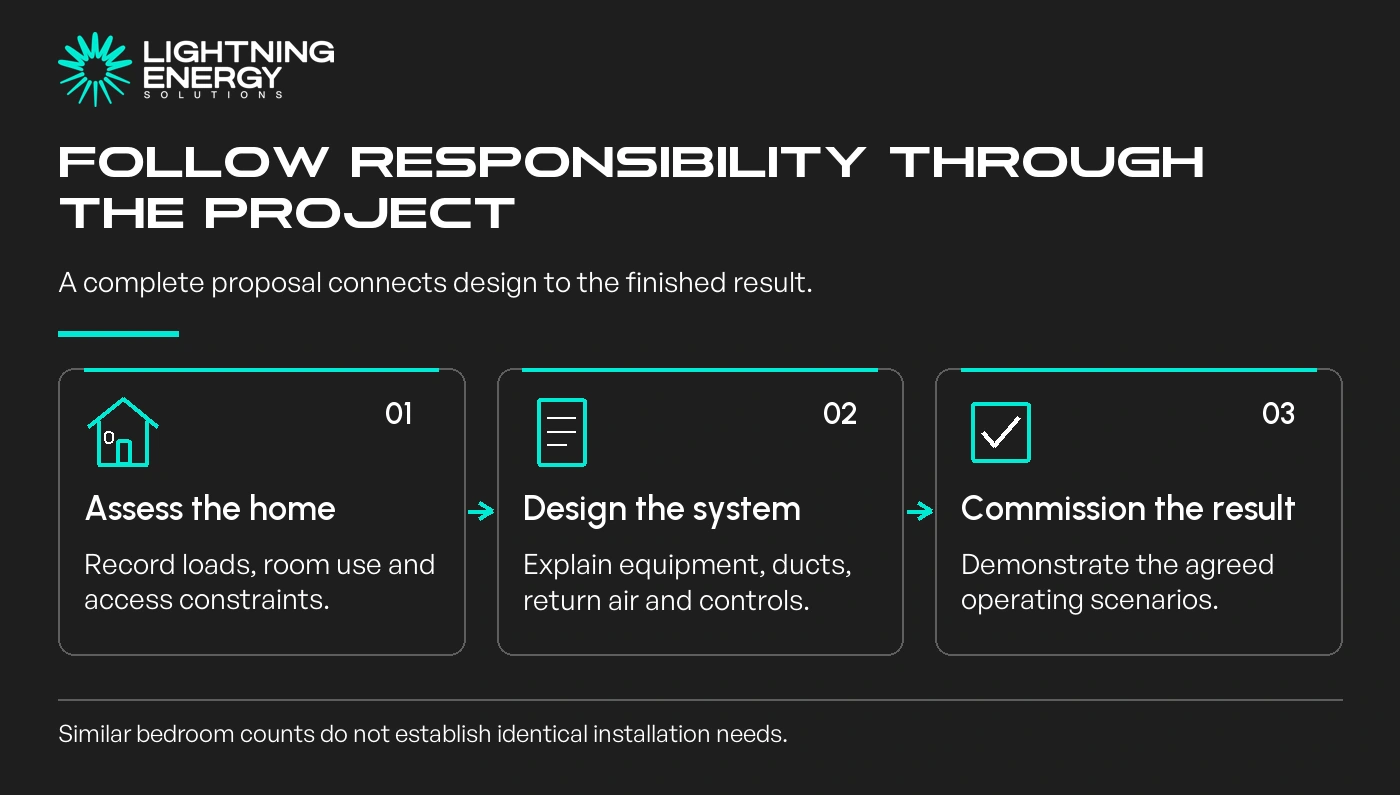
Our air conditioning design process should connect the equipment to the actual building. Similar bedroom counts in nearby suburbs do not establish identical heat loads or roof access.
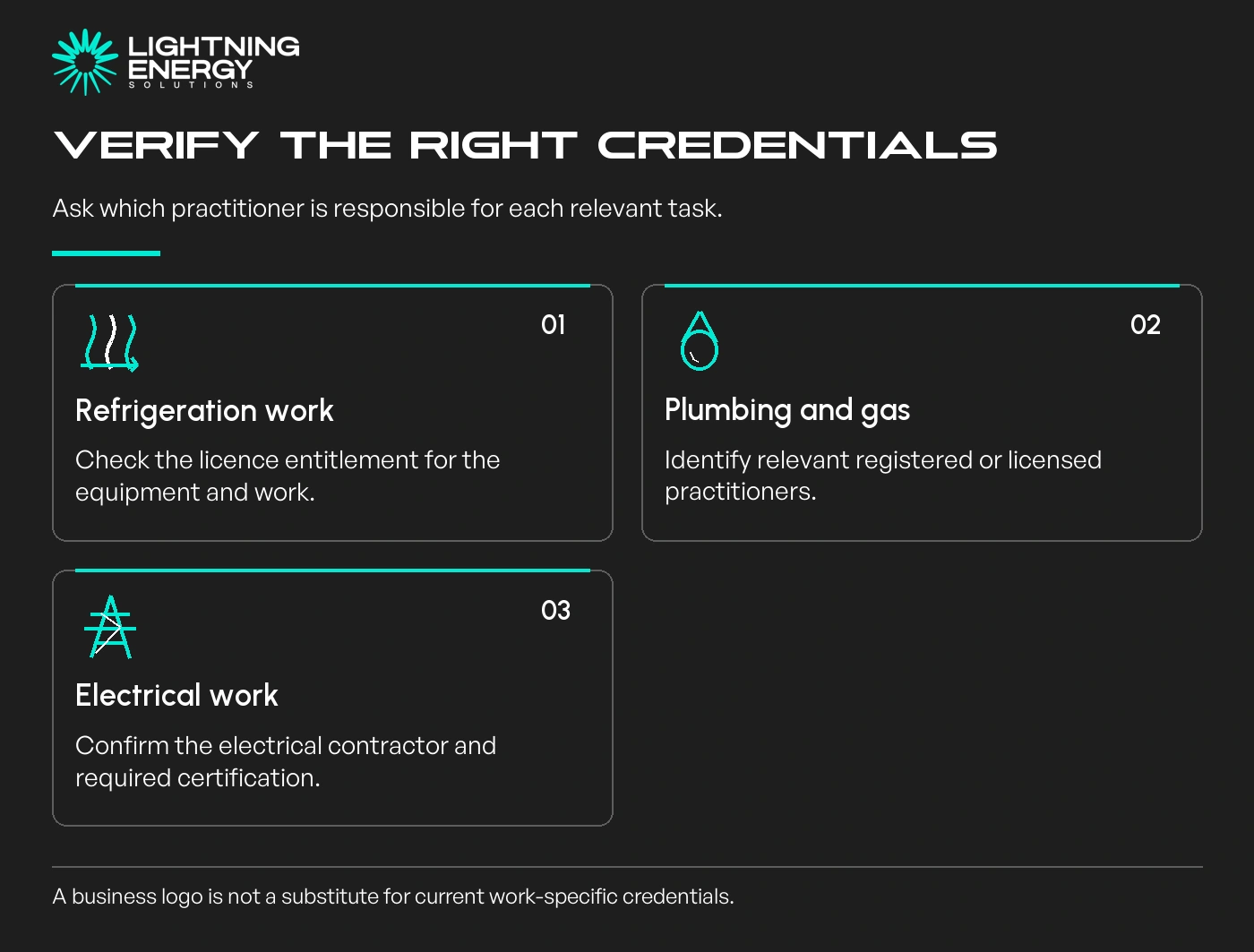
Request the business and practitioner details for refrigeration, relevant plumbing, electrical work and any gas decommissioning. Verify current credentials and the scope they cover through the appropriate regulator.
ARC refrigerant-handling licences have different entitlements. Its restricted split-system licence is not the same as an unrestricted refrigeration and air conditioning licence.
Victoria’s Building and Plumbing Commission describes refrigerated air conditioning work.
Ask which licensed practitioner is responsible for each relevant part of the job. A subcontracting arrangement is not automatically a problem, but unclear responsibility is a reason to seek clarification.
Electrical installation work also needs appropriate licensing and a Certificate of Electrical Safety.
Check exact equipment pairs, room coverage, controls, included sensors and duct specifications. Then compare electrical work, access equipment, removal, disposal and building repairs.
Use ducted packages as a starting point, then ask what the site inspection confirms or changes. Photograph difficult access areas from a safe position to help the discussion.
For an illustrative two-storey home, a downstairs route may need more explanation than a single-storey installation. Ask to see the proposed approach rather than accepting a generic whole-house promise.
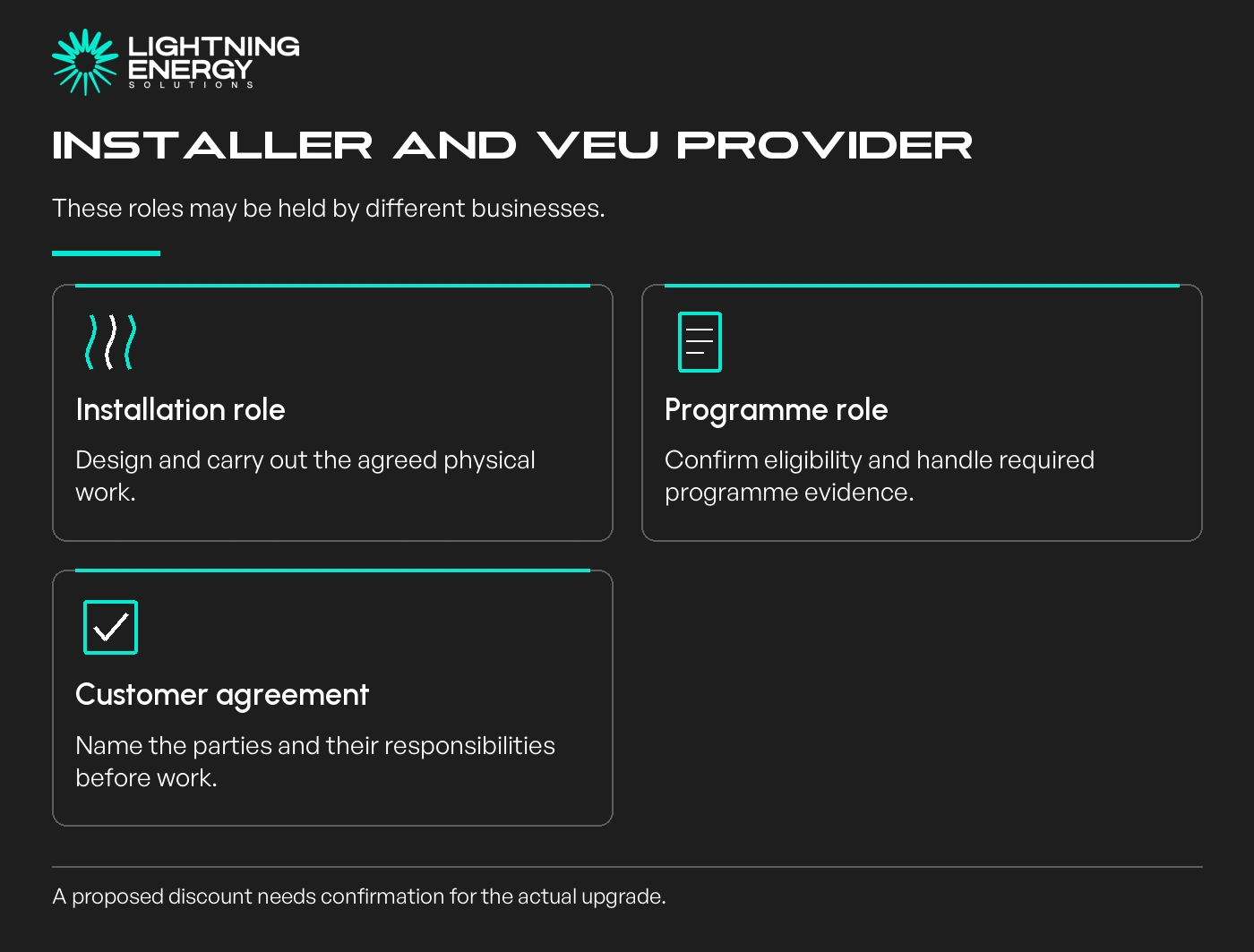
If the quote includes a VEU discount, identify the accredited provider and confirm eligibility before installation. The installer and provider may be different businesses.
Review the VEU quote checks without assuming every advertised discount applies to your upgrade.
Ask how airflow, zones and normal controls will be checked, and what records you will receive. Request a demonstration using the room combinations you actually plan to run.
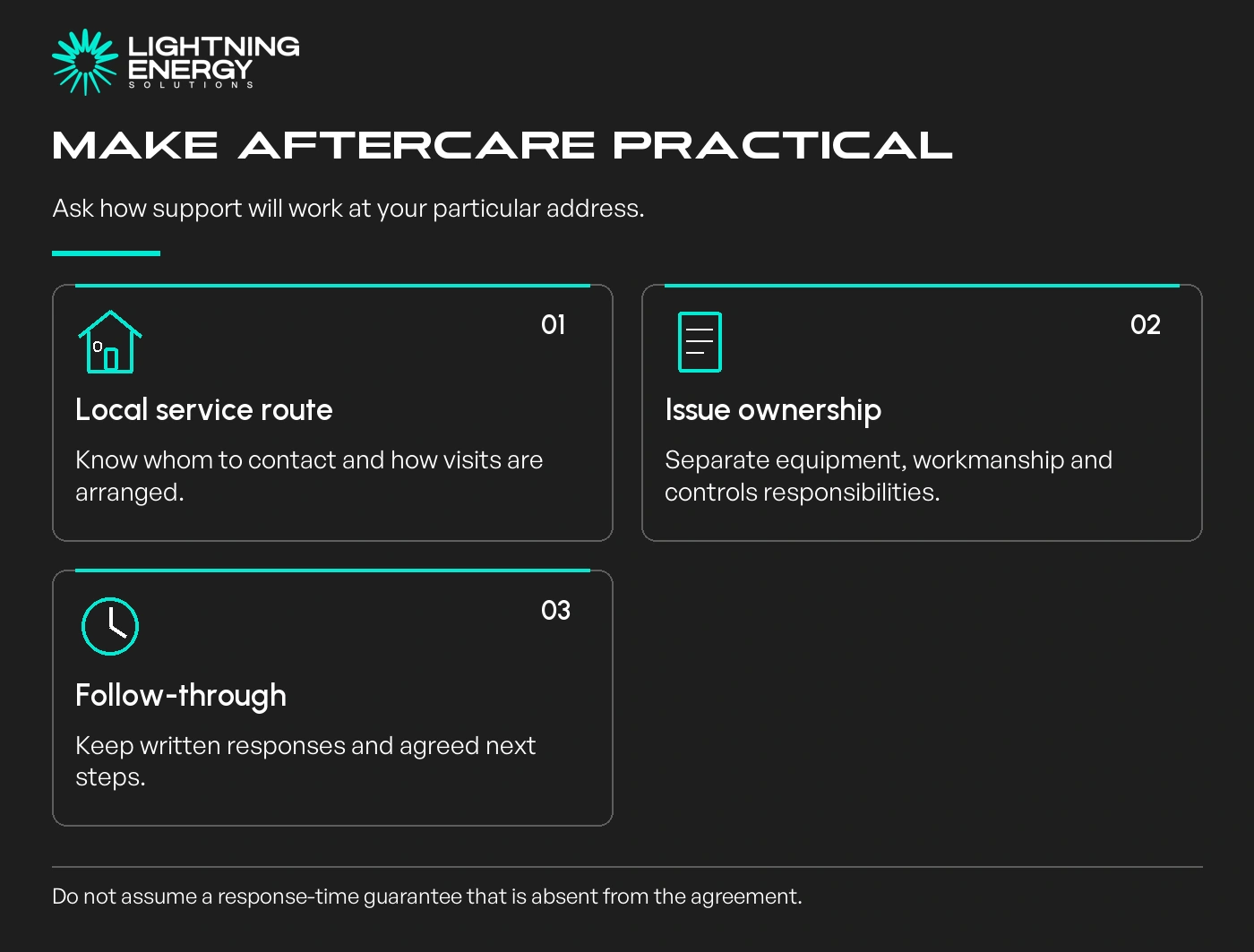
Before purchase, establish the first contact for a problem in your suburb. Ask how workmanship issues, equipment faults and controller concerns are assessed and coordinated.
A claim of local service is more useful when accompanied by a clear booking route and responsibilities. Do not infer a guaranteed response time unless it is part of the written agreement.
Ask for relevant references or examples of comparable completed work, while recognising that another house’s result cannot prove your design. Focus questions on communication, scope and follow-through.
Do not select an installer solely because the equipment brand or headline discount matches another offer. Equally, a higher price needs an identifiable explanation in design, work or support.
Send your floor plan and priorities when you request an assessment. You should finish the comparison knowing who is accountable for the design, installation and aftercare.
Available times
Book a consultation and we'll map solar, storage, hot water, and the rebates around your bills and your goals.
Question 1 of 6
