
Does your heat pump tank have an anode?
Find out whether your heat pump tank uses an anode, locate the right service interval and keep the records that make long-term ownership easier.
Find out whether your heat pump tank uses an anode, locate the right service interval and keep the records that make long-term ownership easier.

Some heat pump tanks have a sacrificial anode and some do not. The reliable way to find out is to match the exact tank model to its current manual, then have the installer explain the maintenance requirement.
The brand on the heat-pump casing is not always enough, especially with split systems using a separate cylinder. Photograph the accessible rating labels and keep the purchase paperwork together.
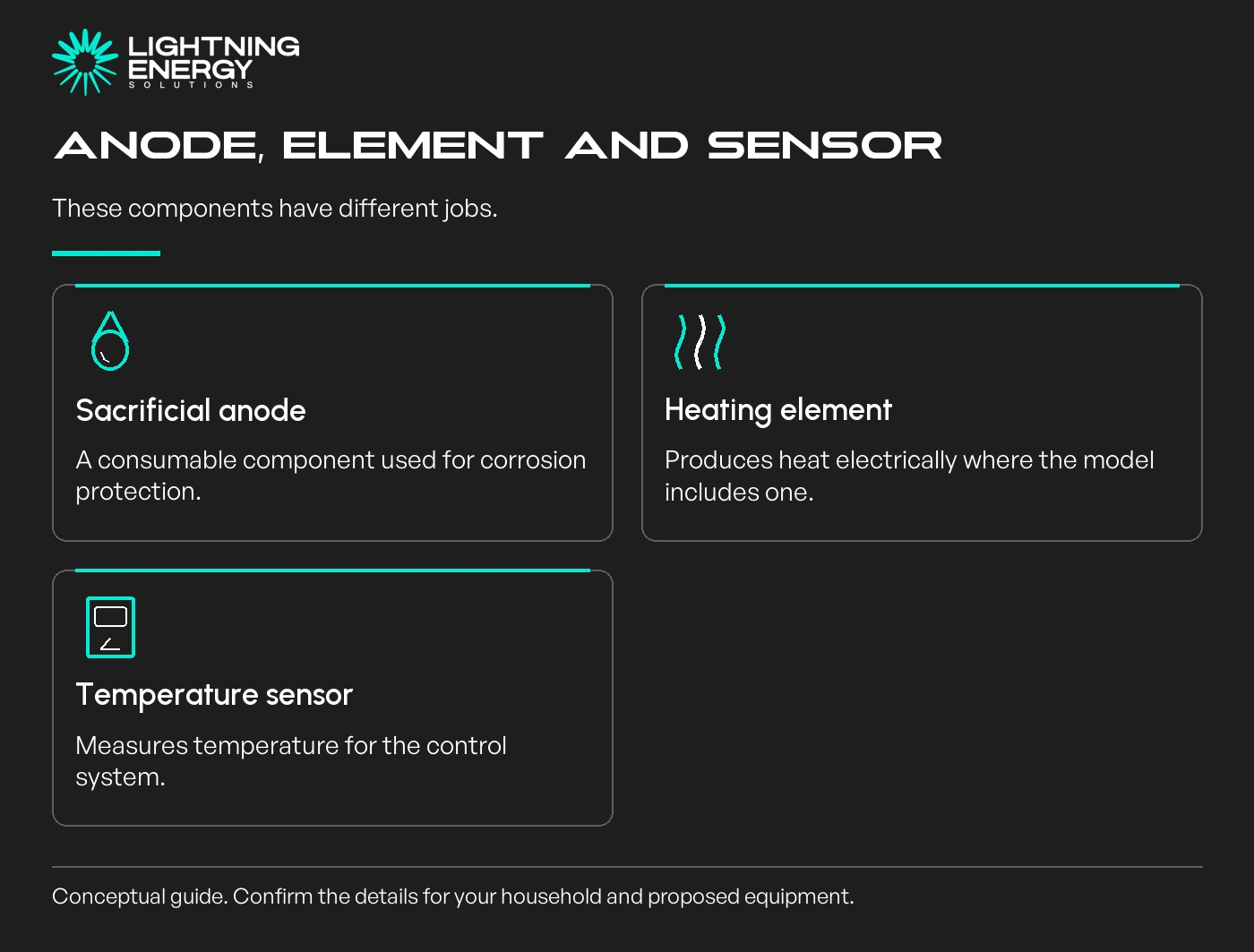
A sacrificial anode is a consumable corrosion-protection component. It gradually gives up material while helping protect the cylinder. That is why a service instruction can call for inspection or replacement before the tank leaks.
It is not the electric heating element, and it is not a sensor that measures how much hot water remains. Those different components can appear near each other in drawings without doing the same job.
The distinction between protected enamel-lined steel and stainless construction appears in Rheem's material explanation.
Search the owner's document for 'anode', 'maintenance' and 'service'. Check the model list at the front before treating a search result as the correct manual.
For example, Haier's Australian specifications identify a magnesium anode for the HP200M1U1P. That is a specific product fact, not proof that every Haier generation or every heat pump has the same arrangement.
Haier Australia 500 Series Monoblock.
Our heat pump selection discussion can include the tank's service requirements before purchase. Asking now is easier than discovering a neglected component several years later.
The December 2025 iStore 270L R290 owner manual specifies anode replacement within its two-yearly professional service, with a shorter schedule under stated water conditions.
iStore 270L R290 owner manual, December 2025.
Use that only as an example of why the actual manual matters. Another brand's five-year recommendation, or an older edition for a previous refrigerant model, does not overrule your unit's instructions.
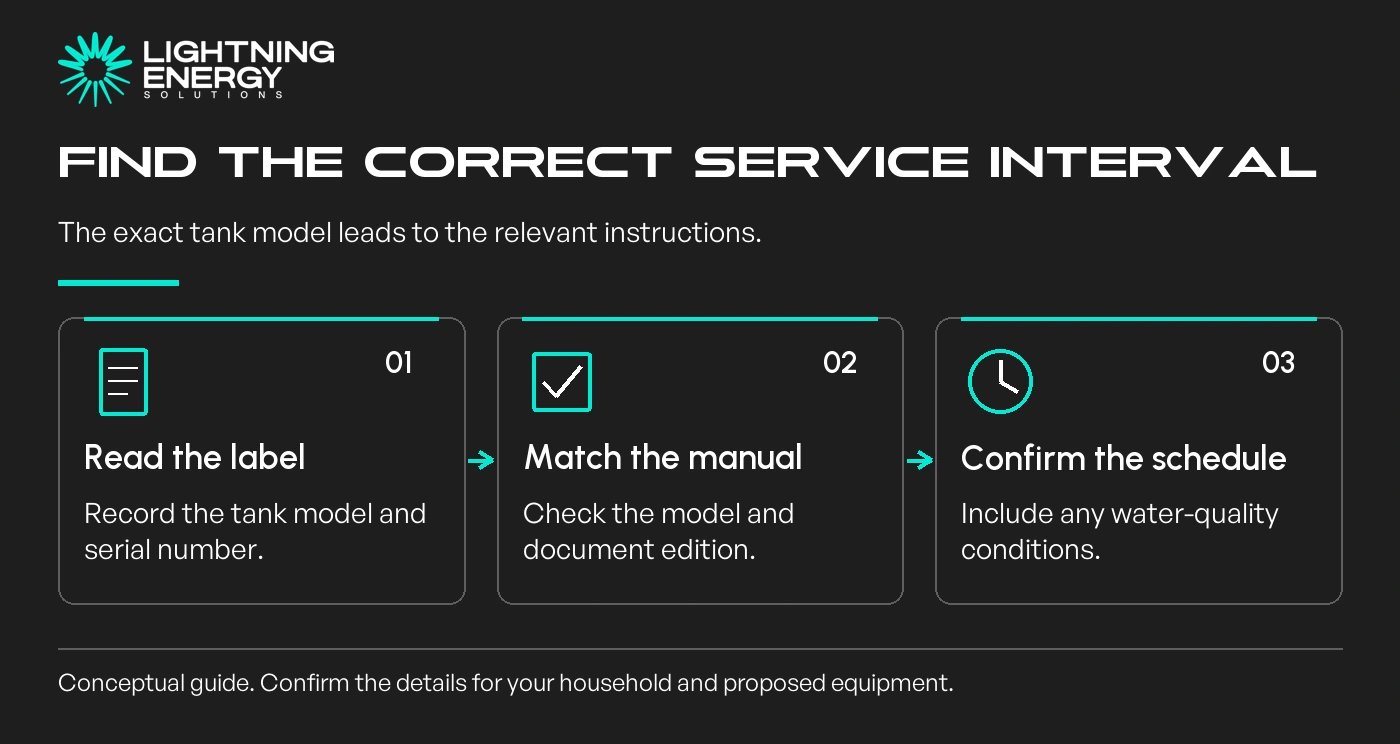
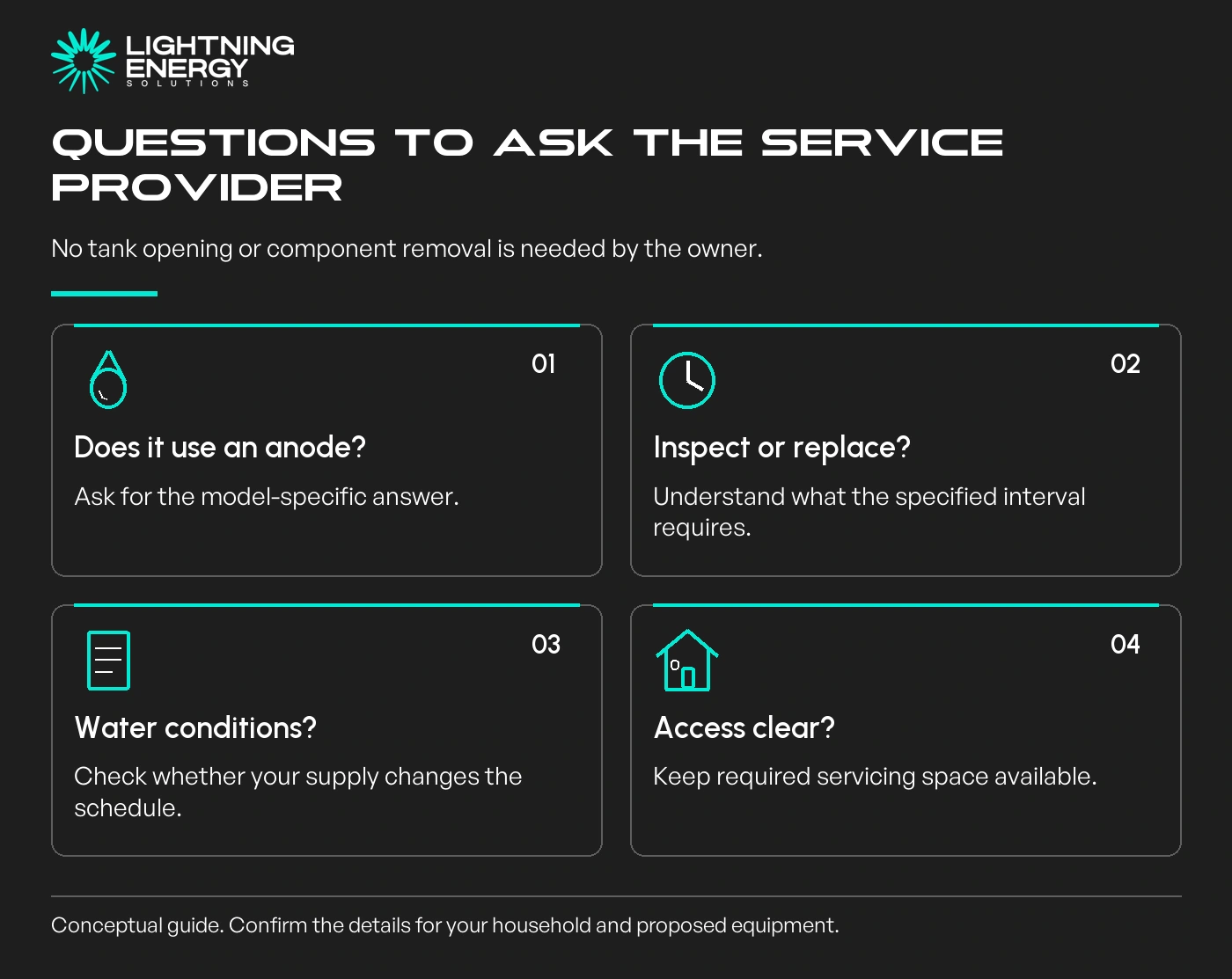
Ask whether the interval is for inspection or automatic replacement. Also ask whether your water supply changes it, who provides the service and what access must stay clear.
Never remove a cap or fitting to check the rod yourself. The cylinder contains hot, pressurised water, and component access is work for the appropriately qualified service person.
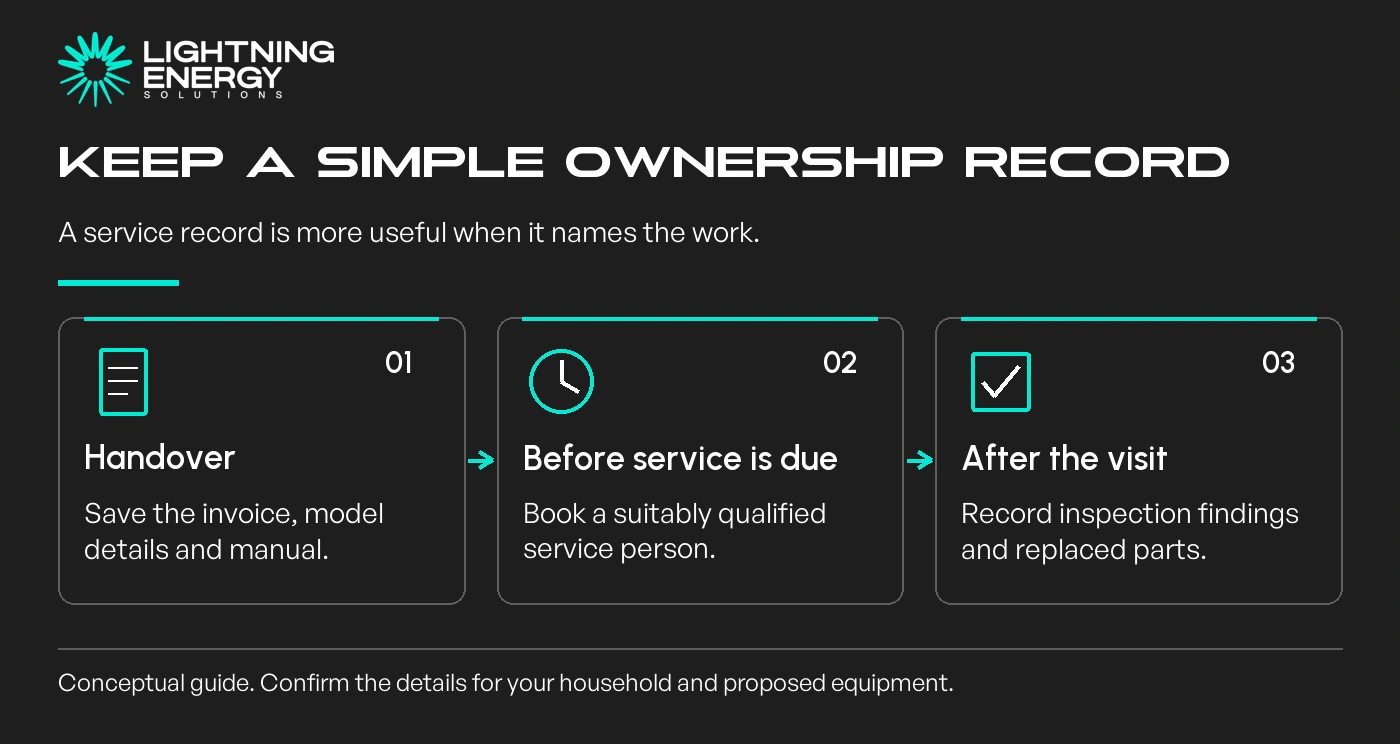
At handover, record the installation date, exact model, manual version and next required service. Set a calendar reminder before the due date, allowing time to arrange a visit.
Keep the service invoice with the model and serial details. Ask the technician to record what was checked or replaced, rather than filing a receipt that says only 'hot water service'.
Imagine buying a house with an existing heat pump and no records. The useful next step is to identify it and arrange a condition and service-history assessment, rather than assuming the previous owner maintained the anode.
If the broader system still meets the household's needs, missing paperwork alone is not a reason to buy a replacement.
Establish its condition first, then review whole-home upgrade priorities.
Changing a timer does not service an anode. Similarly, an anode appointment is not a reason to experiment with storage temperatures or safety controls.
Once maintenance is organised, use the approved controls to review solar heating times. These are separate jobs: one protects the equipment; the other coordinates when it heats.
Plan your hot water upgradeSend us the tank model and any available service records. We can help identify the documentation and the right questions for a qualified service provider.Available times
Book a consultation and we'll map solar, storage, hot water, and the rebates around your bills and your goals.
Question 1 of 6
