
Ducted Air Conditioning Quotes: Installation Extras, Removal and Making Good
Turn a ducted package into a complete quote covering electrical work, access, removal, disposal and repairs, with clear exclusions and variation rules.
Turn a ducted package into a complete quote covering electrical work, access, removal, disposal and repairs, with clear exclusions and variation rules.

A ducted package price is useful only when you know what the final site-specific quote includes. Equipment, removal, electrical work and repairs to the building should each have a clear place in the scope.
Before accepting, ask who finishes the job after the old equipment is gone. A decommissioned heater, a removed heater and a patched ceiling are different outcomes.
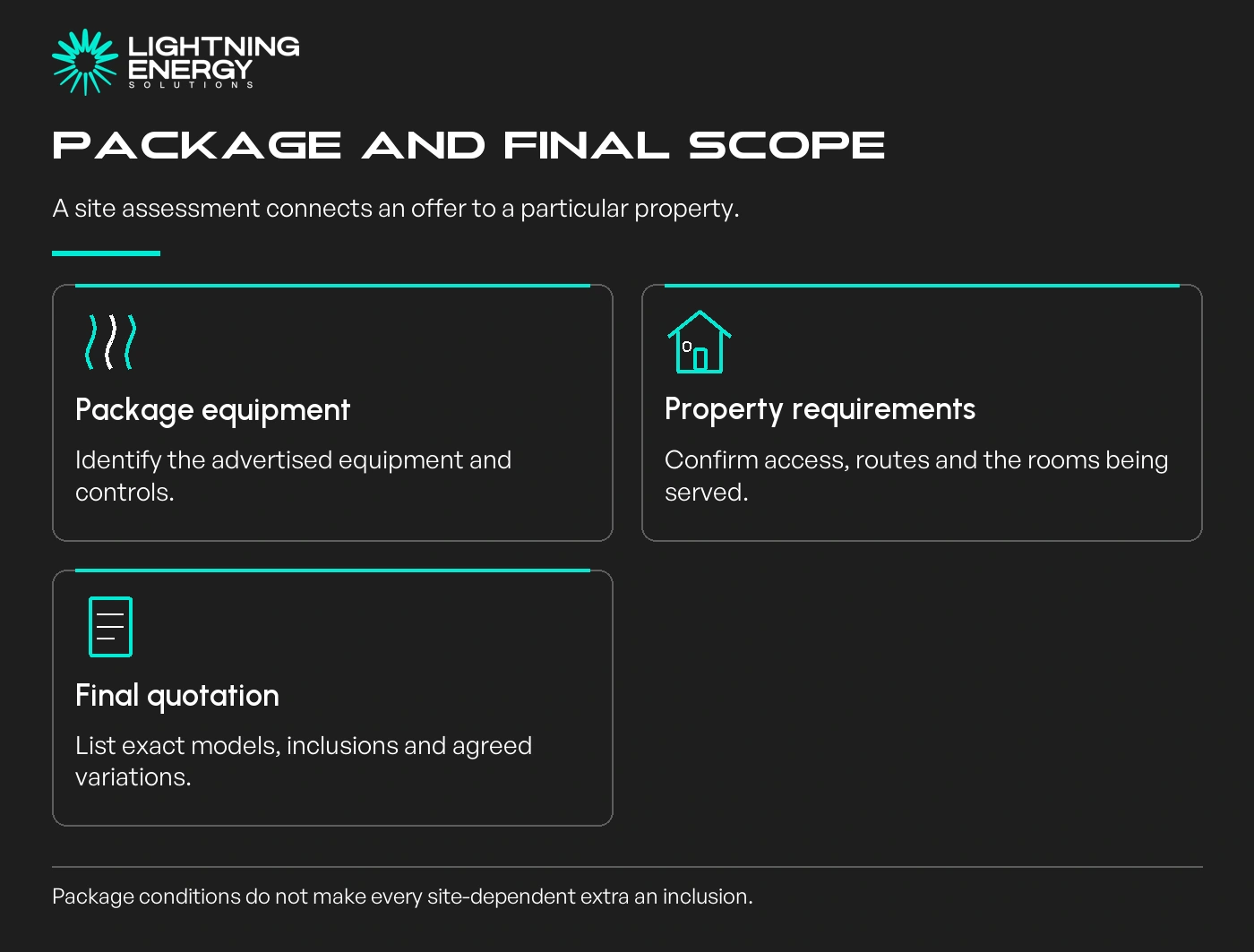
Lightning Energy’s ducted packages describe equipment and controls, with exact models and installation scope confirmed by assessment. Their stated price condition includes GST and an eligible VEU discount.
That does not make every extra on every property an inclusion. Ask the final quote to identify the selected model pair, rooms served, ducting, return air, controls and any required variations.
The air conditioning survey should establish practical access and routes before an advertised package becomes a final scope.
For an illustrative comparison, one property may have straightforward roof access while another needs building alterations to reach downstairs rooms. The package label alone does not price those differences.
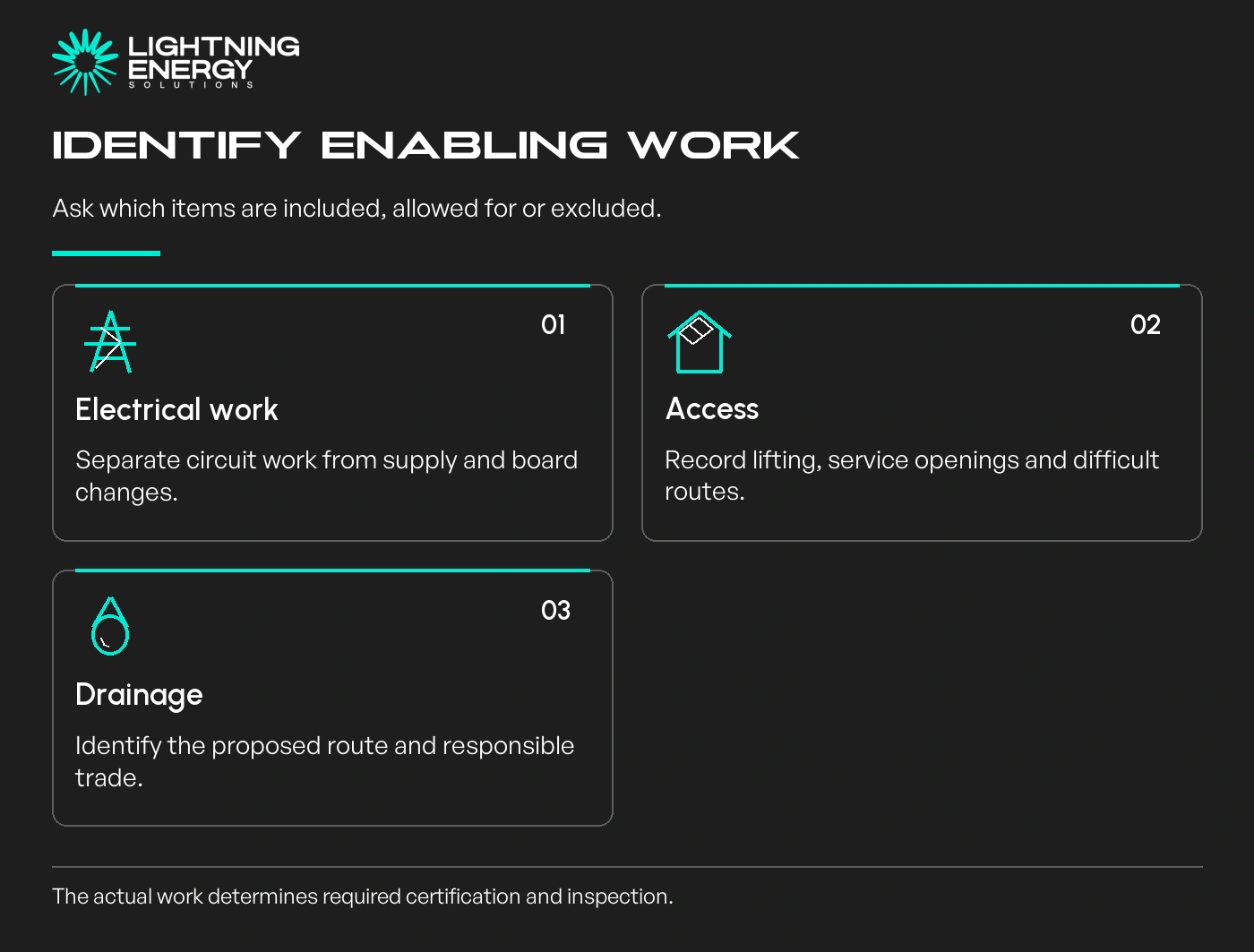
Ask whether the electrical allowance covers the actual selected unit and the home’s existing supply. A new circuit is not the same scope as switchboard, mains or network work.
Keep those items linked to a licensed assessment. Our electrical capacity guide explains why the appliance and combined household demand need separate checks.
Record access equipment, difficult lifting, condensate drainage and any proposed bulkheads or service openings. Ask whether these are fixed inclusions, allowances or exclusions awaiting inspection.
Energy Safe Victoria requires a Certificate of Electrical Safety for electrical installation work. The precise certification and inspection process depends on the work undertaken.
Energy Safe’s certificate guidance.
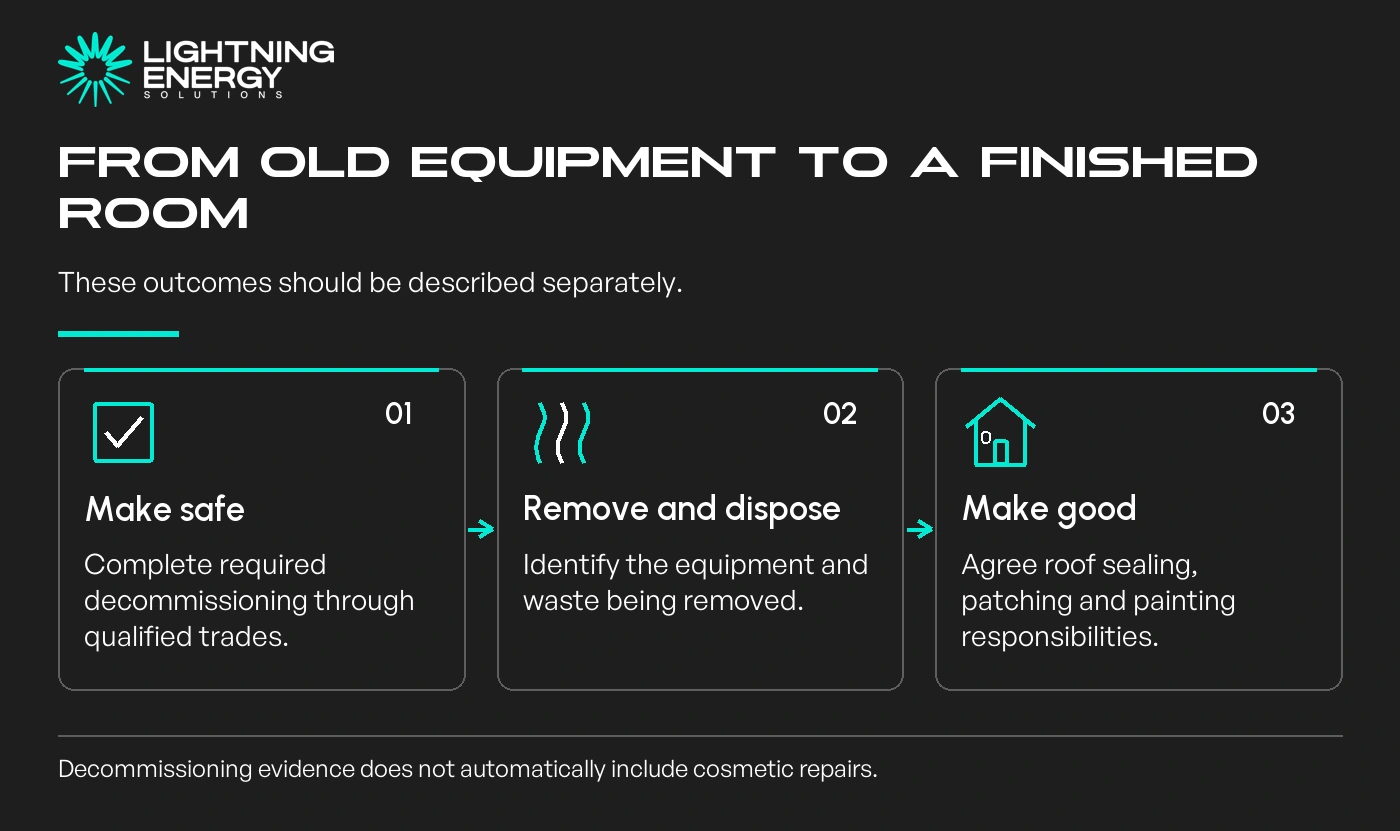
List the old gas heater, evaporative cooler, ducts, outlets, controls and associated services separately. Mark whether each is retained, made safe, removed or replaced.
Ask who removes waste, who seals any roof opening and who patches and paints affected ceilings or walls. A phrase such as “old system removal” may not answer all of those questions.
If an incentive requires decommissioning, confirm that the provider’s process is included. Programme evidence and cosmetic repairs are different responsibilities.
Victorian heating and cooling discount guidance.
Unknown materials or concealed site conditions should have an agreed assessment and variation process. Do not accept a promise that an older property contains no hazardous material without an appropriate basis.
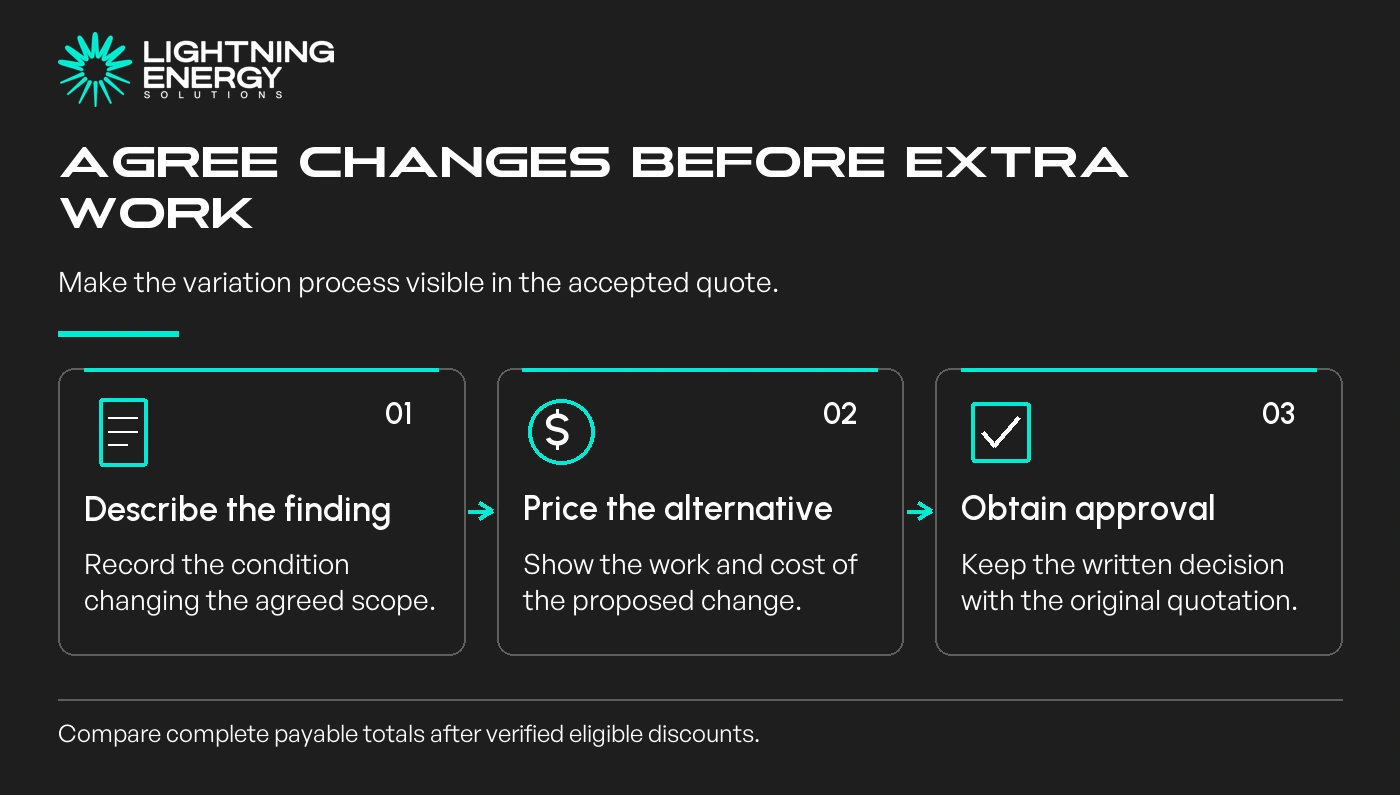
Request the final payable total, GST treatment, confirmed discount and all allowances. Ask what evidence could change the price and how approval will be obtained before additional work proceeds.
An illustrative variation might arise when an inspected route proves inaccessible behind a finished surface. The useful response is a described alternative and its cost, not an unexplained extra on the final invoice.
Ask whether a changed model affects the controls, electrical work or quoted performance. A substitution should be checked as a complete combination, not approved solely because the nominal capacity looks similar.
Keep copies of the accepted scope and later changes. At handover, use them to check installed models, completed removal, repairs, training and unresolved items.
Do not select a cheaper quote until necessary exclusions have been costed. Equally, avoid paying for work already included under another line or another trade’s scope.
Send your floor plan and the complete quotations when you ask us to review the scope. The aim is a finished installation with clear responsibilities, not a package price surrounded by unresolved assumptions.
Available times
Book a consultation and we'll map solar, storage, hot water, and the rebates around your bills and your goals.
Question 1 of 6