
Fox ESS Power Cube vs Tesla Powerwall 3: Two Ways to Size Home Storage
Compare the Australian Fox ESS PQ1 with EQ5500-S and Tesla Powerwall 3: usable energy, expansion, power, backup and the details a fair quote must include.
Compare the Australian Fox ESS PQ1 with EQ5500-S and Tesla Powerwall 3: usable energy, expansion, power, backup and the details a fair quote must include.

Fox ESS Power Cube and Tesla Powerwall 3 offer different ways to package home storage.
The useful comparison is between a specified Fox inverter and module stack and a specified Tesla system, not between two brand logos or the biggest number on a brochure.
This is a document-based comparison checked on 16 October 2026, not a hands-on performance test.
We use Fox’s Australian PQ1 single-phase system with EQ5500-S batteries and the Australian Powerwall 3.
It does not cover the separate Fox PQ3, Tesla Powerwall 3AC or overseas three-phase products.
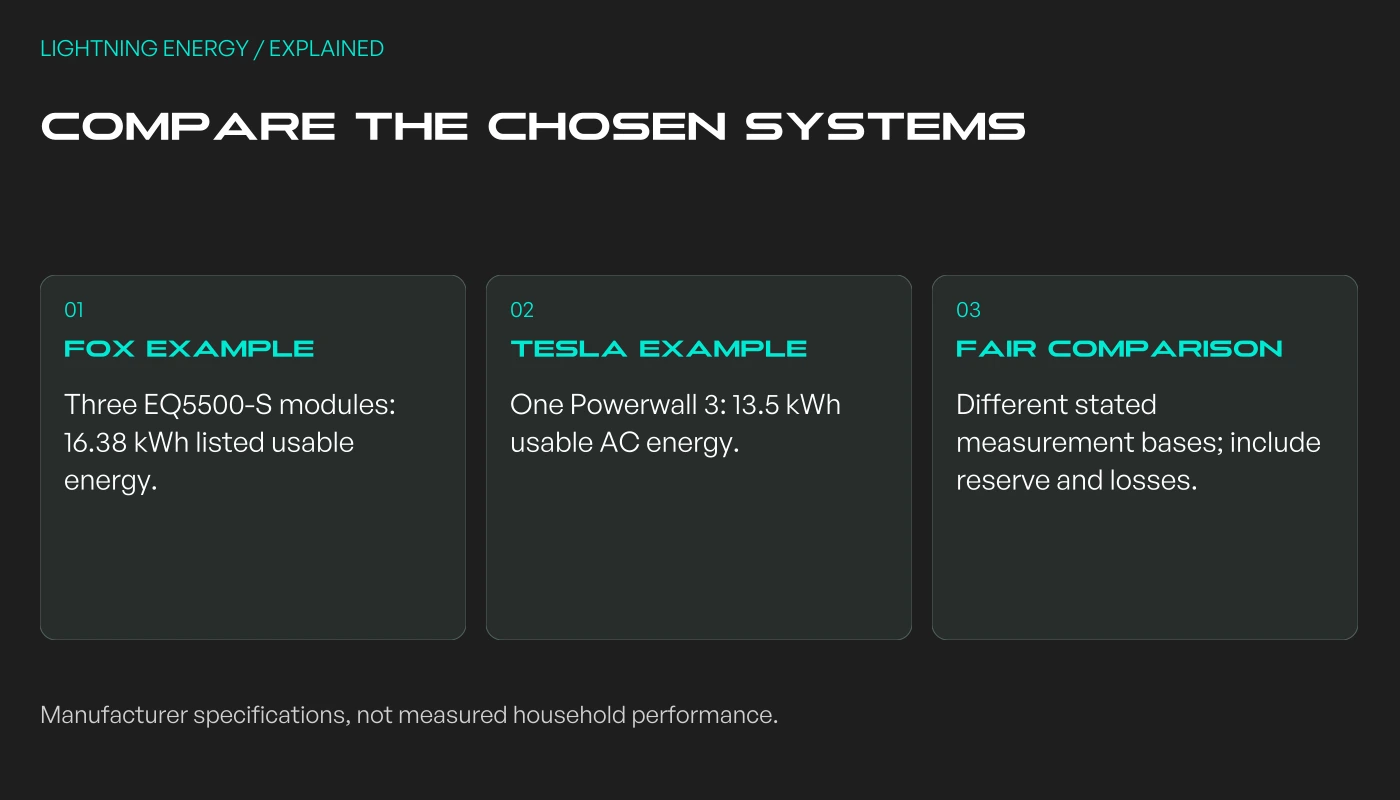
Fox’s current Australian PQ1/EQ5500-S datasheet lists two to nine battery modules, with usable system energy from 10.92 to 49.14 kWh.
A three-module configuration is listed at 16.38 kWh.
The quote should identify both the PQ1 inverter variant and the module count.
Tesla’s Australian datasheet specifies 13.5 kWh of usable AC energy for one Powerwall 3.
Expansion units can add storage, so describing it as a permanently fixed-capacity system would be misleading.
The comparison is between different expansion steps and system designs.
Those headline energy figures are not a controlled efficiency test on the same measurement basis.
Nor is usable capacity a promise that all that energy remains available for routine bill savings: a backup reserve, operating conditions and losses affect the practical result.
Sources: Fox PQ1/EQ5500-S Australian datasheet.
Tesla Powerwall 3 Australian datasheet.
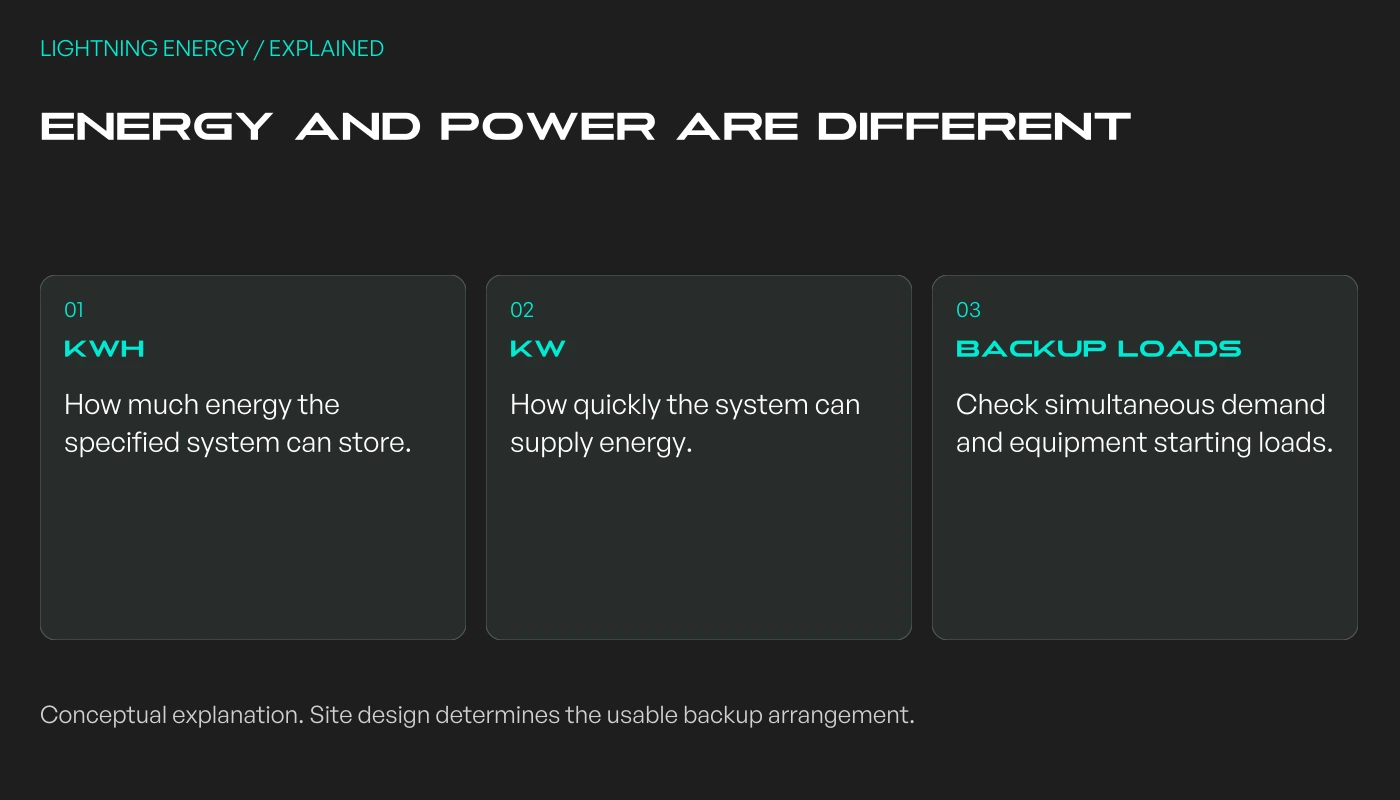
A battery’s kWh figure describes stored energy.
Its kW capability helps determine what it can supply at one time.
Adding capacity should not be treated as an automatic increase in inverter output.
The Fox PQ1 family has several inverter ratings.
Its Australian 10 kW variant includes a 9,999 VA maximum-apparent-power qualification.
Tesla lists configurable nominal output options up to 11.04 kW for Powerwall 3.
Your connection approval and commissioned setting may be lower than a family’s headline maximum.
Ask the designer to explain sustained battery-only output for the actual configuration, starting loads and the proposed backup circuits.
A bypass-current rating is not a promise of the same battery-generated output during an outage.
Avoid comparing a current rating in amps with a power rating in kW as though they are interchangeable.
Fox’s modular stack allows a choice of storage size within its documented combinations.
Tesla also supports system expansion.
For either option, get the permitted future configuration in writing rather than assuming any battery module can be added at any age.
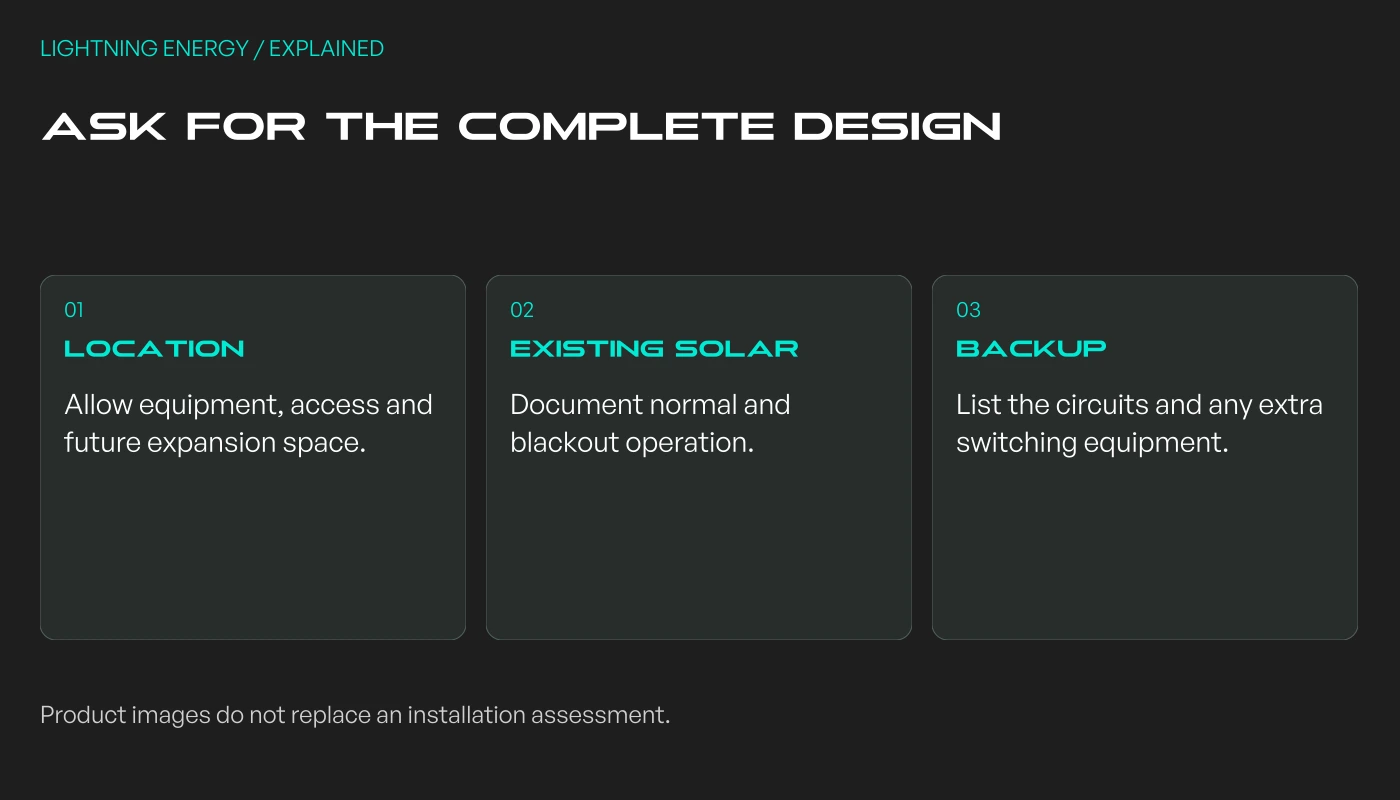
Ask for a dimensioned installation layout showing access, service clearances, protection and the intended expansion space.
A tidy product photograph cannot establish whether a particular garage wall, passage or outdoor location is suitable.
The same applies to the load-bearing surface and any required electrical work.
If an existing solar system will remain, have the quote describe how it interacts with the new equipment in normal operation and during outages.
Do not assume an existing solar inverter keeps generating when the grid is down simply because a battery has been installed.
Use our battery quote guide to keep the proposed scope comparable, and review the Tesla battery page alongside the exact manufacturer documents.
Both systems involve software as well as hardware.
Ask to see the settings that matter to you: reserve management, time-based operation, monitoring and the proposed VPP integration.
Confirm compatibility for the exact model and provider; a generic VPP-ready description is not proof that every service supports it.
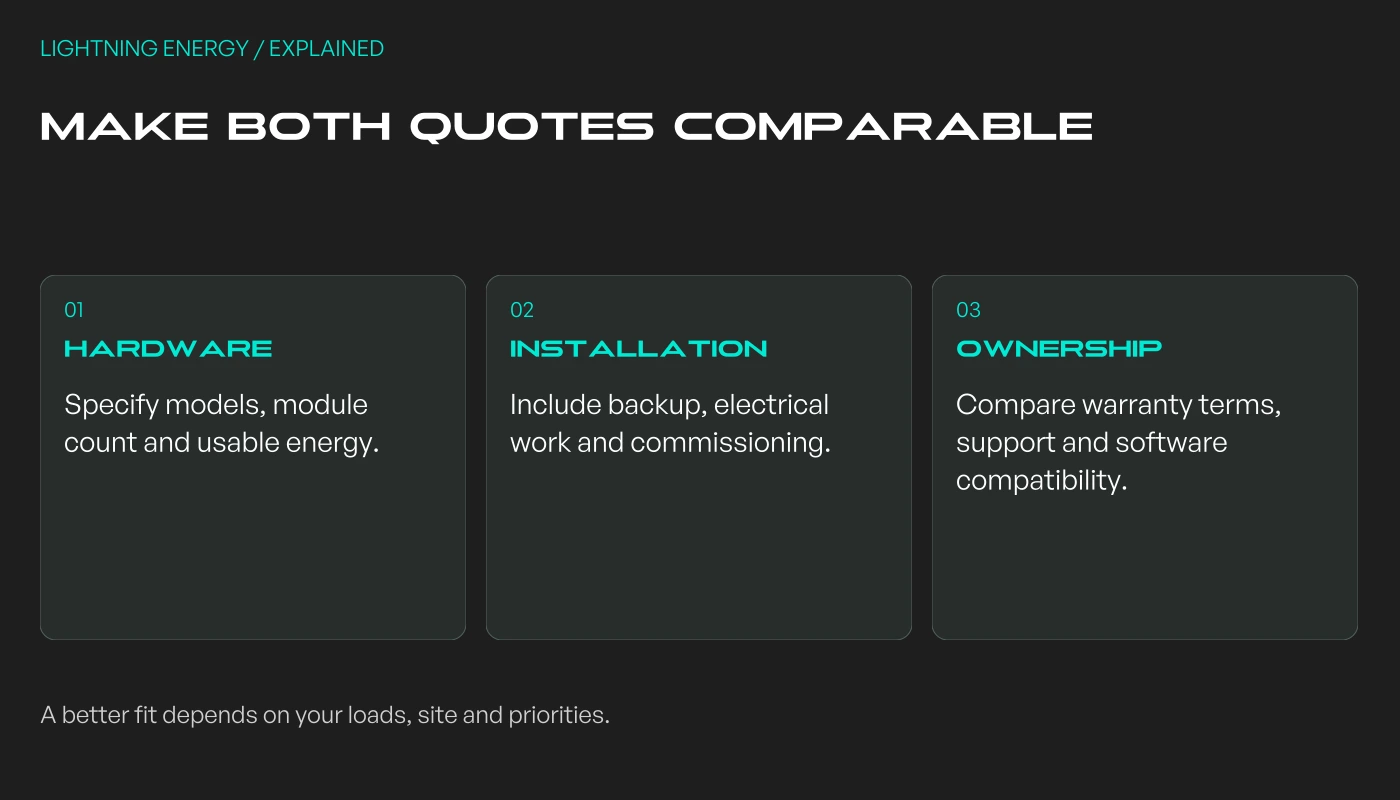
Request the current Australian warranty documents and identify who handles diagnosis, labour, transport and replacement.
A shared headline warranty length does not establish identical conditions.
Keep consumer guarantees separate from voluntary warranty promises.
A fair solar and battery quote should include equipment models, usable capacity, approved output, backup scope, installation work, commissioning and exclusions.
Compare the final payable amount after any eligible discount using the same assumptions.
We have not invented installed prices or assigned a winner from brochure figures.
For a household with modest overnight demand, a larger stack is not automatically better value.
For a high-demand home, extra storage without sufficient power may leave the main problem unresolved.
Start with interval consumption, desired backup loads and a realistic future-use plan.
Explore home battery options or ask us to compare a proposed design.
The strongest choice is the configuration that meets your measured needs, fits the property and comes with clear support responsibilities.
Available times
Book a consultation and we'll map solar, storage, hot water, and the rebates around your bills and your goals.
Question 1 of 6
