
From Solar Quote to Switch-On: The Victorian Installation Timeline
Follow a Victorian solar project from site assessment and approvals through installation, inspection, metering and handover, with realistic timing checks.
Follow a Victorian solar project from site assessment and approvals through installation, inspection, metering and handover, with realistic timing checks.

A solar installation is not complete merely because the panels are on the roof. Design, approvals, electrical inspection, network records, metering and handover all affect when the system can operate as intended.
Ask for a sequence with named responsibilities, rather than a single promised switch-on date. Some steps depend on third parties, and an unresolved issue early in the process can delay everything after it.
Our solar service begins with the property and household requirements so the quotation reflects a buildable design.
The assessment should identify roof condition, shade, access, switchboard requirements, equipment locations and expected electricity use. The proposed equipment and layout need to match the actual property.
Obtain the distributor's required pre-approval and understand its export conditions before committing to a design dependent on a particular export allowance.
If applying for a Solar Victoria rebate, follow its approval sequence. The programme says systems installed before eligibility approval do not receive the rebate.
Check Solar Victoria's current application steps before making timing assumptions based on an advertised incentive.
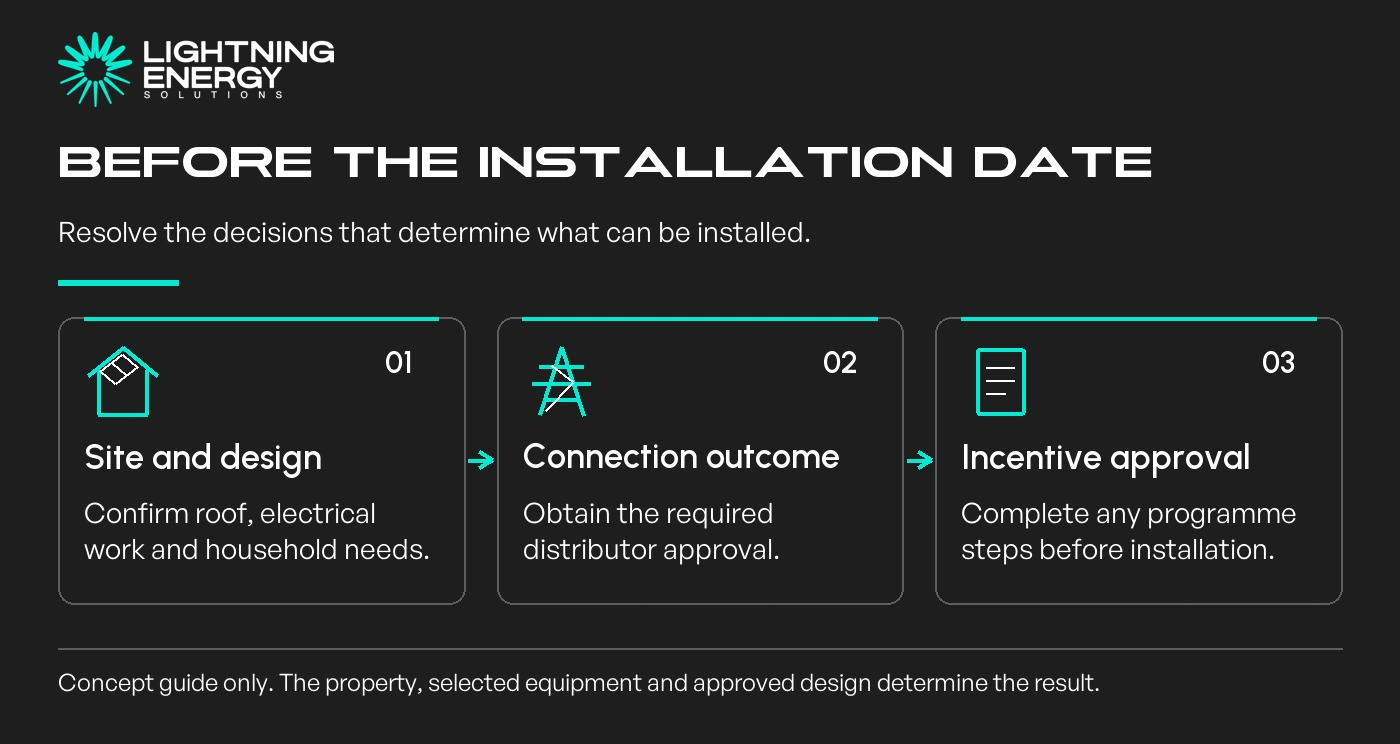
Do not assume a quick installation slot overrides an approval requirement. Clarify what happens to the price, deposit and schedule if eligibility or the connection outcome differs from the initial estimate.
Our rebate guide provides context, while the programme's current rules govern the actual application.
The contract should identify the equipment, installation scope and completion arrangements. Ask how weather, access restrictions, required roof repairs or unavailable equipment would affect the plan.
Make any substitution process explicit. A different inverter or panel model can affect the layout, documentation and approval; it should not be treated as an invisible administrative change.
Consider a hypothetical home needing roof repairs before solar. Booking the panels first may appear faster, but coordinating the roof work can avoid later removal and reinstallation.
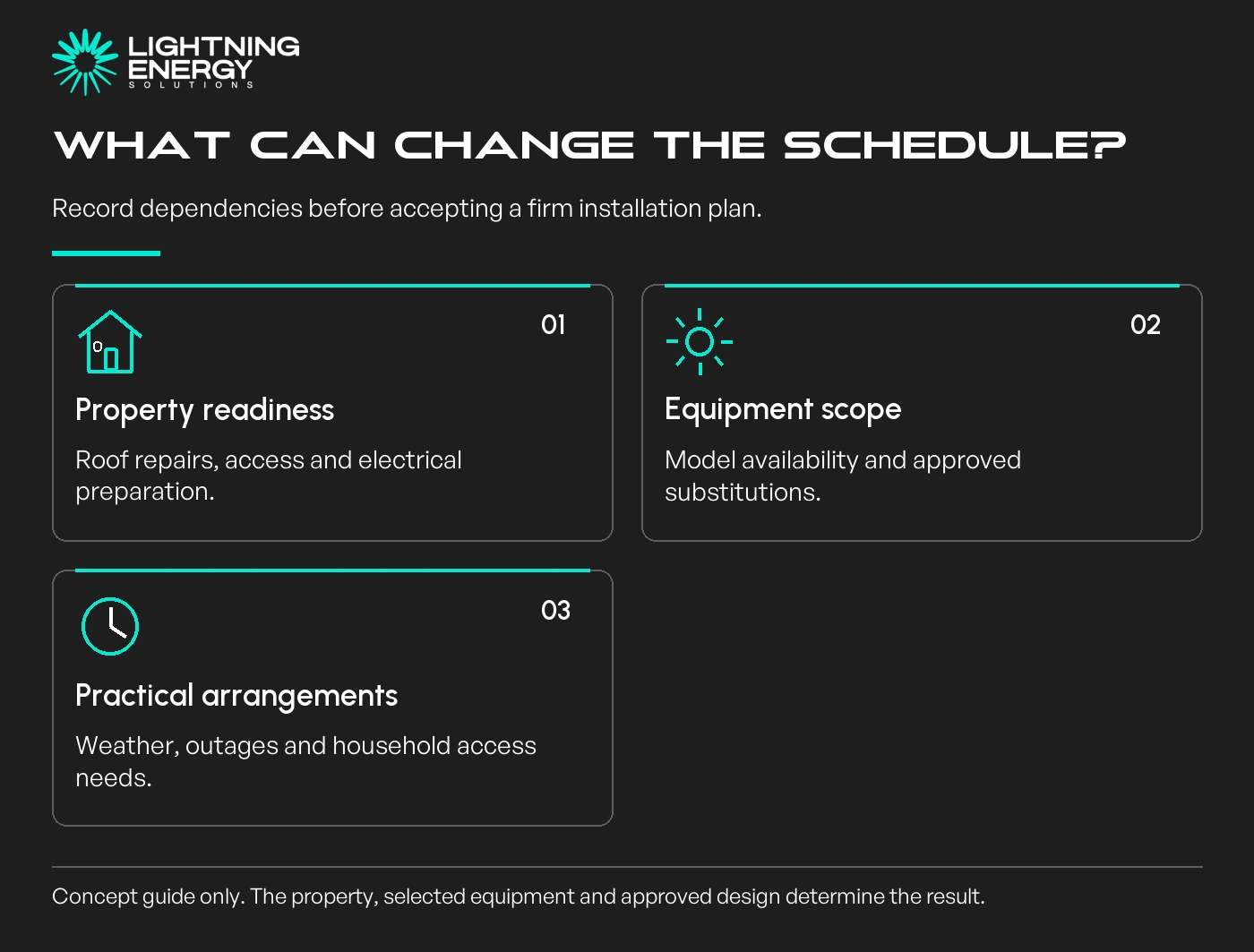
An installer should also explain when electricity will be interrupted and what access is needed. Tell them about relevant household constraints early rather than discovering a conflict on installation day.
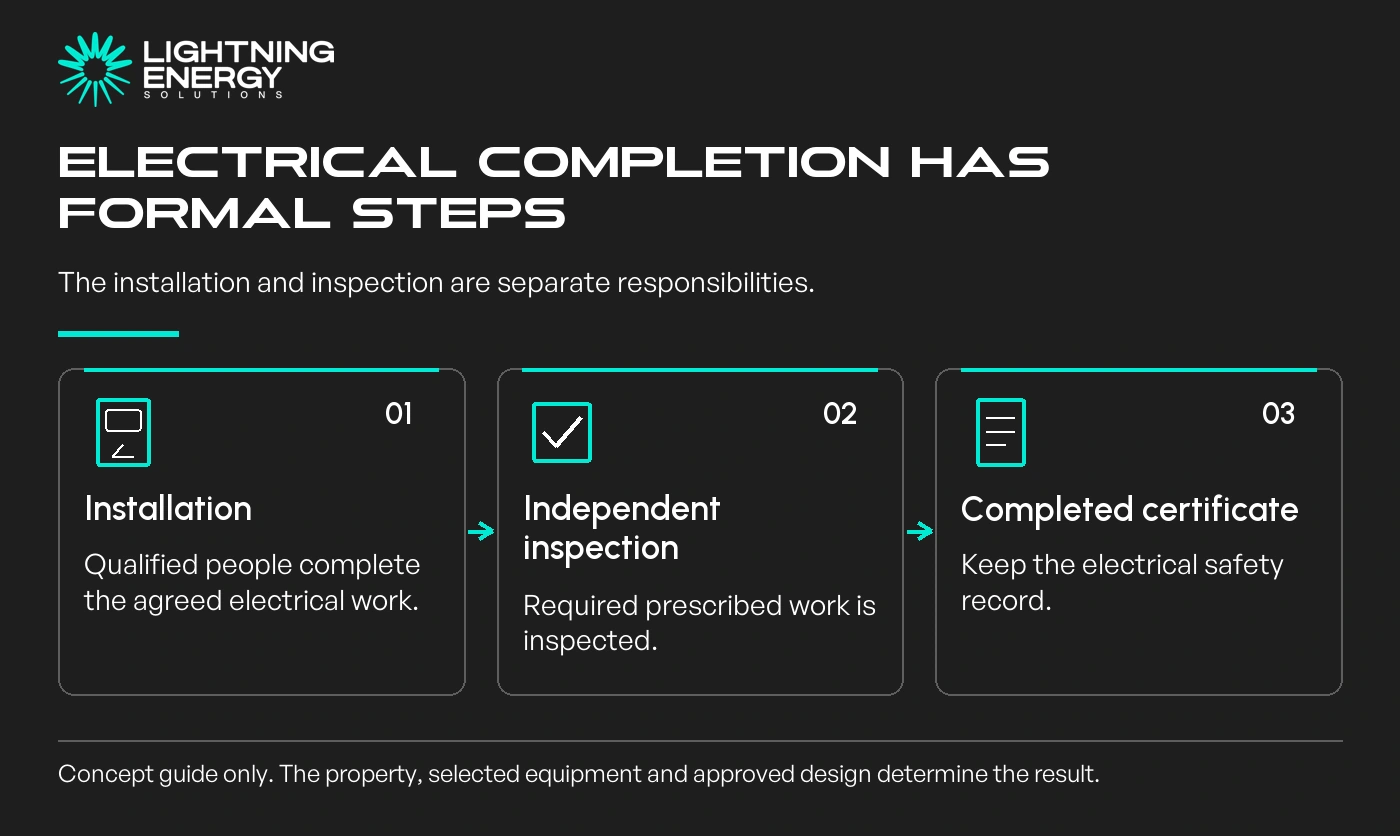
In Victoria, prescribed electrical work includes solar systems. The licensed electrical worker must arrange the required independent electrical inspection before the prescribed certificate can be finalised.
Energy Safe Victoria explains the certificate process. Keep the completed Certificate of Electrical Safety with the system documents.
Installation, inspection and permission to operate are distinct milestones. Follow the installer's documented directions about when the system may be used; do not switch it on simply because the roof work looks finished.
Our installer-selection guide explains why clear responsibility and paperwork are part of the purchase, not optional extras.
The distributor and retailer need the relevant records and service requests to complete the connection and meter configuration. An existing smart meter does not mean that every solar export step is already finished.
United Energy's connection guide covers inspection, the alteration request, document checks and retailer coordination for meter reprogramming.
Other distributors have their own processes. Ask who submits each request, how you receive its reference and who follows up if it remains outstanding. Do not assume the household must guess where the application stopped.
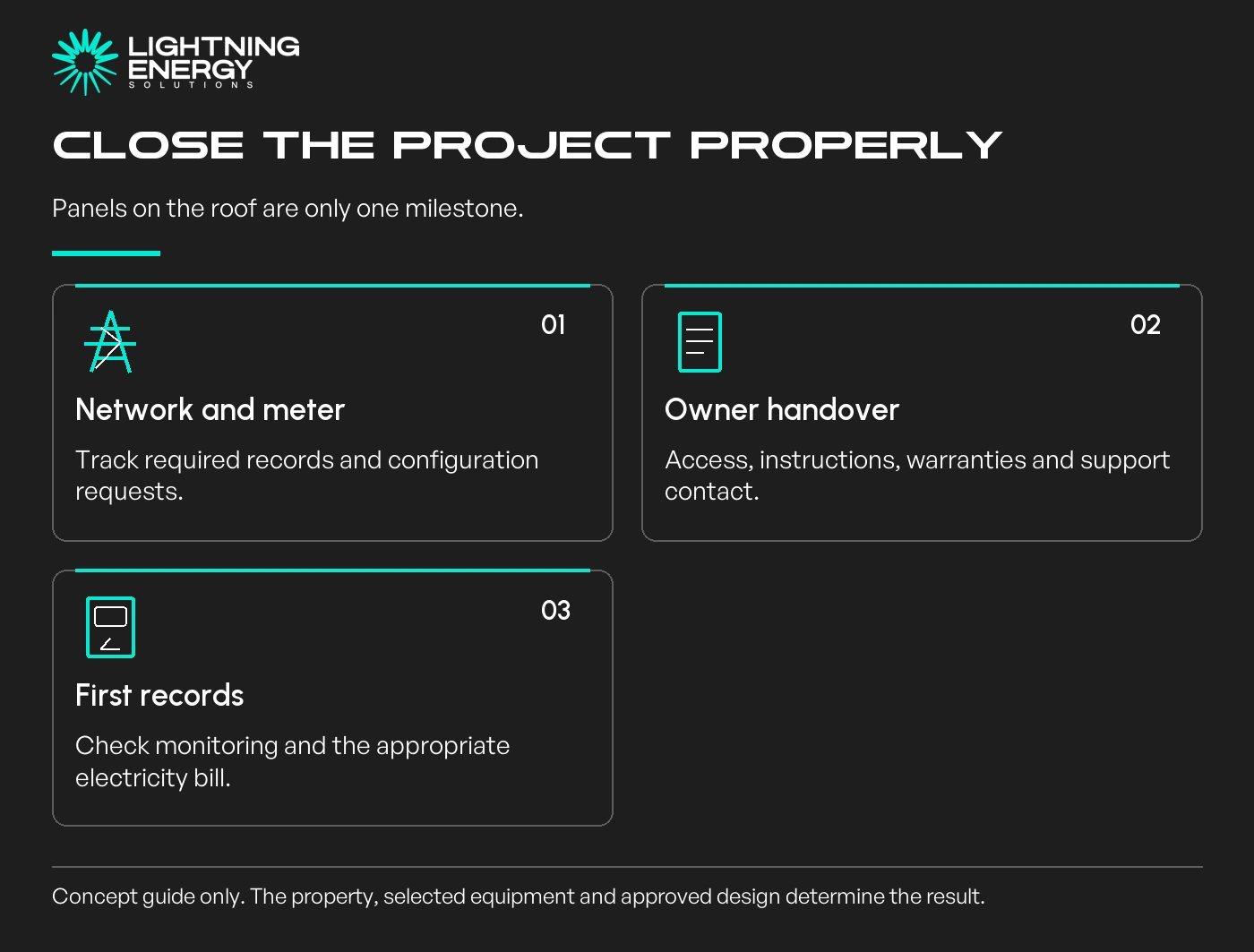
At handover, confirm monitoring access, operating instructions, warranties, the approved export arrangement and the support contact. Check the first appropriate bill and meter records for the expected solar account setup.
If commissioning is complete but billing looks wrong, distinguish a retailer or metering issue from an electrical fault. Those problems can need different evidence and different support teams.
Request a written project sequence with dependencies and responsibilities. That is more useful than a universal installation-duration promise that ignores the property and connection process.
Available times
Book a consultation and we'll map solar, storage, hot water, and the rebates around your bills and your goals.
Question 1 of 6
