
GoodWe Meets Amber: A New Chapter for Home Batteries and BYD V2G
GoodWe ESA joins Amber SmartShift as BYD Sealion 7 enters its V2G program. What Australian households should check about compatibility, costs and control.
GoodWe ESA joins Amber SmartShift as BYD Sealion 7 enters its V2G program. What Australian households should check about compatibility, costs and control.

GoodWe battery owners have a new option for managing electricity costs. Eligible ESA systems can now connect to Amber’s SmartShift automation, which plans battery operation around changing wholesale prices.
Separately, BYD’s Sealion 7 has joined Amber’s vehicle-to-grid program. Together, the announcements show how electricity plans are becoming part of the equipment decision, not just a bill you choose after installation.
There is an important distinction: the GoodWe announcement concerns a home battery integration.
The BYD development concerns eligible cars, bidirectional chargers and a particular program. One does not automatically qualify you for the other.
GoodWe announced public availability on 10 October, followed by Amber’s update on 12 October. The companies say compatible existing ESA systems can enrol without replacing the battery hardware.
The manufacturer lists ACT, NSW, South Australia, South East Queensland and Victoria. Access still depends on the individual system and enrolment requirements; it is not a promise that every GoodWe installation qualifies.
Source: GoodWe’s integration announcement.
Amber’s newer announcement includes compatible single-phase and three-phase ESA models. Other GoodWe series remain under testing. Check the exact inverter and configuration rather than relying on the brand name alone.
An online inverter, current firmware and an Amber account are part of the requirements. Amber describes app controls that let customers override the automated plan, including preserving stored energy.
Source: Amber’s ESA update.
Our GoodWe ESA guide covers the separate questions about configuration and installation. An electricity-service integration does not increase a battery’s physical storage capacity or inverter output.
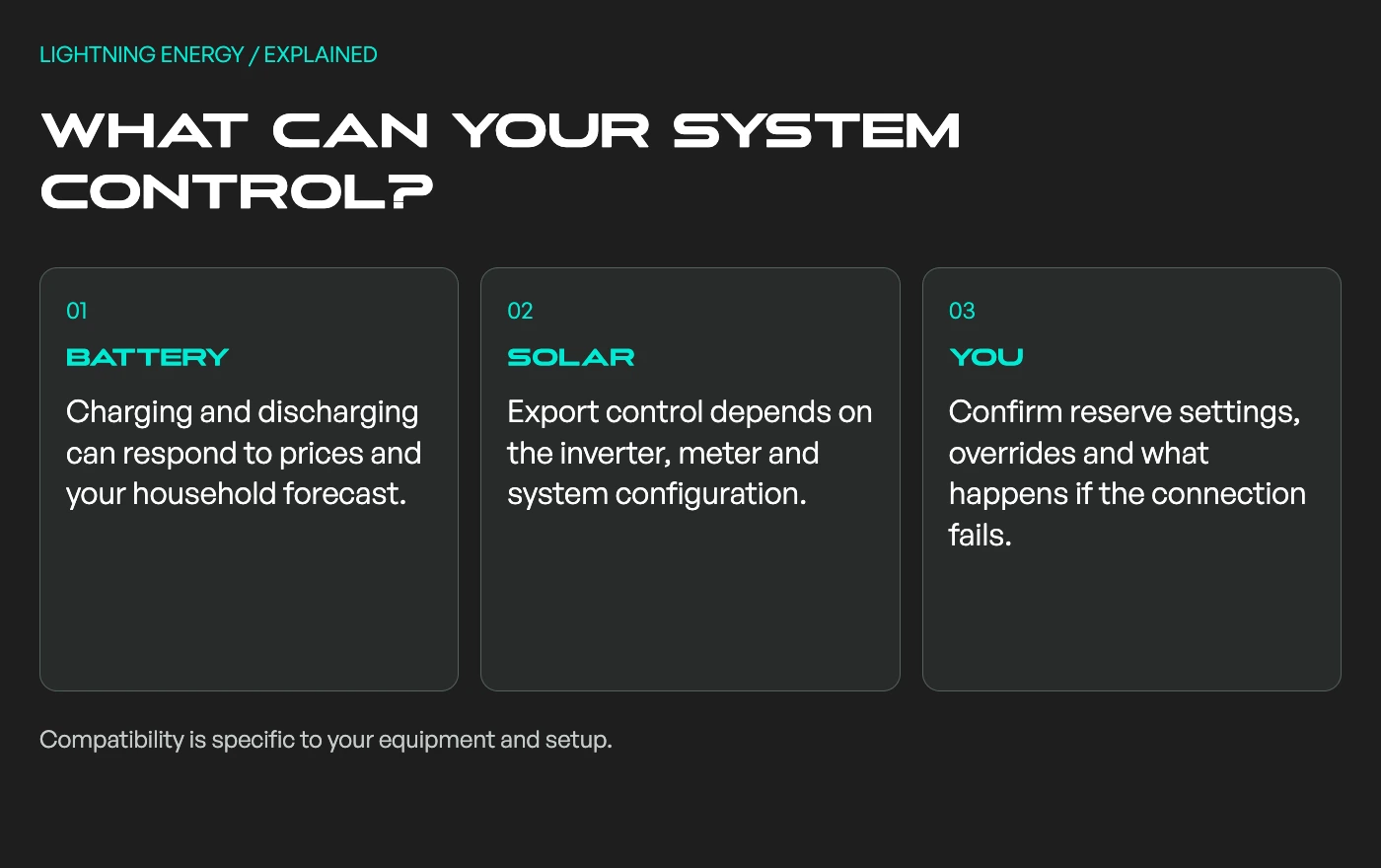
Amber distinguishes battery charging and discharge control from control of solar exports. Its compatibility checker warns that setup conditions still apply even where a product combination supports both.
Load-following curtailment reduces surplus solar export while allowing generation to supply the house. On/off curtailment instead stops solar generation. An additional inverter or unsupported meter can change what is possible.
Ask which behaviour your actual installation supports. This matters when export rates turn negative: an automated battery connection alone does not prove that every solar inverter at the property can be controlled.
Source: Amber’s compatibility checker.
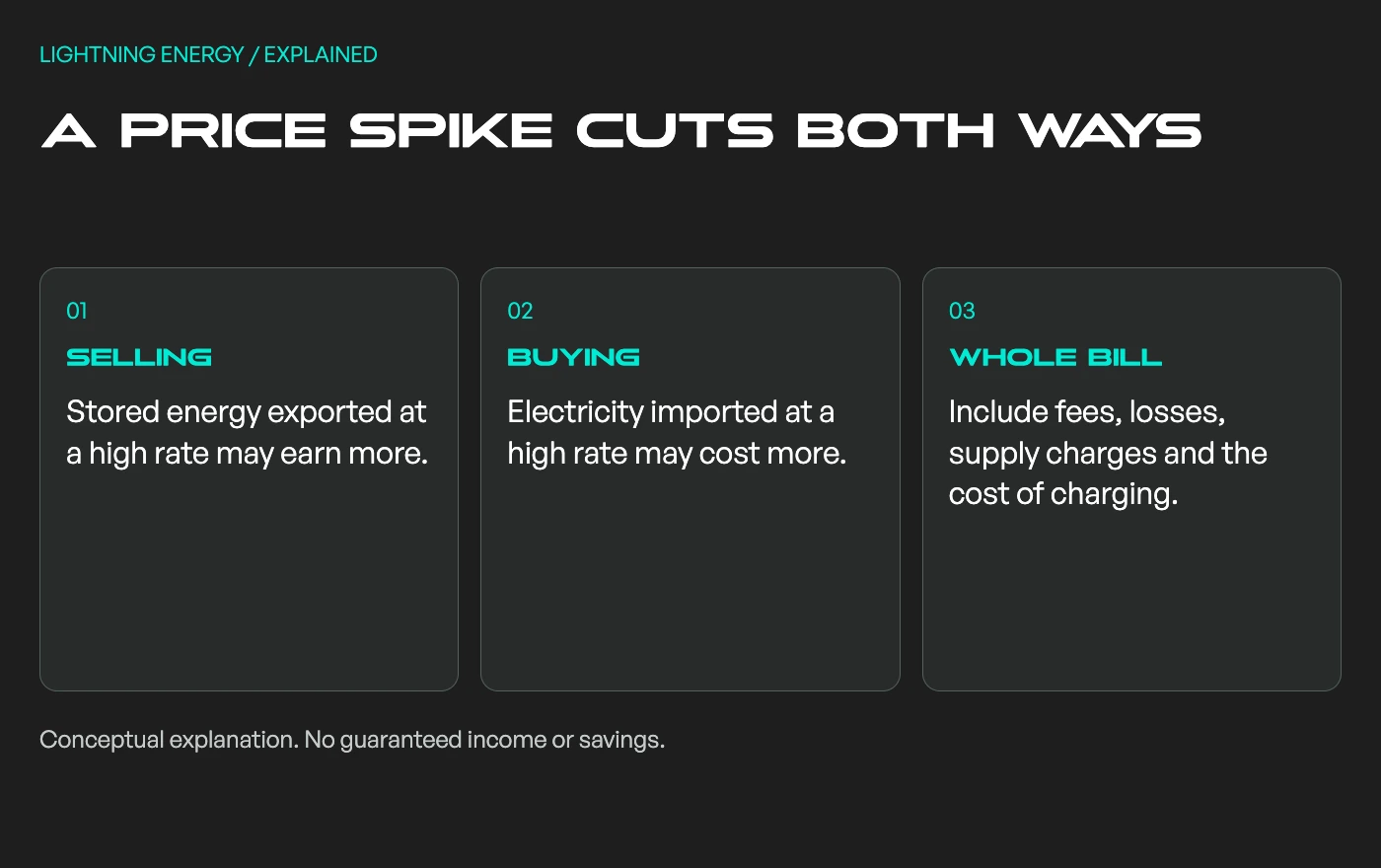
Wholesale-linked pricing creates opportunities and exposure. A high export rate may help when you have spare stored energy. The same period may be expensive if you need to import electricity.
A battery that has already discharged, or a car that is away from home, cannot cover every later purchase. Forecasts and automation are useful tools, but they cannot guarantee a profitable result for every day or household.
Amber currently advertises a $25 monthly subscription for its battery offer. That is $300 over a year, before electricity and other applicable charges. Include it when comparing the full cost with another plan.
Also allow for storage losses, your backup reserve, export limits and battery use. Export revenue is not the same as net savings after charging costs and fees. Our battery overview explains the hardware side of that decision.
Amber’s V2G hub now lists the BYD Atto 3 and Sealion 7 as supported and warranted vehicles for its program. Participation still needs the compatible charger, site assessment and applicable approvals.
Its advertised StarCharge Halo package starts at $2,990 including GST for a single-phase charger and standard installation. The listed three-phase package is $4,490. Non-standard work needs its own quote.
The ARENA program involves at least 12 months with Amber at the supply address and research participation. Those conditions differ from the ordinary battery offer’s advertised no-lock-in arrangement.
Source: Amber’s current V2G program and terms. Confirm eligibility and written installation pricing before purchasing a vehicle or charger.
ARENA announced the project expansion in May 2026, providing an additional $13.6 million and targeting 1,000 V2G households. That funding announcement predates this week’s GoodWe news.
The agency identifies battery testing, manufacturer collaboration and customer behaviour as part of the work.
A trial helps establish how the technology operates in real homes; it is not evidence that every participant will achieve the same savings.
Source: ARENA’s project expansion.
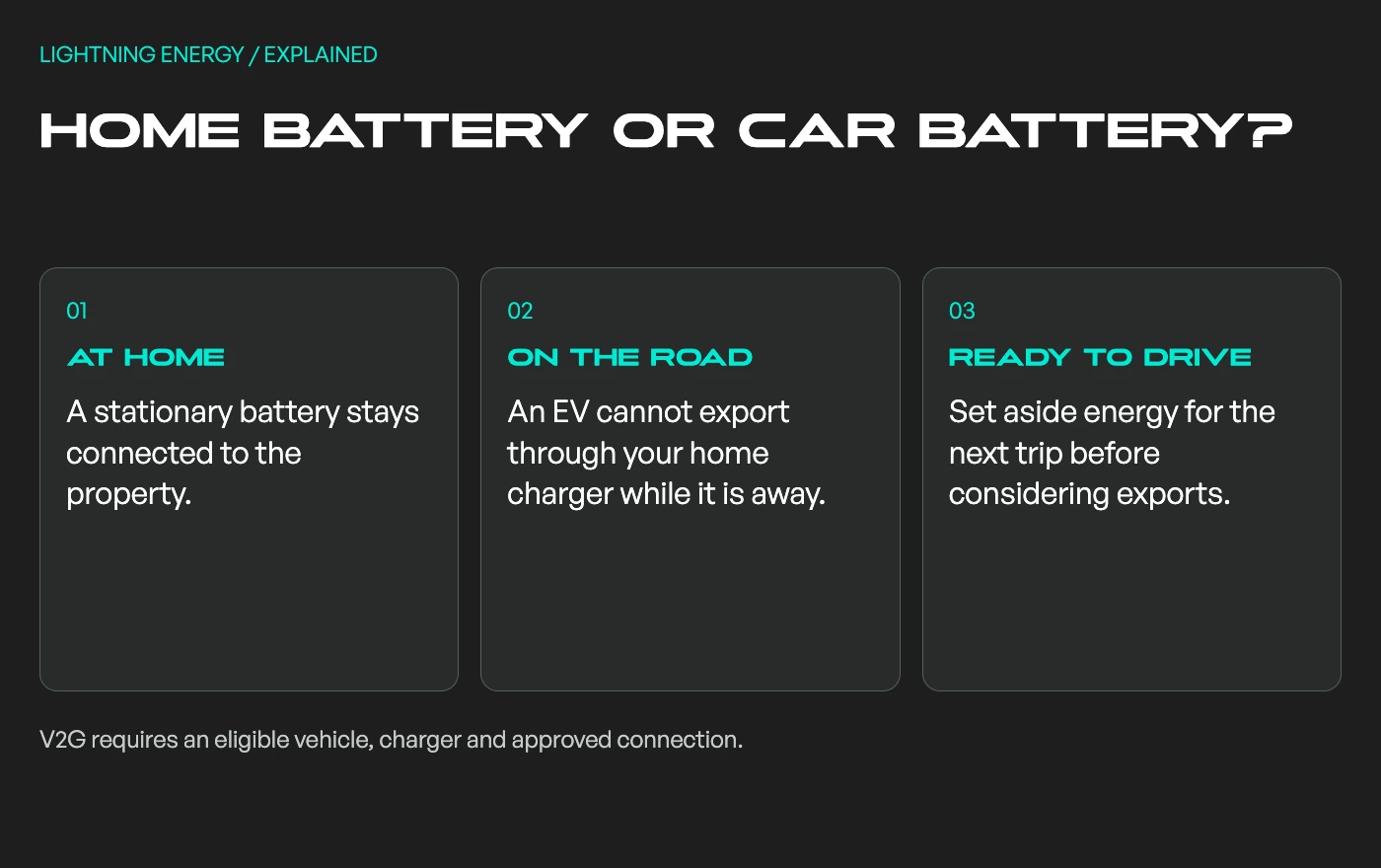
An EV battery may be substantial, but availability matters as much as capacity. Write down when the car usually leaves, returns and needs its next charge. Compare that with the hours you buy the most electricity.
For a commuter, arriving home with a low charge can produce a different outcome from a vehicle parked and plugged in all afternoon. Keep driving needs first when choosing reserves and ready-by settings.
Ordinary EV charging and bidirectional charging are different purchases. A conventional charger does not become a V2G charger just because the car can power appliances through a vehicle-to-load outlet.
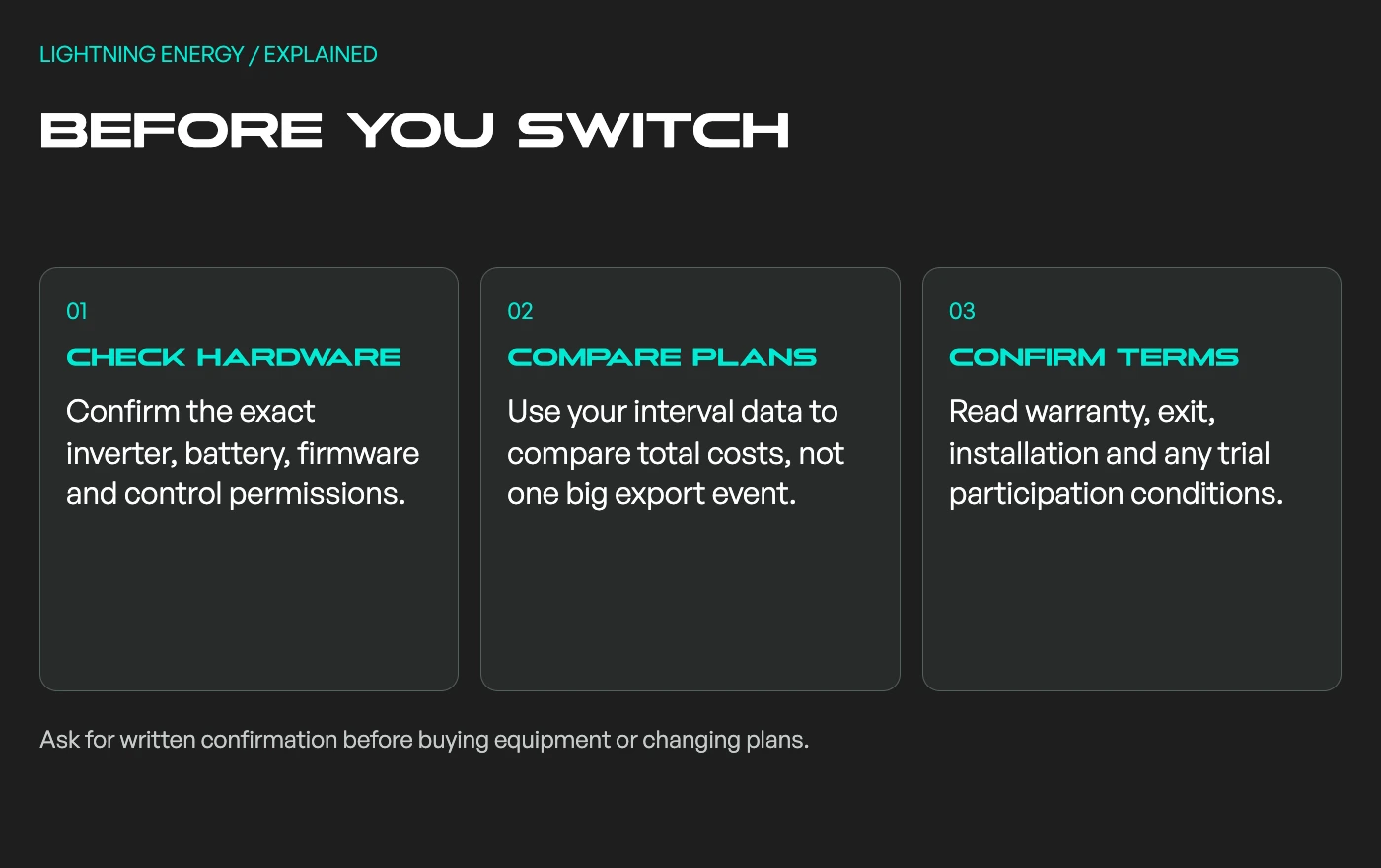
First, will Amber confirm the exact system is eligible? Second, which solar equipment can it control? Third, what reserve and override settings are available?
Fourth, how does the full plan compare using your actual interval data? Fifth, what do the written warranty, installation, exit and participation terms require? For V2G, include vehicle warranty approval in that check.
If you are considering a new system, request solar and battery quotes that explain equipment compatibility alongside the household design. Avoid buying extra capacity solely to chase occasional price spikes.
Our view: the useful advance is more choice for compatible equipment owners. Whether that choice suits your home depends on your consumption, driving routine and willingness to use a variable-price electricity plan.
Checked 14 October 2026. This is a documented news explainer, not a hands-on test or a savings guarantee. The cover is GoodWe’s real announcement photograph, showing representatives of GoodWe, Greentech and Amber.
The story was prompted by SolarQuotes’ reporting and independently checked against the primary sources linked above.
Available times
Book a consultation and we'll map solar, storage, hot water, and the rebates around your bills and your goals.
Question 1 of 6
