
Heat pump, gas or electric storage: comparing hot water running costs
Compare heat pump, gas and conventional electric hot water using household demand, tariffs and supply charges, rather than a promised percentage saving.
Compare heat pump, gas and conventional electric hot water using household demand, tariffs and supply charges, rather than a promised percentage saving.

A heat pump can deliver hot water with less purchased energy than a conventional electric tank. Whether it lowers your bill enough to justify replacement depends on the heater you have, your tariff and the installation cost.
Start with the same hot water demand for every option. Comparing a large family on expensive electricity with a smaller household on gas tells you little about your own choice.
Our heat pump range is a starting point for that comparison. The useful next question is what the proposed system would replace at your property.
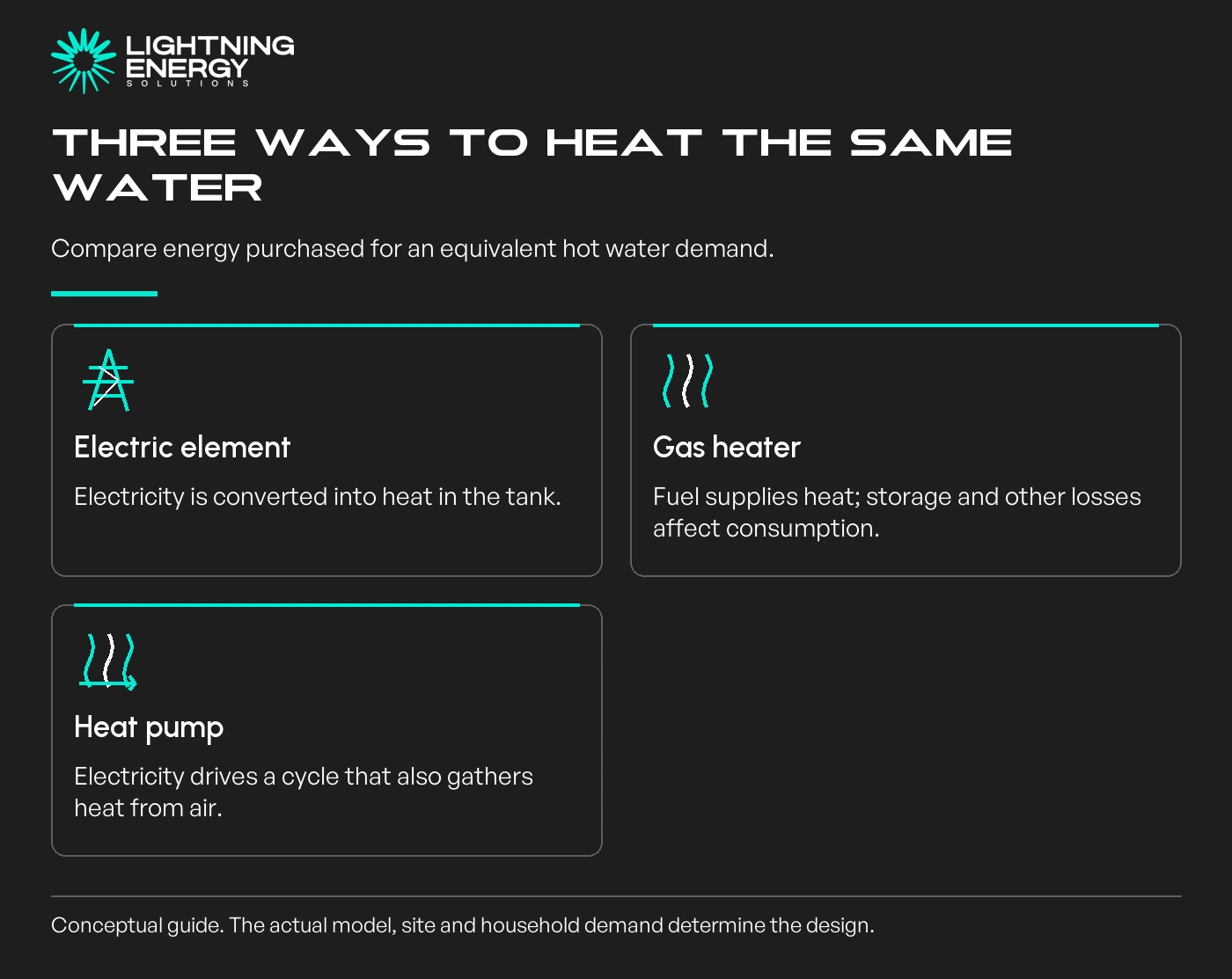
A conventional electric storage tank uses an element to heat water. A gas heater burns fuel. A heat pump uses electricity to move heat from outdoor air into stored water.
Those mechanisms explain the potential efficiency advantage. They do not turn a manufacturer’s best efficiency figure into a guaranteed annual electricity bill.
Government hot water overview.
Include storage losses and any electric boosting in the estimate. Also check whether the proposed heat pump can recover enough hot water in Melbourne winter conditions.
Electricity bills normally price energy in kilowatt-hours; gas bills commonly use megajoules. Do not compare the two tariff numbers as though they describe equal amounts of energy.
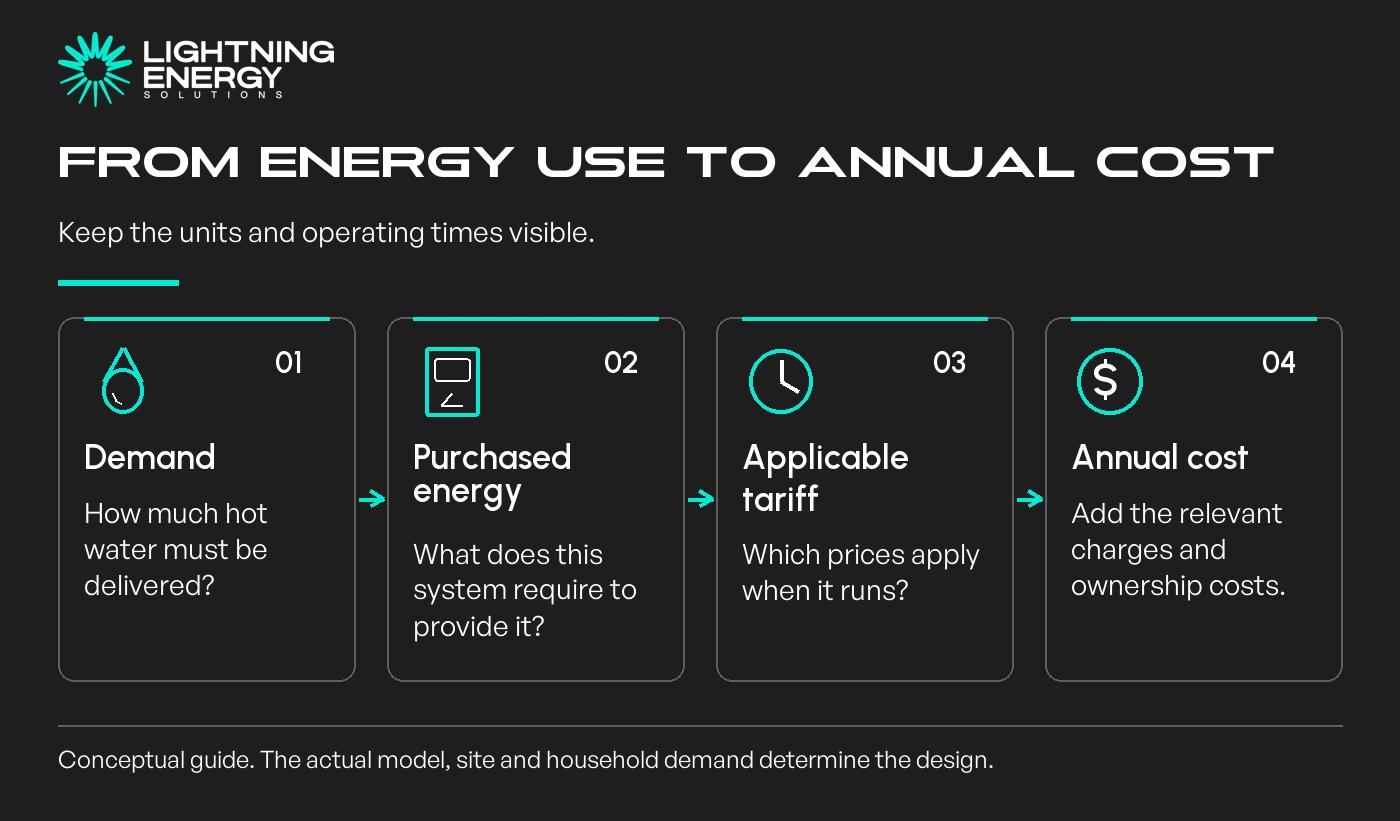
Ask the estimator to show purchased energy for each system, its unit price and the annual result. If the new heater runs at different times, use those import rates rather than a whole-day average.
Solar electricity also has a value. Using surplus for water heating can forgo an export credit. Electricity from a battery has charging losses and may be needed later for other appliances.
Our solar hot water timing guide explains why the heating schedule belongs in the calculation.
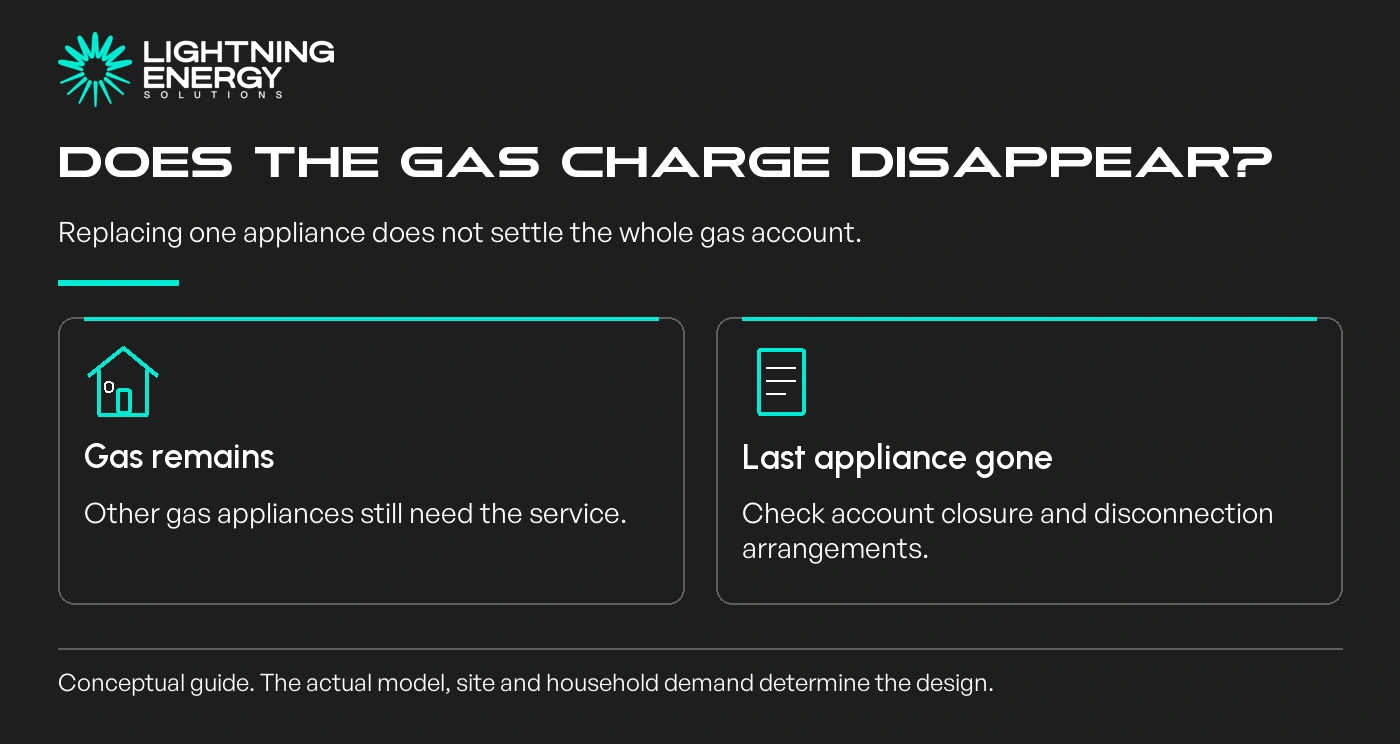
Replacing gas hot water does not remove the gas account’s daily charge while other gas appliances and the connection remain. Only count that saving when the relevant account and disconnection arrangements support it.
For an illustrative comparison, suppose a home keeps its gas cooktop after changing hot water. The water-heating gas use may fall, but assigning the entire gas supply charge as a saving would overstate the result.
A whole-home transition is a separate decision. See our all-electric home planning guide.
Request the installed price before incentives, any confirmed discounts, expected maintenance and the cost of retaining the present heater. These are different from energy consumption.
If the existing heater is healthy, compare replacing it now with keeping it for longer. If it has failed, compare the full cost and performance of realistic replacement options.
A low-use household facing complicated relocation work can have a weaker financial case than a household replacing a heavily used electric element tank. Model that difference instead of borrowing a headline saving.
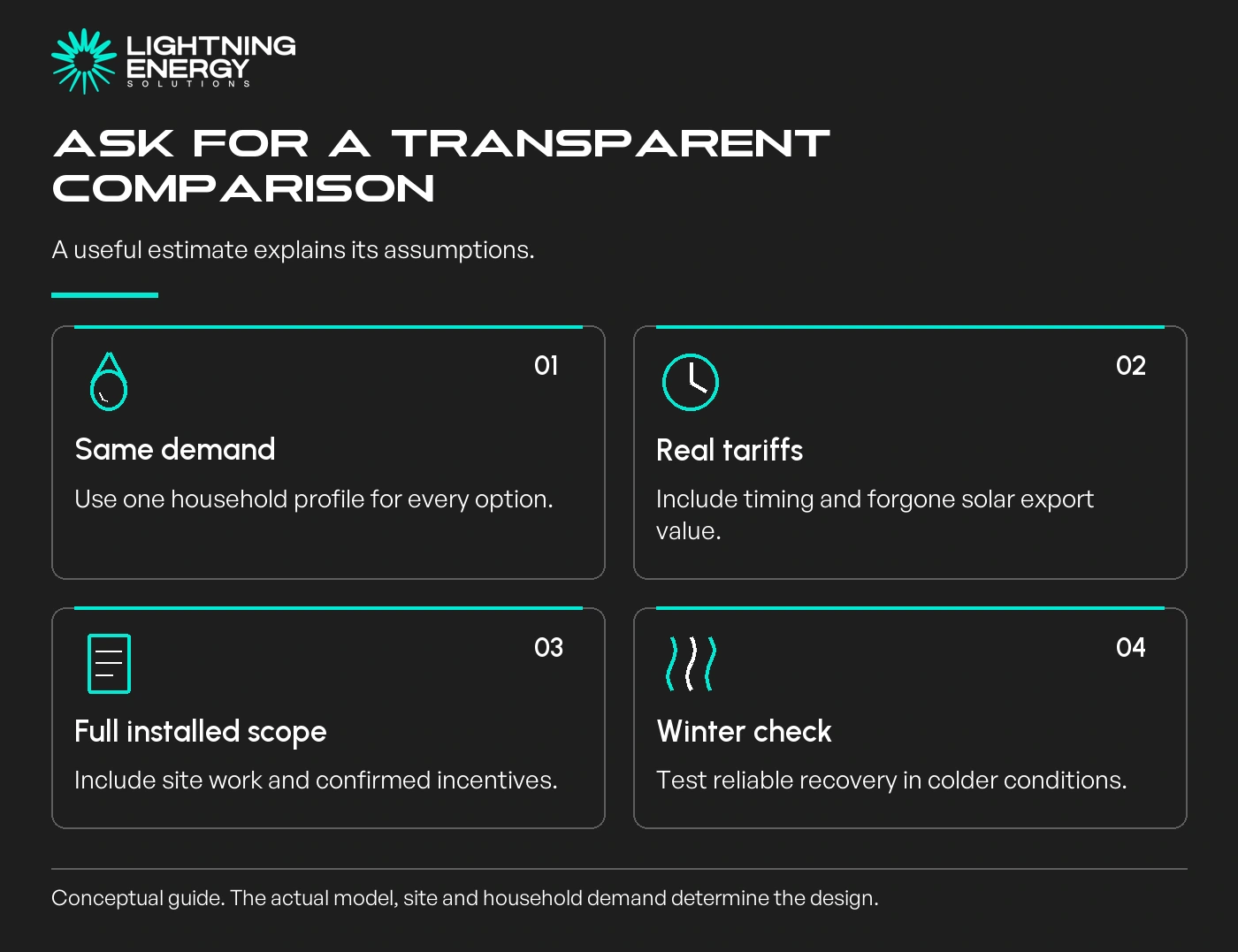
Ask for one worksheet with identical household demand, named models, documented tariffs and the assumptions behind the annual energy estimate. Include a winter scenario and a sensitivity check for changing tariffs.
We would favour the option that reliably meets demand at a defensible total cost. A heat pump deserves consideration, but the right answer should survive the removal of optimistic assumptions.
Send Lightning Energy your bills and heater details. A clear baseline makes the recommendation far more useful than a percentage on an advertisement.
Available times
Book a consultation and we'll map solar, storage, hot water, and the rebates around your bills and your goals.
Question 1 of 6