
Heat-Pump Hot-Water Efficiency Standards: What Buyers Should Check
Australia’s proposed heat-pump water-heater efficiency rules, the closed 2026 consultation, and why laboratory ratings do not replace a suitable household design.
Australia’s proposed heat-pump water-heater efficiency rules, the closed 2026 consultation, and why laboratory ratings do not replace a suitable household design.

A minimum efficiency standard can improve the baseline for products on the market. It cannot tell you, on its own, whether a particular heat pump suits your household.
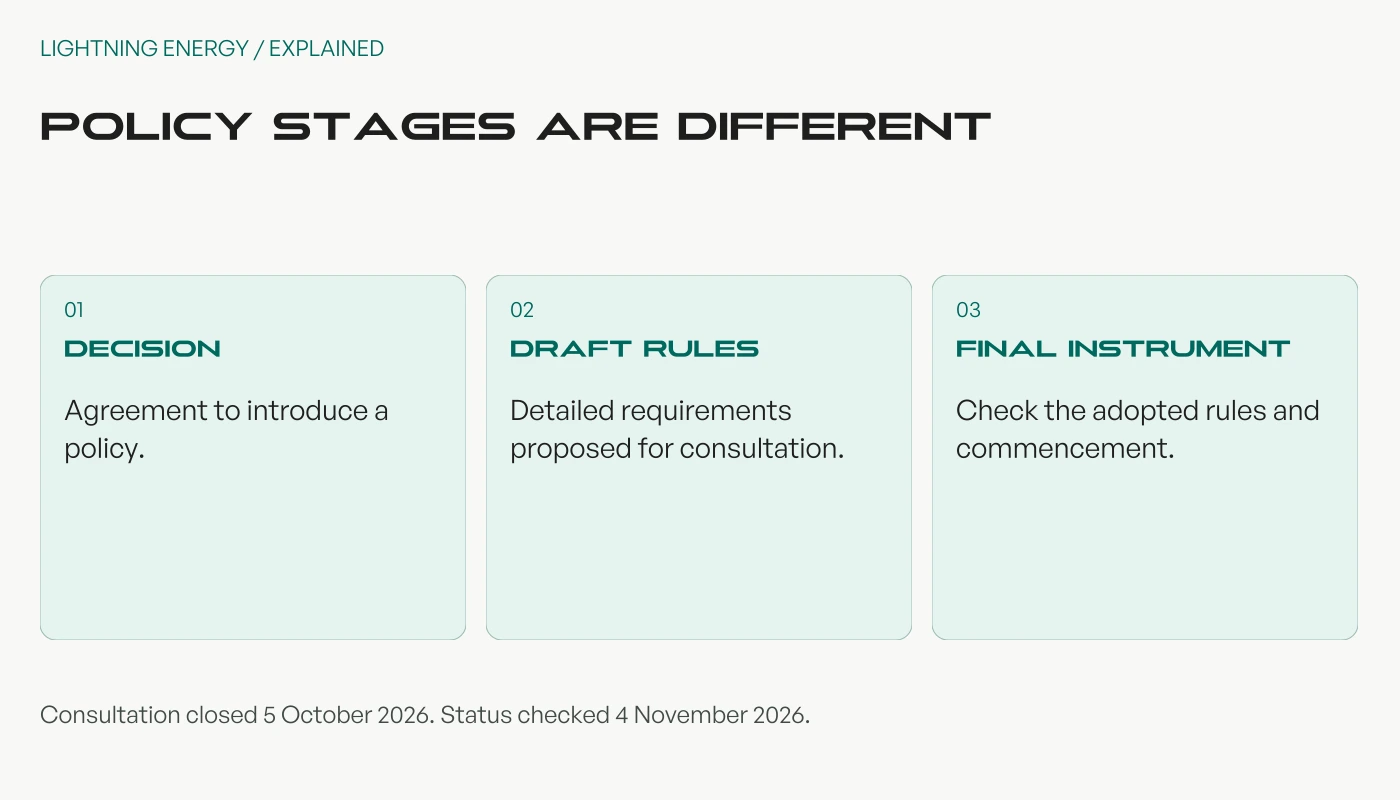
Australia has been developing minimum energy performance standards for heat-pump water heaters. Buyers should distinguish the policy decision, draft regulations and the date any final requirements take effect.
This status check is dated 4 November 2026. It is a document-based buying guide, not an independent laboratory test of any product.
The Commonwealth consultation page says energy ministers agreed to introduce minimum energy performance standards in December 2025. Consultation on exposure-draft regulations ran from 6 September to 5 October 2026.
That consultation is closed. The published consultation timetable lists publication of the determination as a later step with timing to be advised. A closed consultation does not itself make the draft rules operative.
Source: DCCEEW’s heat-pump water-heater exposure-draft consultation.
Before relying on an advertised compliance deadline, ask for the final instrument, its commencement date and the provision relevant to the exact product. Do not turn a proposal into a claim that every current unit is obsolete.
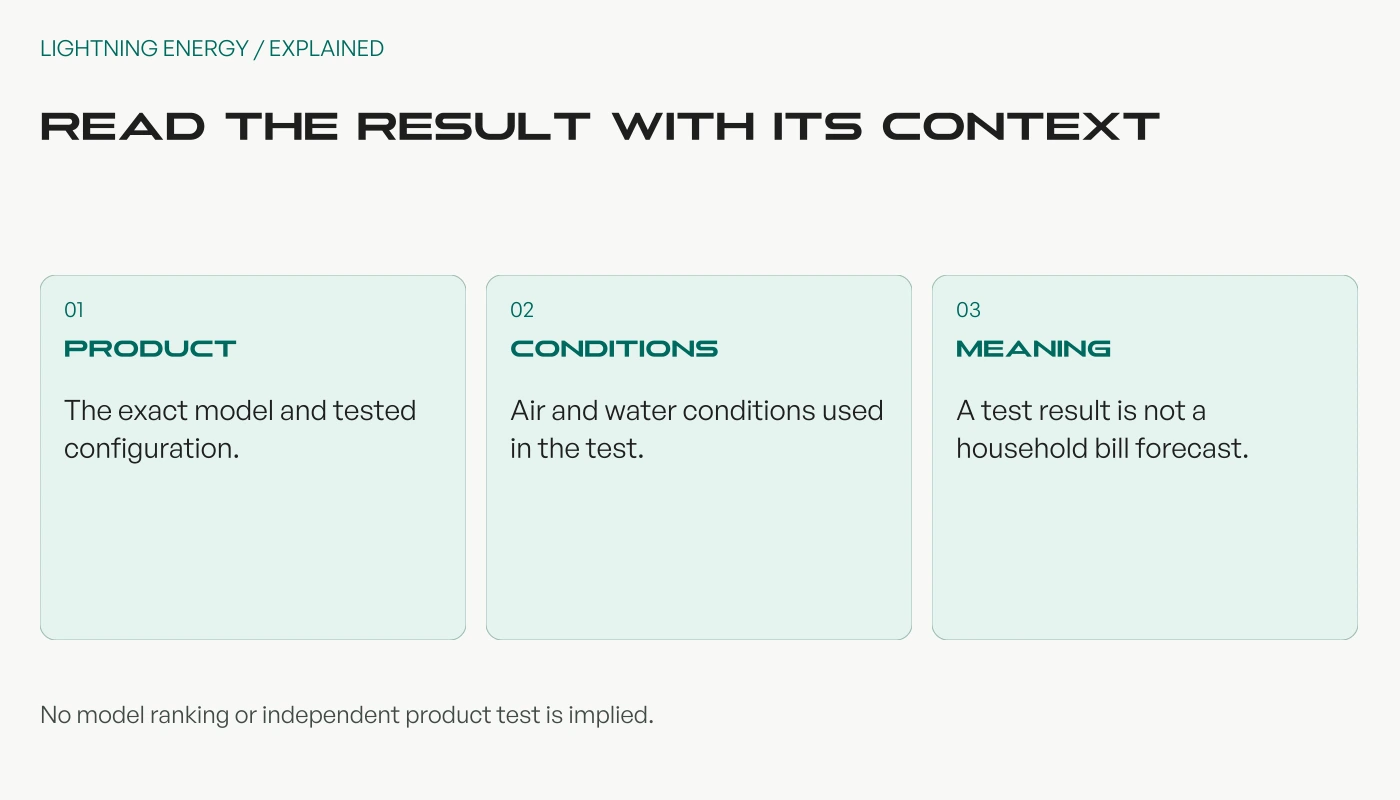
Heat pumps move heat into water using electricity. Their efficiency varies with operating conditions, so a headline coefficient of performance needs context.
The Australian Government’s Your Home hot-water guide explains heat-pump operation and why climate and household requirements matter.
Ask what temperature conditions, water-heating duty and system components are included in the quoted result. Do not compare a best-case marketing number with a different model’s seasonal estimate.
Our COP explainer describes how to compare efficiency claims on a consistent basis.
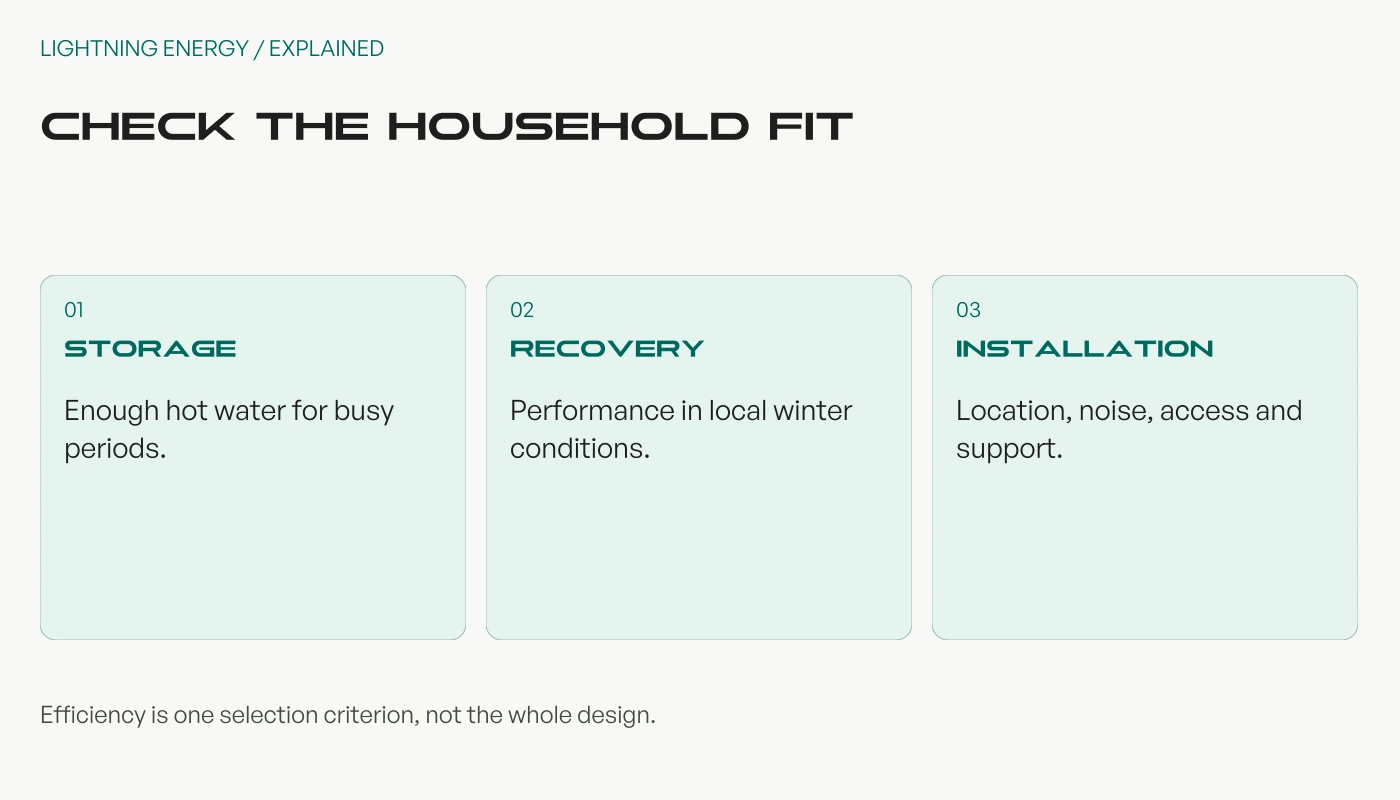
Two households can need different systems even when they use similar total amounts of hot water. Several showers close together create a different recovery requirement from demand spread through the day.
Ask about tank capacity, usable hot water and recovery in local winter conditions. Include the expected role of any electric boost function and how the system maintains its required sanitation cycle.
Our Melbourne winter buying guide helps frame the cold-weather questions. Do not alter sanitation settings simply to chase a lower electricity reading.
Noise, location, access and aftercare also remain important. A product can have an attractive efficiency claim while being a poor fit for the available space.
Eligibility for an incentive is a programme-specific question. Ask the installer to identify the exact model on the relevant list and explain the installation and customer requirements.
Do not assume that proposed national efficiency rules automatically establish eligibility for every state scheme. Equally, a listed product does not guarantee a particular annual bill reduction at your home.
Our heat-pump STC postcode guide explains another reason advertised incentive figures need context.
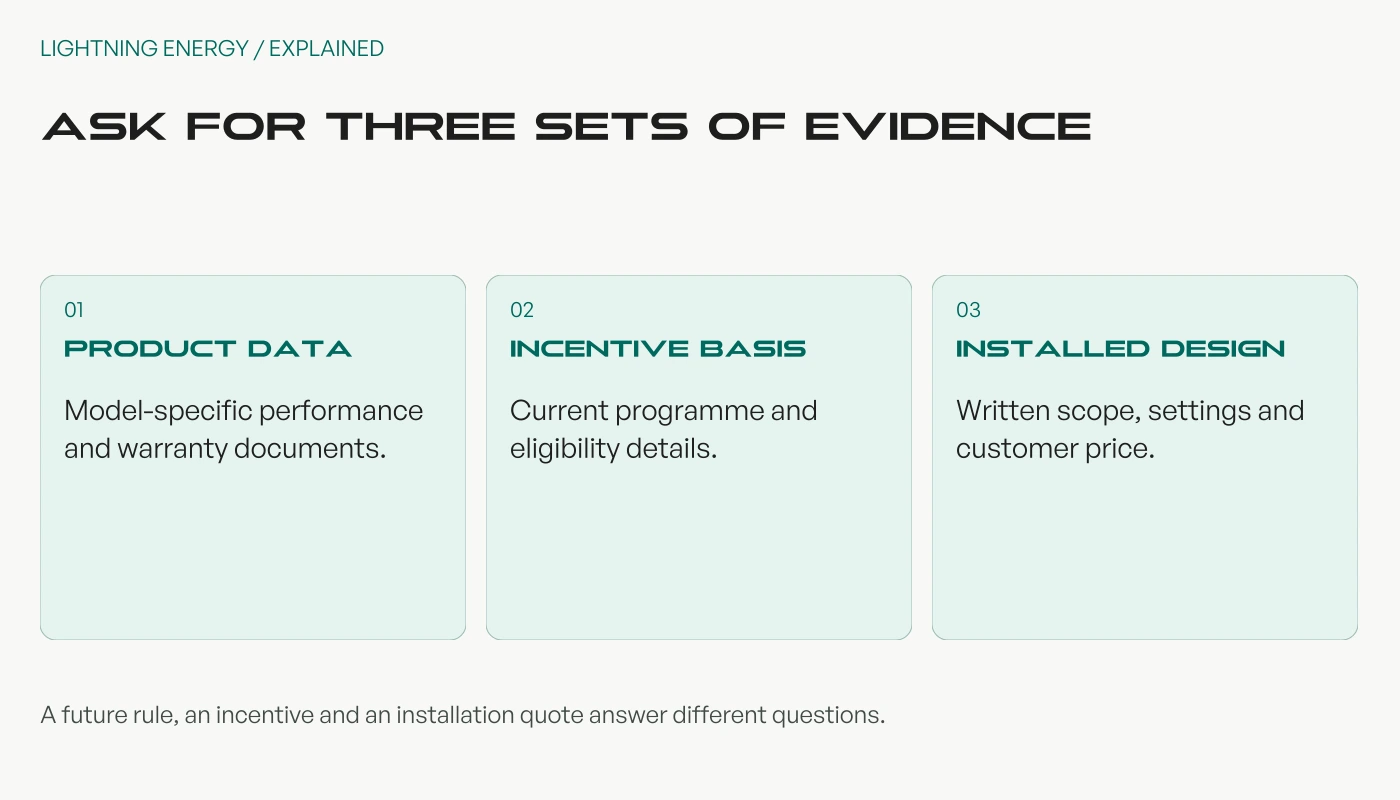
Keep the model documentation, written quote and handover settings. Establish how you will track electricity use without confusing hot-water consumption with unrelated changes around the home.
A credible proposal explains its assumptions: household demand, local climate, tariff, operating schedule and any solar contribution. Treat estimated savings as estimates, not a test certificate for your future bill.
Contact Lightning Energy for a system assessment. Ask for the evidence behind the efficiency claim and a clear explanation of why the complete installation suits your home.
Available times
Book a consultation and we'll map solar, storage, hot water, and the rebates around your bills and your goals.
Question 1 of 6
