
Reading Air Conditioner Energy Labels and Winter Performance for Melbourne
Read air conditioner labels and technical data for Melbourne’s climate, comparing heating output, seasonal efficiency and the exact model pair.
Read air conditioner labels and technical data for Melbourne’s climate, comparing heating output, seasonal efficiency and the exact model pair.

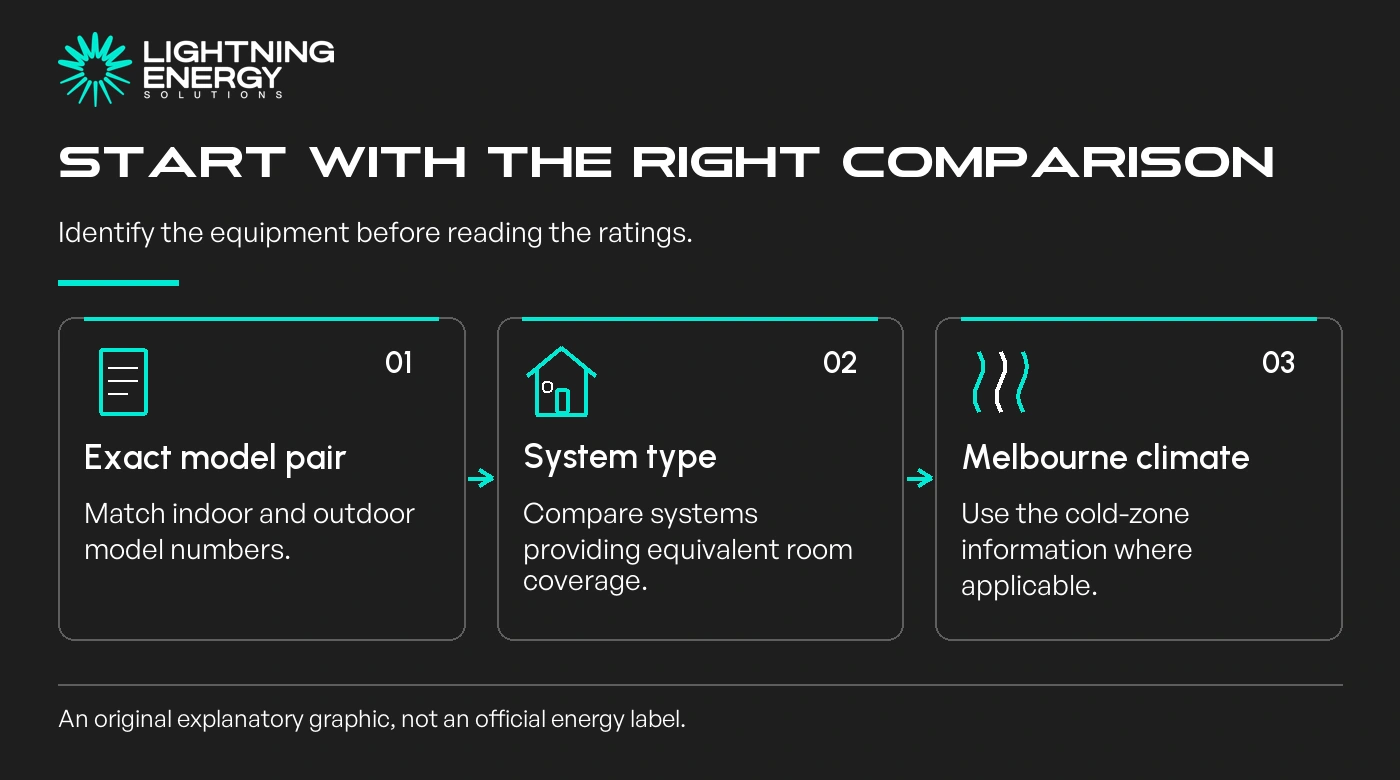
For Melbourne, start with the cold-climate part of a Zoned Energy Rating Label, then check the exact model’s heating performance. Stars help compare similar systems; they do not prove a unit can heat your rooms.
Some air conditioner categories do not carry the same displayed label. A ducted quote still needs performance evidence, even when there is no familiar star sticker beside it.
Match the indoor and outdoor model numbers on the quote to the documentation. A page describing a product family is less useful than data for the combination being supplied.
The government’s label guide places Melbourne in the cold climate zone. Read the heating and cooling ratings in that zone, rather than taking the largest star number printed anywhere on the label.
Energy Rating’s climate guide.
Different product classes have different labelling requirements. Ask for the relevant performance information for the exact system type; a missing retail label is not automatically proof of poor efficiency.
Our air conditioning options include different layouts, so make the system type part of your comparison as well as the brand.
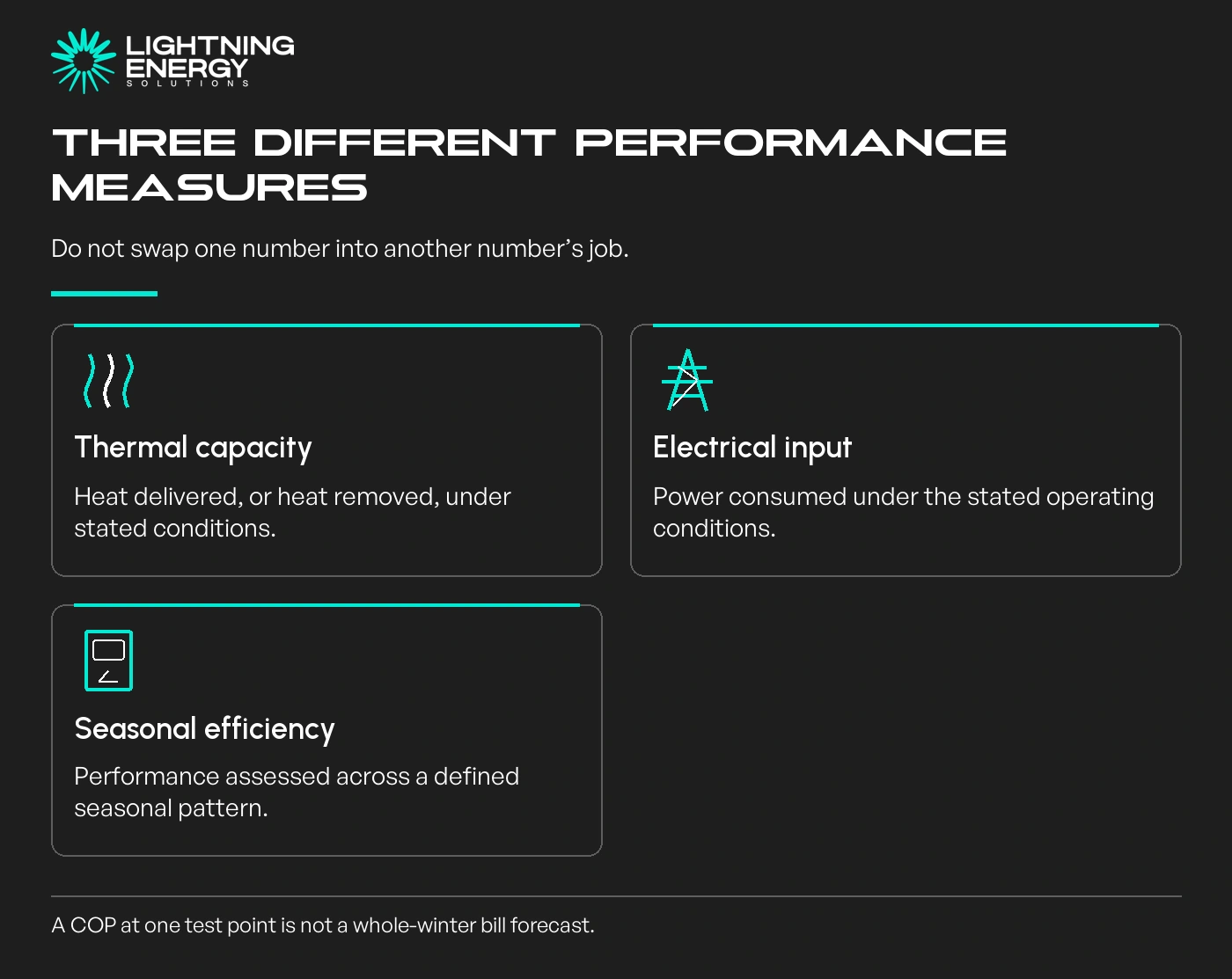
Heating capacity describes heat delivered under stated conditions. Electrical input describes the power consumed. Both can be expressed in kilowatts, but they answer different questions.
COP compares heating output with electrical input at a particular test point. Seasonal measures account for operation across a defined temperature pattern, so a single COP is not a whole-winter bill prediction.
For an arithmetic illustration, 6 kW of heat divided by 2 kW of electrical input gives a COP of 3. Those are invented teaching numbers, not the specification of a quoted product.
Keep electrical design separate. A licensed assessment uses model electrical requirements and household loads, as covered in our supply planning guide.
The government explains the distinction between output capacity, climate-zone stars and annual energy figures.
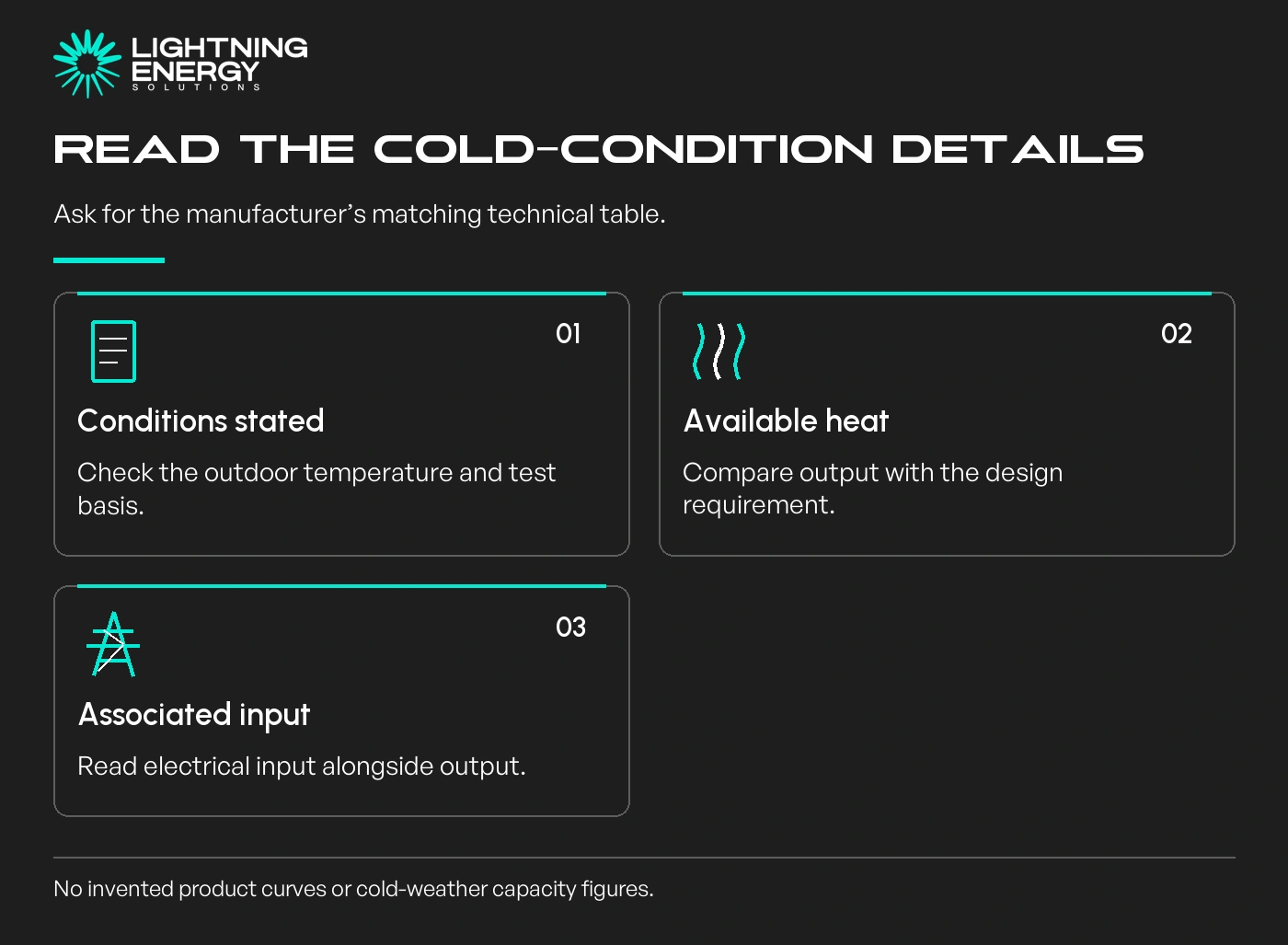
A heating rating at one outdoor temperature does not describe every winter operating condition. Ask the supplier for the manufacturer’s heating performance data relevant to the design conditions used for your home.
Read the capacity and input together, including any stated test conditions. If a salesperson supplies only a headline efficiency ratio, ask which temperature and model combination it describes.
For an illustrative comparison, two correctly sized candidates might have different cold-weather performance despite similar headline capacities. Compare the actual tables rather than assuming the star number settles capacity.
This matters particularly when you are expecting heating to work alongside winter solar production.
Available sunshine and appliance performance are separate parts of the energy budget.
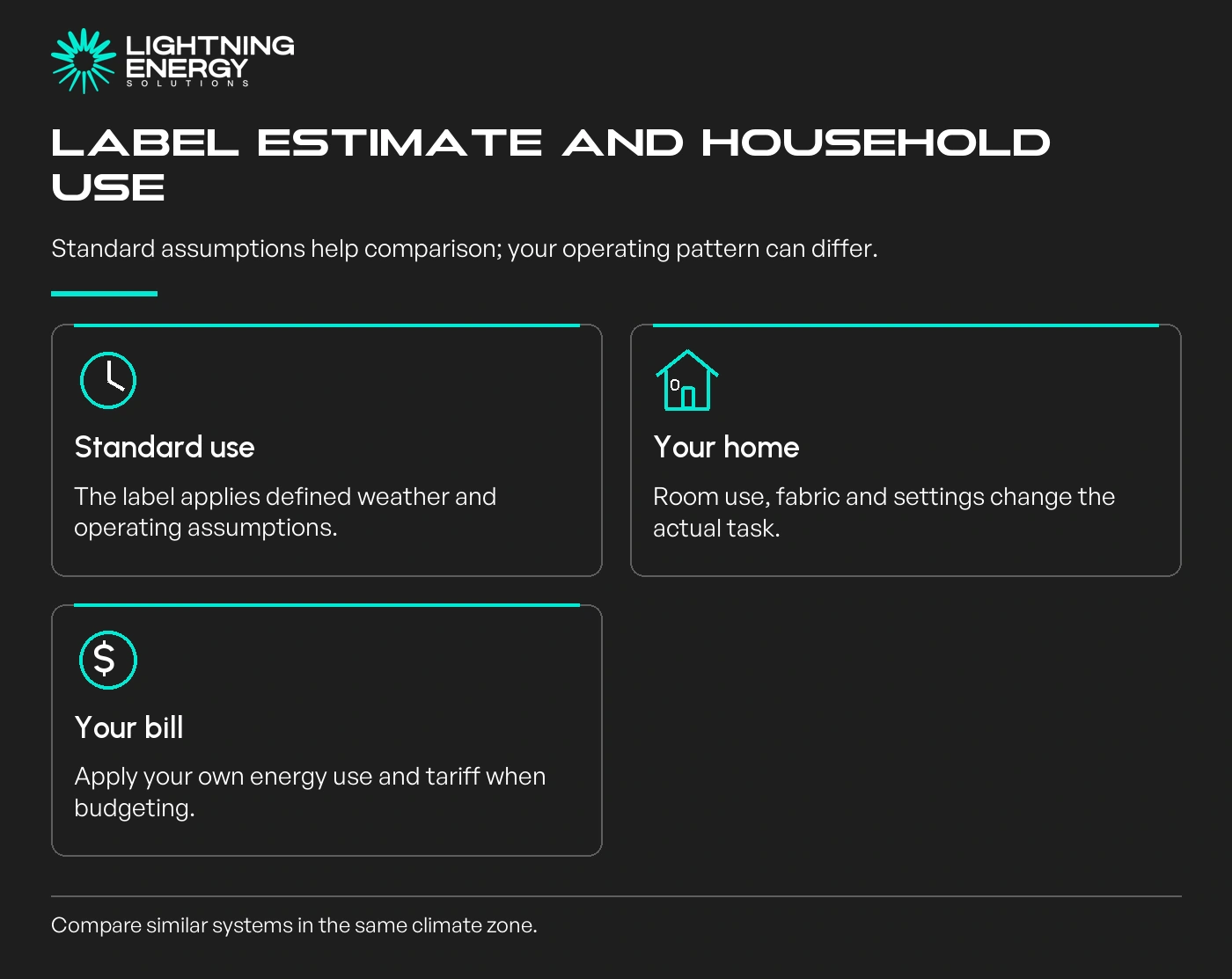
Label annual energy figures use a standardised pattern of weather and operation. Your occupied rooms, set temperatures, house construction and schedule may differ from those assumptions.
Compare similar-capacity systems with similar functions in the same climate zone. A larger unit with the same stars is not necessarily expected to consume the same energy as a smaller one.
For the classes covered and exceptions, consult the current product guidance.
Energy Rating’s air conditioner requirements.
Do not replace a working system solely because an advertisement shows more stars. First establish the comfort problem, likely use and full installed scope, then assess whether a change addresses them.
Ask for a side-by-side sheet of model pairs, design capacity, relevant cold-weather data and seasonal ratings. Bring those quotations to us if you want help identifying the questions still unanswered.
Available times
Book a consultation and we'll map solar, storage, hot water, and the rebates around your bills and your goals.
Question 1 of 6