
Is heat pump hot water worth it without solar?
A heat pump can use grid electricity without rooftop solar. Compare your current heater, electricity tariff, demand and installation costs first.
A heat pump can use grid electricity without rooftop solar. Compare your current heater, electricity tariff, demand and installation costs first.

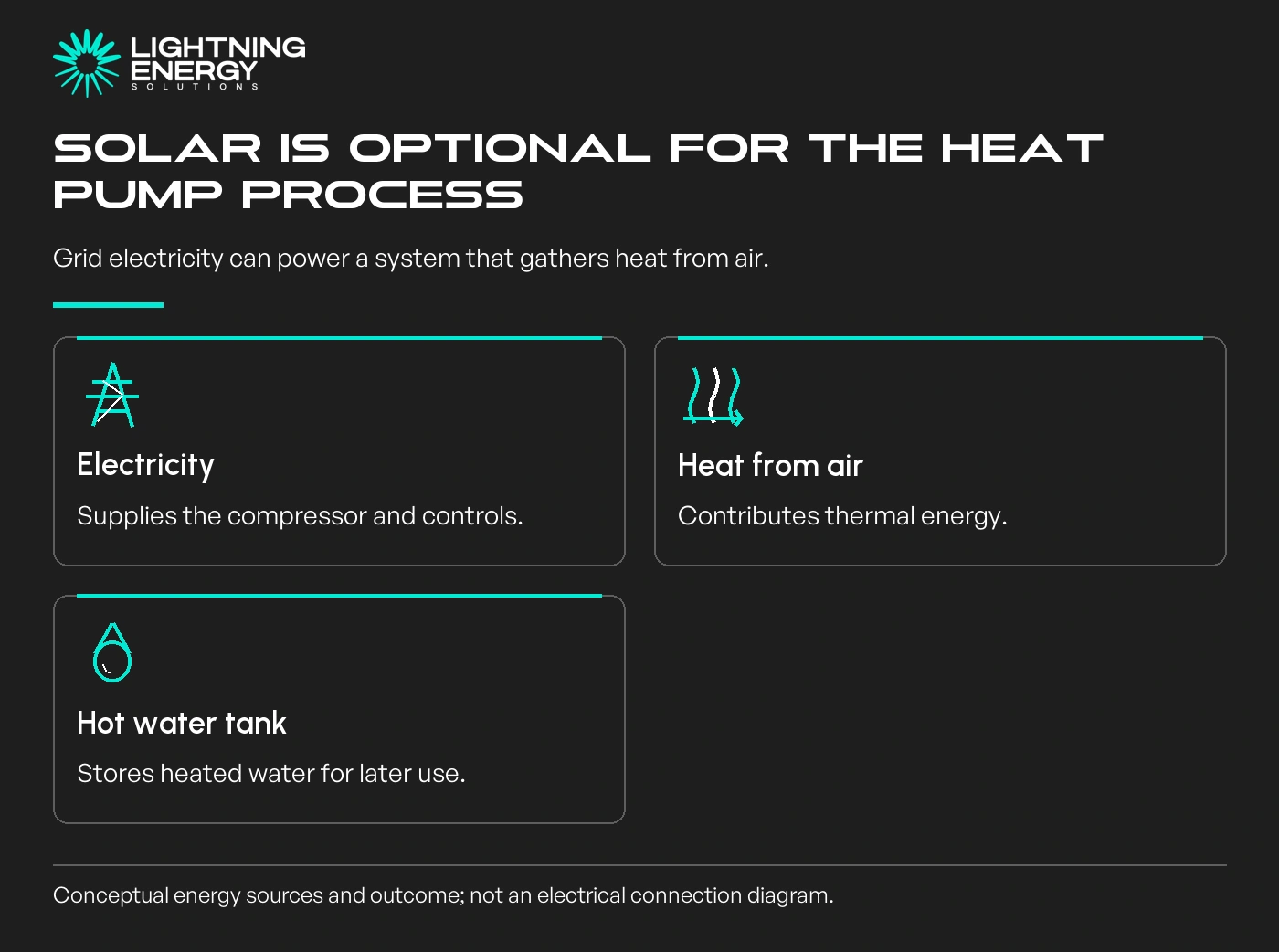
Yes, heat pump hot water can make sense without solar. Its efficiency comes from moving heat from the air, so it does not need rooftop panels to perform that job.
Solar can change where the electricity comes from and what it costs. It is an additional consideration, not the mechanism that makes the heat pump work.
If you are comparing heat pump hot water, assess it against the heater you would otherwise keep or install. That is a more useful test than waiting for a solar purchase by default.
A heat pump uses electricity to operate its refrigeration cycle and controls. The cycle gathers heat from outdoor air and transfers it to the water.
A conventional electric tank supplies heat through its element. Comparing those two systems therefore involves their electricity consumption, rather than assuming all electric water heaters have the same running cost.
Solar Victoria explains the technology.
The quoted model still needs to suit Melbourne conditions and your household. An efficient process cannot compensate for a poorly chosen tank, unsuitable location or inadequate recovery.
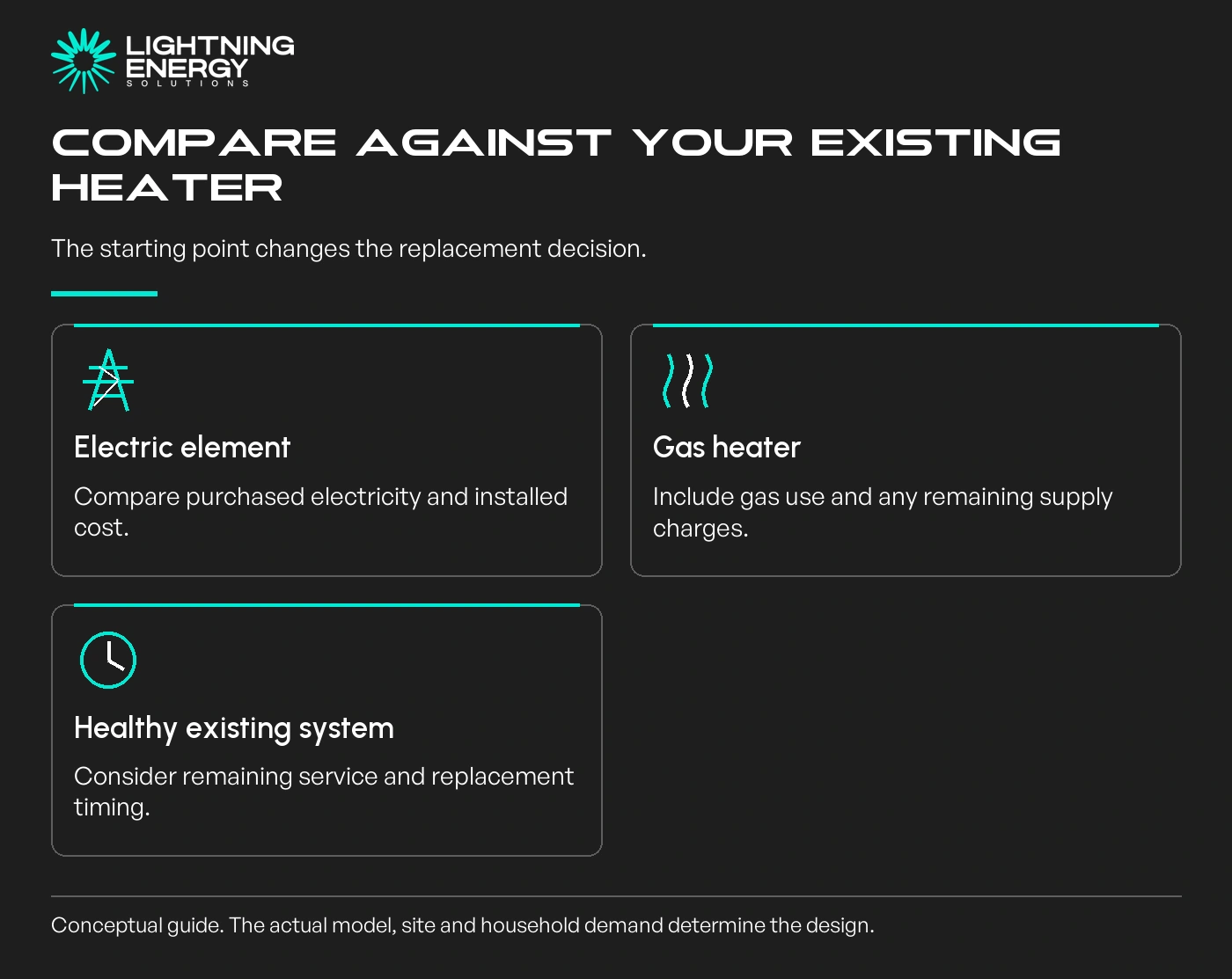
If your electric element tank is failing, compare the two replacement installations using the same hot water demand. Include site work, electricity use and maintenance.
If you have a working gas system, the comparison changes. Include its remaining useful service, your gas tariff and the fact that supply charges may remain while other gas appliances are used.
A household with very low hot water demand and costly relocation work might sensibly retain a healthy heater for now. Efficiency alone does not settle the timing of a purchase.
Our all-electric home guide helps separate the hot water decision from a wider staged upgrade.
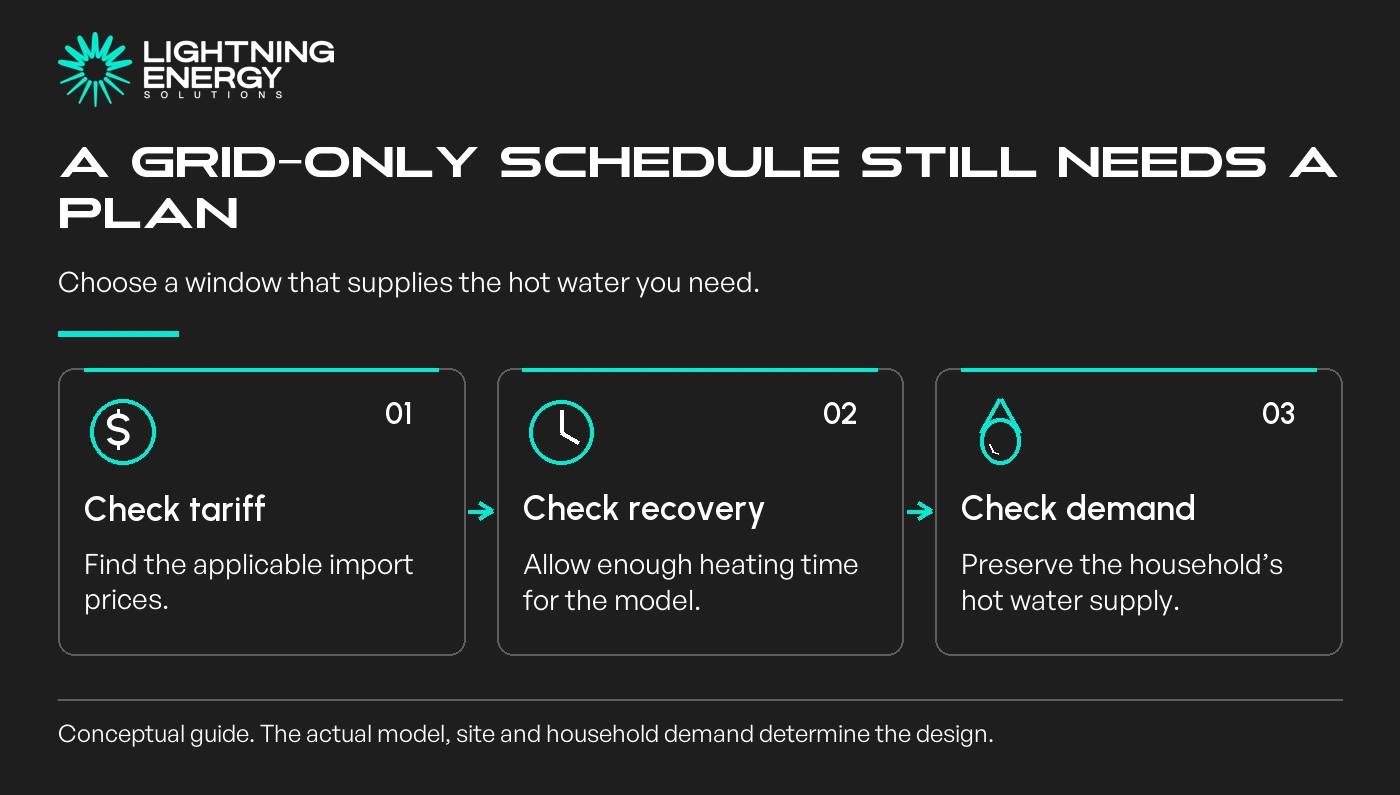
Your tariff may charge different amounts at different times. Ask whether the proposed schedule can use a cheaper period while preserving enough hot water for the household.
Do not select the cheapest hours without checking recovery. A short overnight window and a heavy morning demand can create a different result from a longer daytime heating opportunity.
As an illustrative comparison, two otherwise similar homes can pay different amounts because one heats under a flat tariff and the other uses a time-of-use plan. Neither result proves the heater is inefficient.
Manufacturer temperature, hygiene and protective functions must remain active. Use the owner controls as intended rather than cutting the power to force a schedule.
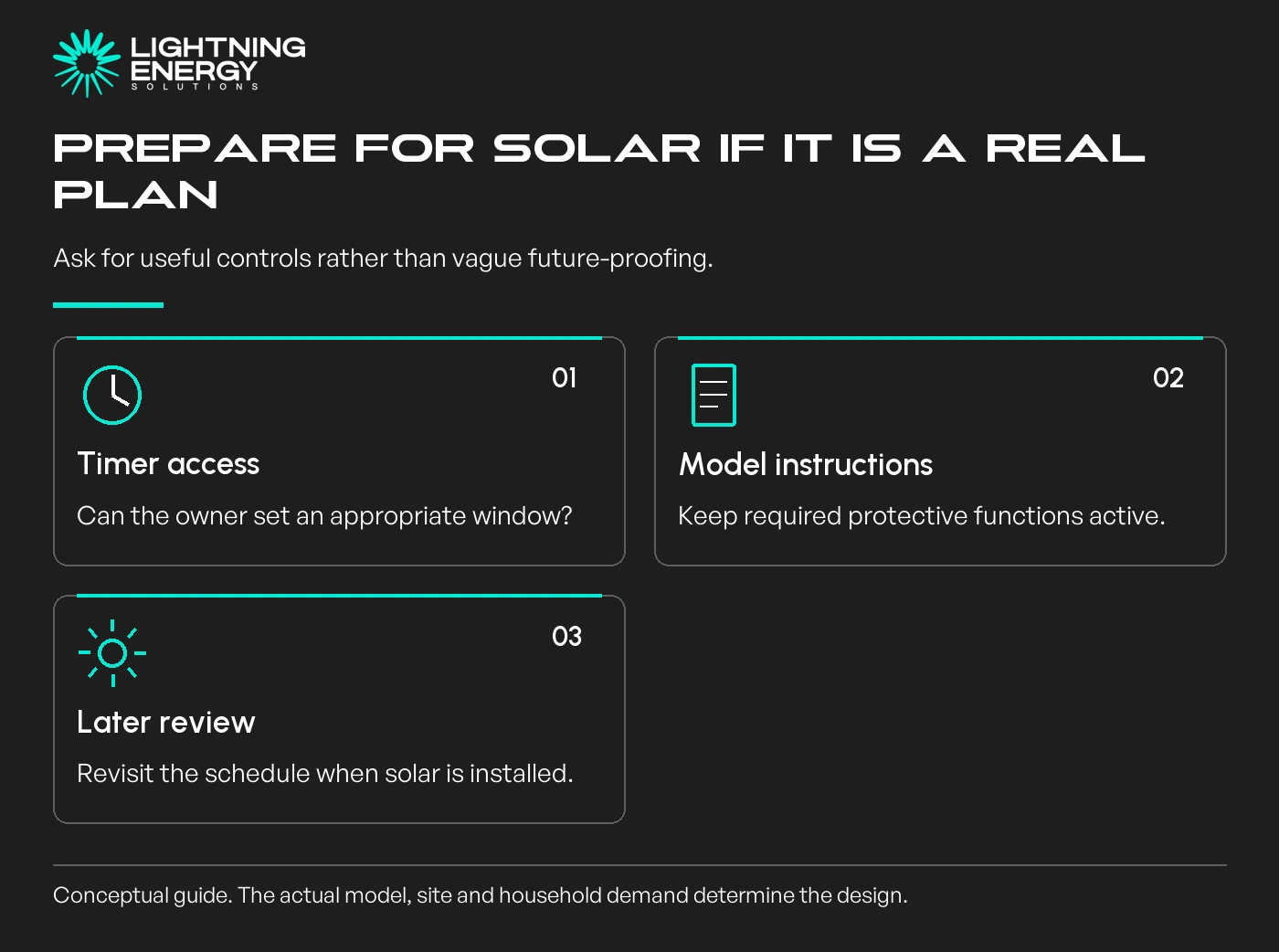
If panels are a realistic future plan, choose controls that can support an appropriate daytime heating window. Ask how a later timer change would be made and what information the installer needs.
Do not pay for unnecessary accessories solely because they are described as future-proof. The useful feature is a documented way to coordinate operation with the system you actually plan to install.
Read the solar timer guide when that future installation becomes concrete. Tariffs, available surplus and daily demand all belong in the new schedule.
Get a grid-only operating estimate first. It should name the current heater, proposed model, household demand, electricity price and installation scope. Then treat any later solar benefit as a separate scenario.
This avoids using an unpurchased solar system to make today’s replacement look attractive. It also avoids postponing a worthwhile hot water upgrade simply because the roof project is not ready.
Talk to Lightning Energy about your current heater. We can start with the household you have now and leave room for a sensible later upgrade.
Available times
Book a consultation and we'll map solar, storage, hot water, and the rebates around your bills and your goals.
Question 1 of 6