
Is Solar Worth Considering When Nobody Is Home During the Day?
Is solar suitable when your home is empty on weekdays? Compare baseload, weekend use and practical schedules before deciding whether storage is needed.
Is solar suitable when your home is empty on weekdays? Compare baseload, weekend use and practical schedules before deciding whether storage is needed.

Solar can still deserve consideration when everyone is out during the working day. The decision turns on your actual daytime electricity use, available roof and tariff, not whether somebody is physically at home.
An empty home may still run refrigeration and other equipment. It may also have useful weekend demand. Measure those patterns before dismissing solar or assuming a battery must be part of the purchase.
A solar assessment should use the household routine you can maintain, rather than a proposed routine built entirely around maximising a forecast.
Look at interval meter records across weekdays and weekends. Identify the daytime baseline and the periods when use rises. Include different seasons rather than choosing one unusually sunny week.
If solar already exists, imports alone will not capture all consumption. Some electricity may already be supplied by the panels, so the monitoring arrangement matters.
Government guidance on monitoring household energy.
Write a short list beside the data: occupied hours, pool operation, hot-water heating and any work-from-home days. You do not need a perfect diary, but the major patterns should make sense.
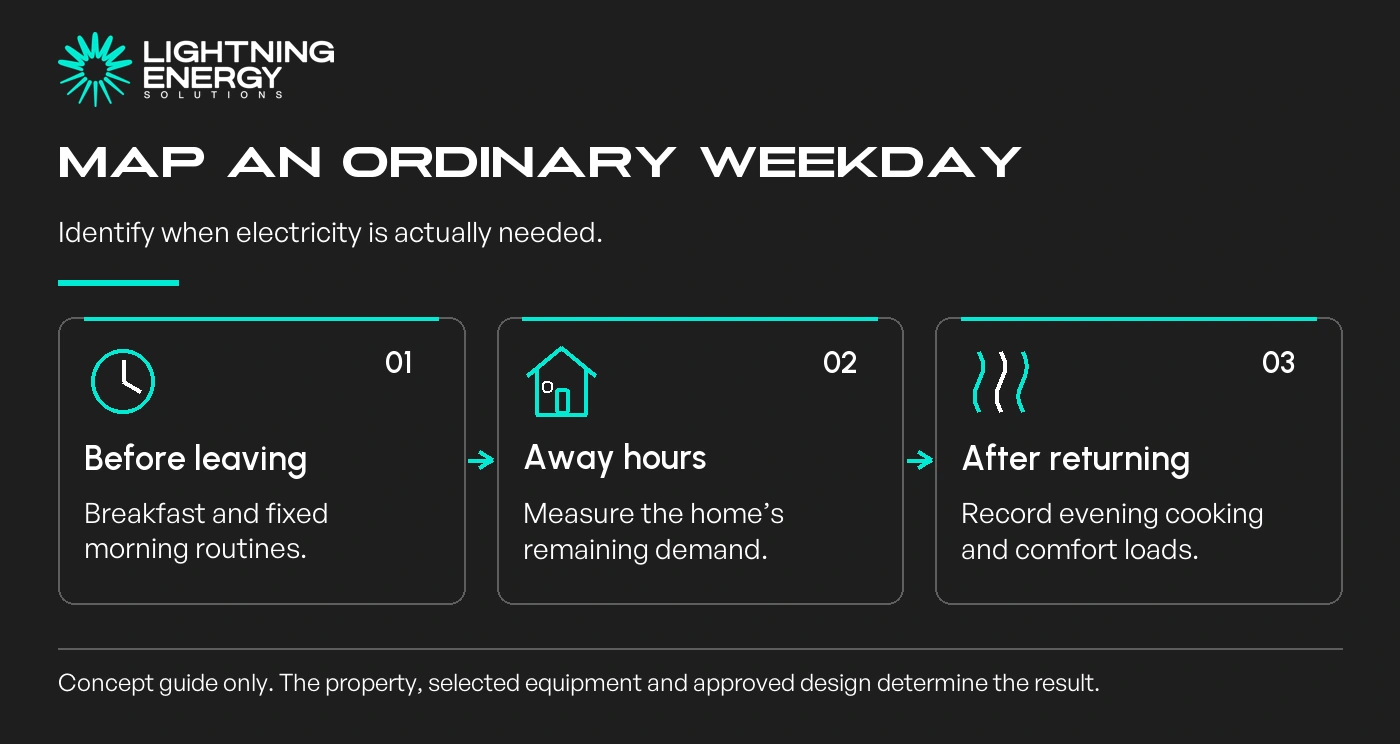
Consider an illustrative household that leaves before sunrise and returns after dark. Their breakfast and evening cooking cannot use rooftop generation directly at those times.
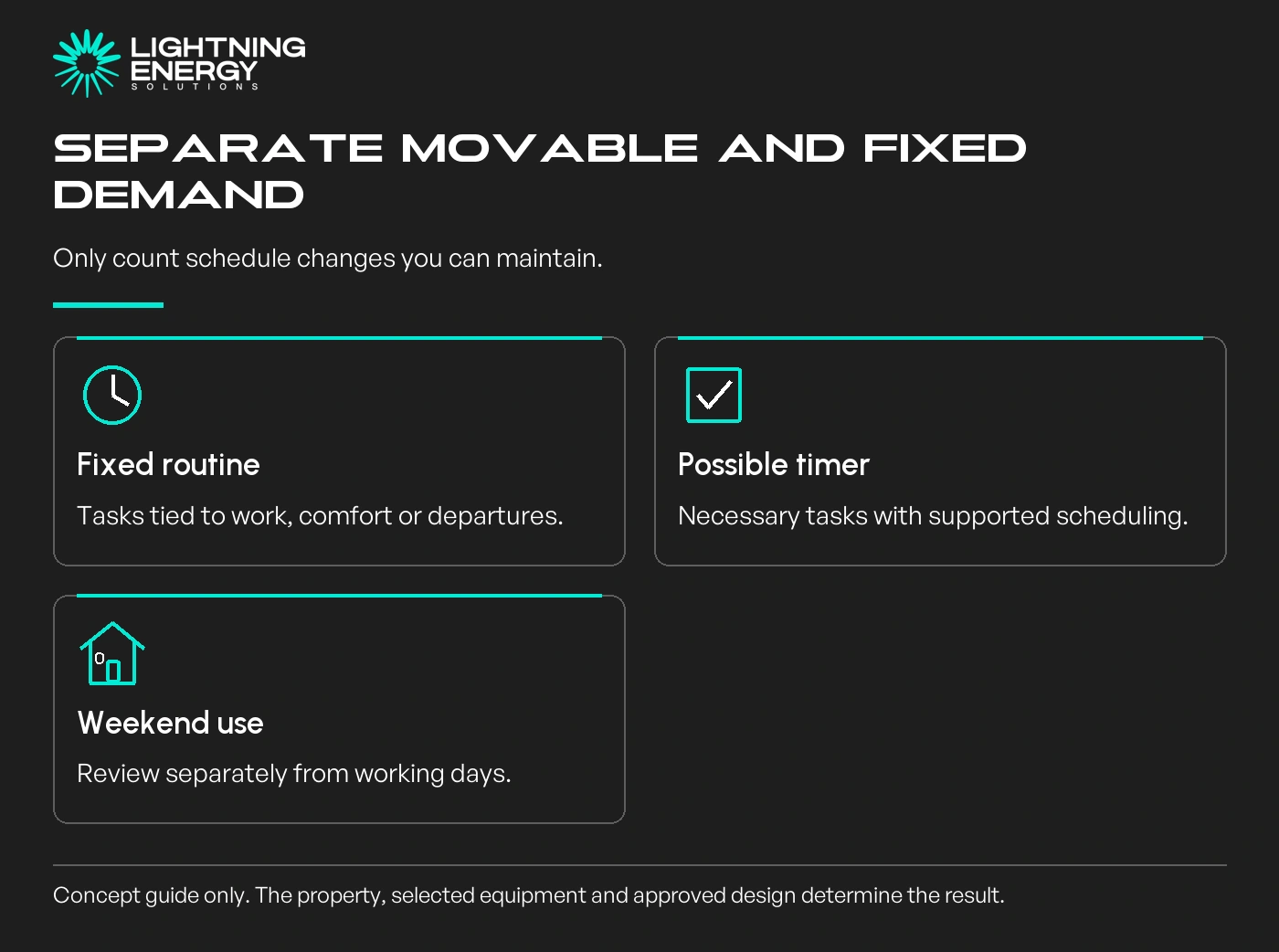
However, a suitable appliance timer or a pool schedule might move some demand into daylight. Check the equipment instructions and practical constraints before counting that change in the forecast.
Do not run appliances unnecessarily just to consume solar. The useful comparison is completing a necessary task at another time, with safe operation and the household’s needs preserved.
Our solar hot-water timing guide explains why water availability and temperature safeguards must remain part of a schedule decision.
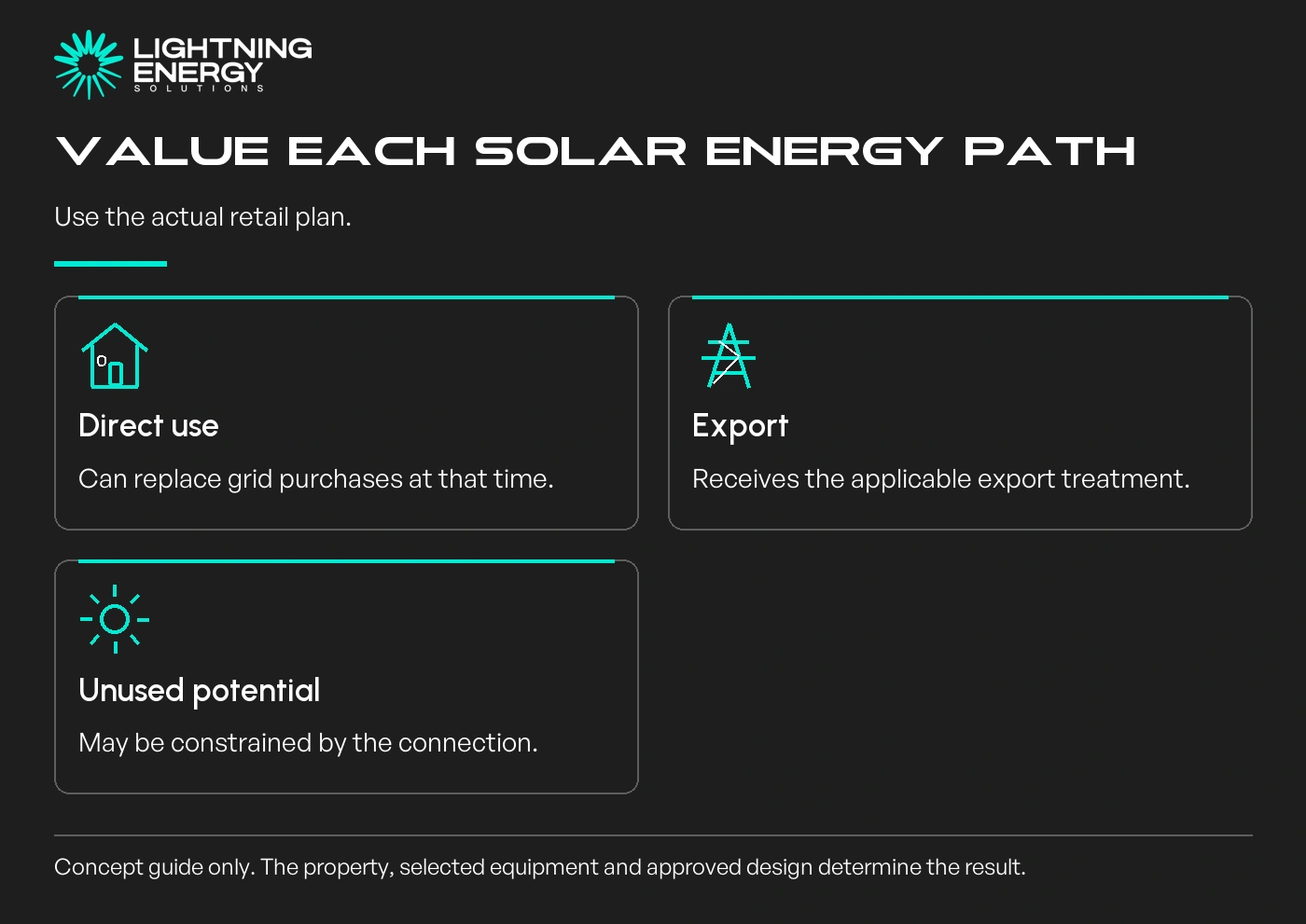
Electricity used directly at home and electricity exported are valued differently under a retail plan. Compare the applicable rates and any time windows rather than treating every generated kilowatt-hour as identical savings.
The Government tariff guide explains why a high feed-in offer alone does not establish the cheapest total bill.
Australian Government tariff guidance.
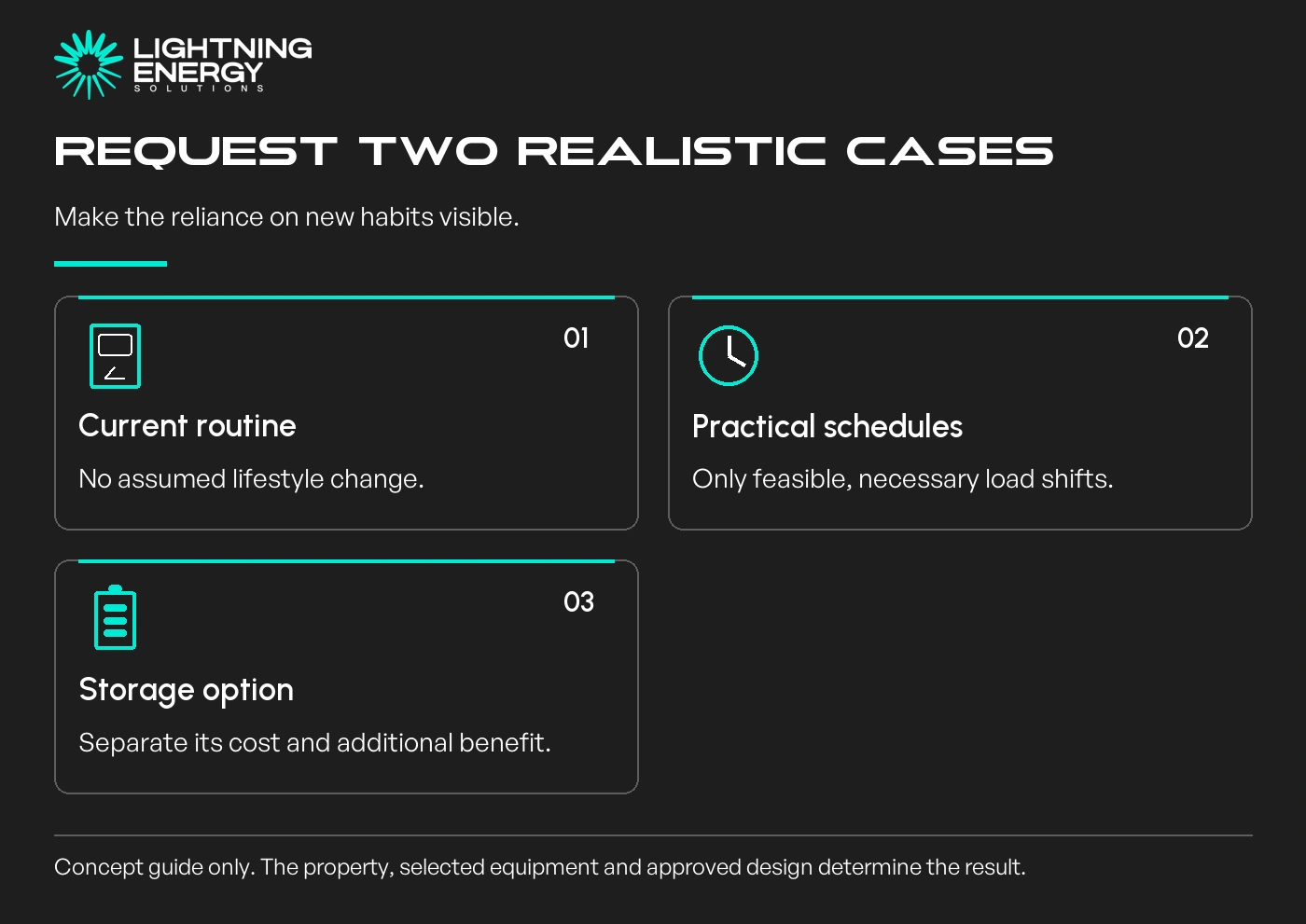
Ask for a solar-only estimate using today’s routine, then a second case with the realistic scheduling changes. That exposes how much of the proposal relies on you changing habits.
A battery may provide a way to use energy later, but it adds another purchase and a set of operating constraints. It should have a clear purpose, suitable charging opportunities and a separate cost-benefit assessment.
Our home battery value guide provides the next questions if storage is on the shortlist.
Being away during the day does not prove that storage is necessary or worthwhile. Equally, deciding against a battery does not automatically rule out a well-matched solar-only system.
If a proposal only works when you dramatically change a routine you cannot change, ask for a different design or reconsider the purchase. A smaller array or a later installation can be a reasonable outcome.
If your roof is suitable and the measured demand supports the proposal, weekday absence need not end the discussion. Weekend use, existing baseload and modest scheduling changes can all be assessed explicitly.
Contact Lightning Energy with interval data and a normal weekly schedule. Ask for the case that reflects your life now, with any future changes shown separately so you can judge them honestly.
Available times
Book a consultation and we'll map solar, storage, hot water, and the rebates around your bills and your goals.
Question 1 of 6